










13 Animals Pipe Cleaner Crafts That Are Too Cute to Resist
The Timeless Magic of Pipe Cleaner Crafts
Pipe cleaner crafts have delighted children and adults alike for generations, offering an almost effortless entry point into the world of handmade creativity. These fuzzy, bendable wires — also known as chenille stems — are among the most forgiving craft materials you can find, making them ideal for beginners and seasoned crafters in equal measure. Their soft texture, vibrant colors, and incredible flexibility make them perfect for shaping into virtually anything you can imagine, and animal figures are perhaps the most beloved category of all.
There is something undeniably satisfying about transforming a simple twisted wire into a recognizable creature with personality and charm. Whether it is a fluffy bunny with long looping ears, a tiny spider dangling on invisible legs, or a proud peacock fanned out in colorful splendor, pipe cleaner animals carry a handcrafted warmth that mass-produced toys simply cannot replicate. Each creation reflects the unique touch of its maker, making these little figures wonderful keepsakes and gifts for people of all ages.
Beyond their aesthetic appeal, pipe cleaner crafts offer genuine developmental and therapeutic benefits. For children, manipulating these materials builds fine motor skills, encourages spatial reasoning, and nurtures creative problem-solving. For adults, the repetitive, meditative quality of twisting and shaping pipe cleaners can be deeply calming — a form of mindful craft that helps reduce stress and anxiety. With just a pack of pipe cleaners and a few simple tools, you have everything you need for hours of joyful, productive making.
Essential Supplies and Tools for Animal Crafting
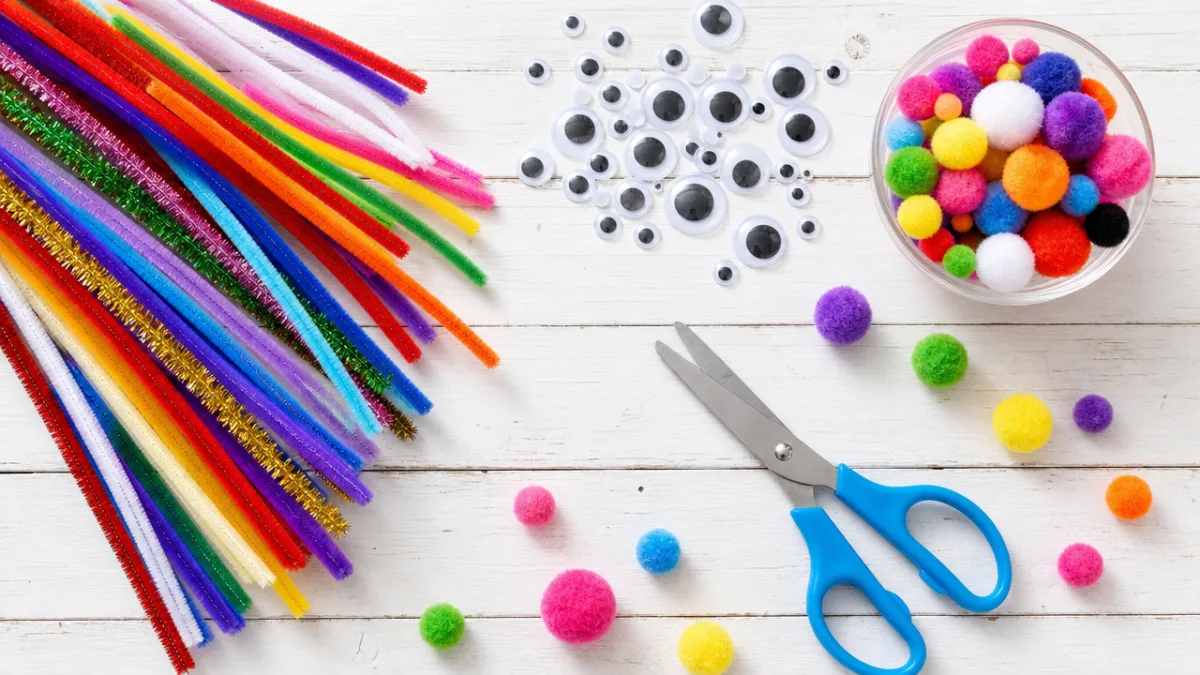
Before you dive into crafting your animal menagerie, it helps to gather a few key materials that will elevate your results from passable to genuinely impressive. Standard chenille pipe cleaners come in packs of mixed or solid colors and are available at virtually any craft store or online retailer for very little cost. For animal crafts specifically, look for packs that include natural tones like brown, tan, black, and white alongside brighter colors for exotic creatures. Having a variety on hand means you will never be stuck mid-project searching for the right shade.
In addition to your pipe cleaners, a small collection of googly eyes in various sizes will instantly bring your animal creations to life. These adhesive-backed wiggly eyes are inexpensive and come in packs of hundreds, so you will have plenty to experiment with. Small pom-poms in assorted sizes are another invaluable addition, perfect for creating fluffy bunny tails, bear noses, or the rounded body of a ladybug. Felt scraps, foam sheets, and a low-temperature glue gun round out your basic supply kit and open up even more possibilities for detail work.
You do not need specialized tools to get started, but a few items will make your crafting experience smoother and more precise. A pair of small craft scissors or wire cutters allows you to trim pipe cleaners cleanly without fraying. A ruler helps you cut pieces to consistent lengths when symmetry matters, such as when forming matching legs or wings. Some crafters also keep a wooden skewer or pencil handy for wrapping pipe cleaners tightly into coils or circular shapes. Organized in a small bin or tackle box, these supplies keep your workspace tidy and your creativity flowing freely.
Here is a quick checklist of supplies to have ready before you begin:
- Assorted chenille pipe cleaners in multiple colors and thicknesses
- Googly eyes in small, medium, and large sizes
- Pom-poms in various colors and diameters
- Low-temperature glue gun and glue sticks
- Craft scissors or small wire cutters
- Felt and foam sheets for accents and details
- Beads, sequins, and feathers for decorative touches
- A ruler and pencil for measuring and marking
The Top 13 Adorable Animal Projects to Try
With your supplies assembled, it is time to explore the most charming and approachable pipe cleaner animal projects that crafters around the world have fallen in love with. These thirteen creatures range from the brilliantly simple to the impressively detailed, ensuring there is something for every skill level. Whether you are crafting with a five-year-old on a rainy afternoon or looking for a weekend project to challenge yourself, this collection has exactly the inspiration you need to get started.
The humble pipe cleaner bunny tops many lists for good reason — it requires only two or three pipe cleaners and can be completed in under ten minutes. You simply fold one pipe cleaner in half to form the body and ears, twist another around the midsection to create the front legs, and add a final piece bent into a U-shape for the hind legs. Attach two small googly eyes and a tiny pink pom-pom nose, and you have an Easter centerpiece or a child’s new favorite toy. The charm of this project lies in how much personality you can convey with so few materials.
Equally popular is the pipe cleaner spider, a craft that works beautifully year-round but is especially beloved around Halloween. Eight pipe cleaners bent and twisted around a central black pom-pom body create a wiggly-legged arachnid that can be hung from a string for spooky decoration or perched on a bookshelf for year-round whimsy. Bending each leg at a slight angle adds a realistic quality that makes the spider look as though it is mid-crawl. A pair of oversized googly eyes gives it a friendly, non-threatening appearance that even arachnophobes tend to adore.
Here is an overview of all thirteen animal projects worth exploring:
- Bunny with looping ears and pom-pom tail
- Spider with eight bent legs and googly eyes
- Butterfly with layered wing loops and bead body
- Caterpillar from stacked pom-poms on a pipe cleaner spine
- Bee with yellow and black striped body and wing loops
- Puppy with folded ears and a wagging tail
- Owl with feathered wing details and large round eyes
- Flamingo with a pink body and bent standing leg
- Turtle with a domed shell and slow-walking legs
- Peacock with fanned tail feathers in multiple colors
- Elephant with a curled trunk and large ear loops
- Fish with layered fin loops and iridescent accents
- Dragonfly with four delicate wing loops and a slim body
Step-by-Step Techniques for Beginners
Understanding a handful of core techniques will allow you to tackle virtually any pipe cleaner animal with confidence. The most fundamental skill is the simple twist, where two pipe cleaners are wrapped around each other to join them securely without glue. This technique forms the backbone of most animal projects, connecting body segments, attaching limbs, and securing decorative elements. Practicing this twist on scrap pieces before beginning a project ensures your finished creatures will hold together through years of handling and play.
The loop technique is equally essential and forms the basis of wings, ears, and rounded body shapes. To create a loop, simply bend a pipe cleaner into a circle or oval and twist the ends together at the base to secure the shape. Multiple loops of different sizes can be layered together to suggest feathers, flower petals, or the scalloped edges of a turtle shell. When crafting a butterfly, for instance, four loops of graduating size — two large and two small — attached to a central bead-threaded spine create a remarkably convincing and beautiful result.
Coiling is a third technique that produces wonderfully textured results, ideal for crafting the curly fleece of a sheep or the spiraling shell of a snail. To coil a pipe cleaner, wrap it tightly around a pencil or dowel rod, then slide it off carefully to reveal a spring-like helix. Multiple coils combined with a simple base structure can suggest thick wool, scaly texture, or the whimsical swirl of a snail’s home. Experimenting with coiling at different tensions produces varied effects that add visual interest and tactile appeal to your finished pieces.
Some additional beginner-friendly tips to keep in mind:
- Always twist connection points at least three full rotations to prevent unraveling during play
- Use thicker pipe cleaners for structural elements like bodies and legs, thinner ones for delicate details
- When making symmetrical parts like wings or ears, cut two pieces to identical lengths before shaping
- Allow glue gun adhesive to cool fully before handling joined pieces to avoid misalignment
- Trim any sharp wire ends with scissors after completing your project to ensure safety for children
Creative Ways to Display and Gift Your Creations
Once you have assembled your pipe cleaner menagerie, the question of what to do with them becomes a delightful creative challenge in itself. These tiny creatures are surprisingly versatile as decorative objects. A cluster of pipe cleaner butterflies pinned to a cork board creates a cheerful nature-themed wall display that brightens any child’s bedroom or playroom. Pipe cleaner flowers paired with animal figures make charming centerpieces for spring tables, Easter brunches, or birthday celebrations themed around woodland creatures or jungle animals.
Gifting pipe cleaner animals is a practice that carries enormous sentimental value precisely because of their handcrafted nature. A single well-made pipe cleaner elephant or bunny tucked inside a greeting card or gift bag communicates thoughtfulness and care in a way that a store-bought trinket cannot. For teachers, a classroom animal related to a current lesson topic makes a memorable, low-cost thank-you gift from a student. For grandparents, receiving a pipe cleaner creature crafted by a grandchild is the kind of keepsake that ends up treasured for decades, often displayed on a windowsill or pinned to a bulletin board long after the child has grown.
You can also incorporate pipe cleaner animals into functional items, transforming them into charming accessories and embellishments. Twist a small pipe cleaner butterfly or ladybug onto the spine of a bookmark for a whimsical reading companion. Wrap a pipe cleaner creature around a pencil or pen to create a playful desk accessory that makes homework feel less like a chore. Small animals can be threaded onto hair ties, attached to backpack zippers, or woven into wreaths for seasonal door decorations. The miniature scale of these creatures makes them adaptable to an almost endless range of practical applications.
Pipe Cleaner Crafts as Educational and Therapeutic Activities
Beyond their entertainment value, pipe cleaner animal crafts occupy an important place in both educational and therapeutic settings. Occupational therapists have long used fine motor crafts like pipe cleaner projects to help children with developmental delays, coordination challenges, or sensory processing differences build hand strength and dexterity in a low-pressure, enjoyable context. The tactile quality of chenille stems provides pleasant sensory feedback that many children find regulating, while the achievable nature of simple projects delivers consistent feelings of accomplishment and pride.
In classroom settings, pipe cleaner animals offer a natural bridge between art and science curriculum. A unit on insects becomes far more memorable when students construct their own pipe cleaner beetles, complete with six correctly positioned legs and segmented bodies. A study of ocean life comes alive when children twist together pipe cleaner fish and arrange them in an underwater scene on a bulletin board. Teachers who incorporate hands-on crafting into lessons consistently report higher engagement, stronger retention of material, and greater enthusiasm for the subject matter among students who might otherwise struggle to connect with purely textual learning.
For adults navigating stress, anxiety, or the emotional heaviness that modern life frequently brings, pipe cleaner crafting offers a gentle, accessible form of creative therapy. The slow, repetitive process of twisting and shaping has a grounding effect that many people describe as similar to meditation or knitting — drawing attention fully into the present moment and quieting the mental chatter that fuels anxiety. Art therapy practitioners increasingly incorporate simple crafts like these into group and individual sessions because they require no prior skill, produce a tangible result, and invite conversation naturally while keeping hands occupied. The whimsical subject matter of animal figures also tends to lighten mood and spark genuine laughter, which carries its own significant therapeutic value.
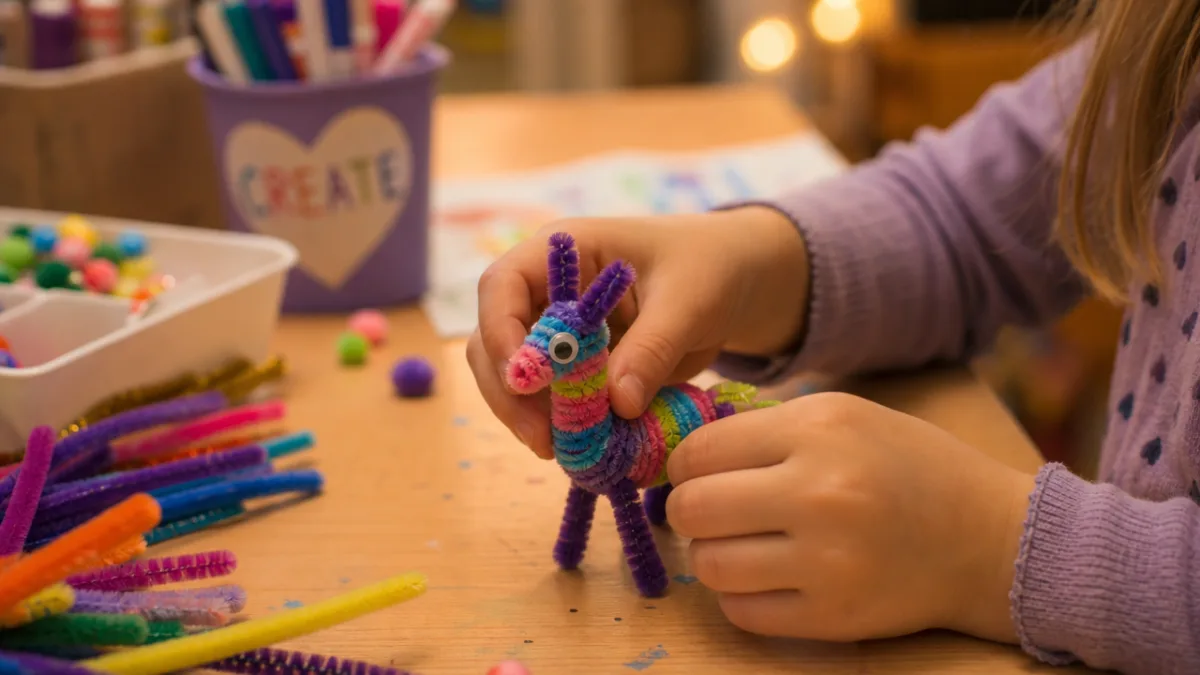
Parent and child crafting sessions centered on pipe cleaner animals offer additional relational benefits that are worth highlighting. Sitting together at a table, working toward a shared creative goal, creates unhurried space for conversation, storytelling, and connection that screens and structured activities rarely provide. Children often open up emotionally during calm, low-stakes activities, making craft time unexpectedly rich for meaningful dialogue. The collaborative nature of crafting — where a parent can guide technique while a child contributes color choices and creative decisions — models healthy teamwork and builds a child’s confidence in their own creative instincts in lasting ways.
Tips for Taking Your Pipe Cleaner Skills to the Next Level
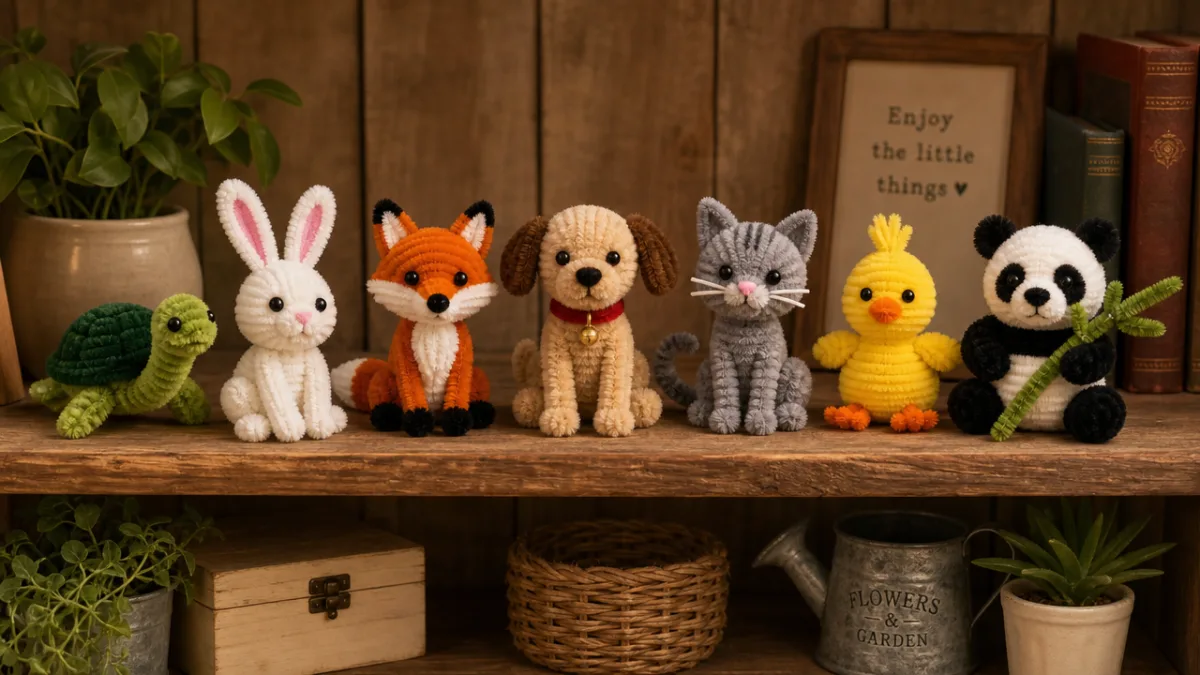
Once you have mastered the basics and worked your way through several beginner projects, the natural next step is to challenge yourself with more ambitious and detailed animal creations. Advanced pipe cleaner crafters often incorporate mixed media into their work, combining chenille stems with wire armature, fabric, polymer clay, or resin to create figures of remarkable complexity and realism. A pipe cleaner bird with a wire-reinforced beak, hand-painted clay feet, and individually shaped feather loops made from multiple pipe cleaners twisted together can become a gallery-worthy miniature sculpture that bears little resemblance to a kindergarten craft project.
Scaling your projects up or down adds another dimension of creative challenge. Crafting a palm-sized pipe cleaner elephant is a satisfying exercise in proportion and symmetry, but constructing a life-sized decorative flamingo from dozens of pipe cleaners twisted over a metal frame is an entirely different and thrilling undertaking. Large-scale pipe cleaner animal sculptures have appeared in professional art installations and retail displays, demonstrating that this humble material is capable of achieving impressive results when applied with vision and patience. If you share your crafts on social media, scaled projects tend to generate tremendous engagement and inspire other crafters to push their own boundaries.
Joining online crafting communities dedicated to pipe cleaner art will accelerate your growth faster than working in isolation. Platforms like Pinterest, Instagram, and YouTube host vibrant communities of pipe cleaner enthusiasts who generously share tutorials, tips, troubleshooting advice, and inspiration at every skill level. Participating in these communities — commenting on others’ work, asking questions, and sharing your own creations — builds relationships with like-minded makers and keeps your motivation high even when a tricky project temporarily frustrates you. Many advanced crafters credit the encouragement of online communities as the primary reason they persisted through early setbacks and developed the skills they now enjoy.
Whether you are a parent looking for a screen-free activity, a teacher seeking hands-on lesson enrichment, a therapist exploring craft-based interventions, or simply a creative person in search of a joyful new hobby, pipe cleaner animal crafts offer something genuinely wonderful. They are inexpensive, accessible, portable, and endlessly variable — the kind of craft that grows with you rather than outgrows you. Start with a simple bunny or a googly-eyed spider, let your curiosity lead you from one creature to the next, and before long you will find yourself with a colorful menagerie that brings smiles to everyone who sees it. The only real question is which adorable animal you will make first.








What do you think?
It is nice to know your opinion. Leave a comment.