










Top 10 Spring-Flowering Bulbs to Plant in Autumn
Why Autumn Is the Perfect Time to Plant Spring Bulbs
There is something wonderfully counterintuitive about planting bulbs in autumn when the garden is winding down and the first frosts are beginning to threaten. Yet this is precisely the moment when experienced gardeners head outside with a trowel and a sense of anticipation, tucking bulbs into the cold earth and imagining the riot of colour that will reward their efforts come spring. Autumn planting is not merely a tradition — it is a biological necessity for most spring-flowering bulbs, which require a period of cold dormancy to trigger the hormonal changes that lead to flowering.
During the cold winter months, bulbs undergo a process called vernalisation, in which sustained low temperatures break their dormancy and stimulate the development of roots, shoots, and eventually flowers. Without this chilling period, tulips, daffodils, and many other beloved spring bloomers simply will not perform to their potential. The soil in autumn is still workable and relatively warm from the summer sun, which encourages strong root development before the ground freezes solid, giving bulbs a head start that pays dividends in spring.
Planting in autumn also offers a practical advantage for the gardener: the work is spread across seasons, making the garden feel like a year-round project rather than a frantic spring scramble. Bulbs are widely available in garden centres from late summer through to November, and choosing a good selection means you can plan for waves of colour that begin with snowdrops in late winter and continue all the way through to alliums in early summer. With a little forethought, an autumn afternoon’s planting can result in months of beauty the following year.
Essential Tips for Planting Success
Before discussing individual bulbs, it is worth establishing a few fundamental principles that apply to nearly all spring-flowering bulbs. The most important of these is drainage. Bulbs are essentially underground storage organs filled with moisture and starch, and while they need water to grow, they are extraordinarily susceptible to rot if they sit in waterlogged soil over winter. If your garden has heavy clay soil, consider improving it with grit or sharp sand, raising your beds slightly, or planting bulbs in containers where drainage can be controlled precisely.
Depth is another critical factor. A common rule of thumb is to plant a bulb at a depth roughly two to three times its own diameter. This means a large tulip bulb might go in at 20 centimetres, while a tiny crocus corm sits just 5 to 8 centimetres below the surface. Planting too shallowly leaves bulbs vulnerable to frost heave and foraging animals, while planting too deeply can exhaust the emerging shoot before it reaches the light. Always plant with the pointed end facing upward — though if you genuinely cannot tell, planting sideways will usually allow the bulb to orient itself.
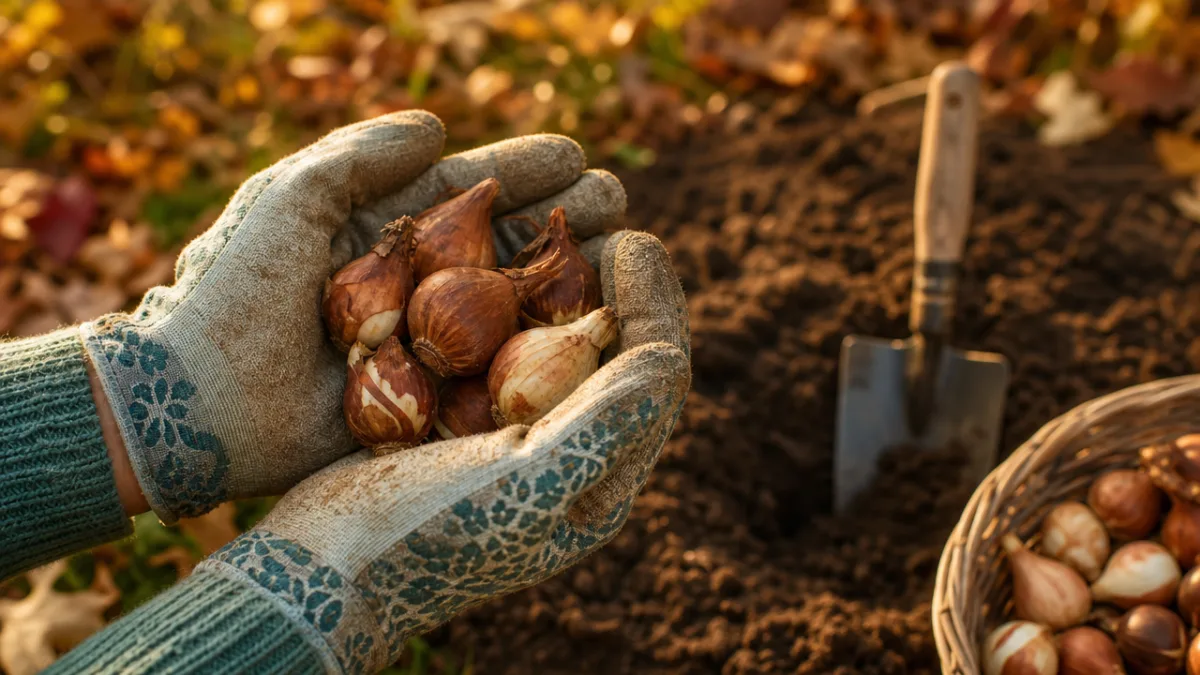
Feeding is optional at planting time but can make a meaningful difference to flowering quality. A handful of bone meal worked into the planting hole provides slow-release phosphorus that encourages strong root establishment. After flowering the following spring, allow the foliage to die back naturally rather than cutting it down — the leaves are busily photosynthesising and replenishing the bulb’s energy stores for the following year’s display. Tying or braiding the foliage is best avoided, as it reduces the leaf surface area and diminishes the bulb’s ability to recharge.
The Top 10 Spring-Flowering Bulbs
With the fundamentals in place, let us turn to the stars of the show — the ten best spring-flowering bulbs to plant this autumn. These have been selected for a combination of visual impact, reliability, ease of cultivation, and the sheer joy they bring to the garden after the long grey months of winter. Whether you have a sprawling country garden or a modest urban balcony, there is something on this list that will transform your outdoor space come spring.
The selection spans a range of heights, colours, and flowering times, which means that with thoughtful planning you can create a succession of blooms rather than one overwhelming burst followed by weeks of bare soil. Taller, later-flowering bulbs can be underplanted with early, low-growing varieties so that as one fades, another takes its place. This layering technique — sometimes called the lasagne method when applied to containers — is one of the most rewarding approaches a gardener can take.
Each of the following bulbs has proven itself in gardens across a wide range of climates and conditions, though specific performance will always depend on local soil type, microclimate, and how faithfully the planting guidelines are followed. Consider them a starting point for your own experimentation, and do not be discouraged if one or two disappoint in their first year — bulb gardening rewards patience and observation, and most varieties improve significantly as they settle into their new home.
Tulips (Tulipa)
Tulips are the undisputed queens of the spring garden, offering an almost bewildering range of colours, forms, and heights. From the elegant, goblet-shaped Single Late varieties to the frilly, feathered Parrot tulips and the delicate lily-flowered forms with their swept-back petals, there is a tulip for every aesthetic. Plant in November or even early December — slightly later than other bulbs — to reduce the risk of tulip fire disease, and choose a sunny, well-drained spot. For the most reliable results, treat them as annuals and plant fresh bulbs each year.
Daffodils (Narcissus)
Daffodils are arguably the most cheerful and reliable of all spring bulbs, naturalising readily in grass and returning faithfully year after year with minimal attention. They are also one of the few spring bulbs that squirrels and other rodents leave entirely alone, thanks to the toxic alkaloids their tissue contains. Plant from September onwards in any reasonable soil, and deadhead after flowering but leave the foliage for at least six weeks. The range available is extraordinary, from miniature species like Narcissus ‘Tête-à-Tête’ to the great golden trumpets of classic varieties like ‘King Alfred’.
Alliums
Alliums — the ornamental onions — have become increasingly fashionable in recent years, and for very good reason. Their perfectly spherical flowerheads, composed of dozens of tiny star-shaped blooms, bring an almost architectural quality to the border, floating above neighbouring plants on tall, slender stems. The giants of the genus, such as Allium giganteum and the popular ‘Gladiator’, can reach over a metre in height, while compact varieties like ‘Purple Sensation’ suit smaller spaces. They flower later than most other spring bulbs, extending the season beautifully into early summer.
Grape Hyacinths (Muscari)
Grape hyacinths are among the most enchanting of all small bulbs, producing dense spikes of tiny, urn-shaped flowers in vivid shades of blue, violet, and occasionally white. They are extraordinarily easy to grow, requiring nothing more than a sunny spot and reasonably well-drained soil, and they naturalise readily to form drifts of intense colour. Their compact habit makes them ideal for edging paths, planting beneath shrubs, or filling gaps in the rock garden, and they are equally at home in containers where their brilliant blue flowers make a striking contrast to yellow daffodils.
Crocuses
Crocuses are often the first sign that spring has genuinely arrived, pushing their cheerful blooms through the cold soil as early as February in mild winters. They come in a wide range of colours including white, yellow, purple, and striped forms, and are perfectly suited to naturalising in lawns where they form carpets of colour before the grass begins to grow vigorously enough to require mowing. Plant the small corms 5 to 8 centimetres deep in autumn, and be prepared to protect them from sparrows and mice, both of which find them irresistible. The species crocuses are often more vigorous and longer-lived than the larger Dutch hybrids.
Hyacinths (Hyacinthus orientalis)
Few flowers can match the hyacinth for sheer intensity of fragrance — a single spike in bloom can perfume an entire room or fill a small garden with its intoxicating scent on a still spring day. The flowers are densely packed onto upright stems and come in shades ranging from pure white and pale pink to deep burgundy and vivid cobalt blue. They are excellent in containers near doors and seating areas where their perfume can be fully appreciated, and they also perform beautifully in formal bedding schemes. When handling the bulbs, wear gloves as the skin can cause irritation in sensitive individuals.
Snowdrops (Galanthus)
Snowdrops are beloved for their brave and delicate appearance at the very tail end of winter, often pushing through snow and frost in January or February to deliver the first flowers of the year. They are best planted “in the green” — that is, as growing clumps dug up immediately after flowering — but dry bulbs planted in autumn will also establish, particularly if the soil is cool and moisture-retentive. They prefer light shade and humus-rich soil, making them natural companions for deciduous trees and shrubs, and they will slowly spread to form substantial colonies given the right conditions. The genus contains dozens of species and hundreds of named cultivars that are avidly collected by enthusiasts known as galanthophiles.
Fritillaries (Fritillaria)
Fritillaries are among the most intriguing and distinctive of all spring bulbs, offering flowers of unusual beauty and an air of quiet elegance quite unlike the bolder showiness of tulips or hyacinths. The snake’s head fritillary, Fritillaria meleagris, produces nodding, chequered flowers in shades of purple, pink, and white, and is stunning when naturalised in damp meadow grass. The crown imperial, Fritillaria imperialis, is a completely different creature — a tall, dramatic plant with a whorl of pendant flowers in orange, red, or yellow beneath a tuft of leafy bracts. Both require quite different conditions, illustrating the diversity within this fascinating genus.
Scilla and Chionodoxa (Glory of the Snow)
These two closely related genera of small spring bulbs are perhaps the most underappreciated of all the autumn-planted favourites, yet they are capable of transforming a garden floor or lawn into a sea of vivid blue at a time when such colour is particularly precious. Scilla siberica produces nodding, intense blue bells in early spring, while chionodoxa bears upright, star-shaped flowers with white centres that create a wonderful two-toned effect. Both are extremely easy to grow, tolerating partial shade and even competition from tree roots, and both naturalise with almost embarrassing enthusiasm, returning in greater numbers with every passing year.
Camassia
Camassia is something of a hidden gem in the world of spring bulbs, less widely planted than it deserves and therefore still capable of providing genuine surprise and delight when it bursts into flower in late spring. The tall spires of star-shaped flowers rise to 60 or 90 centimetres, in shades ranging from pale blue and lilac to deep violet and creamy white, and they have a wonderful presence in naturalistic or prairie-style plantings. Unlike many spring bulbs, camassia positively thrives in moisture-retentive soil and will even tolerate seasonal waterlogging — making it invaluable for gardeners with heavy or wet ground where other bulbs would rot.
Planning Your Planting Scheme
A successful spring bulb display is rarely the result of happy accident — it is almost always the product of deliberate planning, with careful attention paid to colour relationships, height progression, and the succession of flowering times. Before purchasing a single bulb, sketch out your borders or containers and consider what effect you want to achieve. A monochromatic scheme using multiple shades of one colour family — say, creamy whites and soft yellows — has a timeless, sophisticated quality, while a mixed palette of contrasting colours creates energy and exuberance that suits informal or cottage-style gardens.
Flowering time is as important as colour in a well-designed scheme. By combining early-blooming crocuses and snowdrops with mid-season daffodils and tulips, followed by late-flowering alliums and camassias, you can maintain visual interest in the garden from February through to June. Plant bulbs in generous drifts rather than single specimens for maximum impact — a single tulip is pleasant, but fifty planted together in one bold sweep is genuinely breathtaking. In naturalistic settings, scatter bulbs by hand and plant them roughly where they fall for a more organic, less contrived appearance.
Container planting opens up additional creative possibilities and is particularly valuable for gardeners with limited ground space. The layering or lasagne method involves filling a deep pot with compost and planting bulbs at appropriate depths in successive layers — alliums at the bottom, tulips in the middle, and crocuses or grape hyacinths near the top. As the season progresses, each layer emerges and flowers in sequence, providing weeks of interest from a single container. Use a peat-free, loam-based compost mixed with grit for the best drainage, and ensure the pot has adequate drainage holes.
After the Bloom: Caring for Bulbs Year-Round
The moment the last petal falls is not the end of the bulb’s story — it is the beginning of an invisible but critical phase of growth and regeneration that will determine the quality of the following year’s display. As the flowers fade, the plant redirects its energy from reproduction back into the bulb itself, building up stores of carbohydrates and nutrients that will fuel next spring’s growth. This process depends on the continued functioning of the leaves, which must be left intact and in good light for as long as possible — typically at least six weeks after flowering.
Deadheading spent flowers promptly is beneficial because it prevents the plant from expending energy on seed production, though this is not strictly necessary for bulbs that are treated as annuals. After the foliage has yellowed and died back naturally, bulbs can be left in the ground to form clumps or lifted, dried, and stored in a cool, dark, well-ventilated place until autumn replanting. Lifting is particularly recommended for tulips, which can accumulate disease if left in the same soil year after year, and for any bulbs growing in heavy, poorly drained ground where summer moisture might cause rot.
Feeding bulbs after flowering with a high-potassium liquid fertiliser — such as a tomato feed — applied every two weeks until the foliage dies back will significantly improve the following year’s performance. Bulbs that are naturalised in grass or woodland benefit from a top-dressing of slow-release granular fertiliser scattered over the area each autumn. Vigilance for pests and diseases is also worthwhile: narcissus bulb fly, slugs, and various fungal rots can all reduce a bulb collection significantly over time. Good hygiene, adequate spacing, and careful attention to drainage are the best preventive measures available to the home gardener.
Bringing It All Together: Creating a Year-Long Display
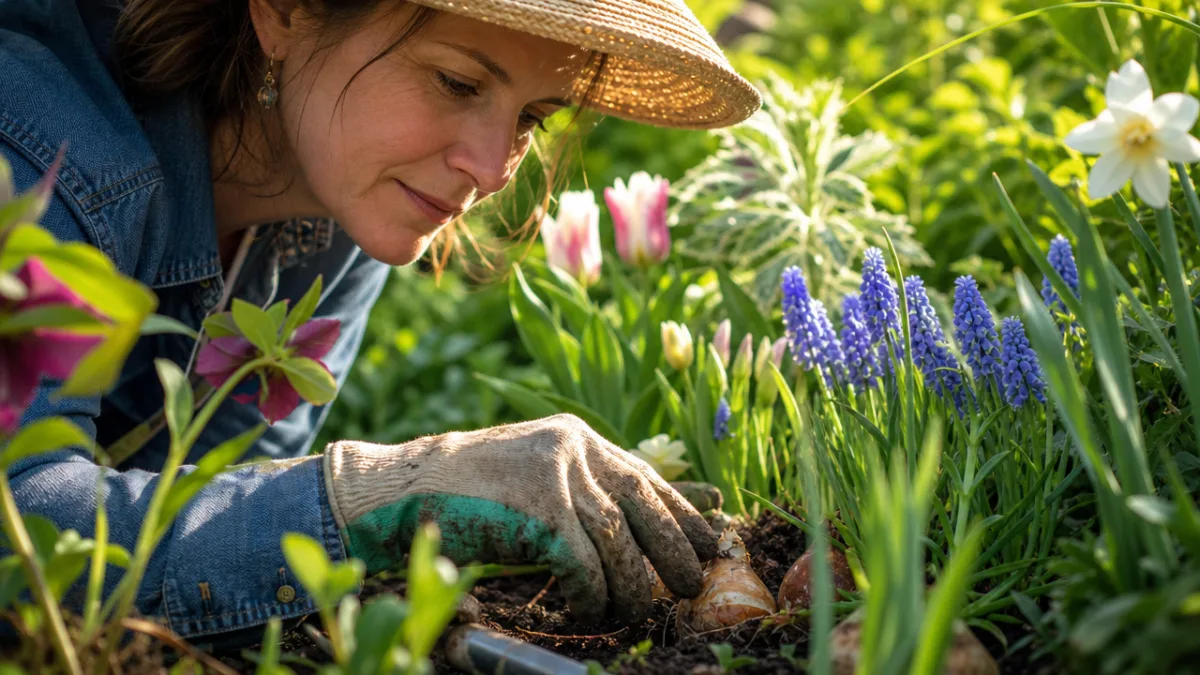
The real magic of autumn bulb planting becomes apparent when you view it not as a single seasonal task but as one component of a year-round garden strategy. Spring-flowering bulbs are natural companions for herbaceous perennials whose emerging foliage helps to disguise the untidy dying-down process that follows bulb flowering. Hostas, for example, emerge just as daffodil foliage begins to look tired, their bold leaves neatly hiding the mess. Similarly, hardy geraniums and later-emerging ornamental grasses can be planted amongst tulips and alliums to provide seamless visual continuity.
Interplanting bulbs with spring-flowering biennials such as wallflowers, forget-me-nots, and sweet Williams is one of the oldest and most effective techniques in the gardening repertoire. The biennials fill the gaps between emerging bulb foliage and provide a complementary backdrop of softer colour that sets off the boldness of tulips and hyacinths to perfection. The combination of forget-me-not blue and tulip red or orange is a classic pairing that never loses its power to delight, while wallflowers in warm amber and crimson shades make a harmonious companion for late tulip varieties in similar tones.
Ultimately, the decision to plant spring bulbs each autumn is one of the most optimistic and life-affirming acts a gardener can perform. It is an investment in the future, a declaration of faith that winter will pass, that cold soil will yield to warmth, and that the promise held within each papery, seemingly inert bulb will be fulfilled in a burst of colour and fragrance when it is most needed. The ten bulbs described in this guide are not merely plants — they are reliable friends whose annual return brings genuine joy, year after year, in gardens large and small, formal and wild, urban and rural alike.
- Tulips — Plant in November for the most disease-resistant results; treat as annuals for reliability.
- Daffodils — Naturalise freely, ignored by rodents, and return faithfully with minimal care.
- Alliums — Architectural flowerheads that bridge the gap between spring and summer.
- Grape Hyacinths — Brilliant blue drifts ideal for edging, containers, and underplanting.
- Crocuses — Among the earliest flowers of the year; superb for lawn naturalising.
- Hyacinths — Unrivalled fragrance; perfect near entrances and seating areas.
- Snowdrops — The brave harbingers of spring; best in light shade and moist soil.
- Fritillaries — Intriguing, distinctive flowers ranging from delicate to dramatically bold.
- Scilla and Chionodoxa — Easy, vigorous, and capable of forming breathtaking blue carpets.
- Camassia — A versatile, underappreciated gem that thrives even in wet conditions.








What do you think?
It is nice to know your opinion. Leave a comment.