










18 Drought-Tolerant Plants for a Colorful Garden That Barely Needs Water
Why Drought-Tolerant Gardening Is the Future of Landscaping
Water scarcity is becoming one of the most pressing challenges of our time, and gardens are often among the first casualties of dry summers and strict watering restrictions. Yet a garden that thrives on minimal rainfall is not just a practical necessity — it can be a breathtaking showcase of color, texture, and life. Drought-tolerant gardening, once considered a compromise, has evolved into one of the most exciting and rewarding approaches to landscape design available to homeowners today.
The secret to a successful low-water garden lies in understanding how plants have adapted to survive in arid or semi-arid conditions. Many drought-tolerant species have developed deep root systems that reach moisture far below the surface, waxy or silvery leaves that reflect sunlight and reduce water loss, or thick succulent tissues that store water during periods of abundance. By selecting plants that have evolved these strategies naturally, you can build a garden that not only survives dry spells but actively flourishes through them.
Beyond the environmental benefits, there is a compelling practical case for embracing drought-tolerant landscaping. Homeowners who make the switch typically see significant reductions in their water bills, spend far less time dragging hoses and adjusting irrigation timers, and find that their gardens require less overall maintenance once established. The initial investment of time and planning pays dividends season after season, delivering color and structure with minimal intervention from the gardener. This article introduces 18 outstanding plants that make that vision a beautiful reality.
Striking Perennials That Return Year After Year Without Fuss
Perennial plants are the backbone of any drought-tolerant garden, returning reliably each season without the need for replanting. Among the very best choices is lavender, a Mediterranean native that fills the air with fragrance while producing dense spikes of purple, pink, or white flowers from late spring through summer. Lavender actually performs best when slightly neglected — it dislikes overwatering and heavy clay soils, preferring the lean, well-drained conditions that challenge so many other plants. Once established, it requires virtually no supplemental watering in most climates.
Echinacea, commonly known as coneflower, is another perennial superstar that earns its place in any water-wise garden. Available in shades ranging from classic purple to vivid orange, red, yellow, and white, echinacea blooms prolifically from midsummer into autumn, providing a long season of color precisely when many gardens begin to look tired. Its deep taproot allows it to access moisture that surface-level plants cannot reach, making it remarkably resilient during heatwaves. As an added bonus, its seed heads feed goldfinches and other songbirds well into winter, extending the garden’s ecological value long after flowering has ended.
Salvia nemorosa, or ornamental sage, rounds out the essential trio of drought-tolerant perennials with its elegant vertical spikes of deep violet-blue, pink, or white flowers. Hummingbirds and butterflies find it irresistible, making it as valuable for wildlife as it is for aesthetics. Like lavender, ornamental sage is native to dry regions of Europe and Asia, equipping it with a natural tolerance for summer heat and drought. It blooms in waves, and cutting it back after the first flush encourages repeat flowering well into autumn, ensuring the garden maintains its vibrant character across the entire growing season.

Colorful Annuals and Biennials That Thrive in Dry Conditions
While perennials provide the structural consistency of a drought-tolerant garden, annuals and biennials add an element of flexibility and seasonal drama that keeps the space feeling fresh and dynamic. Portulaca, sometimes called moss rose, is perhaps the quintessential drought-tolerant annual, producing jewel-bright flowers in shades of yellow, orange, pink, red, and white atop thick, succulent foliage. It thrives in hot, dry conditions where more delicate annuals wilt and fail, and it self-seeds freely, meaning that once you introduce it to your garden, it tends to return on its own in subsequent years without any effort on your part.
Gaillardia, or blanket flower, is another annual that deserves far wider recognition among gardeners seeking color without constant watering. Its bold, daisy-like blooms combine fiery shades of red, orange, and yellow in striking patterns that suggest the woven textiles after which it is named. Gaillardia blooms from early summer right through the first frost, providing one of the longest flowering seasons of any annual available to gardeners in temperate climates. It is remarkably unfussy about soil quality, actually preferring sandy or gravelly conditions that would starve more demanding plants, and it attracts butterflies by the dozen throughout its long season of bloom.
Zinnia elegans has become a beloved staple of cottage and cutting gardens alike, but its impressive heat and drought tolerance is often overlooked. Modern zinnia varieties come in a staggering range of colors — from the palest cream and soft lilac through vivid coral, hot pink, scarlet, and deep burgundy — and they bloom profusely from midsummer until frost. Because they evolved in the dry highlands of Mexico, zinnias actually prefer warm, dry conditions and are prone to fungal issues when overwatered or subjected to overhead irrigation. Growing them from seed directly in the ground in a sunny spot with well-drained soil is all they need to deliver a spectacular performance through even the hottest, driest summers.
Ornamental Grasses and Structural Plants That Command Attention
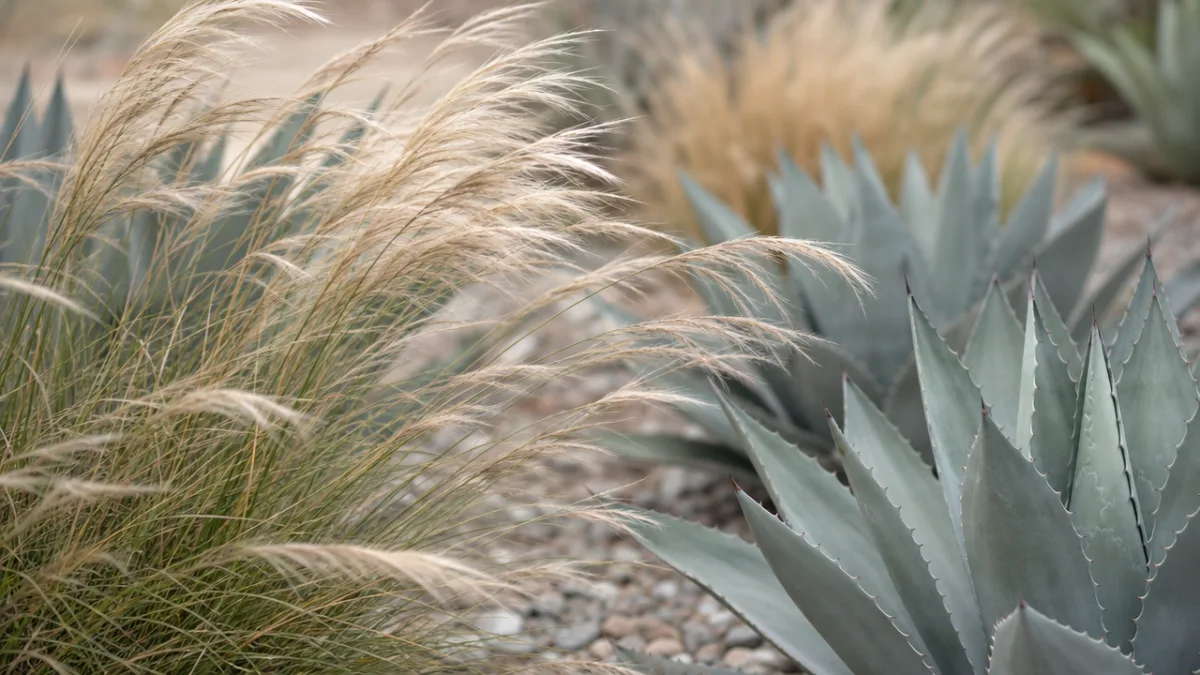
No drought-tolerant garden is complete without the movement, texture, and architectural presence that ornamental grasses provide. Feather reed grass, known botanically as Calamagrostis acutiflora, is among the most versatile and reliable choices available, forming upright clumps of narrow green foliage topped with feathery plumes that emerge in early summer and persist through winter, providing structure and interest in even the coldest months. Despite its refined appearance, feather reed grass is extraordinarily tough, tolerating drought, poor soils, and urban pollution without complaint. Its vertical habit makes it particularly effective as a backdrop for lower-growing flowering perennials.
Blue oat grass, or Helictotrichon sempervirens, brings a cool, silvery-blue color to the palette that is genuinely rare among drought-tolerant plants. Its intensely colored, needle-like foliage forms dense, arching mounds that remain attractive throughout the year, even in regions with cold winters. The blue coloration comes from a waxy coating on the leaf surface — the same coating that dramatically reduces water loss, making this grass as functional as it is beautiful. It pairs magnificently with warm-toned plants such as echinacea and gaillardia, the cool blue acting as a visual foil that makes neighboring colors appear even more vivid and saturated.
For true drama and structural impact, few plants can rival the agave. These architectural succulents form bold rosettes of thick, pointed leaves in colors ranging from blue-green through gray and variegated silver and gold. While they are most associated with desert landscapes, many agave species are far hardier than commonly assumed and can be grown successfully in gardens with relatively cold winters. They rarely need any supplemental water once established, drawing all the moisture they require from rainfall and dew. When an agave finally flowers — which may take many years — it sends up a towering spike that can reach heights of fifteen feet or more, creating one of the most extraordinary spectacles in all of horticulture.
Ground Covers and Low-Growing Plants That Eliminate Bare Soil
Bare soil is the enemy of the water-wise garden, since exposed earth loses moisture rapidly through evaporation and is quickly colonized by weeds that compete with your chosen plants. The solution is to cover every available inch of ground with low-growing, drought-tolerant plants that form a living mulch. Creeping thyme is an ideal choice for this purpose, forming dense mats of tiny aromatic leaves studded with a profusion of pink, purple, or white flowers in late spring and early summer. It tolerates foot traffic surprisingly well, making it an excellent substitute for grass in areas of light use, and it releases its delightful fragrance whenever brushed or walked upon.
Delosperma, commonly known as ice plant, is a succulent ground cover that produces an almost unbelievable carpet of brilliantly colored daisy-like flowers in shades of magenta, orange, yellow, and white. Originally from South Africa, ice plant thrives in full sun and fast-draining soil, and once established it can survive extended periods without any rainfall at all. It spreads steadily to cover large areas, effectively crowding out weeds while keeping the soil cool and moist beneath its dense foliage. In regions with mild winters, it remains evergreen, providing year-round interest and soil coverage that minimizes erosion on slopes and embankments.
Sedum, in its many forms, is perhaps the most widely available and adaptable of all drought-tolerant ground covers. Low-growing varieties such as Sedum spurium and Sedum kamtschaticum spread quickly to form colorful carpets of succulent foliage in shades of green, red, bronze, and variegated patterns, topped with small but cheerful flowers in summer. Taller varieties like Sedum spectabile, now more correctly classified as Hylotelephium, form upright clumps that work beautifully as border perennials, their flat-topped flower heads in pink, white, and deep burgundy providing nectar for late-season pollinators. All sedums share the family characteristic of storing water in their thick leaves, making them among the most resilient plants available to the drought-conscious gardener.
Shrubs and Statement Plants That Define the Garden’s Character
Drought-tolerant shrubs provide the permanent framework around which all other garden planting is arranged, and selecting the right ones is one of the most important decisions a gardener can make. Russian sage, Perovskia atriplicifolia, is a subshrub that has earned an almost universal reputation for excellence in dry gardens, and with good reason. From midsummer through autumn it produces a haze of tiny lavender-blue flowers on long, arching stems clothed in fragrant silver-gray foliage, creating an effect of luminous, airy beauty that complements almost every other plant in the garden. It is heat tolerant, cold hardy, deer resistant, and essentially carefree once established in a sunny, well-drained location.
Cistus, or rock rose, is less commonly grown than it deserves to be, perhaps because it is not always reliably hardy in regions with severe winters, but where it can be grown it is spectacular. These Mediterranean shrubs produce an abundance of large, papery flowers in white, pink, magenta, and burgundy with distinctive golden stamens, blooming prolifically in late spring and early summer. They thrive in the poorest, driest soils imaginable, actually performing better without fertilizer or supplemental water, which can cause them to become lax and short-lived. Established cistus plants are among the most drought-tolerant shrubs in existence, surviving on rainfall alone in regions with Mediterranean-type climates.
Yucca adds a boldly exotic dimension to any drought-tolerant planting scheme, its stiff sword-like leaves creating a dramatic silhouette that provides year-round structural interest. Several species are hardy enough to be grown as permanent garden shrubs across a wide range of climates, including Yucca filamentosa, which is reliably hardy to well below freezing and produces magnificent spikes of creamy white bell-shaped flowers in summer. The curling white threads along the leaf margins give this species a particularly ornamental character that distinguishes it from other spiky plants. Like agave, yucca has a symbiotic relationship with yucca moths, making it ecologically valuable as well as visually striking, supporting specialist pollinator species that depend on it for survival.
Practical Tips for Establishing and Maintaining Your Water-Wise Garden
Selecting the right plants is only the beginning of creating a successful drought-tolerant garden. How and when you plant them matters enormously, particularly during the critical establishment phase when plants are developing the deep root systems that will eventually allow them to access moisture independently. Autumn is widely considered the best time to plant drought-tolerant perennials and shrubs in most climates, as the cooler temperatures and increased rainfall of the season give plants an opportunity to establish their roots before facing the stress of summer heat. Spring planting is the second-best option, provided you are prepared to provide supplemental irrigation during the first growing season.
Soil preparation is another factor that significantly influences the success of a drought-tolerant garden. While these plants are adapted to lean conditions, they universally require excellent drainage. Waterlogged soil is far more damaging to most drought-tolerant plants than dry soil, causing root rot and fungal diseases that kill plants far more quickly than summer drought. Improving drainage by incorporating horticultural grit or coarse sand into heavy clay soils, raising beds, or selecting naturally free-draining spots in the garden will dramatically improve your results. Avoid adding large quantities of organic matter, which retains moisture and promotes the kind of lush, soft growth that is more vulnerable to heat and drought stress.
Mulching is one of the most powerful tools available to the water-wise gardener, capable of reducing soil moisture loss by as much as seventy percent while simultaneously suppressing weeds and moderating soil temperature. Gravel, crushed stone, or slate chippings are particularly appropriate mulches for drought-tolerant gardens, as they complement the aesthetic of the planting while providing the sharp drainage conditions that Mediterranean and arid-region plants prefer. Apply a layer two to three inches deep across all planted areas, keeping the mulch slightly back from plant stems to prevent rot. Once your garden is established and fully mulched, you may find that supplemental watering becomes largely unnecessary except during the most extreme drought conditions.
A final consideration for the long-term success of your drought-tolerant garden is grouping plants with similar water and soil requirements together. This principle, sometimes called hydrozoning, ensures that every plant in a given area receives exactly the conditions it needs without compromising the requirements of its neighbors. Placing a moisture-loving plant among a group of drought-tolerant species, or vice versa, inevitably results in one or more plants performing poorly. Thoughtful planning at the outset — sketching out planting zones based on sun exposure, soil type, and water availability — will prevent these problems and result in a garden where every plant thrives in its designated space, creating the lush, colorful, and essentially self-sustaining landscape that is the ultimate goal of drought-tolerant gardening.








What do you think?
It is nice to know your opinion. Leave a comment.