










12 Simple Ways to Repurpose and Upcycle Old Quilts
Why Old Quilts Deserve a Second Life
There’s something about an old quilt that just gets you. Maybe it was stitched by your grandmother on winter evenings, picked up at a country fair, or rescued from an estate sale — whatever its origin, a quilt carries texture, history, and warmth that new fabric simply can’t match. When one gets too worn or faded for the bed, a lot of people just tuck it into a closet or, sadly, toss it out. But these things are too good for that fate.
Quilt-making has always been rooted in resourcefulness. The earliest quilts were pieced together from scraps of worn-out clothes and leftover fabric — nothing went to waste. Repurposing an old quilt today is really just honoring that same spirit. Instead of letting fraying edges or faded patches feel like flaws, you can turn those imperfections into something new and entirely your own. The wear and tear becomes part of the story, not a reason to give up on it.
There’s an environmental case for this too. The textile industry generates an enormous amount of waste, and choosing to work with what you already have is one of the most practical things you can do at home. And honestly, what you end up making is usually more interesting and meaningful than anything you’d buy off a shelf. So here are some ideas to help you look at your old quilts a little differently.
Transforming Quilts into Statement Home Décor
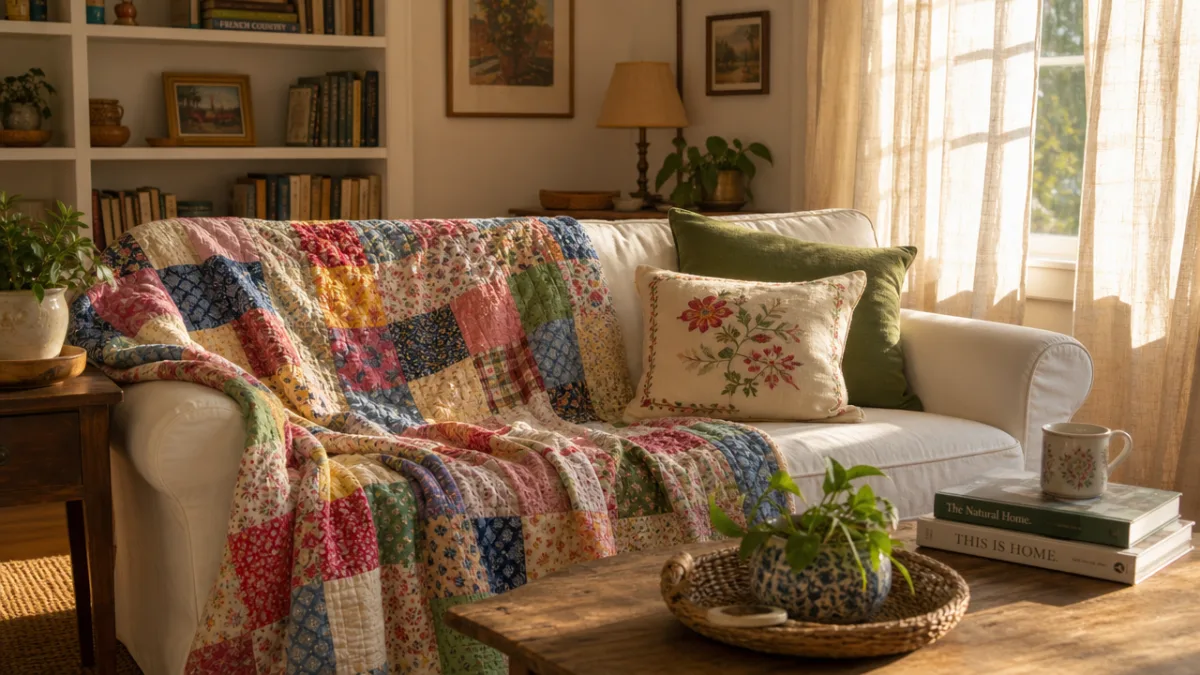
Hanging an old quilt on the wall is one of the most striking things you can do with it. It immediately becomes the focal point of a room, bringing in color, pattern, and a kind of warmth that paint and art prints just can’t offer. A simple wooden dowel with fabric loops gives you a clean, gallery-style look, or you can frame a smaller section behind glass for something a bit more polished. Either way, it puts the craftsmanship on display in a way that folding it into a linen closet never would.
Turning a quilt into a table runner or tablecloth is another great option. If it’s too delicate for everyday use, save it for holidays and special occasions when it’ll actually get noticed and appreciated. A quilt laid out on a dining table softens the whole room. For something more casual, try draping a smaller quilt over a coffee table or ottoman, then layer on a wooden tray and a few candles for that cozy, pulled-together look.
Decorative throw pillows are one of the easiest and most satisfying transformations you can make. Cut squares from the quilt’s best sections, sew them around pillow inserts, and you’ve got accent pillows that no store could sell you. Panels with interesting piecing or embroidery turn into little works of art on their own. Mix a couple of quilt pillows with some solid-colored cushions and the whole setup looks genuinely curated rather than matchy-matchy.
Practical Upcycling Projects for Everyday Use
Not everything has to be decorative — some of the most satisfying quilt projects are just plain useful. Reusable grocery tote bags are a perfect example. The thick, layered construction of most quilts makes them surprisingly tough, more than capable of hauling a week’s worth of groceries. A few straight seams, some handles cut from webbing or canvas, and you’ve got a bag with real personality. They also make excellent gifts, especially if you’re making them from a quilt that someone else has fond memories of.
Dog beds and pet blankets are another obvious winner for quilts that have seen better days. Pets genuinely do not care about fraying edges or faded colors — they just want something warm and soft to curl up on, and the thick batting inside an old quilt is exactly that. You can cut it to size and sew it into a simple cover, or just fold it into a comfortable pad and drop it in your pet’s favorite corner. There’s something nice about an object meant for comfort finding a new way to do exactly that.
Quilts can also pull their weight as protective wrapping for fragile items during a move. The padding inside is genuinely effective at cushioning glass, ceramics, and electronics against bumps and jostling — professional movers and antique dealers have been using quilts this way for years. If you have quilts that are too fragile to display but too meaningful to throw away, keeping them in active use as protective padding is a good solution. They stay handled and useful rather than just sitting in a box somewhere.
Sewing and Crafting Projects Using Quilt Fabric
If you sew, an old quilt is basically a goldmine. One of the most popular projects right now is making a patchwork jacket or vest from quilt panels. The already-quilted layers give you structure, warmth, and texture that you’d never get from plain fabric, and the patchwork patterns make every piece one of a kind. This kind of garment has become genuinely fashionable over the past few years, so it’s both a creative and a stylish move.
For smaller projects, quilt scraps are perfect for zippered pouches, cosmetic bags, and eyeglass cases. These don’t need much material at all, which makes them ideal for quilts that are mostly worn through except for a few good patches. Because the fabric is already thick and structured, the finished accessories have a satisfying solidity to them that feels almost luxurious. They’re also wonderful handmade gifts, particularly when the quilt has some sentimental meaning behind it.
Pot holders, oven mitts, and trivets are another great kitchen project for quilt fabric. The multiple layers of fabric and batting provide real heat insulation — these aren’t just decorative, they actually work. Cut the quilt into squares, add binding around the edges, and you can put together a whole set of coordinated kitchen textiles in an afternoon. Since the quilting is already done for you, these projects are accessible even if you’re fairly new to sewing.
Outdoor and Garden Uses for Old Quilts
Old quilts are surprisingly handy in the garden. A worn quilt makes a fantastic kneeling pad — much more comfortable than those thin foam ones from the garden center — and it keeps your clothes clean while you work. Add a waterproof backing using oilcloth or vinyl to help it hold up against moisture from the ground, and you’ve got something genuinely practical that also keeps a beloved old piece in active use.
Picnic blankets are another natural fit. Quilts are soft, they’re big, and they spread out beautifully on grass. Using an old quilt outdoors also frees it from the pressure of being perfect — if it picks up a grass stain or a little mud, that’s just one more layer of memory. For families with kids, a familiar old quilt repurposed as a picnic blanket has a way of becoming woven into a whole new set of summer memories.
In a pinch, old quilts can even protect garden plants from an unexpected frost. Draping one over a raised bed or a young fruit tree before temperatures drop can genuinely save the plant. You wouldn’t use a truly irreplaceable quilt for this, obviously, but a worn one that’s no longer suitable for display or indoor use can serve this purpose for several seasons. And when it finally gives out completely, it can be composted — a genuinely full circle for something that started as scraps of fabric.
Sentimental Projects That Honor Quilt History
Some quilts carry so much emotional weight that turning them into a tote bag would feel all wrong. For those, the most meaningful projects are the ones that actually honor the people and memories connected to them. One beautiful idea is making a journal cover from a panel of the quilt — wrap a blank notebook in the fabric, secure it with a few stitches or fabric glue, and you’ve created a keepsake that pairs the physical memory of the quilt with a place to write down the stories it holds. It becomes a bridge between generations in the most tangible way.
Small quilt-fabric ornaments are another deeply sentimental option. Cut sections of the quilt into stars, hearts, or simple squares, stuff them lightly with batting, and hang them on a Christmas tree or display them in a shadow box. Year after year, they become reminders of the person who made or owned the quilt. If other family members also have a connection to it, sharing these ornaments around is a lovely way to spread the memory across different households.
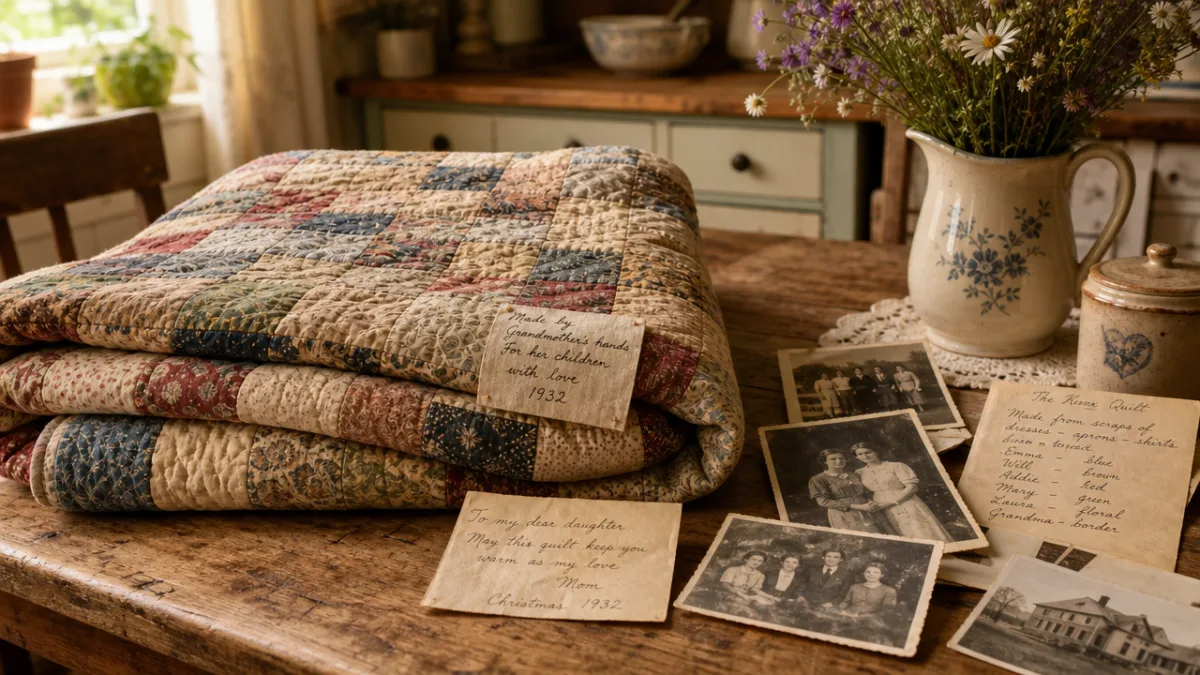
Before you cut into any old quilt, though, consider documenting it first. Photograph the whole thing, write down whatever you know about who made it, when, and where, and save that information in a digital album or printed book. If there’s a signature block or embroidered date — common in antique quilts — photograph those details especially carefully. The physical quilt can be transformed into all kinds of new things, but the history behind it deserves to be preserved just as thoughtfully. The stories stitched into an old quilt are just as worth keeping as the fabric itself.
Tips for Getting Started with Quilt Upcycling
Before you pick up the scissors, take a few minutes to really look at what you’re working with. Find the strongest sections — where the stitching is still solid, the fabric isn’t thinning, and the batting hasn’t shifted. Those are the areas you’ll want to save for projects that need to hold up, like bags or pillows. The weaker, more fragile parts aren’t useless — they’re just better suited to decorative or low-wear projects like wall art, journal covers, or holiday ornaments.
Washing the quilt before you start is a step a lot of people skip, and it really shouldn’t be. Old quilts can carry years’ worth of dust, allergens, and storage smells. A gentle machine wash on a cool, delicate cycle with mild detergent will freshen everything up and make it much nicer to work with. If the quilt is particularly fragile or antique, hand washing in a bathtub with a small amount of gentle soap is the safer route. Either way, let it air dry flat so the quilted layers don’t get pulled out of shape.
Here are some essential tools and supplies to have on hand before beginning your quilt upcycling projects:
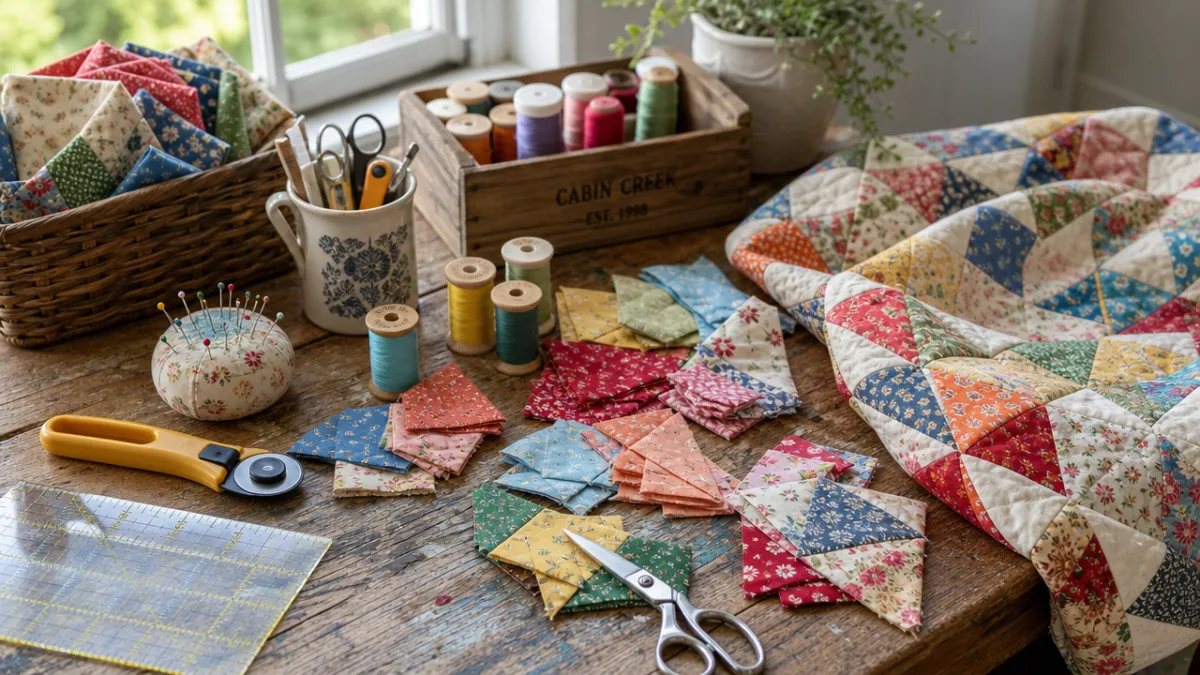
- Sharp fabric scissors or a rotary cutter and cutting mat for clean, accurate cuts
- A sewing machine with a heavy-duty needle suitable for quilted layers
- Fabric glue or iron-on fusible webbing for no-sew projects
- Binding tape or bias tape for finishing raw edges neatly
- Pillow inserts, zipper hardware, or bag handles depending on your chosen project
- Pins, a seam ripper, and a ruler or measuring tape for precision work
The most important thing, honestly, is to let the quilt guide you toward the right project. A quilt made by someone you loved probably wants to become something sentimental — a pillow, a framed panel, a journal cover. A quilt you picked up at a flea market with no personal history attached might feel perfectly suited to a bold functional project like a tote bag or a jacket. When you follow the quilt’s own character rather than forcing a project onto it, you almost always end up happier with the result. Start small if you’re nervous, don’t worry too much about perfection, and remember that even an imperfect finished project is honoring the spirit of creativity and resourcefulness that made the quilt in the first place.








What do you think?
It is nice to know your opinion. Leave a comment.