










Before and After Exterior: Transforming Your Home’s Curb Appeal
The Power of a Home Exterior Transformation
There are few renovation projects that deliver as dramatic and immediately visible a result as a full exterior makeover. The moment you pull up to a home that has undergone a thoughtful before-and-after transformation, the impact is undeniable. Peeling paint gives way to crisp, fresh color. Overgrown landscaping is replaced by structured, intentional planting. What once felt like a forgotten property suddenly radiates pride, character, and warmth. This kind of transformation is not just cosmetic — it speaks to the story of a home being reclaimed and loved.
Curb appeal is often the first conversation a home has with the outside world. Before a guest even rings the doorbell, before a potential buyer steps inside, the exterior has already made an impression. Studies in real estate consistently show that homes with high curb appeal sell faster and command higher prices than comparable homes with neglected exteriors. But beyond market value, a beautiful exterior simply makes coming home feel better. It signals care, attention, and intention — qualities that ripple inward through the entire living experience.
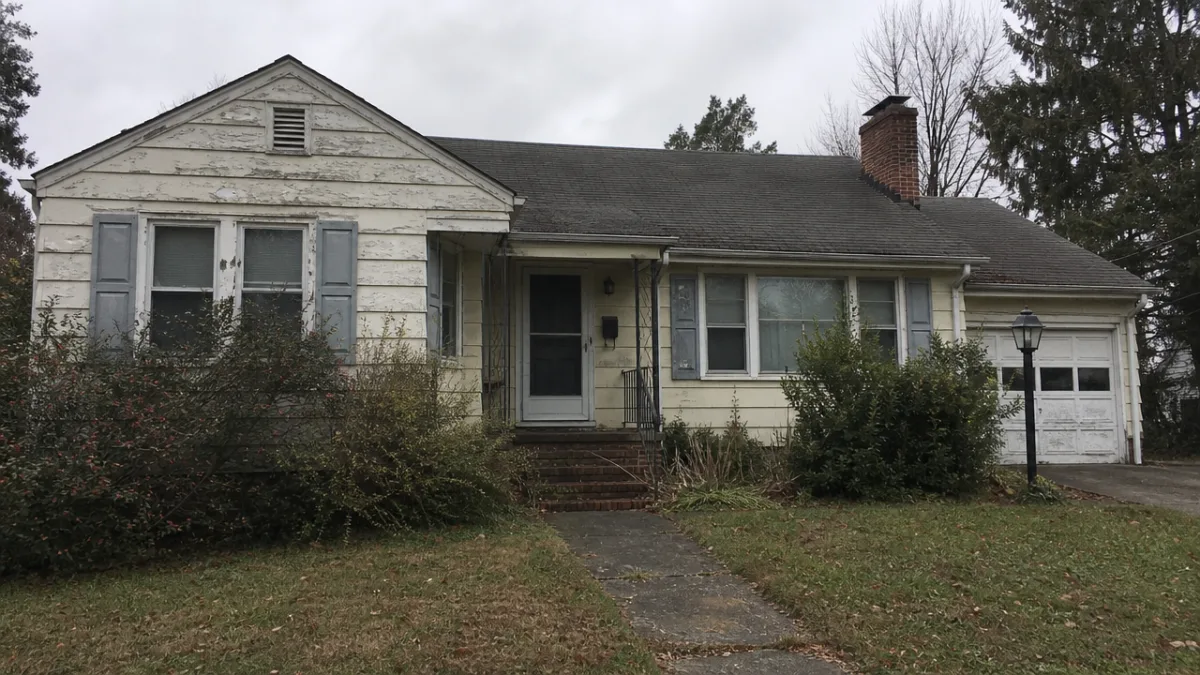
What makes before-and-after exterior projects so compelling is the contrast they reveal. When you see the starting point — perhaps a faded brick facade, cracked shutters, a sagging porch railing, and a lawn that has seen better days — and then see what emerges after skilled planning and execution, the transformation feels almost cinematic. These projects remind us that potential is often hiding in plain sight, buried under years of wear and deferred maintenance, waiting for someone to see it and bring it forward.
Assessing Your Home’s Exterior: Where to Begin
Before any paint brush touches a surface or any plant goes into the ground, a thorough assessment of your home’s current exterior condition is essential. Walk around the perimeter of your property as if you are seeing it for the first time. Take note of every element: the condition of the siding or masonry, the state of the windows and their trim, the front door and its hardware, the gutters and downspouts, the driveway and pathways, and of course the landscaping. Document everything with photographs, because the camera often captures details the eye glosses over.
Once you have a clear picture of what exists, you can begin to prioritize. Not every exterior issue carries the same weight. Structural problems — like a damaged foundation, rotting wood, or a failing roof — must take precedence over aesthetic choices. Addressing these first ensures that your cosmetic investments are built on a solid foundation. A beautifully painted house with rotting fascia boards will quickly undo all your hard work, so the sequence of improvements matters enormously in the planning phase.
It also helps to establish a clear vision before you begin purchasing materials or hiring contractors. Gather inspiration from sources like Pinterest boards, home design magazines, and neighborhood walks. Identify a cohesive style — whether that is modern farmhouse, classic colonial, mid-century modern, or coastal cottage — and let that style guide every decision that follows. A home that commits fully to a coherent aesthetic reads as intentional and polished, while a mismatched collection of updates can feel disjointed even when each individual element is attractive on its own.
- Photograph the existing exterior from multiple angles and distances before beginning any work.
- Identify structural issues that must be resolved before cosmetic improvements begin.
- Create a mood board or inspiration folder that reflects your target aesthetic style.
- Set a realistic budget with a contingency of at least 15 to 20 percent for unexpected costs.
- Research local building codes and HOA guidelines before making significant changes.
Choosing the Right Colors and Materials
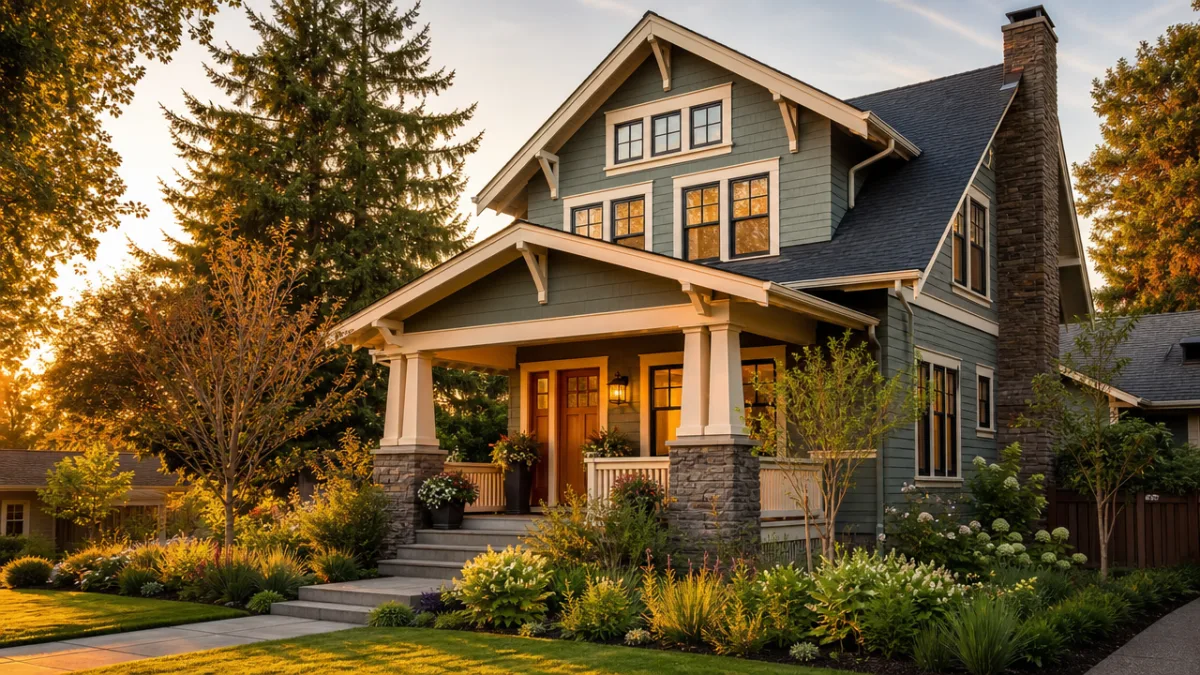
Color selection is arguably the single most transformative decision in any exterior renovation. The right palette can make a modest home look distinguished, a dated home look fresh, and a nondescript home look like it has personality. When choosing exterior colors, it is important to consider the fixed elements of your home — the roof color, the brick or stone accents, and the surrounding landscape — because these cannot easily be changed and must be harmonized with your chosen palette. Most successful exterior color schemes use no more than three colors: one for the main body, one for the trim, and one accent for the door or shutters.
Material choices are equally consequential. Fiber cement siding, for example, offers the classic look of wood without the vulnerability to moisture and insects. Brick and stone veneers can add texture and permanence. Vinyl siding, when selected in higher-quality profiles, can provide a clean and low-maintenance finish that holds color well over time. Each material has its own maintenance profile, cost structure, and aesthetic range, so research is important. Consulting with a contractor who specializes in exteriors can help you understand which materials are most appropriate for your climate and architectural style.
Texture is an often-underappreciated element in exterior design. A home that uses only one material and one surface finish can feel flat and uninspiring, even if the colors are well-chosen. Mixing materials — pairing smooth stucco with stacked stone, for instance, or combining board-and-batten siding with horizontal lap — adds visual depth and interest. The same principle applies to trim work. Detailed millwork around windows and doors, corner boards, and decorative brackets or corbels can elevate a plain box of a house into something that feels crafted and considered.
Landscaping and Hardscaping: The Frame Around the Picture
A beautifully painted and refurbished home can still fall flat if the landscaping around it is chaotic or neglected. Think of the landscape as the frame around a painting — when the frame is right, it enhances the artwork; when it is wrong, it distracts from it. The first step in a landscape refresh is usually subtraction: removing overgrown shrubs that block windows, dead or diseased trees, weedy ground cover, and any plants that are clearly wrong for the space. This editing process alone can dramatically open up and clarify a facade.
Once the space is cleared and cleaned, thoughtful planting can begin. Foundation plantings — the shrubs and plants that hug the base of the home — should be chosen for proportion, meaning they should complement the scale of the house without eventually overwhelming it. Evergreens provide year-round structure. Flowering shrubs add seasonal color and interest. Ornamental grasses bring movement and texture. A layered approach, with taller plants at the back and lower ones at the front, creates a sense of depth and abundance that feels intentional rather than haphazard.
Hardscaping — the non-plant elements of the landscape, including pathways, driveways, retaining walls, steps, and patios — plays an equally important role in curb appeal. A cracked and stained concrete driveway can drag down an otherwise lovely exterior. Replacing it with pavers, stamped concrete, or a gravel-and-border treatment makes an enormous difference. Similarly, a well-designed front pathway — one that leads the eye and the foot naturally from the street to the front door — communicates a sense of welcome and intention that a plain slab of concrete simply cannot match.
- Begin by editing and removing plants and features that are overgrown, dead, or poorly placed.
- Define the edges of beds and lawns cleanly before introducing new plantings.
- Choose foundation plantings that will stay in proportion with the house at full maturity.
- Layer plantings by height to create depth and visual richness.
- Consider hardscape materials that complement the home’s architectural style and color palette.
- Add lighting along pathways and at key focal points to extend the impact into the evening hours.
Front Door, Fixtures, and Finishing Details
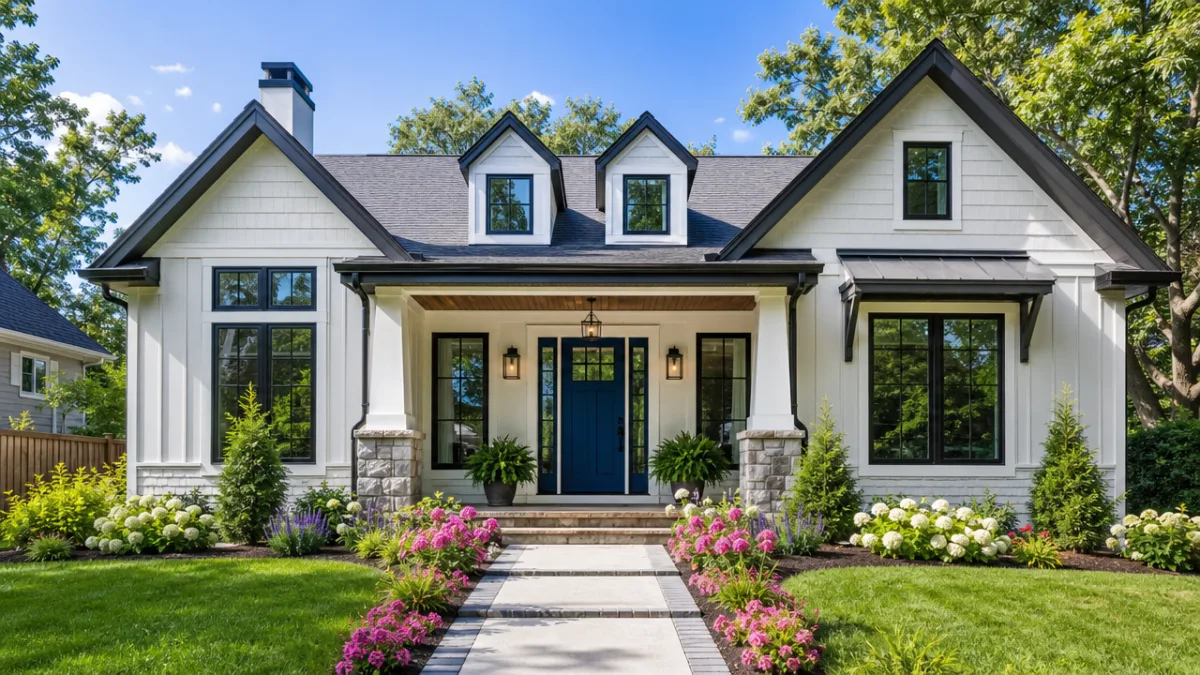
The front door is the focal point of almost every home’s exterior, and it deserves to be treated as such. A new front door — or even just a repainted existing one in a bold, confident color — can transform the entire feel of a facade. Deep navy, rich forest green, classic red, or warm terracotta are perennially popular choices because they announce the home’s personality without overpowering it. When selecting a door color, consider it in the context of the full palette: it should feel like the exclamation point of a well-constructed sentence, not a non sequitur.
Hardware is the jewelry of the front door and should not be overlooked. A mismatched or tarnished door knocker, an outdated house number plaque, or a worn mail slot can undercut an otherwise polished look. Upgrading to a consistent hardware finish — whether that is matte black, brushed nickel, aged brass, or oil-rubbed bronze — ties the entrance together and communicates attention to detail. The same finish should ideally be carried through to the light fixtures flanking the door, creating a unified and intentional look.
Exterior light fixtures deserve their own moment of consideration. Lighting does double duty on a home’s exterior: it provides safety and visibility while also contributing to the overall aesthetic. Fixtures that are too small for the scale of the facade look insignificant; fixtures that are dated or mismatched with the home’s style create visual noise. A pair of well-chosen lantern-style sconces flanking a front door, for example, can look both timeless and elegant, while a single pendant above a covered porch can add warmth and charm. After dark, the right lighting is what makes a home look truly alive and welcoming.
The Lasting Impact of Exterior Renovation
When a home exterior transformation is complete and you step back to take in the full picture, the emotional impact is often surprising even to those who planned every detail. Seeing the before photograph alongside the finished result crystallizes just how much a home can change — and with it, how much its owners’ relationship to it can change. A home that felt like a source of embarrassment or anxiety becomes a source of pride. A house that blended invisibly into the streetscape becomes a standout that neighbors notice and compliment. This shift in perception carries genuine psychological weight.
The return on investment for exterior renovations is well-documented and often impressive. Projects like new siding, a new front door, garage door replacement, and professional landscaping consistently rank among the highest-return home improvements in annual cost-versus-value reports. But the returns are not only financial. There is a compounding effect to a beautiful exterior: it motivates continued care and investment in the property, it elevates the standard for the interior renovations that often follow, and it contributes positively to the broader neighborhood aesthetic — a kind of generosity that radiates outward beyond the property line.
Sustaining the results of an exterior renovation requires an ongoing maintenance commitment, and building this into your annual routine is essential. A regular schedule of cleaning gutters, touching up paint, trimming plantings, sealing driveways, and inspecting for any signs of water intrusion or pest damage will protect your investment and keep the exterior looking its best year after year. The before-and-after story does not end on the day the project is completed — it continues with every season, every small act of care, and every moment of pride as you pull into the driveway of a home that truly reflects who you are.








What do you think?
It is nice to know your opinion. Leave a comment.