










DIY Alcohol Ink Bookmarks: Create Stunning Swirled Designs at Home
Introduction to Alcohol Ink Art and Bookmarks
Alcohol ink art has taken the crafting world by storm, and for very good reason. These highly pigmented, fast-drying inks produce extraordinarily vivid, fluid designs that seem almost alive as they swirl and blend together. Unlike traditional watercolors or acrylics, alcohol inks behave unpredictably in the most delightful way, creating organic patterns that are impossible to replicate exactly — meaning every piece you make is truly one of a kind. This quality makes them especially perfect for crafting unique, personalized bookmarks.
Bookmarks are one of those small, practical items that often get overlooked when it comes to thoughtful design. Most of us rely on a folded receipt or a random scrap of paper to hold our place in a book, yet a beautifully crafted bookmark can elevate the entire reading experience. Handmade alcohol ink bookmarks transform this humble utility item into a tiny work of art — something you might actually look forward to seeing each time you crack open your favorite novel or reference book.
What makes this project so appealing to crafters of all skill levels is that alcohol ink art requires no prior artistic training or drawing ability. The magic happens almost on its own as the inks flow, blend, and react with rubbing alcohol or blending solution dropped onto the surface. Whether you are a seasoned mixed-media artist or picking up a craft tool for the very first time, you can produce gorgeous, professional-looking results. All it takes is a little curiosity, some basic supplies, and a willingness to let the ink lead the way.
Why Alcohol Inks Are Perfect for Bookmark-Making
Alcohol inks are ideally suited to small-format projects like bookmarks because their intense pigmentation means even a tiny surface area becomes a richly detailed canvas. A standard bookmark measures roughly two by six inches, and within that compact rectangle an alcohol ink design can pack in swirls of ten or more colors that interact in complex, layered ways. The resulting piece looks far more intricate than the simple process that created it, which is one of the reasons people find this craft so satisfying and almost addictively fun.
Another reason alcohol inks work so well for bookmarks is their compatibility with Yupo paper, a synthetic, non-porous medium that is the gold standard surface for this type of art. Because Yupo has no tooth or absorbency, the inks sit on top of the surface and remain moveable for longer than they would on traditional paper. This gives you time to manipulate the design with a straw, your breath, or a small brush, coaxing the pigments into the exact swirled patterns you envision before they set in place permanently.
The finished bookmarks are also remarkably durable when properly sealed. Unlike watercolor paintings that can smear or fade if touched with damp fingers, sealed alcohol ink bookmarks resist moisture, handling, and the general wear and tear that comes with being slipped in and out of books repeatedly. With the right sealant, your handmade bookmarks can last for years, retaining their brilliant color and gloss. This durability also makes them excellent candidates for gifting — a beautiful, practical item that holds up to everyday use.
Materials and Supplies You Will Need
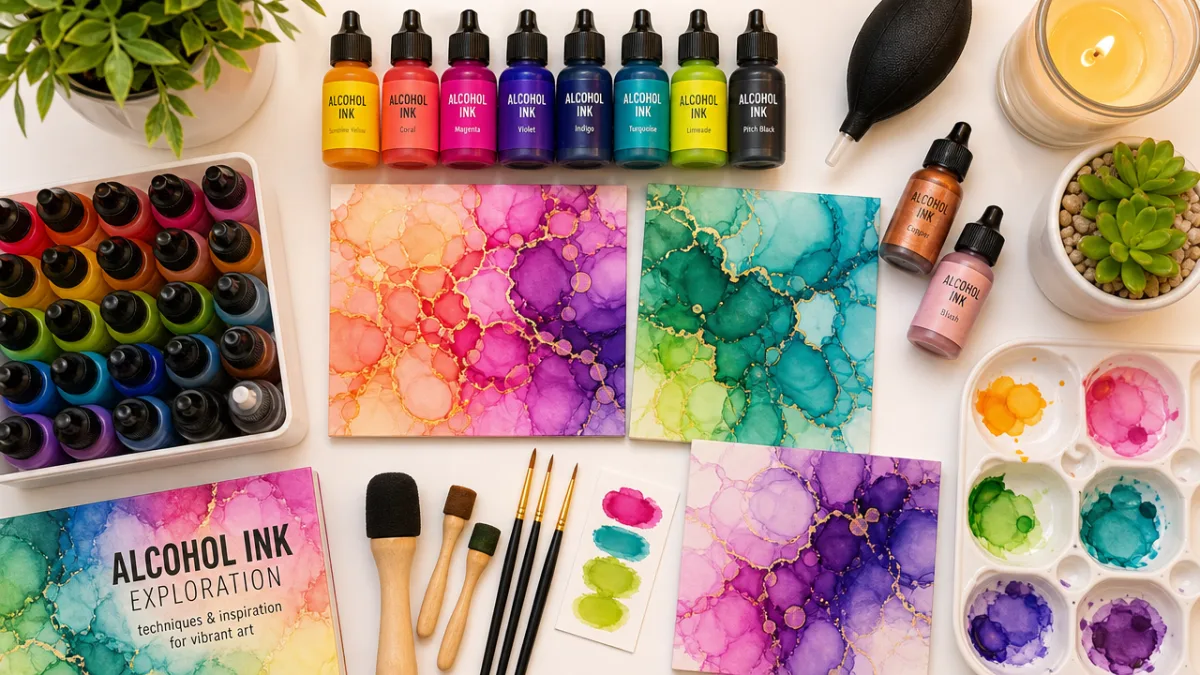
Gathering the right materials before you begin is essential for a smooth and enjoyable crafting session. Alcohol ink art is relatively accessible from a supply standpoint, and most of what you need is either inexpensive or available at local craft stores. The star of the show is, of course, the alcohol ink itself. Brands like Ranger Adirondack, Tim Holtz, and Jacquard Pinata are widely recommended by experienced crafters for their vibrant pigmentation, smooth flow, and excellent blending properties. Start with a small selection of colors that appeal to you — you do not need dozens to get started.
The surface you choose will dramatically influence your results. As mentioned, Yupo paper is the go-to choice for alcohol ink work, and it is widely available in both white and translucent versions. White Yupo produces the most vivid color payoff, as the pale background allows the ink’s true pigmentation to shine through without any muting effect. Translucent Yupo, on the other hand, creates a stunning stained-glass effect when held up to the light, which can be particularly beautiful in bookmark form. You can also experiment with ceramic tiles, glossy cardstock, or metal bookmarks as alternative surfaces.
Beyond inks and surfaces, you will need a handful of additional tools and materials to complete your project successfully. Having everything organized and within reach before you begin is especially important because alcohol inks dry quickly and you will not want to pause mid-design to hunt down a supply. Below is a comprehensive list of what to gather:
- Alcohol inks in your chosen color palette (three to five colors is a great starting point)
- Isopropyl rubbing alcohol at ninety percent concentration or higher, or a dedicated blending solution
- Yupo paper or your preferred non-porous surface, pre-cut to bookmark dimensions (approximately 2 x 6 inches)
- Plastic droppers or pipettes for applying blending solution with control
- Straws for blowing the ink into swirled patterns
- Nitrile gloves to protect your hands from staining
- A silicone craft mat or wax paper to protect your work surface
- A heat gun or hair dryer set to low heat for speeding up drying time
- A UV resin or spray sealant such as Krylon UV-Resistant Clear to protect the finished design
- A hole punch and ribbon or tassel for finishing the bookmark
One additional supply worth mentioning is metallic alcohol ink or gold or silver Pearl-Ex powder, which can be added as a finishing touch to create shimmering accents within your design. Many crafters find that adding even a small drop of gold or copper ink to an otherwise colorful bookmark gives it an elevated, luxurious quality that makes it feel extra special. These metallics blend beautifully with standard alcohol inks and do not require any special techniques beyond what you will already be doing.
Step-by-Step Instructions for Creating Your Bookmarks
Before you begin applying ink, prepare your workspace carefully. Cover your table with a silicone mat or several layers of wax paper, as alcohol inks will stain most surfaces permanently and can be difficult to remove once dried. Put on your nitrile gloves now — even experienced crafters keep them on throughout the entire process, as the inks are equally enthusiastic about staining skin. Pre-cut your Yupo paper into bookmark-sized rectangles and lay several pieces out at once, since the process moves quickly and you may find yourself wanting to make multiple bookmarks in one session.
Begin by dropping two or three colors of alcohol ink directly onto the Yupo surface. You can drop them close together in the center or distribute them along the length of the bookmark. There is no wrong approach here — this craft rewards spontaneity. After applying the initial drops of ink, use a pipette or dropper to apply a small amount of isopropyl alcohol or blending solution directly on top of or alongside the ink drops. Watch as the alcohol pushes and displaces the pigment, creating halos, streaks, and organic flowing shapes. This reaction is the heart of alcohol ink art and it never gets old to watch.
Now use a straw to blow across the surface of the ink. Hold the straw close to but not quite touching the paper and exhale in short, controlled bursts or long, steady streams depending on the effect you want. Short bursts create starburst or firework patterns, while long gentle blows encourage the ink to flow in sinuous, river-like streams across the bookmark. Rotate the bookmark as you blow to direct the ink in different directions and create that characteristic swirling effect that makes alcohol ink designs so dynamic and visually engaging.
Adding Layers and Building Complexity
Once your first layer of ink has settled — which happens within seconds to a minute depending on how much blending solution you used — you can begin adding additional colors to build depth and complexity in your design. Drop a new color into any areas that feel too bare or monochromatic. At this stage, you might also try tilting the bookmark slightly to encourage wet ink to run gently in one direction, which can create beautifully smooth gradients that layer over the textured first pass. The combination of blown and tilted ink creates a particularly rich, multidimensional look.
A technique that many crafters love for creating truly swirled designs is using a toothpick or the end of a fine paintbrush to physically drag wet ink through and around other colors on the surface. This gives you more direct control over the swirling patterns than blowing alone and allows you to create deliberate spiral forms, feathered edges, or tight little whirlpools of color. Use this tool sparingly and with a light touch, as overworking the ink can muddy the colors rather than keeping them vibrant and distinct from one another.
Do not be afraid to add a background wash if areas of plain white Yupo remain visible and feel too stark against your colorful design. You can use a very light application of a neutral or complementary ink color — a soft gray, a warm ivory, or a pale lavender — to fill in these gaps without overpowering your primary design. Alternatively, some crafters deliberately embrace the white negative space as a design element in itself, allowing the swirled colors to read like brushstrokes against a clean background. Both approaches produce beautiful results, and the choice comes down entirely to your personal aesthetic preference.
Finishing and Sealing Your Bookmarks
Once you are satisfied with your design and it has dried completely — which usually takes between five and fifteen minutes at room temperature, or can be accelerated with a heat gun on the lowest setting — it is time to seal and protect your work. This step is absolutely critical and should not be skipped. Unsealed alcohol ink remains somewhat vulnerable to smudging, fading from UV light, and damage from moisture, all of which are real concerns for an item that will be handled as frequently as a bookmark.
The two most popular sealing methods among alcohol ink artists are UV resin and spray sealant. UV resin, applied with a silicone brush or spreader and then cured under a UV lamp for a few minutes, produces a thick, glass-like coating that is exceptionally durable and gives the finished bookmark a stunning high-gloss finish. This method requires a UV lamp as an additional tool investment but produces truly professional-quality results. Spray sealant, such as Krylon UV-Resistant Clear in either gloss or matte finish, is the more budget-friendly and beginner-accessible option, requiring only a few light coats applied in a well-ventilated area.
After sealing, use a hole punch to add a hole at the top of the bookmark, then thread through a length of ribbon, yarn, or a decorative tassel. This finishing touch transforms the piece from a flat art card into a functional bookmark with a satisfying tactile element. You can coordinate the ribbon or tassel color with the dominant hues in your ink design, or use metallic gold or silver cord for a universally elegant look that complements almost any color palette.
Color Palette Ideas and Design Inspiration
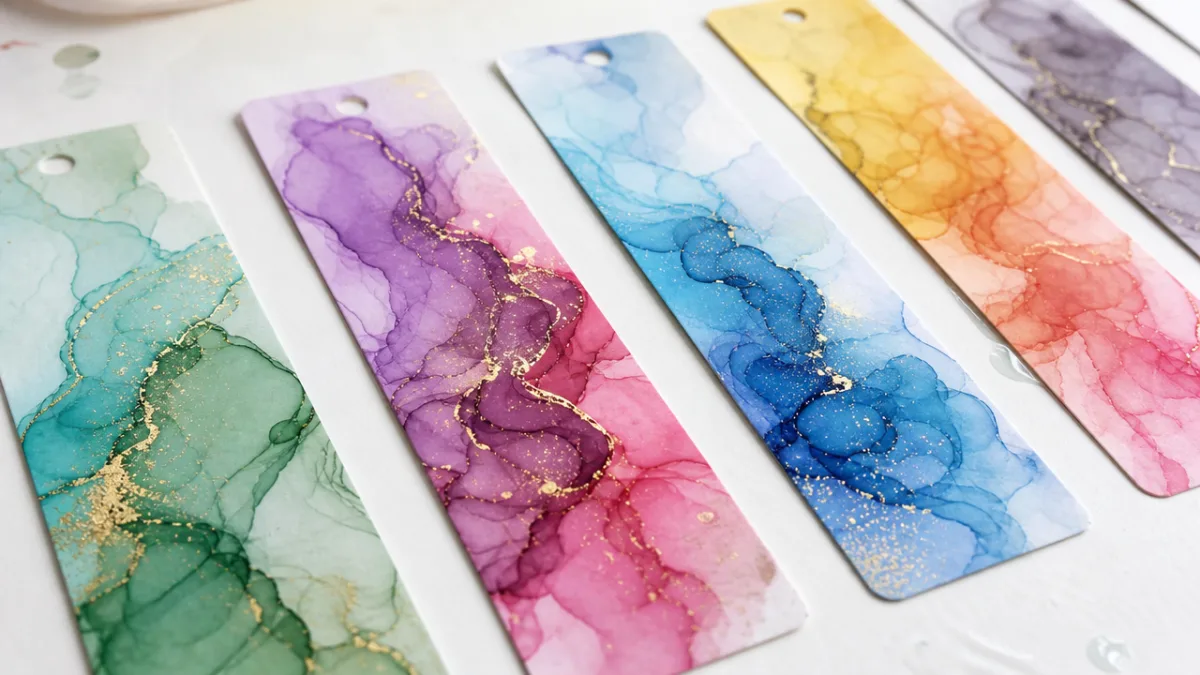
One of the most exciting aspects of this craft is the nearly limitless range of color palettes you can explore. Because alcohol inks blend so fluidly and naturally, even colors that might seem mismatched on paper often come together beautifully on Yupo, with the blending zones between hues creating unexpected tertiary colors that add richness to the design. That said, approaching your color choices with some intentionality can help you produce bookmarks with a cohesive, harmonious feel rather than a muddy or visually chaotic one. Starting with a planned palette of three to five colors is a great way to maintain control while still enjoying plenty of creative freedom.
Ocean-inspired palettes are perennially popular in alcohol ink art and work especially well on the elongated bookmark format, which naturally echoes the horizontal sweep of a seascape. Try combining deep cobalt blue, teal, seafoam green, and a touch of white or pearl for a design that captures the movement and luminosity of water. Adding a single drop of sandy gold or coral can introduce warmth and suggest sun-drenched tropical waters. The swirling, flowing quality inherent to alcohol ink makes ocean themes feel particularly authentic and alive.
Sunset and fire palettes are another excellent choice, pairing deep crimsons, burnt oranges, golden yellows, and magenta purples in combinations that recall the sky at dusk. Floral palettes using soft blush pinks, lavenders, and mint greens create bookmarks with a romantic, feminine quality. Galaxy-themed designs — deep navy and black backgrounds with bursts of violet, electric blue, and metallic silver or gold — are perennially striking. Below are a few palette ideas to try:
- Tropical Ocean: Turquoise, cobalt, seafoam, pearl white, and a touch of coral
- Desert Sunset: Burnt orange, deep red, golden yellow, and dusty magenta
- Enchanted Forest: Forest green, emerald, warm gold, and brown
- Galaxy Night: Black, deep navy, violet, electric blue, and metallic silver
- Spring Blooms: Soft pink, lilac, mint, and cream with a gold accent
- Jewel Tones: Sapphire blue, deep amethyst, ruby red, and rich teal
Beyond color, you can also draw design inspiration from natural phenomena — the cross-section of an agate stone, the patterns in a peacock feather, the swirling arms of a galaxy viewed through a telescope, or the marbled endpapers of antique books. Alcohol ink is remarkably good at mimicking the organic patterns found in nature, and approaching your design with a reference image in mind — even if you interpret it loosely — can help you make intentional decisions about where to place colors and how to direct the flow of the ink rather than simply dropping and hoping for the best.
Tips for Success, Troubleshooting, and Getting the Most From Your Craft
Even with a craft as forgiving and spontaneous as alcohol ink art, a few common pitfalls can trip up beginners. One of the most frequent issues new crafters encounter is over-blending, which occurs when you continue manipulating the ink after it has begun to dry. Overworked ink loses its vibrancy and distinct color zones, resulting in a muddy brownish or grayish tone where once there were clear, separate hues. The solution is to work quickly while the ink is still wet and mobile, and then step back and let it be once it begins to settle. Trusting the process — and the ink — is a skill that develops with practice.
Another common challenge is achieving consistent results from session to session, which is genuinely difficult given how many variables affect alcohol ink behavior. Temperature, humidity, the age of your inks, and even how vigorously you shake the bottle before use can all influence how the ink flows and blends on the surface. Rather than fighting against this variability, embrace it as one of the craft’s most charming characteristics. Keep a simple journal or photo log of what colors and techniques you used for each bookmark, which will help you gradually build an intuitive understanding of how different conditions affect your results.
If your finished bookmark looks too sparse or you are unhappy with how a design turned out, remember that alcohol ink can actually be lifted and removed from Yupo paper while still wet by applying fresh rubbing alcohol and blotting gently with a paper towel. This gives you the opportunity to adjust or even completely restart a design without wasting your surface material. Even after drying, lighter areas can sometimes be reworked by applying new ink on top. This forgiving quality of Yupo paper is one of the reasons it is so beloved by alcohol ink artists at every level of experience.
Making Bookmarks as Gifts and for Sale
Handmade alcohol ink bookmarks make truly exceptional gifts precisely because they combine beautiful aesthetics with genuine, everyday utility. Unlike many handmade gifts that end up displayed on a shelf and eventually forgotten, a beautiful bookmark gets used regularly, serving as a small daily reminder of the person who made it. They are appropriate for virtually any occasion — birthdays, holidays, teacher appreciation, graduation, or simply as a thoughtful gesture for a friend who loves to read. Packaging them in a small glassine envelope tied with ribbon elevates the presentation further and makes them feel giftworthy even before the recipient sees the design inside.
Many crafters who begin making alcohol ink bookmarks for personal use quickly discover that friends and family want them too, which can naturally evolve into a small creative business. Platforms like Etsy are well-suited to selling handmade bookmarks, and because the materials cost per bookmark is relatively low — often under one dollar per piece once you have your initial supplies — the profit margin can be quite healthy even when selling at a modest price point. Custom color palettes made to match a recipient’s preferences or a specific book aesthetic are particularly popular and allow you to command a premium price for a personalized order.
If you plan to sell your bookmarks, investing in UV resin rather than spray sealant is strongly recommended, as the resulting quality and durability is noticeably superior and justifies a higher price point. Photographing your finished bookmarks in good natural light against a clean, uncluttered background is essential for online listings — the vibrancy and detail of alcohol ink designs can be difficult to capture accurately in photos, so taking multiple shots and experimenting with different angles and backgrounds until you find what showcases your work most effectively is time well spent. Consider adding lifestyle shots as well, such as a bookmark nestled into the pages of a beautiful hardcover book, to help potential customers envision the item in use.

Caring for Your Finished Bookmarks and Long-Term Enjoyment
Properly sealed alcohol ink bookmarks are surprisingly resilient, but a few simple care practices will ensure they remain beautiful for years to come. Avoid storing unsealed bookmarks in direct sunlight for extended periods, as UV exposure can cause even the most vibrant alcohol ink colors to fade over time. If you used a UV-resistant spray sealant or UV resin, this is less of a concern, but keeping your bookmarks out of prolonged direct sun exposure is still a good habit regardless. When not in use, storing them flat in a book, a folder, or a small decorative box protects them from bending and surface scratches.
If a bookmark ever becomes slightly sticky — which can occasionally happen in very warm, humid conditions, particularly with spray-sealed pieces — placing it between two sheets of wax paper and leaving it somewhere cool and dry usually resolves the issue within a few hours. For bookmarks sealed with UV resin, this stickiness problem is essentially nonexistent, which is another point in favor of the resin method for anyone who lives in a warm or humid climate. Cleaning a smudged or dusty sealed bookmark is as simple as wiping it gently with a dry or barely damp soft cloth.
One of the greatest rewards of making your own alcohol ink bookmarks is the way the craft evolves as you gain experience. Early bookmarks tend to be exuberant explorations of color and movement, while later pieces often reflect a more refined eye for composition, a more deliberate approach to palette selection, and a deeper understanding of how the inks behave under different conditions. Many crafters keep their earliest bookmarks specifically to track this progression, finding it both humbling and inspiring to see how dramatically their skill and artistic sensibility develops over even a relatively short period of regular practice. The craft grows with you, and that is one of the most beautiful things about it.








What do you think?
It is nice to know your opinion. Leave a comment.