










17 Brilliant DIY Old Chair Ideas For Your Garden
Giving New Life to Forgotten Furniture
There’s something really satisfying about pulling a beat-up old chair off the curb or digging one out of a dusty garage and turning it into something your garden can actually be proud of. Old chairs have a kind of personality that you just can’t buy brand new — the weathered wood, the flaking paint, the legs that wobble just a little. In a garden setting, all of those “flaws” become part of the charm. With a bit of creativity and next to no budget, you can create features that stop people in their tracks and get the neighbours asking questions.
What makes this kind of project so appealing is that it’s genuinely accessible. You don’t need to be particularly handy or own a shed full of tools to pull most of these ideas off. A tin of weather-resistant paint, some potting compost, a few trailing plants, and a free afternoon are usually all you need to make something that looks like it took real effort. Thrift shops, car boot sales, estate auctions, and Facebook Marketplace are absolute goldmines for cheap — sometimes completely free — wooden chairs, metal bistro seats, and plastic garden chairs just looking for a new purpose.
There’s an environmental angle to all of this too, and it’s worth mentioning. Every chair you rescue is one that doesn’t end up in a skip, and one less thing that needs to be manufactured from scratch. In a world where we’re all trying to be a bit more thoughtful about what we throw away, turning a broken dining chair into a flowering planter feels like a small act of defiance against throwaway culture — and a genuinely satisfying one at that.
Classic Chair Planters: The Most Popular Transformation
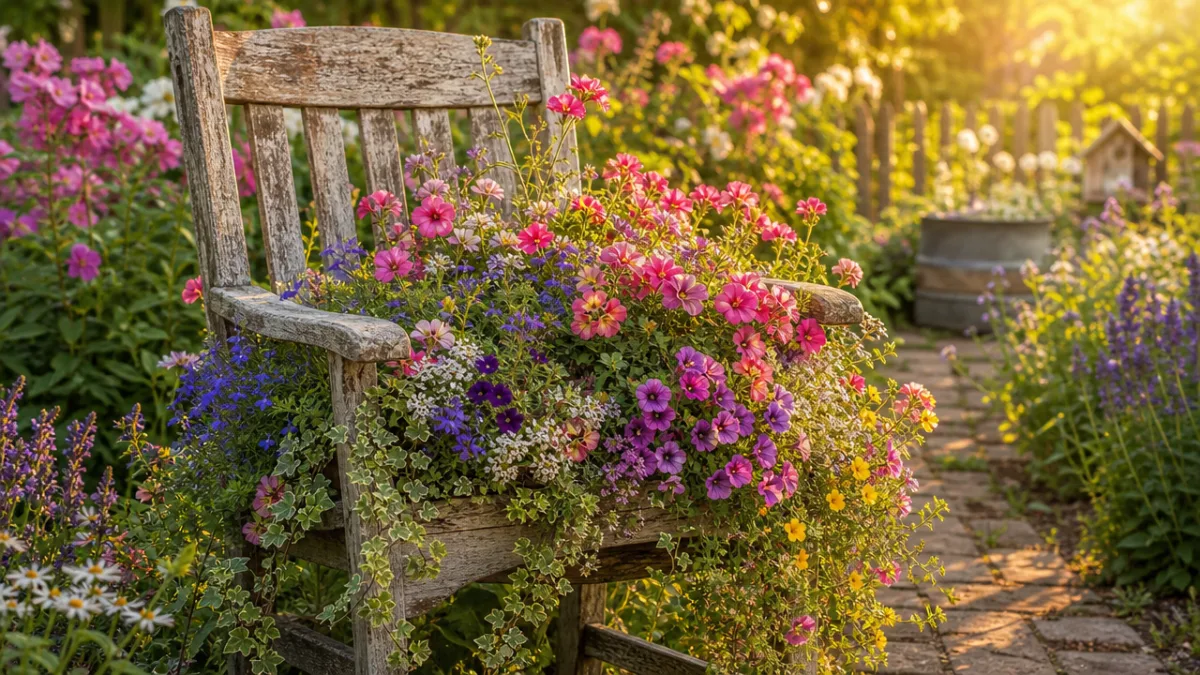
If there’s one old-chair idea that’s been pinned, shared, and recreated more than any other, it’s the chair planter — and honestly, it’s popular for good reason. The basic idea is simple: remove the seat or cut a hole in it, drop in a pot or line the cavity with landscape fabric, fill it with compost, and plant it up. What you end up with is this lovely, slightly surreal living sculpture that feels both domestic and wild at the same time. It’s homey and a little unexpected, which is exactly why it works so well in a garden.
Wooden chairs are the classic choice, and they age really beautifully outside when you treat them with an exterior sealant or a coat of outdoor chalk paint. Ladder-back chairs with woven rush seats are particularly good for this because the natural seat material gradually breaks down, eventually creating a kind of open basket that can hold soil on its own. Larger Adirondack chairs can handle bigger, bolder planting schemes, while smaller café-style chairs with slatted seats are perfect for a single show-stopping plant — a sprawling succulent or a wave petunia in a colour that makes you do a double-take.
When it comes to choosing plants, lean into cascading varieties that will soften the chair’s hard lines and eventually make it look like the garden is slowly reclaiming the furniture — which is part of the magic. Trailing lobelia, bacopa, sweet potato vine, creeping Jenny, and verbena all work brilliantly. If you prefer something a bit more structured, try ornamental grasses or a single upright fern with low ground cover plants around the base. The really good news is that this project suits almost any garden style, from formal to wild and weedy cottage, and you genuinely don’t need any specialist skills to put it together.
Fairy Garden Chairs: Enchanting Miniature Worlds
Fairy gardens have a way of captivating pretty much everyone, regardless of age, and an old chair is one of the best starting points you could choose. The idea is to treat the chair seat like a little stage — fill it with miniature plants, tiny furniture, pebble paths, and whatever whimsical bits and pieces catch your eye, until the whole thing looks like something tiny and magical has taken up residence. Chairs with solid wooden seats or metal mesh designs work especially well because they give you a stable, contained surface to build your miniature world on.
Start by lining the seat with a thin layer of landscape fabric to hold the compost in without blocking drainage, then mix in some coarse sand to keep things free-draining — the tiny alpine and succulent plants that work best in these setups really don’t like sitting in wet soil. Miniature mondo grass, thyme, sedums, and baby tears all stay small enough to stay in proportion with your fairy accessories. From there, glue a tiny wooden door to one of the chair legs, lay a mossy stone path up to the seat, and tuck in a miniature watering can or wheelbarrow, and you’ve built something genuinely delightful.
If you have kids around, positioning a fairy garden chair at their height is a brilliant way to get them interested in gardening. Let them take ownership of it — they can water it, rearrange the accessories, and swap things out with the seasons. At Halloween, tiny carved pumpkins and miniature skeletons. At Christmas, a little fir tree with a dusting of silver glitter. In spring, tiny flower baskets and an Easter egg hunt hidden among the plants. It becomes something they actually look forward to tending, which is a pretty wonderful thing.
Chair Birdhouses and Wildlife Habitats
If you’re feeling a bit more ambitious, an old wooden chair can become a proper working wildlife habitat — something that genuinely benefits the creatures living in and around your garden. The most popular version of this idea is to attach a small birdhouse or nesting box to the back of the chair, turning the furniture into a decorative mount that actually earns its place in the garden. It looks wonderfully eccentric nestled among the plants, and the birds don’t seem to mind the artistic framing one bit.
For a simpler take on the same idea, you can turn a chair into a bug hotel by stuffing the gaps between the slats with bundles of bamboo canes, pinecones, rolled corrugated cardboard, and dry moss. These materials give solitary bees, lacewings, ladybirds, and ground beetles somewhere to nest and overwinter. Tuck it into a sheltered, partially sunny spot near some flowering plants, and over time you’ll notice genuinely more insect activity around it — which, in turn, does good things for the rest of your garden.
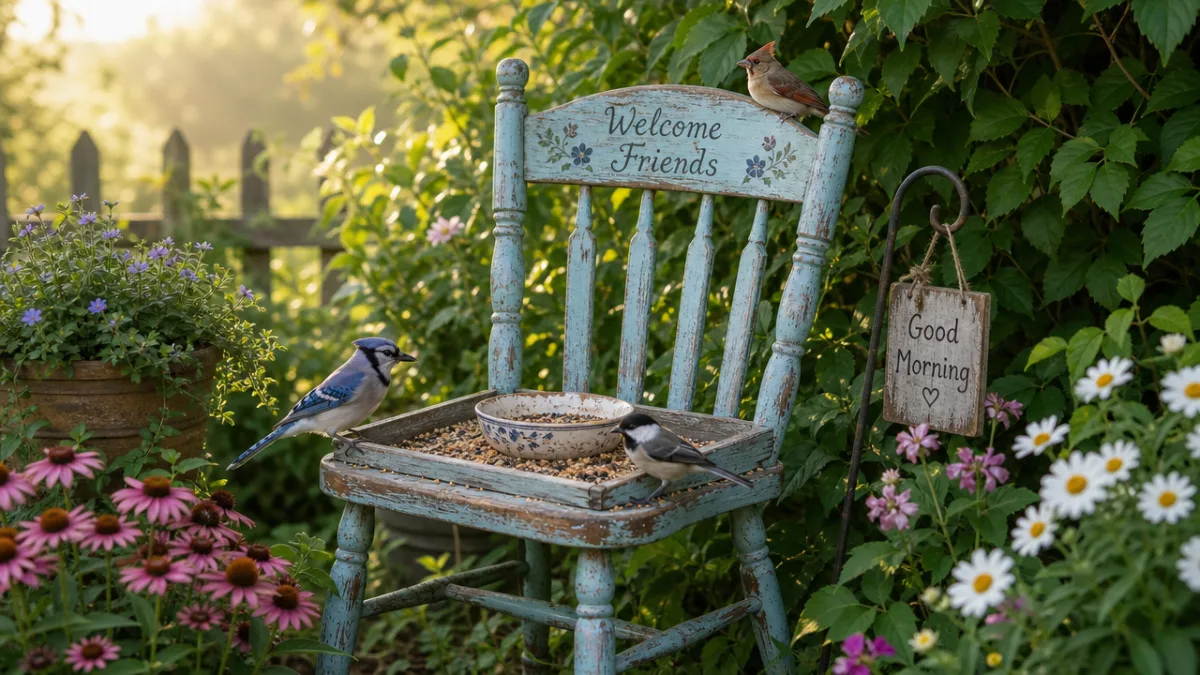
Old chairs with strong, sturdy frames also make excellent bird feeding stations. Hang suet feeders, nyjer seed bags, and peanut feeders from the rungs and arms using S-hooks and short lengths of chain, and set a shallow dish of water on the seat as a drinking spot. Paint the whole thing in one bold colour — a deep forest green, a chalky duck-egg blue, a rich terracotta — so it reads as a deliberate feature rather than something that got left out by accident. Scatter some gravel around the base to catch fallen seed husks and keep things looking tidy.
Creative Painted Chair Art Installations
Not every old chair needs to become a planter or a wildlife station. Sometimes the chair itself — painted up and placed with intention — is the whole point. Painted chairs have a long history in folk art, and the garden is honestly the perfect gallery for this kind of bold, colourful, weatherproof creativity. A single chair with a striking geometric pattern placed at the end of a garden path immediately gives your eye somewhere to travel, and suddenly the whole space feels more designed and deliberate.
If freehand painting feels a bit daunting, stencilling is a brilliant way in. Geometric shapes, botanical prints, folk art flowers, and even simple lettering can all be applied with affordable stencils and exterior acrylic paint. A Moroccan tile pattern in terracotta and cream can make a plain wooden chair look like it belongs in a sun-drenched courtyard. A Scandinavian folk art design in red, white, and blue gives you something crisp and cheerful that suits a kitchen garden or herb patch perfectly.
For something really show-stopping, consider covering the seat and back in a mosaic of broken tiles, coloured glass, or ceramic shards. It takes a bit more effort — you’ll need tile adhesive, exterior grout, and a steady hand — but the results are spectacular. A mosaic chair catches the light differently throughout the day and genuinely glitters in the rain. It becomes a real focal point, and once it’s properly grouted and sealed, it holds up to the elements surprisingly well. Flat-seated solid wooden chairs are the best candidates for this treatment.
Vertical Garden Chairs and Living Wall Features
One of the cleverest ways to use old chairs in the garden — especially if you’re short on space — is to fix several of them to a fence or wall at different heights and fill each one with planted containers. The result is a living tapestry of colour and texture that goes upward rather than outward, which is a game-changer if you’re working with a small patio, a narrow side passage, or a courtyard where every bit of ground-level space is precious.
Before you start fixing chairs to walls, think carefully about weight. Compost and plants add up quickly, and you want to make sure your fence or wall can genuinely take the load. Use heavy-duty screws and appropriate wall plugs, and always fix through the strongest parts of the chair — the back rails and seat frame, not the thinner decorative spindles that might look sturdy but aren’t. Lightweight plastic chairs are actually a smart choice for this project precisely because they keep the total weight down, and a coat of spray paint in a sophisticated colour sorts out any aesthetic concerns.
Planting for a vertical chair garden means thinking about drought tolerance, since elevated containers tend to dry out faster than ground-level ones, and reaching up to water a wall-mounted installation every day gets old quickly. Succulents and sempervivums are ideal for sunny walls. Ferns, mind-your-own-business, and variegated ivies do well in shadier spots. For colour through the season, trailing calibrachoa, compact begonias, and small-flowered impatiens all give you reliable flowering without getting too big or heavy for the containers.
Seasonal and Festive Chair Decorations
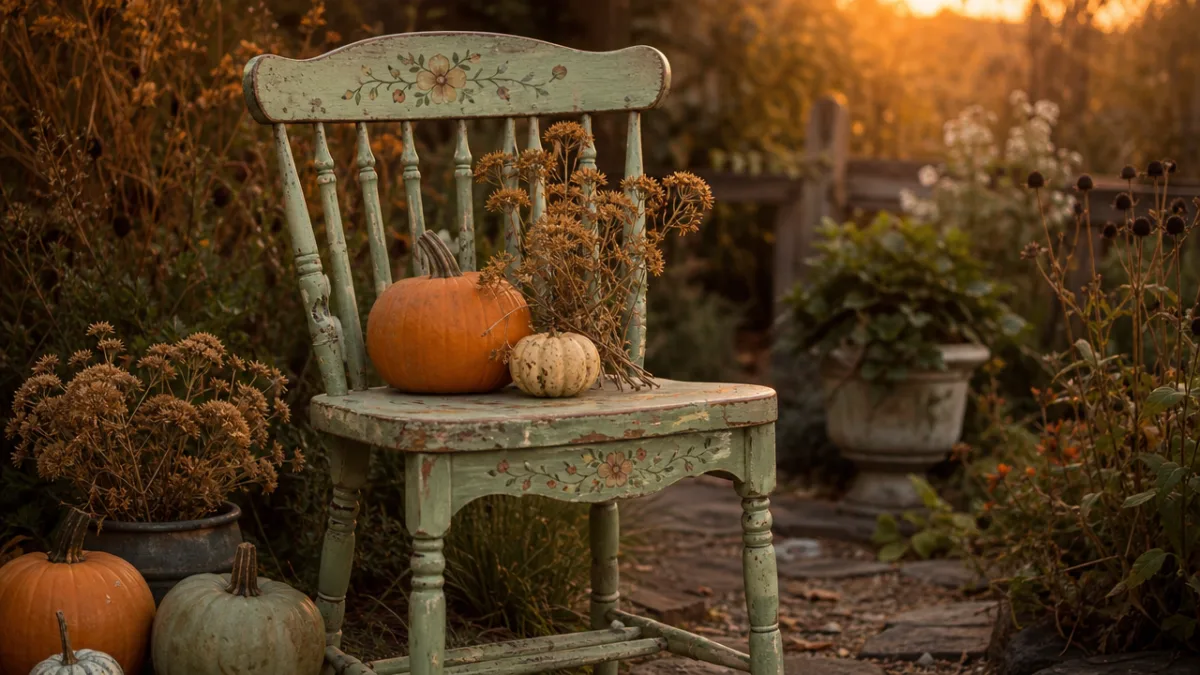
Old garden chairs make wonderful frames for seasonal decorations because, unlike actual garden seating, nobody needs to sit on them — so you can pile them as high as you like with whatever the season calls for. In autumn, arrange a considered still life of gourds, pumpkins, dried seed heads, and sheaves of wheat on and around the chair. It doesn’t take much to make something that looks genuinely abundant and celebratory, and the natural materials weather beautifully as the weeks go on.
At Christmas, outdoor fairy lights woven through the back and legs of a garden chair create a lovely warm glow in the dark winter garden. Tuck bundles of holly, ivy, and pine into any planting cavities, hang glass baubles from the rungs with weatherproof ribbon, and add a wreath to the chair back to complete the picture. If you’re in a milder climate without harsh frosts, this kind of display can stay outside the whole season — especially useful if you opt for solar-powered lights and skip the trailing cables altogether.
Spring and summer bring the most naturally beautiful opportunities for this kind of seasonal display. A few ideas worth trying as the year moves through its warmer months:
- Fill the seat with a pot of sweet-smelling hyacinths in early spring, swap them for tulips as things warm up, then move on to summer bedding once the frost risk has passed.
- String bunting from the chair back to set a festive mood for summer gatherings and outdoor parties.
- Weave fresh flower garlands through the chair back using garden twine as a base, pulling from whatever happens to be blooming at the time — completely free and completely beautiful.
- Place the chair at the entrance to your garden path as a welcoming feature, changing the plants and decorations with each season so it marks the turning of the year for everyone who visits.
- Use the chair as a display stand for potted herbs near the kitchen door, so fresh cooking herbs are always within arm’s reach while still looking like an intentional garden feature rather than a cluttered windowsill overflow.
The best thing about using old chairs as the basis for seasonal displays is how flexible they are. Unlike a built-in planter or a fixed sculpture, a chair can be moved around, repositioned to catch better light, or shifted to serve a completely different purpose as your garden and your ideas evolve. That adaptability is what makes an old chair one of the most quietly brilliant things you can introduce into your outdoor space — endlessly useful, endlessly reinterpretable, and always ready for whatever you dream up next.








What do you think?
It is nice to know your opinion. Leave a comment.