










Hygge: The Danish Art of Cozy Living and Joyful Simplicity
What Is Hygge? Understanding the Untranslatable Danish Concept
Hygge (pronounced “hoo-gah”) is a Norwegian and Danish word that has somehow managed to capture the imagination of the entire world — and yet stubbornly refuses to translate cleanly into any other language. At its heart, it describes a feeling: coziness, contentment, a kind of warmth that’s as much emotional as physical. It’s that particular sense of being fully present in a moment that feels safe, comfortable, and shared. It’s not a decorating trend or a seasonal aesthetic — it’s a deeply held cultural philosophy that shapes how Scandinavians think about everyday life, human connection, and what it actually means to be happy.
The word itself has roots going back centuries, drawn from a Norwegian term meaning “well-being,” and it’s been woven into Danish life for so long that most Danes don’t consciously practice hygge — they just live it. It shows up in the ritual of lighting candles on a dark winter evening, in baking bread with a friend, in lingering at the dinner table long after the food is gone because the conversation is simply too good to walk away from. It’s about savoring the ordinary and finding real richness in what’s already right in front of you.
In recent years — particularly after a wave of books and articles introduced the concept to English-speaking audiences around 2016 — hygge became something of a global phenomenon. People from Tokyo to Toronto embraced its ideas, drawn by the promise of a slower, warmer, more intentional way of living. But the Danes would gently remind us that hygge can’t be bought with a single candle or a woolen blanket. It’s a state of mind, a quality of relationship, and above all, a practice of being genuinely present and grateful for the small, luminous details of an ordinary day.
The Elements of a Hygge Environment: Creating Atmosphere at Home
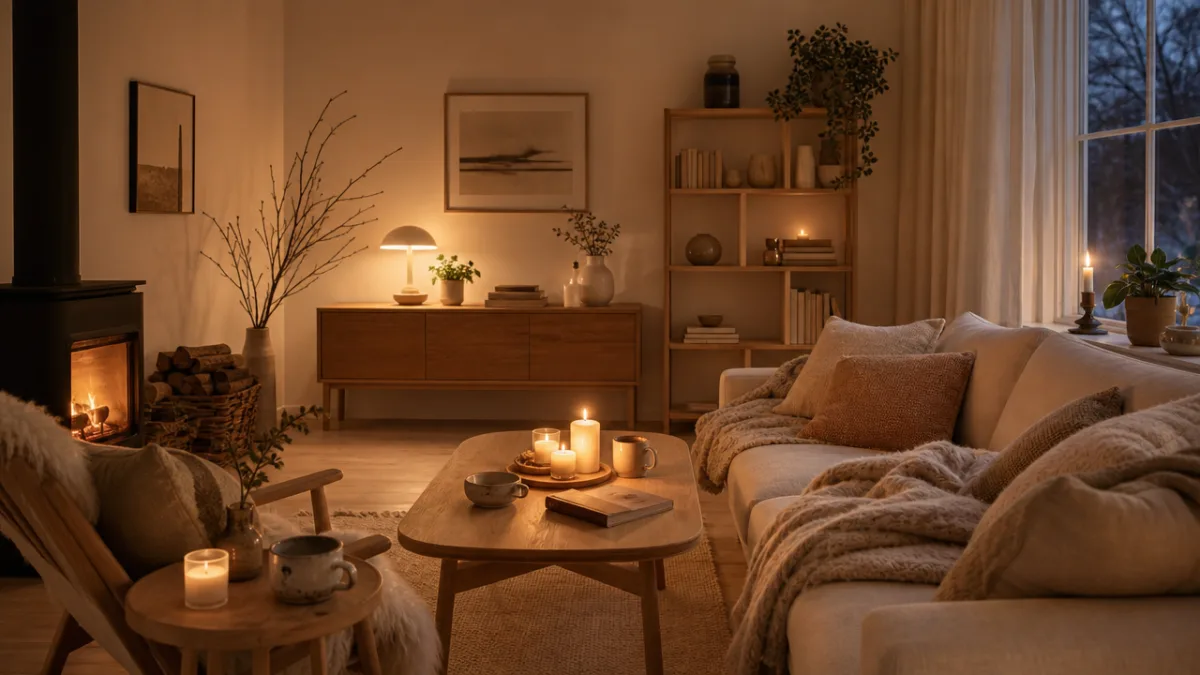
Creating a hygge environment starts with atmosphere, and nothing shapes atmosphere more powerfully than light. Harsh overhead lighting is basically the enemy of hygge — instead, Danes reach for candlelight, soft lamps, and the amber warmth of a fireplace. Denmark consumes candles at a per-capita rate that puts almost every other country to shame, and once you’ve spent a Scandinavian winter evening lit only by flickering flame, you completely understand why. That play of light and shadow softens a room, quiets the nervous system, and invites exactly the kind of unhurried conversation and reflection that hygge is built around.
Beyond light, texture matters enormously. Think thick wool blankets draped over armchairs, sheepskin rugs underfoot, chunky-knit cushions piled on the sofa, ceramic mugs that feel warm and solid in your hands. These aren’t objects chosen because they look good in photos — they’re chosen for how they feel, for the physical invitation they extend to settle in, wrap up, and stay awhile. Danish design has always prized both beauty and function, and that sensibility fits perfectly here. A hygge space isn’t sterile or carefully curated for show — it’s genuinely lived-in and welcoming.
Nature has a place in the hygge home too. Bringing the outside in — through wooden furniture, potted plants, pinecones, dried flowers, or seasonal finds like autumn leaves and winter greenery — creates a quiet sense of connection to the world beyond the walls. That grounding quality is a big part of what makes a hygge space feel restorative rather than just stylish. There’s no rigid checklist here, no approved list of items. The real question is simpler: does this space feel like somewhere I actually want to come back to? Does it make me feel held?
- Prioritize warm, layered lighting — candles, salt lamps, and dimmable fixtures over harsh overheads.
- Layer soft textiles: wool throws, cotton cushions, sheepskin, and knitted accents throughout the room.
- Incorporate natural materials like wood, linen, stone, and ceramic to ground the space.
- Keep clutter minimal but personality rich — display meaningful objects, not performative ones.
- Add living elements: plants, fresh flowers, a bowl of seasonal fruit, or herbs on the windowsill.
Hygge and Food: The Ritual of Eating Together
Few things are more fundamentally hyggelig than a shared meal. Food in the hygge tradition isn’t about culinary sophistication or a perfectly plated Instagram shot — it’s about abundance, warmth, and the simple pleasure of getting people around a table. The classic hygge spread might include freshly baked cinnamon rolls, a pot of soup simmering on the stove, dark rye bread piled with toppings, and mugs of coffee or hot chocolate still steaming in the cool air. These are foods that take time and reward slowness — they fill the kitchen with smell and give a house that sense of quiet, purposeful life that makes it feel truly inhabited.
Danish baking culture in particular is deeply tangled up with hygge. There’s something about making dough by hand — the kneading, the waiting, the transformation of a few simple ingredients into something warm and aromatic — that just embodies the spirit of it. Baking with someone else is even better. The shared project, the flour on the counter, the deliberate pace, the anticipation of sitting down to eat what you’ve made together: all of it creates exactly the kind of slow, sensory richness that hygge values far above efficiency or novelty.
Hot drinks deserve their own moment in any serious conversation about hygge. The Danish relationship with coffee borders on devotional — it’s drunk slowly, often, and in company whenever possible. Tea, hot chocolate, and warm spiced cider work just as well. Making and sharing a hot drink is a small but genuinely powerful act of care. It’s a way of saying to someone: I see you, I’m here, let’s just pause together for a minute. Even enjoyed alone, a carefully made cup of something warm is its own kind of self-hygge — a quiet, deliberate moment of gentleness toward yourself in the middle of an ordinary afternoon.
- Bake something from scratch: cinnamon rolls, sourdough, or a simple cake made with seasonal fruit.
- Prepare a big communal pot of soup, stew, or fondue — food that invites people to gather and linger.
- Set the table with care: cloth napkins, candles, mismatched ceramics that feel personal rather than formal.
- Brew proper coffee or tea and drink it without looking at a screen.
- Let the meal be unhurried — conversation is as important as the food itself.
Hygge as a Social Philosophy: Connection, Belonging, and the Art of Togetherness
Hygge can absolutely be practiced alone — curled up with a book on a rainy afternoon, say — but its fullest expression is social. The Danish understanding of happiness has always been deeply communal, and hygge is probably the most tangible version of that worldview. It’s about creating the conditions in which people feel genuinely at ease with one another: no one performing, no one competing, the usual pressures of status and achievement quietly set aside. In a hygge gathering, the CEO and the newest hire end up wrapped in the same blanket, arguing companionably about their favorite films.
That quiet insistence on social equality is one of hygge’s most interesting qualities. A hygge gathering values presence over status, warmth over impressiveness — which is partly why hygge culture tends to resist grand, elaborate entertaining in favor of something simpler and more intimate. A dinner party for twelve with a catered menu isn’t inherently hyggelig. An evening with four close friends sharing a homemade meal and staying too late because nobody wants to leave — that’s the very definition of it. The measure isn’t how impressive the evening looked from the outside, but how safe and seen everyone felt within it.
Hygge also has a real relationship with vulnerability and authenticity. The kind of connection it fosters asks you to slow down, set aside distraction, and actually show up for the people you’re with. In an age of constant digital noise and performative busyness, that’s genuinely countercultural. Many people who discover hygge find that its deepest gift isn’t a warmer living room — it’s a richer quality of human contact. The rediscovery that real togetherness, the kind that actually replenishes you rather than drains you, is available at any moment, in the simplest of settings, as long as you’re willing to be truly present.

Hygge Through the Seasons: Adapting the Practice Year-Round
Hygge is most strongly associated with winter — dark evenings, roaring fires, the particular relief of coming in from the cold — but it’s absolutely not a seasonal concept. Danes practice hygge across all four seasons, adapting it to what each time of year naturally offers. Once you start thinking of hygge as a year-round orientation rather than a winter coping strategy, its full richness opens up. It becomes less about specific props and settings and more about a consistent way of approaching pleasure, presence, and togetherness — regardless of what the weather is doing.
Winter hygge leans into its most iconic forms: candlelit rooms, hot drinks, heavy blankets, and the particular coziness of being warm inside while the cold presses against the glass. But spring hygge looks quite different — it’s opening the windows to let in the first genuinely mild air, buying the season’s first tulips for the kitchen table, going for long walks and then rewarding yourself with coffee in a patch of pale sunshine. Summer hygge is outdoor and expansive: long evenings in the garden, picnics by the water, the strange magic of a Scandinavian summer night when it never quite gets fully dark. And autumn hygge is closest in spirit to winter’s version, rich with apples and candles and the satisfying bittersweetness of watching leaves fall.
The seasonal dimension of hygge teaches us something important about its deeper philosophy: it’s about working with what’s actually here, rather than always reaching for something else. Every season comes with its own textures, flavors, quality of light, and emotional tone. Hygge is the practice of noticing and celebrating those things rather than treating them as mere backdrop to a busy life. When we let our hygge practices shift with the seasons, we become more attuned to the rhythms of the natural world — and, perhaps a little paradoxically, more at home in time itself. Less haunted by what’s passed, less anxious about what’s coming.
- Winter: Candlelight, wool blankets, hot drinks, board games, baking, fireplace evenings.
- Spring: Fresh flowers on every surface, open windows, early morning walks, light soups and salads.
- Summer: Long outdoor evenings, picnics, cold drinks, al fresco dining, lingering sunsets.
- Autumn: Harvest cooking, apple-picking, scented candles, warm spiced beverages, cozy reading nooks.
Hygge and Wellbeing: Why Coziness Is Good for the Soul
Denmark consistently ranks among the happiest countries in the world in the annual World Happiness Report, and while no single thing can account for that, plenty of researchers and cultural observers have pointed to hygge as a meaningful piece of the picture. The practices associated with hygge — regular social connection, slow shared meals, time spent in genuinely comforting environments, deliberate rest — map closely onto what psychologists and wellbeing researchers have identified as the core ingredients of human flourishing. In other words, hygge isn’t just culturally charming. It’s remarkably well-aligned with what we actually know about what makes people happy.
The mental health dimensions of hygge are worth sitting with. Creating a physically comforting environment — warm light, soft textures, familiar smells — has measurable effects on the nervous system. These sensory signals tell the brain that it’s safe, dialing down the stress response and creating conditions where genuine rest and restoration actually become possible. For a lot of people who live with chronic low-level anxiety and the exhaustion of constant stimulation, a hygge environment functions almost like a reset button: a deliberate downshift into a calmer, more receptive, more replenished mode of being.
Hygge also offers something that’s become surprisingly rare in modern life: permission to do nothing in particular and consider that enough. The productivity culture that dominates so much of contemporary Western life treats rest as something to be earned and leisure as something that should still be optimized or goal-oriented. Hygge quietly but firmly pushes back against all of that. An afternoon spent doing nothing more ambitious than drinking tea, reading, and watching the rain isn’t wasted — in the hygge worldview, it might actually be among the best uses of an afternoon imaginable. That philosophical permission to simply be, without justification or measurable outcome, may be hygge’s most radical and most needed contribution to how we live.
The beautiful thing is that practicing hygge doesn’t require any significant spending or lifestyle overhaul. It’s fundamentally accessible — built from attention, intention, and a willingness to slow down and appreciate what’s already at hand. Light a candle. Make something warm to drink. Call a friend and invite them over for no particular reason. Sit by the window and watch the light change. Turn off the notifications and turn toward the person beside you. These aren’t grand gestures. They’re the small, luminous acts from which a genuinely happy life is quietly assembled, one cozy evening at a time.









What do you think?
It is nice to know your opinion. Leave a comment.