










“`html
Why Kitchen Plastic Waste Is a Problem Worth Solving
If you take a close look around your kitchen, you’ll probably notice plastic everywhere. Cling wrap on the leftovers, zip-lock bags in the drawer, produce bags stuffed under the sink. It’s crept in so gradually that most of us don’t even think twice about it anymore. And that’s kind of the problem — not just the sheer volume of plastic we’re going through, but how little of it actually gets recycled. Study after study shows that the majority of plastic film, flexible packaging, and food-contaminated plastic ends up in a landfill, or worse, somewhere out in nature where it’ll sit for centuries without breaking down.
A lot of us assume the recycling bin is handling it. Unfortunately, it’s not that simple. Most curbside programs won’t touch soft plastics like food bags, wraps, or pouches. Even sturdier stuff like yogurt containers and takeout tubs often gets rejected or turned into lower-quality material rather than actually recycled. So we’re doing all this sorting with good intentions, and not a whole lot is changing. Once you understand that gap between what you think is being recycled and what actually is, it gets a lot easier to see why making different choices in the kitchen matters.
Here’s the good news: reducing your kitchen plastic waste doesn’t mean overhauling your entire life or spending a fortune. The swaps that make the biggest difference over time tend to be the simplest ones — just swapping out the stuff you already use for longer-lasting versions. They pay for themselves pretty quickly, and after a while they just become part of how your kitchen works. The five ideas in this article are a solid, practical place to start.
Swap One: Beeswax Wraps Instead of Cling Film
Cling film — plastic wrap, Saran wrap, whatever you call it where you live — has to be one of the most wasteful things in the average kitchen. You tear off a piece, use it for a few hours, and throw it away. It’s too thin and flexible to recycle, so it goes straight to landfill every single time. If you’re using it regularly, you can burn through a whole roll in a month and barely notice, because each individual piece seems so small and insignificant in the moment.
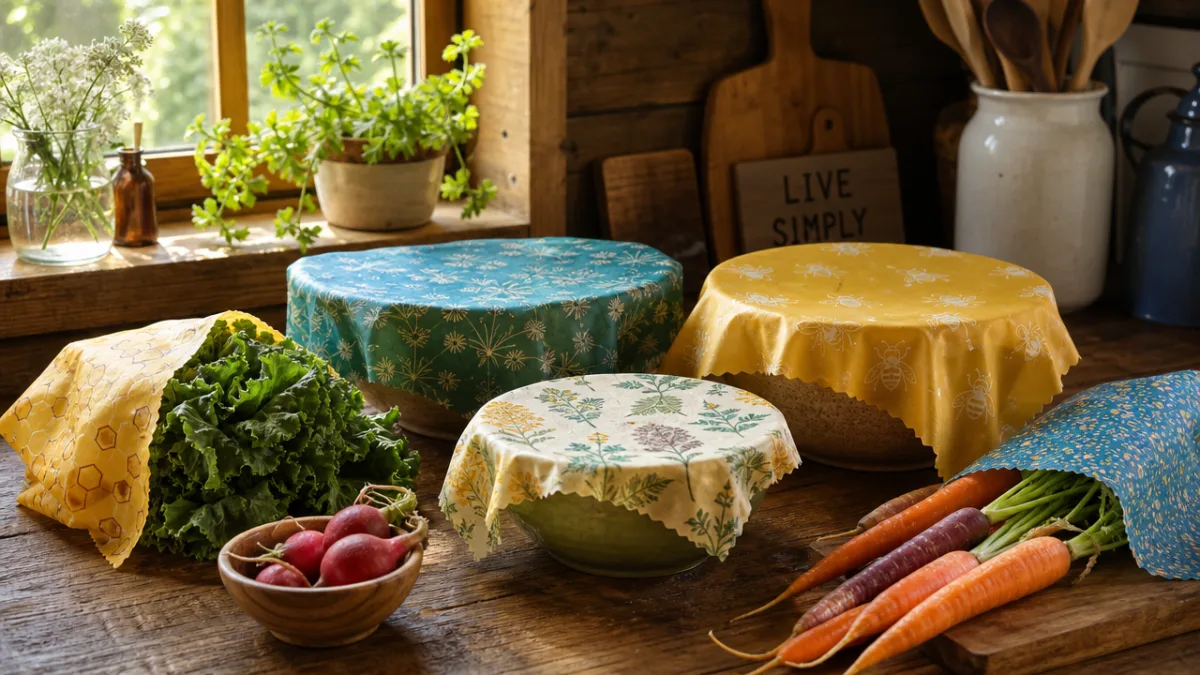
Beeswax wraps are a genuinely great replacement. They’re cotton cloths infused with beeswax, tree resin, and jojoba oil, which gives them a slightly tacky, pliable texture that molds itself around bowls, half-cut vegetables, cheese, bread — basically anything you’d normally grab cling film for. Wash them with cool water and a little mild soap, and with some basic care, one wrap can last anywhere from six months to a full year. Some brands even give you instructions for refreshing the wax coating once it starts to thin out, which stretches the life even further.
In practice, making the switch is pretty painless. Beeswax wraps come in a range of sizes, from small pieces for covering half an avocado to big sheets for a salad bowl or a loaf of bread. You just warm the wrap slightly with your hands and it conforms to whatever you’re covering, creating a decent seal that keeps food fresh. If you avoid animal products, there are plant-based versions made with candelilla wax that work exactly the same way, so this swap is open to pretty much everyone.
Swap Two: Reusable Silicone Bags Instead of Zip-Lock Bags
Zip-lock bags are one of those things that just quietly take over a kitchen. You use them for leftovers, for marinating meat, for school lunches, for the freezer — they’re everywhere. And it’s hard to argue with how convenient they are. But they’re made from a type of plastic that standard recycling programs don’t accept, and they take hundreds of years to break down. For something designed to be used exactly once, that’s a pretty staggering environmental footprint, and the sheer number of them going through households every day adds up fast.
Reusable silicone bags can handle everything a zip-lock bag can, and honestly a bit more. Food-grade silicone is non-toxic, doesn’t hold onto odors, and can go from the freezer to the microwave to a pot of boiling water without any issues. A good-quality set will last for thousands of uses and can go in the dishwasher. Yes, they cost more upfront than a box of disposables, but a set of four or five bags will last you years, which makes the cost per use laughably small compared to buying disposables over and over.
When you’re shopping for silicone bags, it’s worth paying a little attention to quality. Look for food-safe certification and avoid anything with BPA-adjacent additives. Thicker, more substantial bags tend to hold up better than flimsy ones. For most households, a useful starting set would include a couple of sandwich-sized bags, one or two larger gallon-sized bags for batch cooking and freezer meals, and maybe a small snack-sized option for nuts or cut fruit. That covers the majority of what you’d otherwise be reaching for a zip-lock to handle.
Swap Three: Cloth Produce Bags Instead of Plastic Produce Bags
Those thin little plastic bags in the produce section might be the most unnecessary single-use plastic in the whole grocery store. They’re flimsy, they’re basically free, and most people grab several without a second thought — a few for the apples, one for the green beans, maybe another for some mushrooms. Then they get home, unpack the groceries, and throw them all away. Because the bags are too thin and food-contaminated to recycle properly, virtually every single one ends up in a landfill or blows away as litter, where it becomes a hazard for wildlife and waterways.
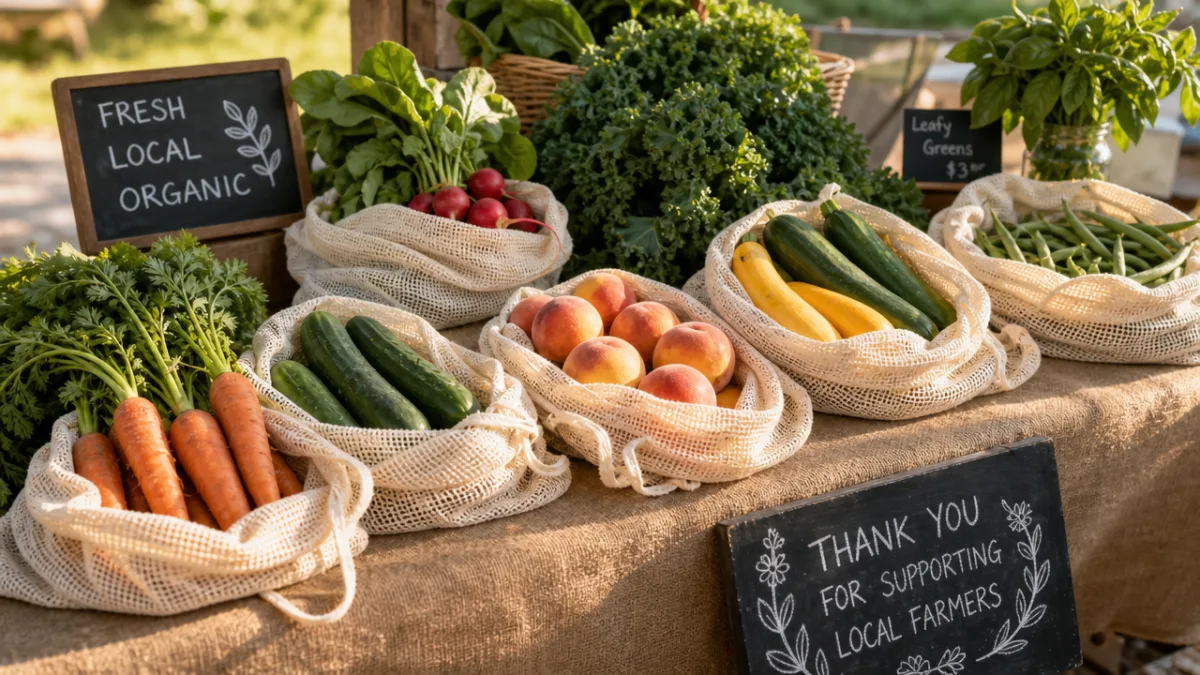
Lightweight mesh or muslin cloth bags are a really easy fix. They’re breathable, which actually keeps produce fresher than sealed plastic does, and they’re washable, so they’re just as hygienic as anything else in your kitchen. One of the most common worries people have is that a reusable bag will throw off the weight at checkout, but most cloth produce bags are light enough that even sensitive scales barely register them. A set of eight to twelve bags in a couple of different sizes will get you through a full shop, and they fold down small enough to live in a tote bag or coat pocket without you ever forgetting them.
They’re also more useful than they might first appear. Mushrooms do much better stored in a breathable cloth bag than sealed in plastic — less condensation, less early spoilage. They’re great for carrying bulk dry goods like rice or oats at stores with bulk bins. You can use them for snacks on the go or for keeping things organized in a larger bag. And because they’re made from natural fibers, you can compost them at the end of their life, which makes them one of the rare kitchen items that’s genuinely closed-loop.
Swap Four: Glass or Stainless Steel Containers Instead of Plastic Tupperware
Plastic food storage containers feel more durable than single-use plastics, and in fairness, they are. But they have their own issues. Over time they scratch, they stain, they start holding onto smells in a way that no amount of scrubbing quite gets rid of. A lot of older containers contain BPA or similar compounds that can leach into food, especially when they’re heated. Even the ones labeled BPA-free often contain substitute chemicals that we don’t fully understand yet — which is exactly the kind of uncertainty most people would rather just not deal with.
Glass and stainless steel containers sidestep all of that. Glass doesn’t react with food, doesn’t absorb odors, and doesn’t stain. You can take it straight from the fridge to a preheated oven, which means it doubles as a baking dish and cuts down on the total number of things cluttering your cupboards. Stains and residue wipe right off because they can’t penetrate the surface. Stainless steel has similar benefits, plus it’s lighter and basically impossible to break, which makes it great for lunchboxes, kids’ food, and picnics where dropping a glass container is a real possibility.
You don’t have to replace everything at once. The most painless approach is to swap things out as your current containers wear out or get too scratched up to clean properly. Start with the ones you use most often — maybe a medium container for leftovers, or a few small ones for prepped ingredients — and go from there. Within a year or two of replacing things gradually, most people find their plastic containers have quietly been phased out and they’ve got a cohesive set of glass or steel that honestly just feels like an upgrade.
Swap Five: Bar Soaps and Solid Cleaners Instead of Plastic Bottle Liquids
The plastic bottles holding your dish soap, hand soap, and all-purpose cleaner are easy to overlook because they seem recyclable — they’ve got the little symbol right on them. But in practice, soap residue contamination and the mix of materials in pumps and caps means a lot of them don’t actually make it through the recycling process. And even when they do, recycling still takes energy and produces a lower-quality result. The more sustainable outcome is simply to avoid the packaging in the first place.
Bar soaps and solid dish soap blocks have had a real comeback over the past decade, and the quality has genuinely caught up. Modern dish soap bars aren’t the sad, ineffective things you might be imagining — they cut grease well and hold their own against liquid soap. A single bar can outlast two or three bottles of liquid dish soap depending on how you use it, and it typically comes wrapped in compostable paper or nothing at all. Concentrated cleaning tablets that dissolve in a reusable spray bottle bring the same zero-waste logic to counter and surface cleaning around the kitchen.
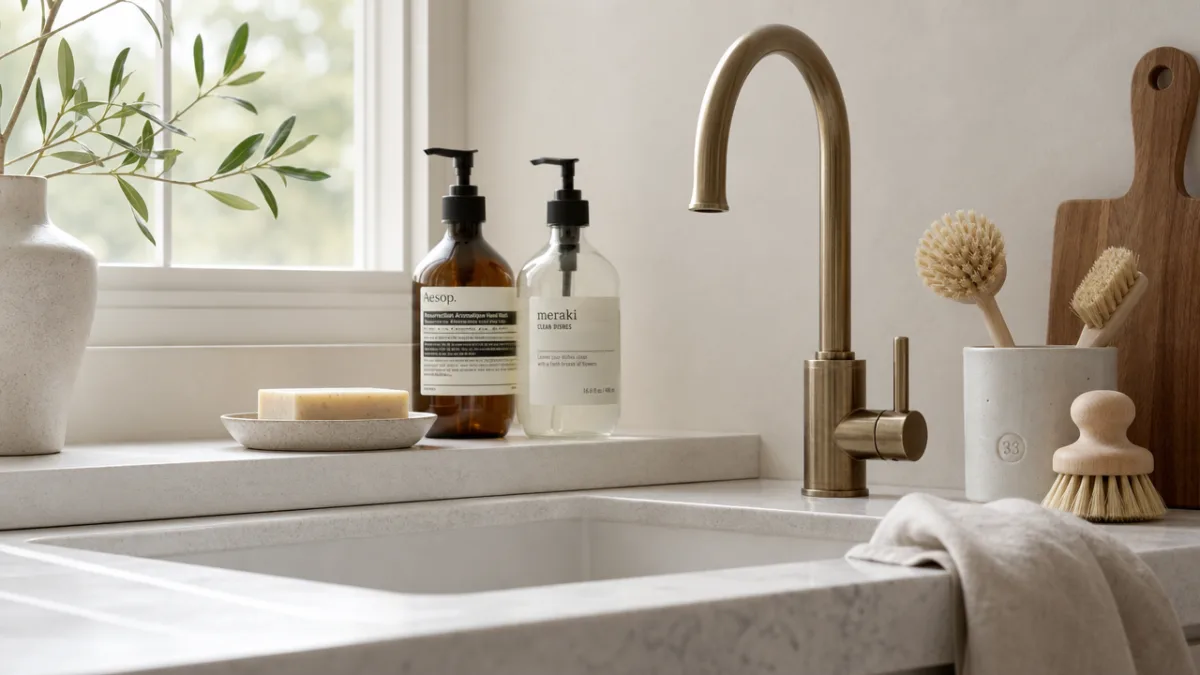
For hand soap, this is probably the easiest swap in the whole article. Bar soap has been doing the job for centuries. It doesn’t need a plastic pump, it lasts longer per gram than liquid soap (which is basically water plus soap), and it comes in a small paper wrapper if it’s packaged at all. Set a bar on a soap dish with some drainage next to the kitchen sink and you’re done — it takes thirty seconds and costs almost nothing. Add up all the cleaning product bottles a typical household goes through in a year, and eliminating them starts to feel like a pretty meaningful win.
Building These Habits for the Long Term
Knowing what to swap is the easy part. Actually making the new habits stick is where most people hit a wall. The most common reason people slide back into old patterns is that the alternatives feel unfamiliar and slightly inconvenient at first, and convenience usually wins. The trick isn’t to rely on sheer willpower — it’s to set things up so the sustainable option is also the path of least resistance. Keep your beeswax wraps and silicone bags in the exact same drawer where the cling film and zip-locks used to live. Hang your cloth produce bags by the door so they leave the house with you automatically. Put your soap bar somewhere just as easy to reach as a pump bottle was.
It also helps to have a way of seeing the progress you’re making. Some people keep a rough log of what they would have bought that month — how many bags, bottles, and rolls of wrap they’ve skipped. Others find the money savings are motivating enough on their own: a set of silicone bags that saves you from buying a box of disposables every two weeks adds up to real money over a year, and the same math works for basically every swap on this list. When sustainability also makes financial sense, it’s a lot easier to stick with.
And honestly, the best thing you can do to make these habits last is talk about them. Share what you’ve changed and why — with whoever you live with, with friends, with anyone who asks why you’ve got a funny wax cloth over your salad bowl. Research on behavior change consistently shows that social influence is one of the most powerful forces behind lasting habits. When one person in a household or friend group makes visible changes, others tend to follow. These five kitchen swaps might feel small, but practiced widely, they’re part of something genuinely bigger — a slow but real shift in how we all think about plastic in everyday life.
- Replace cling film with beeswax or plant-based wraps for a washable, reusable alternative that lasts up to a year with proper care.
- Switch disposable zip-lock bags for food-grade silicone bags that can handle freezing, microwaving, and thousands of uses before wearing out.
- Use lightweight mesh or muslin produce bags at the grocery store to eliminate one of the most common sources of single-use plastic in food shopping.
- Transition from plastic Tupperware to glass or stainless steel containers that are safer, more durable, and free from chemical leaching concerns.
- Replace liquid soap and cleaner bottles with bar soaps and solid or tablet-based cleaning products that eliminate plastic packaging entirely.
None of this is hard, and none of it asks you to give up convenience or effectiveness. It just takes a little upfront attention, maybe a small initial investment, and a short adjustment period while things start to feel normal. After that, most people say they barely notice any difference in their day-to-day routine — except when they stop and notice how much less plastic is passing through their kitchen. That quiet feeling of living a bit closer to your values, without any drama or deprivation, turns out to be a pretty satisfying reward for some pretty simple changes.
“`








What do you think?
It is nice to know your opinion. Leave a comment.