










Sashiko and Boro: The Ancient Japanese Art of Mending on Modern Nike Sweaters
The Origins of Sashiko and Boro: A History Woven in Thread
Sashiko, which translates roughly to “little stabs” in Japanese, is a form of functional embroidery that originated in rural Japan centuries ago, most commonly traced back to the Edo period (1603–1868). Farmers and working-class families developed this technique out of necessity, using simple running stitches to reinforce worn fabric and extend the life of garments that would otherwise be too costly to replace. The distinctive white thread on indigo-dyed cloth became the visual signature of an entire cultural tradition built around resourcefulness and care.
Boro, meaning “tattered rags” or “repaired cloth,” is the broader textile philosophy from which sashiko emerged as a practical tool. Boro garments were created by layering and stitching together scraps of worn fabric over generations, sometimes passing through the hands of three or four family members before being retired. These textiles were not considered beautiful in their time — quite the opposite. They were markers of poverty, and families often felt shame in wearing them. It was only in the late twentieth century that collectors and textile scholars began recognizing boro as a profound form of material culture and folk art.
The rehabilitation of boro’s reputation owes much to collectors like Chuzaburo Tanaka, who spent decades gathering these discarded textiles and eventually established a museum to preserve them. His work helped shift the narrative from one of shame to one of reverence. Today, boro and sashiko are studied in art schools, celebrated in fashion editorials, and practiced by textile artists around the world. What began as a survival strategy for cold northern Japanese winters has become an internationally recognized aesthetic tradition with deep philosophical underpinnings about impermanence, repair, and the passage of time.
Understanding the Stitches: Patterns, Geometry, and Meaning
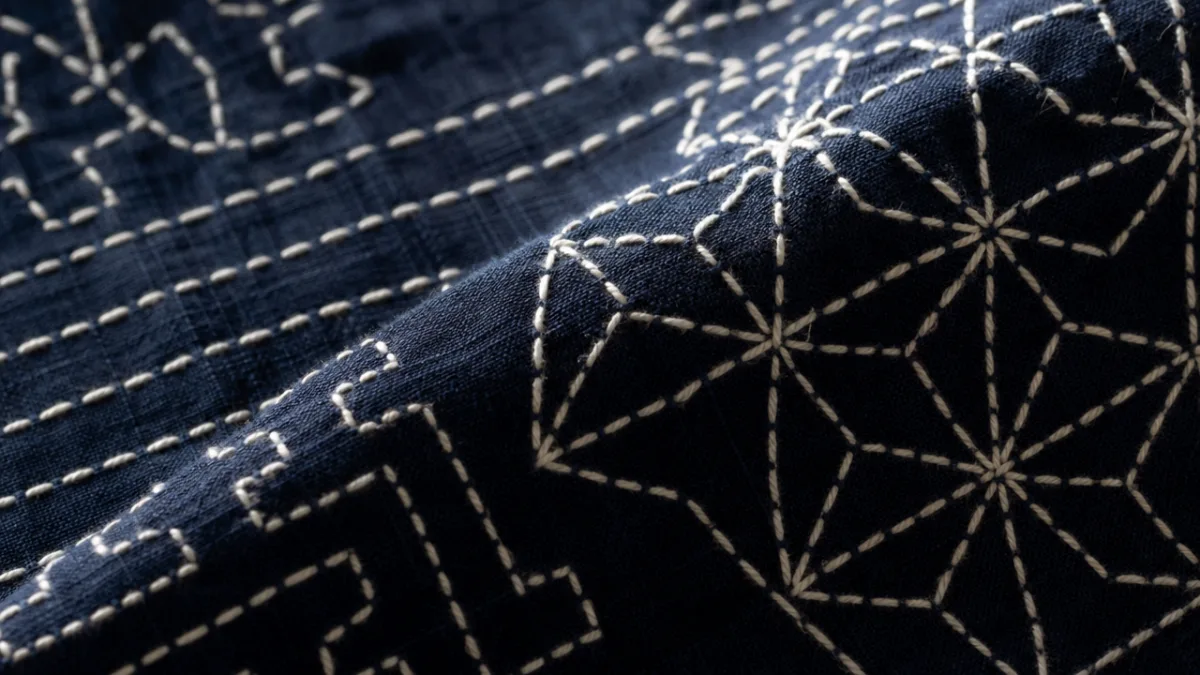
Sashiko patterns are deceptively complex in their geometry while remaining accessible to beginners with basic needlework skills. The most iconic designs include hitomezashi (one-stitch sashiko), moyouzashi (pattern sashiko), and a wide library of named geometric forms such as asanoha (hemp leaf), shippo tsunagi (seven treasures), and nowaki (autumn grasses). Each pattern carries its own symbolic meaning rooted in Japanese cultural and spiritual life, and choosing a pattern for a garment was never a purely decorative decision — it was an expression of intention and hope.
The asanoha pattern, one of the most widely recognized sashiko motifs, consists of interlocking six-pointed star-like shapes that resemble hemp leaves. Because hemp grows quickly and vigorously, the pattern is associated with health, growth, and resilience — making it a particularly meaningful choice for children’s clothing and garments intended to withstand hard wear. The seigaiha pattern, composed of overlapping semicircles resembling fish scales or ocean waves, represents protection and good fortune. Understanding these symbolic dimensions adds a layer of intentionality to the craft that elevates it from mere decoration to meaningful communication through textiles.
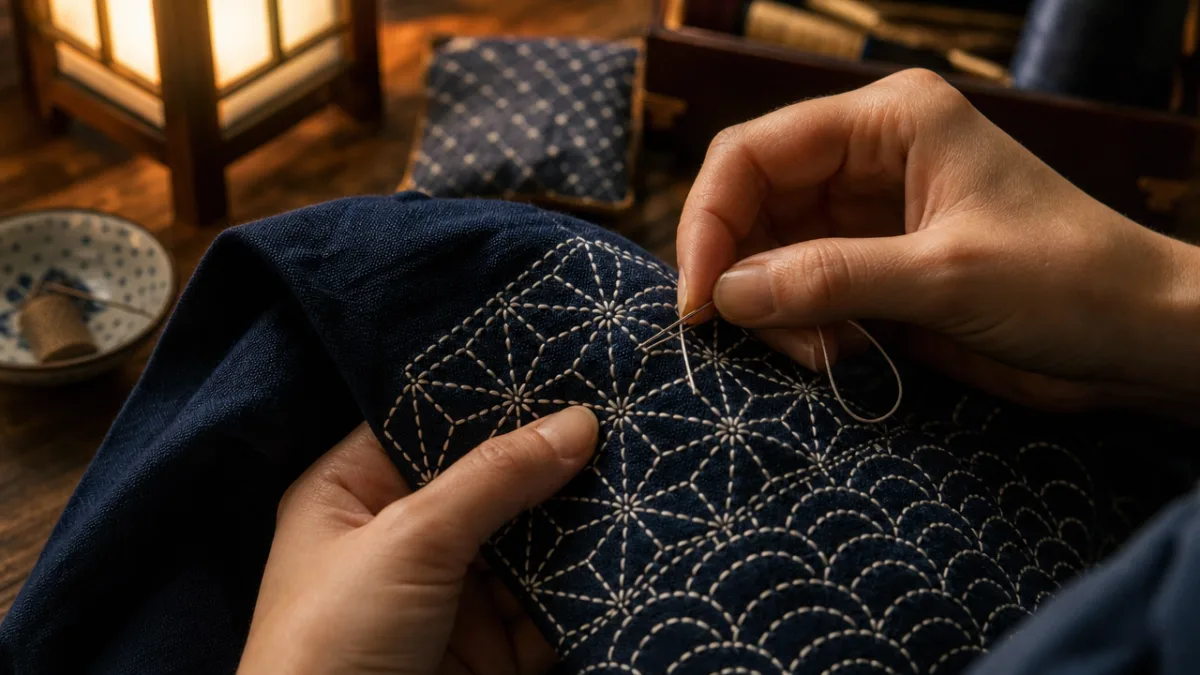
The thread and needle used in sashiko are specific and important. Traditional sashiko thread is thicker and less twisted than ordinary embroidery floss, which allows it to sit on top of the fabric rather than sinking in, creating that characteristic raised visual texture. Sashiko needles are longer than standard embroidery needles, enabling the practitioner to load multiple stitches onto the needle at once before pulling through — a technique that creates the even, rhythmic stitch length that defines the aesthetic. Modern practitioners sometimes substitute pearl cotton or other thick threads, but purists maintain that authentic sashiko thread produces a result that cannot be replicated.
- Asanoha (Hemp Leaf): Symbolizes strength, growth, and protection — traditionally used on children’s garments.
- Shippo Tsunagi (Seven Treasures): Represents harmony, connection, and good fortune through interlocking circles.
- Nowaki (Autumn Grasses): Evokes the wind moving through tall grasses, symbolizing resilience and flexibility.
- Seigaiha (Blue Ocean Waves): Offers protection and conveys a wish for peaceful, prosperous seas ahead.
- Yabane (Arrow Feathers): Associated with moving forward and never looking back, often used in wedding garments.
The Rise of Sashiko and Boro in Contemporary Fashion
The intersection of sashiko and contemporary fashion has been building momentum for several decades, but the past ten years have seen an explosion of mainstream interest that shows no sign of slowing. High-end designers including Junya Watanabe, Visvim, and Kapital have incorporated boro and sashiko aesthetics into their collections, commanding prices that would have been unthinkable for the poverty-born original garments. Meanwhile, the global slow fashion and sustainability movement has given new generations of consumers a philosophical framework for embracing repair and visible mending as acts of environmental and social responsibility.
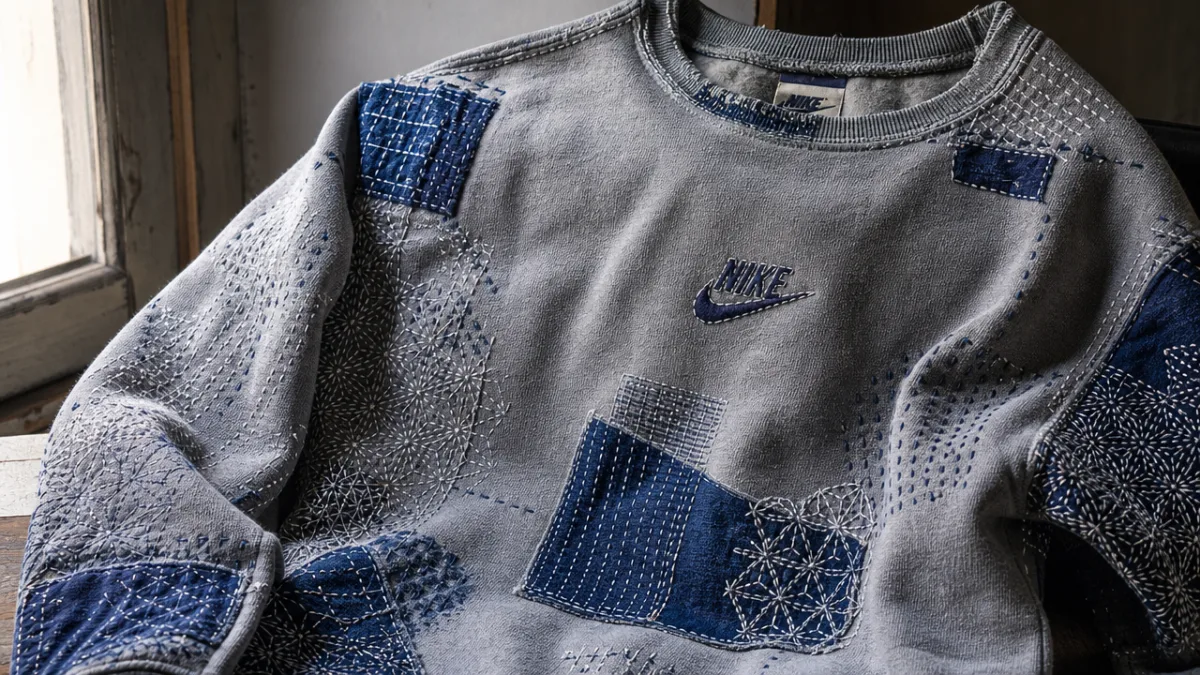
Social media, particularly Instagram and Pinterest, has played a transformative role in democratizing sashiko practice and spreading its visual aesthetic across global audiences. Textile artists and hobbyist crafters alike share their projects online, creating communities of practice that transcend geographic boundaries. The image of a sashiko- and boro-treated Nike sweater — a piece of mass-produced American sportswear reborn through Japanese folk textile techniques — encapsulates this cultural moment perfectly. It is a collision of the global and the local, the industrial and the handmade, the disposable and the cherished.
Streetwear culture’s embrace of Japanese craft aesthetics has been particularly significant in bringing sashiko into unexpected contexts. Brands like Supreme, A Bathing Ape, and various independent designers have referenced boro and sashiko in their releases, exposing younger audiences to these techniques through a lens they already understand and respect. When a Nike sweater — one of the most recognizable garments in global sportswear — is chosen as the canvas for sashiko embroidery and boro patching, it makes a statement about the value of handwork, the rejection of fast fashion, and the possibility of transforming the ordinary into something genuinely extraordinary through patience and skill.
Applying Sashiko and Boro Techniques to Sweatshirts and Knitwear
Working sashiko stitches on a sweatshirt or fleece garment like a Nike sweater presents different technical challenges than working on flat woven cotton, which is the traditional substrate for the technique. Sweatshirt fabric has stretch, texture, and a looped pile on the interior that can catch needles and cause uneven stitching. Many practitioners recommend basting a stabilizing layer of woven cotton or fusible interfacing to the wrong side of the area to be stitched before beginning, which provides a firm foundation and prevents the fabric from distorting under the tension of the running stitches.
The boro element of the transformation typically involves applying patches of contrasting fabric to areas of wear, damage, or simply as compositional elements of the overall design. Denim, indigo-dyed cotton, vintage shirting, or other reclaimed textiles are common choices that complement the deep, muted palette often associated with boro aesthetics. These patches are first basted in place, then secured with sashiko running stitches that both attach the patch firmly and create the decorative grid that is the hallmark of boro repair. The beauty of this approach is that practical necessity and visual composition become inseparable.
Placement decisions on a sweatshirt or hoodie require careful consideration of garment construction, wear patterns, and visual balance. Elbows, collar areas, cuffs, and the front chest panel are natural focal points for boro patches and sashiko embellishment. Some practitioners prefer to distribute stitching across the entire garment for a comprehensive transformed look, while others concentrate their work on specific zones for a more graphic, intentional effect. There is no single correct approach — the individual practitioner’s aesthetic sensibility guides the work, which is precisely what makes each finished piece utterly unique and unrepeatable.
- Wash and dry the sweater thoroughly to pre-shrink the fabric before beginning any stitching.
- Apply stabilizing interfacing or baste a woven cotton backing to areas that will receive heavy stitching.
- Select and position boro patches, considering both aesthetic balance and areas of structural need.
- Baste patches in place with temporary stitches before committing to the final sashiko embroidery.
- Work sashiko patterns in a consistent direction, loading multiple stitches onto the needle before pulling through.
- Remove basting stitches carefully once the sashiko work is complete and the patches are fully secured.
- Press gently from the reverse side with a damp cloth to settle the stitching without flattening the texture.
Cultural Respect and Appropriation: Navigating the Conversation
As sashiko and boro have traveled far beyond their origins in rural northern Japan, important conversations have emerged about cultural exchange, appreciation, and appropriation. These are not simple binaries, and the textile and craft communities that practice and celebrate these traditions hold a range of perspectives. At one end of the spectrum are those who welcome global enthusiasm for Japanese textile traditions as a form of living preservation, arguing that practiced appreciation — learning technique, understanding history, and acknowledging origins — is fundamentally different from shallow aesthetic borrowing.
Others point to the commercial dimension of this conversation with justifiable concern. When Western fashion brands profit substantially from aesthetics rooted in Japanese working-class survival strategies, while the rural communities that developed those techniques remain largely uncelebrated, there is a genuine ethical imbalance worth examining. The boro garments now selling for thousands of dollars in Japanese antique markets and Western auction houses were created by people who wore them because they had no other choice — the transformation from survival necessity to luxury commodity deserves careful reflection from anyone who engages with these traditions.
The most constructive path forward appears to be one of genuine engagement: studying the history, learning proper technique from qualified teachers including Japanese practitioners who teach internationally and online, using materials that honor the tradition, and consistently crediting sources and influences. Applying sashiko to a Nike sweater is an inherently hybrid, contemporary act, and acknowledging that hybridity honestly — rather than presenting the finished piece as simply “Japanese-inspired” without deeper understanding — is a mark of genuine respect. Craft traditions survive and evolve through engaged practitioners, and the global community of sashiko practitioners includes many Japanese teachers who actively welcome international students into the fold.
Wabi-Sabi, Kintsugi, and the Philosophy of Visible Repair
Sashiko and boro exist within a broader Japanese philosophical tradition that finds beauty in imperfection, impermanence, and incompleteness — a worldview most commonly expressed through the concept of wabi-sabi. Where Western aesthetics have historically prized symmetry, newness, and flawless surfaces, wabi-sabi elevates the worn, the asymmetrical, and the evidence of time and use. A garment mended with visible sashiko stitching is not hiding its history — it is displaying it proudly, making the repair itself into a form of decoration and testimony.
Kintsugi, the Japanese practice of repairing broken ceramics with gold-dusted lacquer, operates on exactly the same principle and has become perhaps the most widely known expression of this philosophy in the West. The repaired crack, rather than being concealed, becomes the most visually prominent feature of the object — a golden scar that makes the piece more beautiful and more meaningful than it was before it broke. Applied to textiles, this philosophy suggests that a Nike sweater bearing the visible evidence of damage, repair, and hand-stitched embellishment is more interesting, more valuable in the deepest sense, and more connected to human experience than the pristine factory original ever could be.
This philosophical dimension is part of what draws so many people to sashiko beyond its obvious visual appeal. In a consumer culture built on the premise of planned obsolescence and the perpetual replacement of things, choosing to mend — and to make that mending beautiful and visible — is a quietly radical act. The hours invested in working sashiko patterns across a worn sweater are hours spent in a kind of meditative attention to an object, a relationship with a garment that industrial production actively discourages. Many practitioners describe the stitching process itself as calming, absorbing, and deeply satisfying in a way that purchasing a new item never is. The philosophy is not merely about the finished object but about the quality of attention brought to the act of making.
Getting Started: Tools, Materials, and Resources for Your First Project
Beginning a sashiko boro project on a sweatshirt or other garment requires a modest but specific set of materials that are increasingly available outside Japan thanks to growing international interest in the craft. The foundational requirement is genuine sashiko thread, which differs from standard embroidery floss in its thickness, twist, and the way it interacts with fabric. Several Japanese thread manufacturers including Olympus and Daruma produce high-quality sashiko thread in traditional white as well as an expanding range of colors, and these are available through specialty needlework suppliers and online retailers worldwide.
Beyond thread, a sashiko needle — longer and slightly blunter than standard embroidery needles — makes an enormous practical difference in working the long running stitches that define the technique. Sashiko needles allow multiple stitches to be gathered on the needle before pulling through, which both speeds the work and helps maintain even stitch length. Water-soluble fabric marking pens or chalk are essential for transferring patterns onto dark fabrics, and a light box can be invaluable for this stage of the work. Thimbles, while optional, are strongly recommended as sashiko involves pushing a needle through multiple layers repeatedly over long periods.
The learning landscape for sashiko has never been richer, with resources available to suit every learning style and budget. Books by practitioners including Nihon Vogue’s comprehensive pattern collections, online courses taught by Japanese sashiko masters like Atsushi Futatsuya (who teaches internationally and maintains an active online presence through Sashiko.Life), and community groups on platforms including Pinterest, Instagram, and dedicated fiber arts forums all offer guidance, inspiration, and encouragement for beginners. Starting with a small practice piece on a cotton scrap before committing to a beloved garment is universally advised — the techniques are approachable, but like any handcraft, they reward practice and patience before producing the polished results visible in finished boro Nike sweaters that circulate so compellingly across social media.
- Essential thread: Olympus or Daruma sashiko thread in white or natural for traditional results, or colored varieties for contemporary work.
- Needles: Designated sashiko needles, sized to accommodate the thicker thread without damaging fabric.
- Marking tools: Water-soluble fabric pen for light fabrics; chalk or white marking pen for dark indigo or navy grounds.
- Stabilizer: Lightweight woven cotton fusible interfacing for use behind stretchy or loosely knit substrates.
- Patch fabrics: Vintage denim, indigo-dyed cotton, reclaimed shirting, or other textiles with complementary texture and weight.
- Thimble: A leather or metal thimble fitted to the middle finger of the dominant hand for sustained stitching comfort.
- Pattern resources: Printed pattern sheets, light box for tracing, or free printable patterns from reputable craft websites.
The most important tool any new practitioner brings to sashiko is not purchased in a craft supply store — it is patience. The technique is meditative and deliberately slow, and this slowness is not a flaw but a feature. Each stitch in a finished boro Nike sweater represents a moment of concentrated attention, a small decision about placement and tension, a breath taken and a choice made. Multiply those moments across the hundreds of hours that a fully realized boro garment can represent, and you begin to understand why these pieces carry such weight — not just as objects, but as records of sustained human care lavished on something that the world told us was disposable.








What do you think?
It is nice to know your opinion. Leave a comment.