










24 Inspiring DIY Lamp and Chandelier Ideas Made From Old Household Items
The Art of Upcycled Lighting: Why DIY Matters
There is something deeply satisfying about transforming a forgotten object into a source of warm, beautiful light. DIY lamps and chandeliers made from old household items represent one of the most creative intersections of sustainability and interior design. Instead of purchasing mass-produced fixtures that look identical to thousands of others, crafters and homemakers are discovering that the objects already living in their homes — colanders, wine bottles, mason jars, driftwood — can become conversation-stopping centerpieces that tell a personal story.
The movement toward upcycled lighting has grown significantly over the past decade, fueled by a cultural shift away from disposable consumerism and toward intentional, meaningful living spaces. When you hang a chandelier made from old wine bottles above your dining table, you are not simply saving money — though you certainly are doing that — you are also embedding memory and personality into the very atmosphere of your home. Each fixture carries the weight of its former life, creating layers of meaning that no store-bought lamp can replicate.
Beyond the philosophical appeal, upcycled lighting projects are remarkably accessible. Many of the most stunning results require only basic tools, an inexpensive lamp kit from a hardware store, and a willingness to see ordinary objects differently. Whether you are a seasoned crafter or someone who has never attempted a home project before, the world of DIY lighting offers entry points at every skill level. The 24 ideas explored throughout this article will prove that inspiration is genuinely everywhere, including in your recycling bin, your garage shelves, and your kitchen cabinets.
Kitchen Castoffs: Turning Culinary Items Into Stunning Fixtures
The kitchen is perhaps the richest source of raw material for DIY lamp projects, and it makes a certain poetic sense that objects associated with nourishment and gathering would find new life as light sources. Colanders — those humble pasta-draining workhorses — are among the most popular starting points for upcycled pendant lamps. Their perforated surfaces create mesmerizing constellations of light on surrounding walls and ceilings, projecting dozens of tiny circles that transform an ordinary room into something magical. An old stainless steel colander or even a brightly painted vintage enamel one can become a pendant light with the addition of a basic pendant lamp cord kit.
Mixing bowls, whether ceramic, enamelware, or copper, offer another compelling option. A large copper mixing bowl wired as an overhead pendant casts a warm, golden-toned light that flatters both food and faces — making it a particularly brilliant choice above kitchen islands or dining tables. Antique shops and thrift stores often have battered old bowls for just a few dollars, and the patina of age only adds to the aesthetic. Similarly, old kitchen funnels, particularly the large vintage galvanized variety, make striking industrial-style pendants that suit farmhouse and loft interiors beautifully.
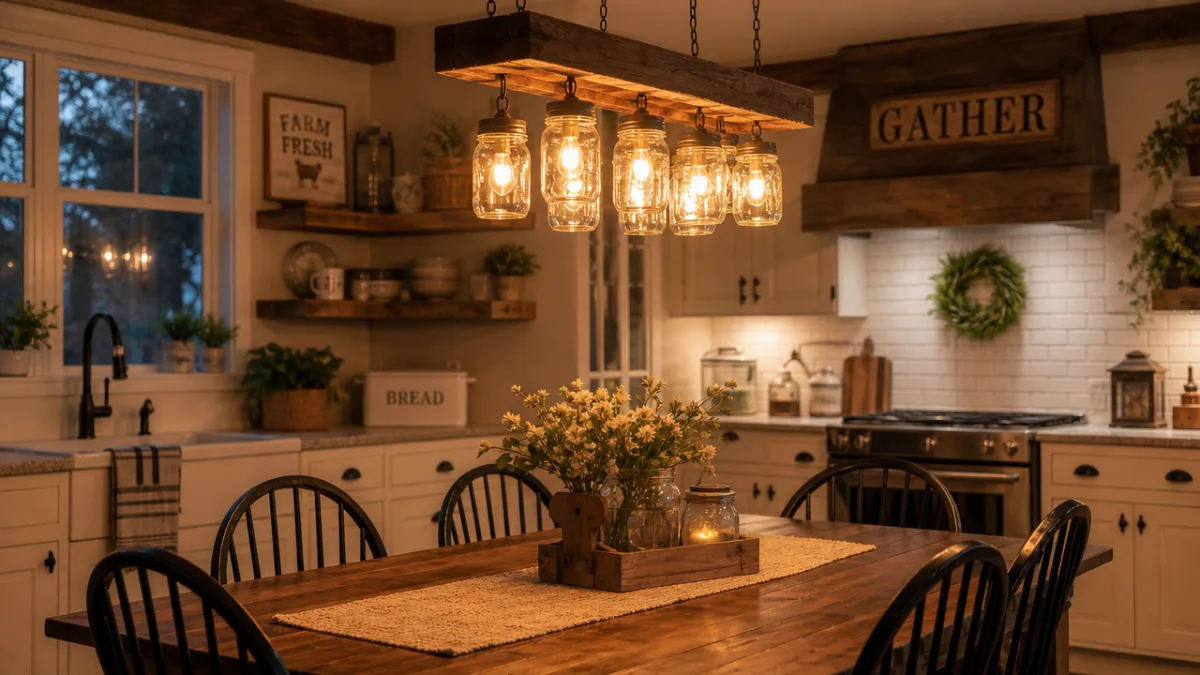
For those who want to go even further, entire chandelier arrangements can be assembled from kitchen items. Imagine a grouping of vintage enamel ladles hung at varying heights from a central wooden beam, each one cradling a small Edison bulb. Or consider a chandelier built from old mason jars — a perennial favorite — suspended at different levels from a reclaimed wood plank, each jar containing a small filament bulb that glows amber in the evenings. These kinds of installations require slightly more planning but remain well within reach for a dedicated weekend project, rewarding the maker with a fixture of genuine originality.
Bottles and Glassware: Liquid Vessels Reimagined as Light
Glass bottles are among the most versatile and visually compelling materials available to the DIY lamp maker. Wine bottles, in particular, have a shape that seems almost purpose-built for conversion into pendant lights or table lamps. Their long necks accept standard bottle lamp kits, their thick glass diffuses light beautifully, and their range of colors — from clear to deep olive green to rich amber — allows for a variety of moods and aesthetics. A single dark green wine bottle lamp on a side table creates an intimate, almost candlelit glow, while a group of clear bottles arranged as a cluster pendant chandelier produces a light that feels fresh and airy.
Spirits bottles offer even more personality, since their shapes are often more distinctive and their labels carry brand identities that some makers choose to preserve as part of the design. A collection of mismatched vintage liquor bottles converted into pendant lights above a home bar creates an installation that is both functional and narratively rich. Beer bottles, particularly the distinctive shapes of craft beers, can be grouped into multi-bottle pendants using specialized hardware kits that allow several bottles to hang from a single canopy. The key with any bottle lamp is ensuring the wiring is properly insulated and that the bulb used does not generate excessive heat within the enclosed glass.
Beyond bottles, other glassware offers wonderful possibilities. Old glass globes, terrariums, fish bowls, and even large glass canisters can all be suspended or mounted as pendant lights. A large clear glass apothecary jar makes an elegant pendant when filled with a few decorative elements — dried botanicals, sea glass, or simply left empty to let the filament bulb serve as the sole visual element. Vintage milk glass lampshades, while not strictly a repurposing project, can be paired with new hardware to create fixtures with genuine mid-century character that would be impossible to find at affordable prices in retail stores.
Industrial Salvage: Pipes, Crates, and Metal Objects
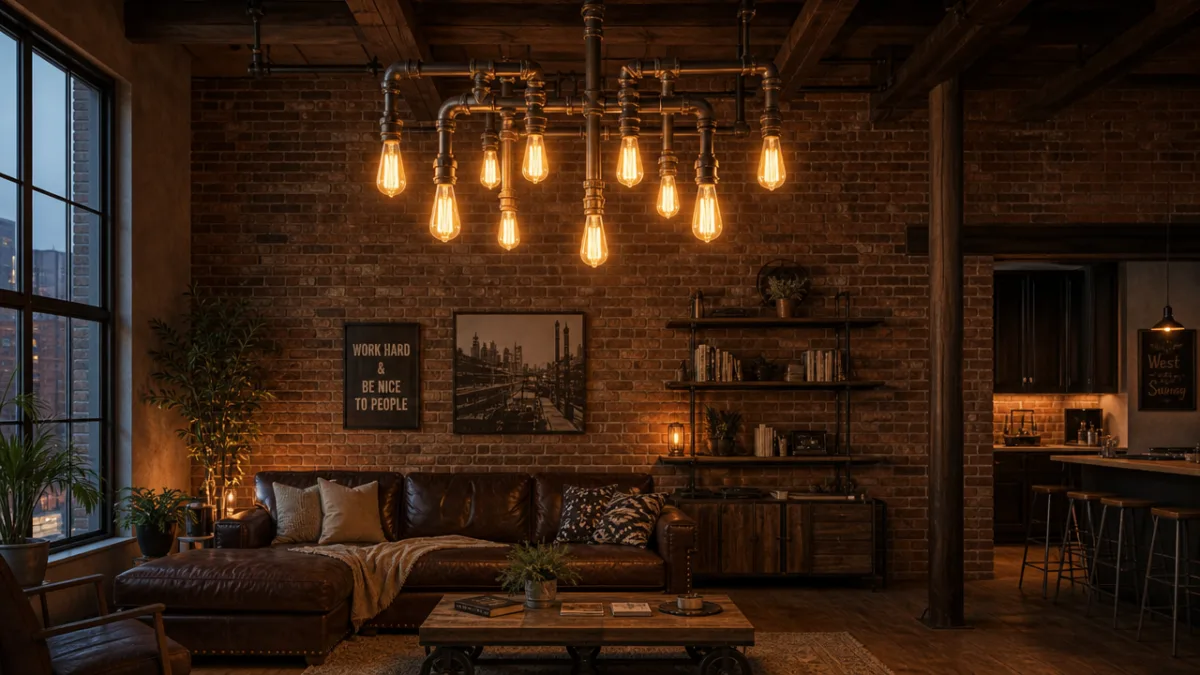
The industrial aesthetic has proven itself to be far more than a passing trend. There is a timeless appeal in the honest display of raw materials — exposed metal, aged wood, functional hardware used for decorative purposes. DIY lamps built from plumbing pipes represent one of the most popular expressions of this aesthetic, and for good reason. Black iron pipes and fittings, available at any hardware store for modest prices, can be assembled into table lamps, floor lamps, wall sconces, and elaborate multi-arm chandeliers without any specialized tools beyond basic wrenches. The resulting fixtures have a rugged, purposeful quality that suits industrial lofts, modern farmhouses, and even traditional interiors as an unexpected contrast element.
Wooden wine crates and fruit crates offer a different but equally compelling industrial-meets-rustic direction. A simple wooden crate mounted to the wall with a basic socket and bulb installed inside becomes a wall sconce with genuine character. Several crates arranged in a grid pattern, each containing a bulb, create a modular light installation that can be expanded or reconfigured at will. Old factory pulleys, found at antique markets or salvaged from old buildings, make dramatic lamp bases when paired with Edison bulbs. Their worn metal surfaces and mechanical complexity add a sense of history and craftsmanship that feels authentic precisely because it is.
Metal buckets, particularly the vintage galvanized variety, have long been favorites in the DIY lighting community. Converted into pendant lamps, they produce a directional downlight that is perfect for task lighting over work surfaces or reading nooks. Old paint cans, thoroughly cleaned, serve a similar function with the added benefit of coming in interesting sizes and shapes. For more ambitious makers, entire chandeliers have been assembled from old gear wheels, metal pipes, and salvaged industrial hardware, creating installations that look as though they might have been recovered from a Victorian factory. The availability of LED bulbs that mimic warm incandescent light has made these metal fixtures more practical than ever, since they no longer pose the heat management challenges they once did.
Nature-Inspired Creations: Driftwood, Branches, and Organic Materials
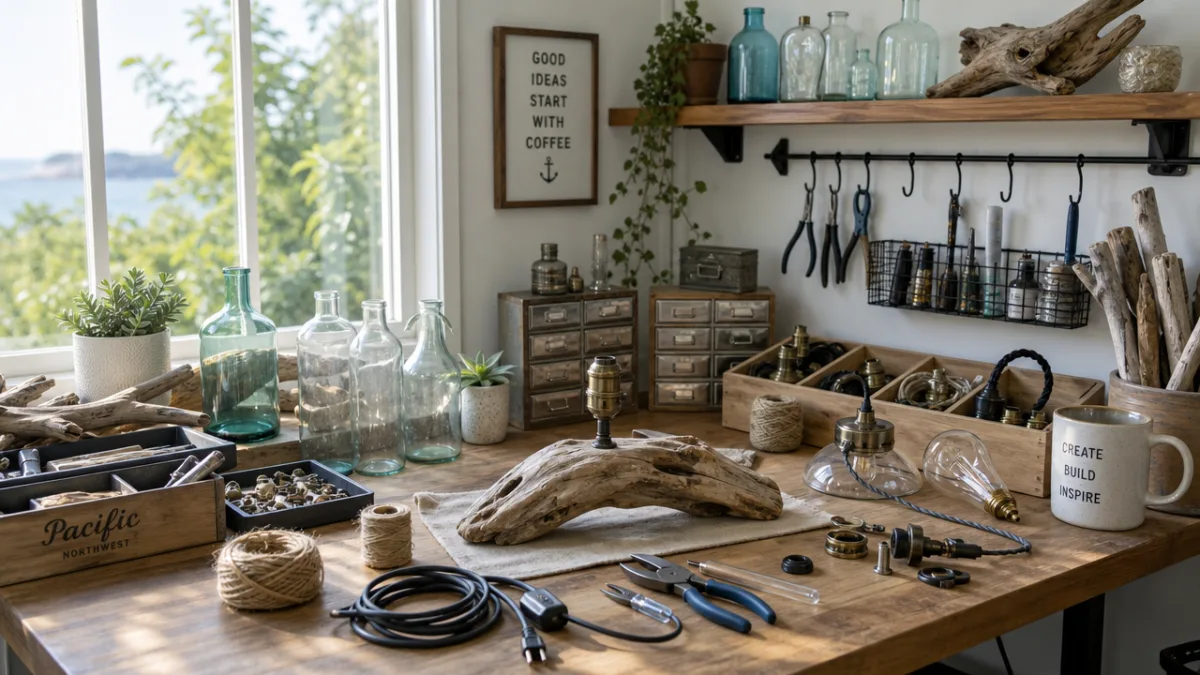
Not all upcycled lighting reaches for the industrial or the culinary — some of the most breathtaking DIY chandeliers draw their inspiration and their materials directly from the natural world. Driftwood chandeliers, assembled from pieces of weathered wood gathered from beaches or riverbanks, create installations of remarkable organic beauty. Because no two pieces of driftwood are identical, no two driftwood chandeliers can ever be exactly alike, which makes each one genuinely unique in a way that mass production simply cannot replicate. The pale, salt-bleached colors of ocean driftwood suit coastal interiors perfectly, while darker river wood works beautifully in woodland cabins and nature-inspired spaces.
Branches and twigs gathered from the garden or the woods form the basis of another popular category of DIY chandeliers. A bare branch chandelier — several interesting branches wired together and strung with Edison bulbs or small fairy lights — brings the feeling of the outdoors inside in the most literal way possible. This style of fixture suits a surprising range of interiors, from the expected rustic lodge to contemporary spaces where the organic form creates a striking contrast against clean architectural lines. Birch branches, with their distinctive white bark and elegant silhouette, are particularly popular for this purpose, though any interesting branch with good structural integrity can serve.
Other natural materials expand the possibilities further. Woven baskets, whether inherited from family or found at thrift stores, make beautiful pendant shades that cast a warm, patterned light through their woven surfaces. Gourd lamps, made from dried and hollowed gourds with holes cut to create light patterns, represent a craft tradition with roots in multiple cultures around the world. Even collections of pine cones, shells, or smooth river stones can be incorporated into lamp bases or chandelier frames to create fixtures that feel rooted in a particular landscape or memory. These nature-inspired projects tend to bring not just light but a sense of calm and groundedness to a living space.
Practical Guidance: Wiring, Safety, and Getting Started
The creative inspiration that drives DIY lamp projects must always be paired with a solid foundation of practical knowledge, and the most important practical consideration is electrical safety. While many upcycled lamp projects are genuinely simple to execute safely, it is essential that every maker understand the basic principles before beginning. The good news is that most pendant lamp and table lamp conversions do not require any complex wiring at all — they rely instead on pre-wired pendant cord kits and lamp socket kits that are widely available at hardware stores and online retailers. These kits take the guesswork out of the electrical components, leaving the maker free to focus on the creative challenge of the vessel or frame.
Choosing the right bulb is equally important, both for safety and for achieving the desired aesthetic effect. LED filament bulbs have become the default choice for most DIY lamp makers because they produce the warm, amber-tinted light of traditional incandescent bulbs while generating very little heat and consuming minimal electricity. This is particularly important for enclosed fixtures made from bottles, jars, or metal containers, where heat buildup could otherwise become a concern. Always check the maximum wattage rating of any lamp kit used and ensure the chosen bulb does not exceed it. For fixtures made from combustible materials like wood or woven baskets, LED bulbs are essentially mandatory rather than simply recommended.
Getting started with a first DIY lamp project is easier than most people expect, and beginning with something simple builds the confidence to tackle more ambitious designs later. A good starting point is a basic bottle lamp kit, a wine bottle with an interesting shape, and a low-wattage LED filament bulb. The entire project can be completed in under an hour and requires no tools beyond perhaps a pair of pliers. From there, the maker might graduate to a pendant lamp using a colander or mixing bowl, then perhaps to a small cluster chandelier using mason jars. Each project builds familiarity with the materials and techniques, making the next project easier and more ambitious.
- Always use pre-wired lamp kits from reputable suppliers rather than attempting to wire fixtures from scratch without electrical knowledge.
- Choose LED bulbs whenever possible to minimize heat generation, especially in enclosed or semi-enclosed fixtures made from glass, metal, or wood.
- Ensure any ceiling fixture is properly anchored to a structural support rather than simply to drywall, as even lightweight chandeliers can be heavier than they appear.
- Sand and seal any raw wood components before use to prevent moisture absorption and to give the finished fixture a more polished appearance.
- Clean glass vessels thoroughly before wiring, and allow them to dry completely to prevent any moisture from affecting the electrical components.
- When in doubt about any electrical aspect of a project, consult a licensed electrician — the creative work is worth protecting with professional oversight of the technical components.
Finding Inspiration and Sourcing Materials
One of the most enjoyable aspects of DIY lighting projects is the scavenger hunt for materials, and once you begin looking with new eyes, potential lamp components seem to appear everywhere. Thrift stores and charity shops are among the best hunting grounds, offering colanders, bottles, baskets, bowls, and all manner of interesting objects at prices that make experimentation feel consequence-free. Estate sales are particularly rich sources, since they often include items from an entire lifetime of accumulation, including vintage kitchenware, old industrial hardware, and decorative objects that would be impossible to find at retail prices.
Online marketplaces have transformed the process of sourcing materials for upcycled projects. Platforms dedicated to secondhand goods connect buyers with sellers across the country, making it possible to find very specific items — a particular style of vintage colander, a set of matching glass globes, a collection of old industrial spools — that would be nearly impossible to locate through local shopping alone. Social communities dedicated to DIY crafts share not only finished project photos but also tips on sourcing materials, links to recommended hardware suppliers, and step-by-step guides for specific techniques. The sense of community around upcycled crafts is genuinely warm and generous, with experienced makers enthusiastically helping newcomers navigate their first projects.
Perhaps most importantly, the best materials are often already in your possession, waiting to be seen differently. Before purchasing anything, walk through your home with fresh eyes and ask what objects might become beautiful light sources with relatively minor intervention. That collection of wine bottles in the recycling bin, the old colander at the back of the cupboard, the basket gathering dust in the garage, the driftwood piece brought home from a beach walk and forgotten on a shelf — any of these might be the beginning of a lamp that becomes one of the most beloved objects in your home. The transformation from overlooked to illuminated is, in the end, exactly what these projects are about: finding the light that was already there, waiting to be released.








What do you think?
It is nice to know your opinion. Leave a comment.