










Unique Crochet Quilt Ideas That Feel Warm & Creative
The Beautiful Intersection of Crochet and Quilting
Crochet quilts occupy a special place in the world of fiber arts, blending two beloved traditions into something entirely their own. Unlike traditional woven quilts made from fabric, crochet quilts are built stitch by stitch, giving the maker extraordinary control over texture, density, and design. This handcrafted quality means every finished piece carries the personality of its creator, making crochet quilts among the most personal and meaningful items you can produce with your own hands.
The warmth of a crochet quilt goes beyond its physical properties. Yes, the interlocking loops of yarn trap air and hold heat beautifully, but the warmth these pieces provide is also emotional. There is something deeply comforting about wrapping yourself in something made with intention and care. Whether draped across the foot of a bed, layered over a couch, or gifted to someone you love, a crochet quilt carries a sense of permanence and tenderness that mass-produced blankets simply cannot replicate.
What makes crochet quilts particularly exciting right now is the surge of creative innovation happening within the community. Fiber artists are experimenting boldly, mixing traditional granny squares with modern color theory, combining different yarn weights within a single project, and borrowing structural concepts from quilting to create dimensional effects that push the boundaries of what crochet can look like. The result is an art form that feels simultaneously ancient and completely fresh.
Why Crochet Quilts Are Having a Moment
Social media platforms like Pinterest and Instagram have played a significant role in the crochet quilt revival. Images of beautifully styled crochet quilts spread rapidly through crafting communities, inspiring makers at every skill level to attempt their own versions. The visual nature of these platforms allows patterns and color combinations to travel across continents in seconds, creating a kind of global conversation about what crochet quilts can be and who they are for.
There is also a broader cultural movement toward slow crafts and intentional making that has drawn many people to crochet quilts specifically. In a world of fast fashion and disposable goods, spending weeks or months creating something meant to last decades feels quietly radical. Many crafters report that the repetitive, meditative quality of working on a large crochet project provides genuine mental health benefits, helping them feel grounded and present in a way that scrolling through a screen never quite manages.
Accessibility is another major factor driving interest. Crochet requires only a hook and yarn, making it one of the most affordable and portable crafts available. A crochet quilt project can be picked up and set down between other responsibilities, worked on during commutes, evenings, or lazy Sunday mornings. This flexibility makes it a realistic creative pursuit for people with busy lives, not just those with unlimited leisure time.
Popular Crochet Quilt Patterns and Styles
Granny Square Quilts
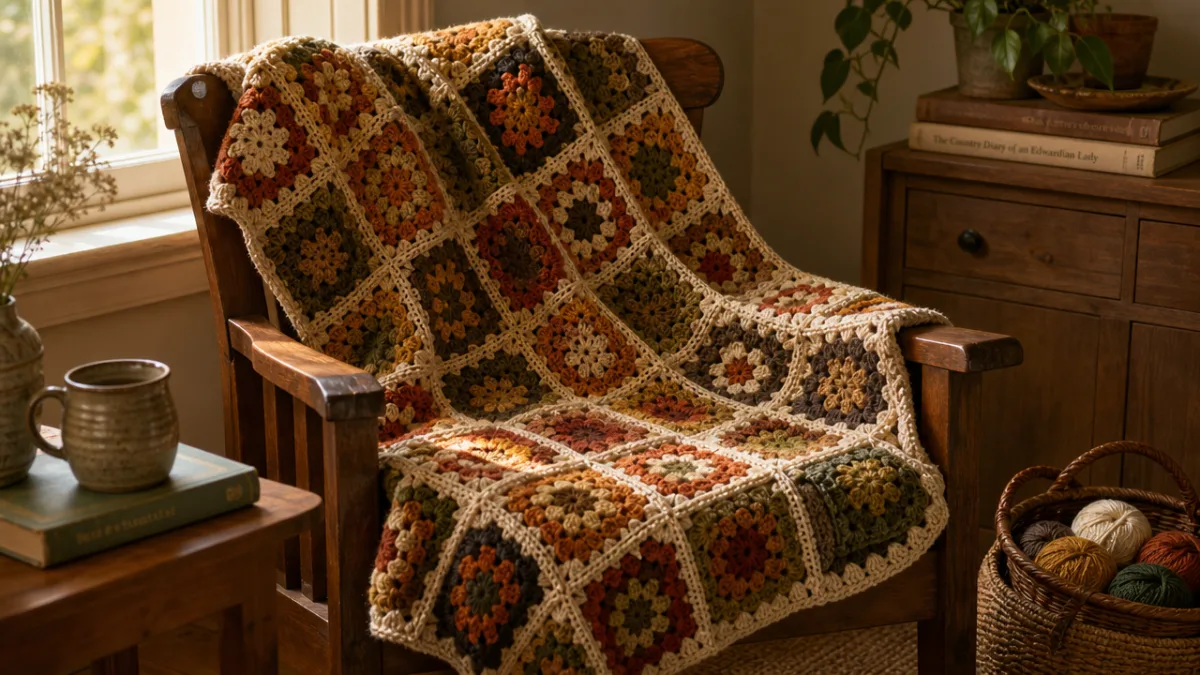
The granny square is perhaps the most iconic unit in all of crochet, and it forms the foundation of countless quilt designs. Traditional granny squares feature concentric rounds of clusters and chain spaces, creating a geometric motif that can be made in virtually any color combination. When dozens or hundreds of these squares are joined together, the effect is a vibrant patchwork of color and texture that echoes the look of a traditional fabric quilt while remaining unmistakably crochet in character.
Modern makers have expanded the granny square concept in exciting directions. Solid granny squares worked in a single color create a clean, contemporary look when arranged in gradient progressions. Oversized granny squares, worked on larger hooks with bulky yarn, allow quilts to come together much more quickly than traditional small-square constructions. Some designers have created hexagonal or triangular variations on the classic square format, producing quilts with entirely different visual rhythms and a more complex, jewel-like surface quality.
Joining methods matter enormously in granny square quilts and represent one of the most creative decisions a maker will face. Flat slip stitch joins create an almost invisible seam, letting the squares read as a continuous fabric. Joining as you go eliminates the need for a separate finishing stage altogether. Perhaps most striking is the decorative join, worked in a contrasting color, which actually highlights the grid of the construction and turns the joining lines into a design element in their own right.
Strip and Block Construction
Borrowing directly from quilting tradition, strip and block construction translates beautifully into crochet. In this approach, the maker works rectangular or square blocks that are then assembled in rows or columns to create a larger composition. This method offers tremendous design flexibility because each block can be worked in a different stitch pattern, creating a sampler quilt effect where the eye travels from one textural zone to the next, discovering new detail at every turn.
Classic stitch patterns that work particularly well in block format include the shell stitch, the bobble stitch, the linen stitch, and the puff stitch. Each of these creates a distinctly different surface texture, and placing them side by side in a single quilt produces a richly layered tactile experience. Color consistency can unify these varied textures beautifully, using the same palette across every block while allowing the stitchwork itself to provide the variation and interest.
Strip construction, where the maker works long vertical or horizontal panels that are then seamed together, creates a different visual effect with strong directional lines. This approach can produce quilts that look almost woven, especially when the strips are worked in alternating colors or stitch directions. The resulting piece has a graphic boldness that suits modern interiors particularly well and can be scaled up or down easily by adjusting the number and width of the strips.
Tapestry and Colorwork Crochet Quilts
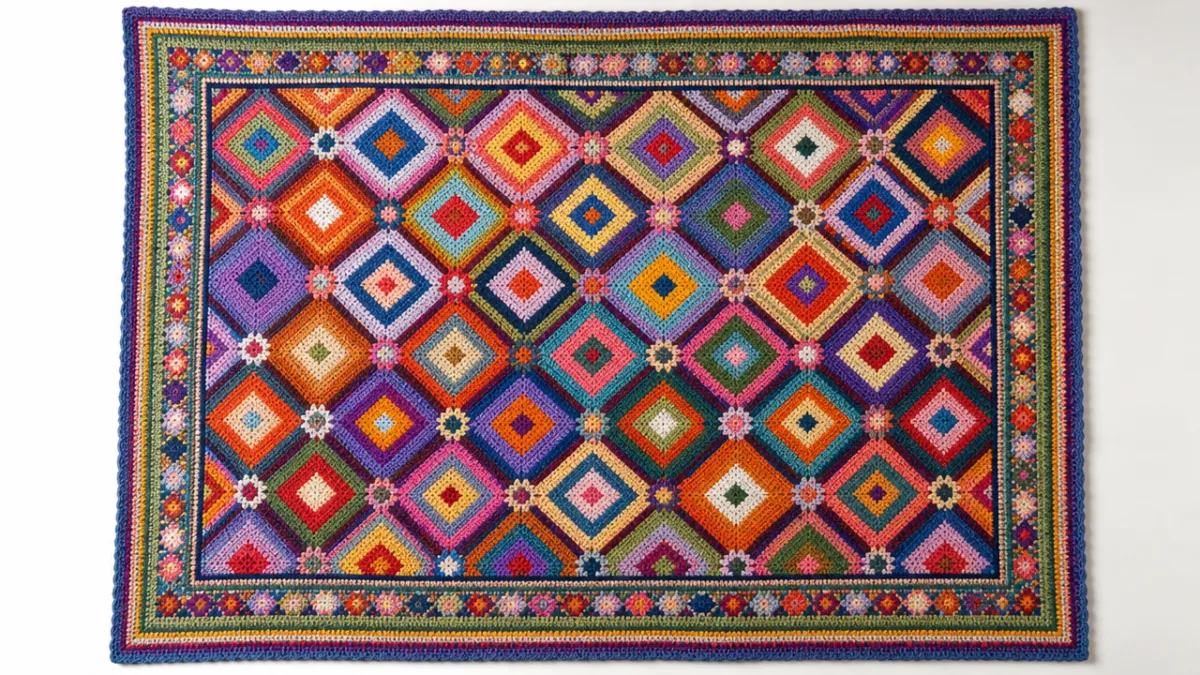
Tapestry crochet techniques allow makers to work pictorial or geometric motifs directly into the fabric of a quilt without any separate appliqué or embellishment. By carrying unused yarn colors along the inside of the work and switching colors as the pattern dictates, skilled crocheters can create complex patterns including diamonds, chevrons, stars, and even representational imagery. The resulting fabric is thick and substantial, with an almost woven quality that makes it ideal for quilts intended for heavy use.
Mosaic crochet, a subset of colorwork techniques, has become especially popular for quilt-making because it achieves complex-looking geometric patterns using only one color per row. The visual complexity comes from alternating which stitches are worked into the current row and which reach down to pick up the row below, creating a layered optical effect that looks far more technically demanding than it actually is. This makes mosaic crochet an excellent entry point for makers who want to explore colorwork without the complexity of managing multiple active yarns.
Corner-to-corner crochet, often abbreviated as C2C, creates quilts worked diagonally from one corner to the opposite corner. This technique naturally produces a subtle diamond texture across the surface and adapts beautifully to colorwork graphs, allowing makers to work photographs, text, or intricate geometric designs into their quilts. The diagonal construction gives C2C quilts a distinctive drape and visual interest that differs meaningfully from quilts worked in traditional horizontal rows.
Choosing Yarn and Color for Your Crochet Quilt
Yarn selection is one of the most consequential decisions in any crochet quilt project, affecting not only how the finished piece looks but how it feels, how it washes, how it wears over time, and how long it takes to make. Cotton yarns produce quilts with excellent drape and breathability, making them ideal for warmer months or warmer climates. Wool and wool blends offer superior warmth and have a natural elasticity that makes them pleasant to work with and helps finished quilts retain their shape through years of use.
Acrylic yarns deserve more credit than they often receive in crafting conversations. Modern premium acrylics have come a long way from the scratchy, flat fibers of decades past. Today’s acrylic options include yarns with beautiful sheen, excellent color saturation, remarkable softness, and full washability, making them a genuinely excellent choice for quilts that will be used and loved by children or anyone who needs easy-care textiles. The affordability of acrylic also makes it possible to work on a larger scale without the project becoming prohibitively expensive.
Color planning for a crochet quilt deserves as much attention as pattern selection. Working from a cohesive color palette, rather than simply collecting colors you like individually, produces quilts with visual harmony and intentional beauty. Many makers find it helpful to draw inspiration from a single source image, a painting, a textile, a landscape photograph, and pull their palette directly from that reference. Others work with classic color theory principles, exploring complementary, analogous, or triadic color relationships to create quilts with strong visual impact.
Fiber Weight and Hook Size Considerations
The weight of yarn chosen for a crochet quilt project affects everything from the scale of the stitches to the drape of the finished fabric to the time investment required to complete it. Fingering and sport weight yarns create fine, delicate fabrics with excellent drape but require significantly more time and more yardage than heavier weights. Worsted weight, the most popular choice for quilt projects, strikes an excellent balance between stitch definition, fabric density, warmth, and reasonable completion time. Bulky and super bulky weights create dramatic, cozy quilts that work up quickly, though they tend to produce stiffer fabrics with less drape.
Hook size works in concert with yarn weight to determine gauge, and understanding gauge is essential for producing quilts that come out at the intended size. A tighter gauge, achieved with a smaller hook relative to yarn weight, creates a denser, warmer fabric with excellent stitch definition. A looser gauge produces a drapier, more flexible fabric that might be better suited to a quilt intended to be used as a throw rather than a bed covering. Most experienced quilt makers recommend swatching carefully and measuring gauge before committing to a large project.
Consistency of gauge across a large project can be challenging, particularly for quilts made from joined motifs worked over many sessions. Tension naturally varies with mood, time of day, and how relaxed or stressed the maker is. Blocking finished motifs before joining them is an excellent way to even out these variations and ensure that every square or hexagon in a granny-square quilt is the same size before assembly begins. This step, though sometimes skipped by impatient makers, makes a dramatic difference in the professional quality of the finished piece.
Techniques for Assembling and Finishing Your Quilt
The assembly stage of a crochet quilt is where all the individual pieces come together into a coherent whole, and the choices made at this stage have enormous influence on the finished result. For motif-based quilts, laying out all the completed pieces on a flat surface before beginning to join them is an essential step that allows the maker to audition different arrangements and find the most pleasing composition. Spending time at this layout stage, rearranging until the color distribution feels balanced and the overall pattern feels harmonious, is time extremely well spent.
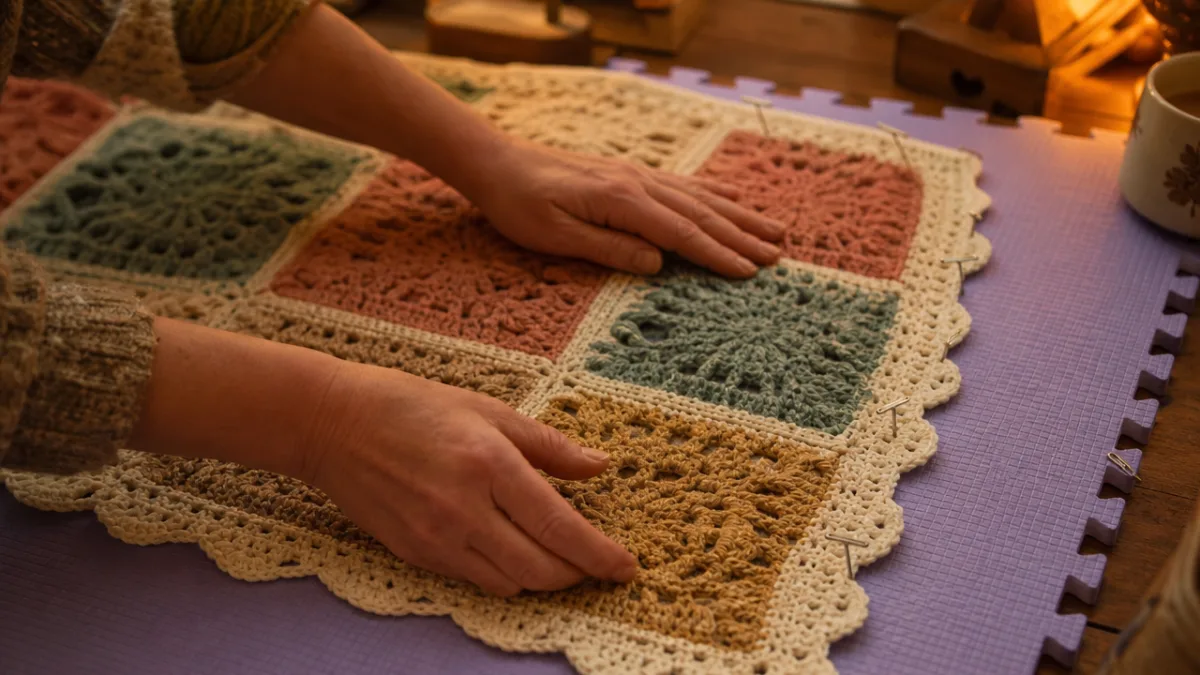
Blocking is a transformative finishing technique that every crochet quilt maker should incorporate into their practice. Wet blocking, which involves soaking the finished piece in water, gently pressing out excess moisture, and pinning it to shape while it dries, evens out stitches, opens up lace patterns, and helps the finished quilt lie flat. Steam blocking uses a steam iron held just above the surface to achieve similar results more quickly. Both methods produce quilts that look significantly more polished and professional than unblocked alternatives and help the finished piece maintain its shape through years of washing and use.
Borders are another finishing decision that can dramatically affect the overall appearance of a crochet quilt. A simple single-crochet border in a neutral color frames the central design cleanly and gives the edges stability. A more elaborate border worked in shells, picots, or other decorative stitches can add visual weight and elegance to the perimeter, particularly on heirloom-quality pieces. Some contemporary designs deliberately omit borders entirely, letting the geometry of the central construction speak for itself in a more minimalist aesthetic.
Care and Longevity of Crochet Quilts
A well-made crochet quilt, worked from quality materials and finished with care, can genuinely last for generations. Proper care begins with understanding the fiber content of the yarn used and following the appropriate washing instructions. Most acrylic quilts can be machine washed and dried on low heat without any concern. Wool and delicate fiber quilts benefit from hand washing in cool water with a gentle wool wash, followed by pressing out excess water without wringing and drying flat to prevent stretching.
Storage matters as much as washing for the long-term health of a crochet quilt. Folding and storing quilts in acid-free tissue or cotton bags protects them from the yellowing and fiber degradation that can occur over time. Rotating fold lines periodically prevents permanent creasing along the same edges. Cedar blocks or lavender sachets placed near stored quilts help deter moths and other fiber-damaging insects without the chemical smell of mothballs, keeping heirloom pieces fresh and undamaged through long periods of storage.
Repair skills are worth developing for any maker who creates quilts intended to last. Knowing how to duplicate a stitch to reinforce a worn area, or how to work in a small replacement section when damage occurs, allows you to extend the life of a beloved quilt indefinitely. Many experienced crafters say that a quilt that has been repaired and mended carries even more meaning than a perfect one, because those repairs are evidence of how much it has been used and loved.
Inspiration and Getting Started on Your Own Crochet Quilt
Beginning a crochet quilt project can feel daunting given the scale of the commitment, but approaching it thoughtfully makes the process manageable and genuinely enjoyable. Starting with a smaller version of your intended design, a baby quilt or lap throw rather than a full bed quilt, allows you to test your pattern, color palette, and construction method before investing in larger quantities of materials. This smaller scale project also produces a finished, usable object relatively quickly, giving you the satisfaction of completion before moving on to a more ambitious version.
Finding community around your project makes the long-term commitment of a large crochet quilt much more sustainable. Online crafting communities, local yarn shops with stitch-and-chat nights, and crochet-alongs organized around specific patterns all provide accountability, encouragement, and the pleasure of shared progress. Seeing other makers work through the same pattern you are tackling, encountering the same challenges and finding their own solutions, is both practically helpful and wonderfully motivating when enthusiasm wanes on a long project.
Keeping a project journal, whether a physical notebook or a digital record, is a practice that many experienced makers swear by. Recording the yarn used, the hook size, the date you began, notes on any modifications to the pattern, and photographs of your progress creates an invaluable reference that you will return to again and again. When you want to make a second quilt in a different colorway, or when someone admires your work and asks exactly what yarn you used, that journal becomes an irreplaceable resource that saves hours of reconstruction and guesswork.
Recommended Starting Projects for New Quilt Makers
For those new to crochet quilts, certain projects offer an ideal combination of accessibility and satisfying results. The classic granny square throw, made from dozens of identical squares joined in a simple grid, teaches all the fundamental skills of crochet quilt making, including working in the round, reading a simple pattern, managing color changes, and joining motifs, without requiring advanced techniques. The repetitive nature of working multiple identical squares also builds speed and consistency that will serve every future project.
A simple striped throw worked in rows is another excellent starting point that allows a new maker to focus on color design and simple stitch patterns without the complexity of motif joining. By selecting a beautiful set of coordinating colors and alternating them in planned or improvisational sequences, even a very simple single-crochet stripe quilt can produce a striking, sophisticated result. This type of project also works up relatively quickly, providing the important psychological reward of visible progress and completion that keeps long-term projects feeling manageable.
Whatever project you choose, remember that the purpose of a crochet quilt is ultimately warmth in the fullest sense of the word: warmth of body, warmth of home, and warmth of connection between the maker and whoever receives or shares the finished piece. Every stitch you work is an act of creative intention and human care, and that intention is woven into the object permanently, making it something genuinely worth the time and effort it requires. Start where you are, use what you have, and make something beautiful.
- Begin with a manageable size like a baby quilt or lap throw to build confidence before tackling a full bed quilt.
- Choose yarn in a fiber weight and care requirement that suits your lifestyle and the intended recipient.
- Plan your color palette in advance using a reference image or color theory principles rather than choosing colors intuitively one at a time.
- Block your finished motifs before joining them to ensure consistent sizing and a polished professional result.
- Join a crochet-along or online community to stay motivated and find support through the long-term commitment of a large project.
- Keep a project journal with yarn details, hook size, modifications, and progress photos for future reference.
- Invest time in a quality border and finishing treatment, because these final steps dramatically elevate the overall appearance of the finished quilt.








What do you think?
It is nice to know your opinion. Leave a comment.