










Turn Old Jeans Into Instant Cash With These 5 Genius Etsy Secrets
Why Your Old Denim Is Worth More Than You Think
Most people look at a pile of worn-out jeans sitting in the back of their closet and see nothing but clutter. The frayed hems, faded knees, and outgrown waistbands feel like problems to be solved at the next donation drop-off. But savvy sellers on Etsy have discovered something remarkable: those same imperfections that make jeans unwearable as clothing make them extraordinarily valuable as raw material for a thriving handmade goods business. The resale and upcycling market has exploded in recent years, and denim sits at the very heart of that revolution.
The numbers tell a compelling story. Denim upcycling shops on Etsy regularly pull in hundreds to thousands of dollars per month selling items crafted entirely from jeans that would otherwise end up in a landfill. Buyers are actively searching for sustainable, one-of-a-kind pieces made from reclaimed fabric, and they are willing to pay premium prices to get them. A pair of jeans you might toss for free at a thrift store could, with a few hours of creative work, become a forty-dollar tote bag or a seventy-dollar patchwork jacket. The math starts to look very attractive very quickly.
Understanding what drives this demand is the first step toward capitalizing on it. Consumers today are increasingly conscious of fast fashion’s environmental toll, and many actively seek out handmade or upcycled alternatives as a way to shop with intention. Etsy positions itself as the marketplace for exactly this kind of transaction, connecting makers with buyers who specifically want something crafted, considered, and unique. When you bring old denim into that ecosystem, you are not just selling a product — you are selling a story of transformation, sustainability, and craft. That story has real monetary value on the platform.
Secret One: Master the Art of the Denim Tote Bag
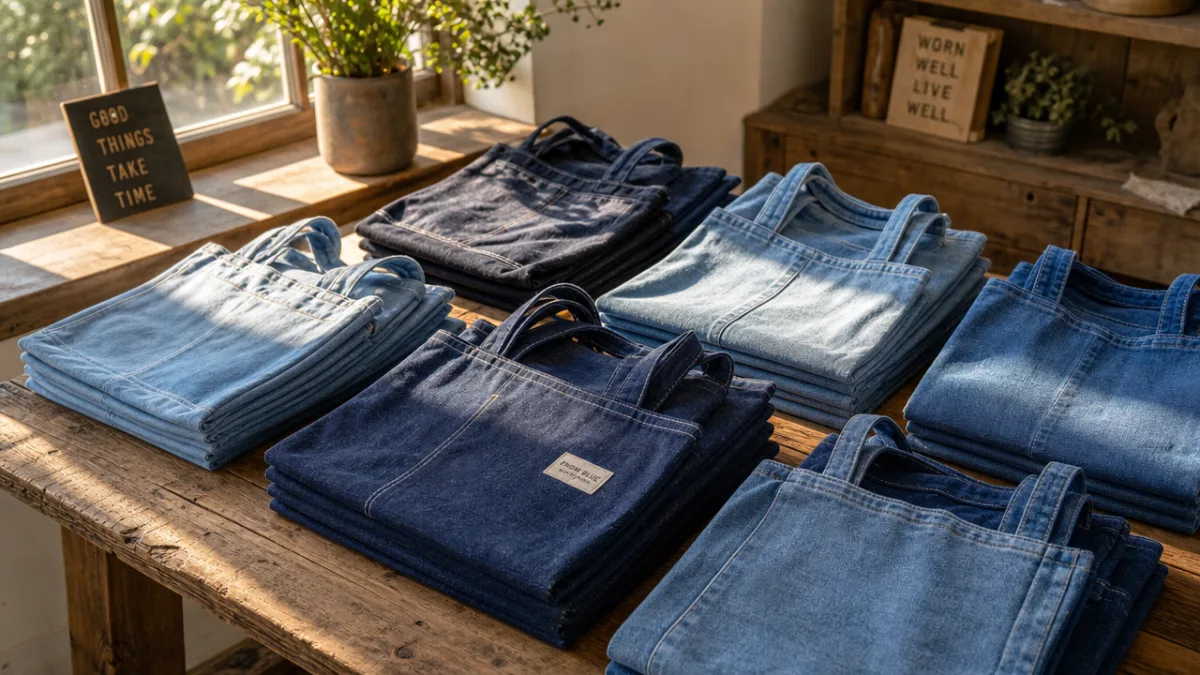
Of all the products you can create from old jeans, the denim tote bag consistently ranks among the bestsellers on Etsy, and for good reason. It requires minimal sewing skill, uses a relatively small amount of fabric, and appeals to an enormous range of buyers. The sturdy woven structure of denim makes it naturally suited for bag construction — it holds its shape, resists tearing, and develops a beautiful character with use. Even beginner sewers can produce a professional-looking tote in a single afternoon using just the legs of one pair of jeans.
The key to standing out in a crowded tote bag market is differentiation through detail. Sellers who simply cut denim into rectangles and sew on handles find themselves competing on price alone. Those who add embroidery, hand-painted designs, contrast stitching, or repurposed jean pockets as exterior features command dramatically higher prices. A plain denim tote might sell for fifteen dollars. One with a hand-embroidered floral motif on the front pocket, lined with a cheerful cotton print inside, can easily fetch forty-five to sixty dollars — for roughly the same material cost and only a modest increase in labor time.
Pricing your tote bags correctly from the beginning is essential for building a sustainable shop. Many new sellers undervalue their work by failing to account for all costs: the time spent sourcing materials, the Etsy listing fees, payment processing charges, shipping supplies, and the labor of the sewing itself. A solid formula is to calculate your total material cost, multiply it by three for a wholesale baseline, then double that for your retail Etsy price. This sounds aggressive until you realize that buyers on Etsy are not shopping for the cheapest option — they are shopping for something they love and that feels worth the price tag.
Secret Two: Patchwork Products Are Etsy Gold
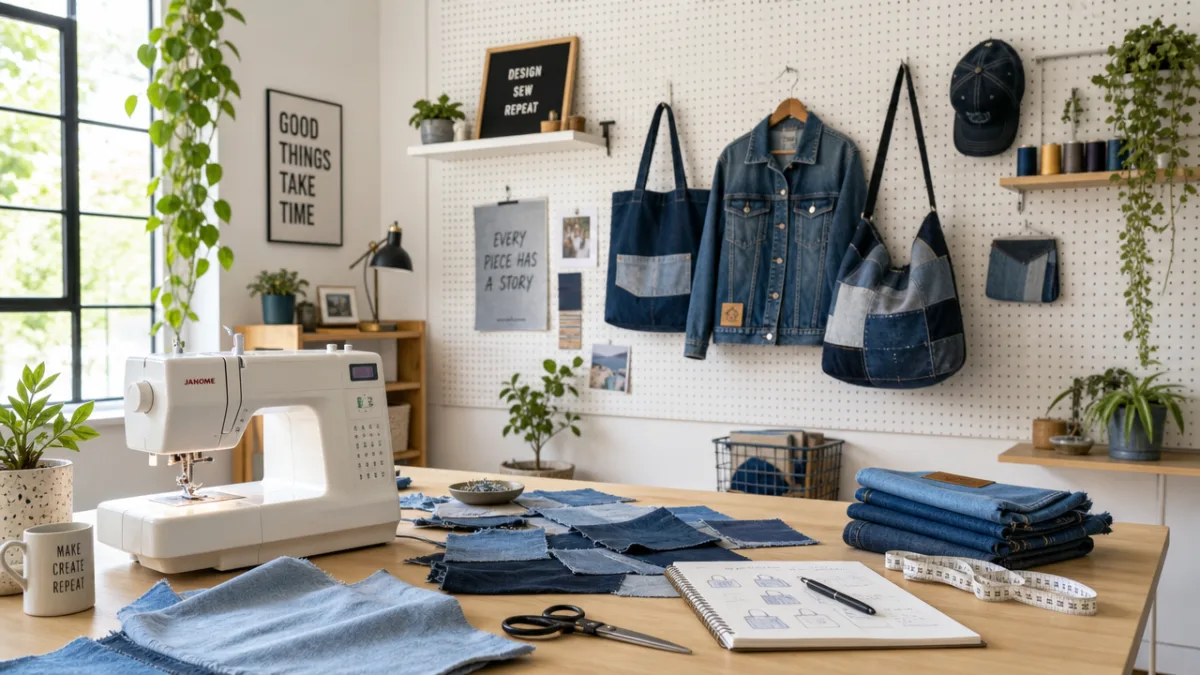
Patchwork has experienced a massive cultural revival, and denim patchwork in particular has become one of the most searched aesthetic categories on Etsy. Items like patchwork quilts, throw pillows, zippered pouches, and even patchwork denim jackets attract passionate buyers who are willing to invest serious money in pieces that feel both nostalgic and contemporary. The beauty of patchwork from a maker’s perspective is that it is the ultimate scrap-friendly technique — virtually every bit of denim you cut away from another project can find a home in a patchwork piece.
Building a coherent patchwork product line requires some thought about color harmony and texture variation. Denim comes in an enormous range of washes, from pale ice blue to deep indigo to black, and mixing these intentionally creates visual richness that buyers find irresistible. Some sellers specialize in all-blue tonal patchwork for a calm, sophisticated look. Others mix denim with canvas, corduroy, or chambray for a more eclectic, bohemian feel. Either approach can be wildly successful on Etsy, but consistency within your shop’s overall aesthetic helps build brand recognition and encourages repeat customers to return for more.
Patchwork quilts represent the highest-ticket denim item you can offer on Etsy, and they deserve special mention. A well-made denim patchwork lap quilt, measuring roughly fifty by sixty inches, can command prices between one hundred fifty and three hundred dollars when presented with high-quality photography and a compelling listing description. These pieces take more time to create, but the margin is excellent when you have accumulated a large stock of reclaimed denim at zero material cost. Many top sellers in this niche run a waiting list for custom quilts, which creates both urgency and social proof that their work is worth waiting for.
Secret Three: Photography and Listings Make or Break Your Sales
Here is a truth that experienced Etsy sellers know well and beginners often learn the hard way: a mediocre product with exceptional photography will outsell an exceptional product with mediocre photography almost every single time. On Etsy, buyers cannot touch your fabric, examine your stitching up close, or feel the weight of your finished bag. All they have are your images and your words, and those two elements must work together to build enough trust and desire that a stranger hands over their credit card information. This is not a minor detail — it is arguably the most important skill you will develop as a seller.
For denim upcycled products specifically, a few photography principles make an enormous difference. Natural light is your best friend; shoot near a large window during the middle of the day and avoid harsh shadows. Lifestyle shots — images that show your product in use, carried by a real person, or styled in a lived-in setting — dramatically outperform flat lays for conversion rates. Show scale by including a hand, a familiar object, or a human body in at least one photo per listing. And always include a close-up image of any decorative detail, because embroidery, painted elements, or hardware are often the deciding factor for a buyer on the fence.
Your listing title and description carry equal weight in the sales process. Etsy’s search algorithm relies heavily on keyword matching, which means your title should include the specific words buyers actually type into the search bar. Instead of “Denim Bag,” write “Upcycled Denim Tote Bag, Sustainable Handmade Jean Bag, Eco Friendly Market Tote.” Your description should open with the most important information — what the item is, what makes it special, and what the buyer will feel when they use it — before moving into dimensions, materials, care instructions, and shipping details. Think of the description as a conversation with a curious customer, not a technical specification sheet.
Secret Four: Build a Product Ecosystem, Not Just Individual Items
The sellers who build the most successful denim upcycling shops on Etsy are not just making one product and hoping it sticks. They are deliberately constructing a product ecosystem — a curated range of items at different price points that allows buyers to enter at a comfortable level and gradually spend more over time. Think of it as a ladder: a small zippered coin pouch might sit at the twelve-dollar entry point, a tote bag at forty, a patchwork pillow at sixty-five, and a custom quilt at two hundred fifty. Every customer who falls in love with your coin pouch is a potential future quilt buyer if you cultivate the relationship thoughtfully.
Within this ecosystem, consider creating product families that share a visual identity. If you develop a signature embroidery motif — a wildflower, a moon phase, a geometric pattern — applying it across multiple product types gives your shop a cohesive, branded feel that encourages buyers to collect multiple pieces. This approach also dramatically simplifies your marketing, since one compelling image of a “set” that includes a bag, a pouch, and a pillow cover communicates far more value than three separate listings ever could. Coordinated product families consistently perform well in Etsy’s gift-giving seasons, particularly around the winter holidays and Mother’s Day.
Offering customization within your ecosystem is one of the most powerful ways to increase average order value and build customer loyalty. Many denim upcycling sellers offer monogramming, custom embroidery text, or the option to specify a preferred denim wash for made-to-order pieces. Customization commands a premium — buyers routinely pay twenty to thirty percent more for a personalized item than for the same item off the shelf — and it creates an emotional connection to the finished product that drives glowing reviews and word-of-mouth referrals. A five-star review from a delighted customer who got exactly what they envisioned is worth more to your shop’s long-term success than almost any paid advertising you could run.
Secret Five: Source Smarter to Maximize Your Profit Margins
Even if you start your denim upcycling business with nothing but jeans from your own closet, you will quickly discover that scaling the operation requires a reliable and affordable supply of raw material. Sourcing smartly is what separates a casual side hustle from a genuinely profitable Etsy business. The goal is to acquire as much quality denim as possible for as little money as possible, without spending so much time hunting for materials that you eliminate the hours you need for actual making. Fortunately, denim is one of the most abundant secondhand materials on the planet, and with the right approach, you can build a substantial stockpile at minimal cost.
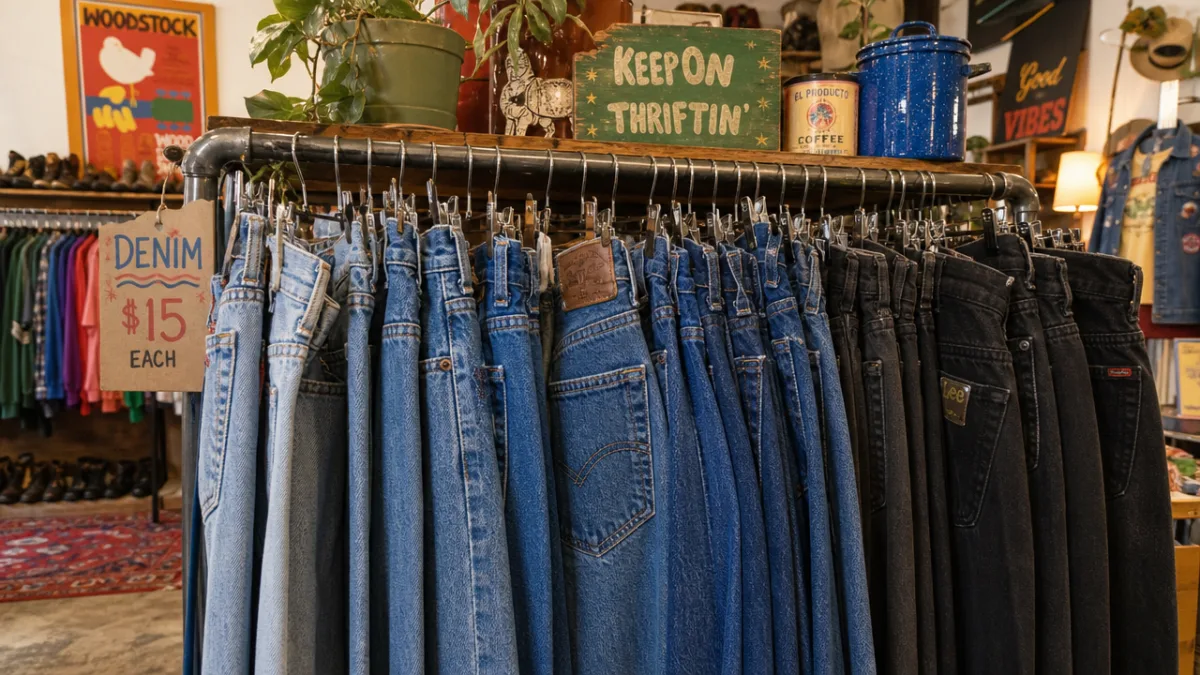
Several sourcing strategies work particularly well for denim sellers. Thrift stores like Goodwill and Salvation Army are the obvious starting point, but experienced sellers know to shop on sale days — many locations offer fifty percent off all clothing on specific weekdays — and to target stores in affluent neighborhoods, where donated jeans are more likely to be higher-quality brands in better condition. Estate sales and garage sales are another goldmine, especially in summer months when people are cleaning out decades of accumulated clothing. Some sellers even post on local community groups like Nextdoor or Facebook Marketplace asking for denim donations, framing it as an environmental service, and receive bags full of material completely free of charge.
As your shop grows, consider building relationships with local clothing drives, school fundraiser programs, or corporate sustainability initiatives that collect used clothing. These organizations often have more denim than they know what to do with and are happy to partner with a local maker who can give the material a second life. You can also source strategically by purchasing bulk denim lots from online wholesale platforms, though this approach works best once you have a clear sense of which products sell fastest and which denim weights and washes your customers prefer. Keeping meticulous track of your material costs as you scale ensures your pricing remains profitable even as your volume increases and your sourcing becomes more sophisticated.
Getting Started: Your First Week Action Plan
Turning this inspiration into actual income requires moving from reading to doing, and the first week is where most aspiring sellers either build momentum or stall out. The good news is that you do not need a fully equipped studio, a large inventory, or years of sewing experience to open a successful Etsy shop. What you do need is a handful of finished products, decent photographs, and a willingness to learn as you go. Many of today’s most successful denim upcycling sellers started with a single tote bag, a smartphone camera, and a kitchen table as their cutting surface.
A practical first-week plan might look something like this. On day one, gather every pair of old jeans in your home and sort them by color and condition. On days two and three, produce your first three to five products — start with tote bags if you are new to sewing, since they are forgiving and fast. On day four, photograph everything in the best natural light you can find, shooting at least five images per product. On day five, open your Etsy shop and write your first listings, paying careful attention to keyword-rich titles and thorough descriptions. On days six and seven, share your new shop on your personal social media accounts and ask friends and family to spread the word. This is not a glamorous launch strategy, but it works.
Patience and consistency are the underrated secrets that underpin all five of the strategies outlined in this article. Etsy shops rarely go viral overnight, but they build steadily when a seller shows up regularly with new listings, responds promptly to customer messages, and continuously refines their photography and product offerings based on what the market responds to. Set a goal of adding at least two to three new listings per week during your first three months, track which products get the most views and favorites, and lean into what is working. The sellers who succeed on Etsy are not always the most talented — they are the most persistent, the most curious, and the most willing to treat their creative work as a real business worth investing in.
- Start small and iterate: Begin with simple products like tote bags or coin pouches before tackling more complex items like quilts or jackets. Each project teaches you something new about your materials and your process.
- Invest in your photography: A clean white sheet hung on a wall, a chair positioned near a bright window, and a friend willing to model your bags for twenty minutes can transform your listing images without spending a single dollar.
- Study your competition strategically: Search your own product keywords on Etsy and examine the top-performing listings. Notice what they do well in photography, pricing, and description — then figure out how to do it better or differently.
- Collect reviews actively: After every sale, send a polite follow-up message thanking the customer and gently inviting them to leave a review if they love their purchase. Reviews are the social currency of Etsy, and shops with strong review counts convert dramatically better than those without.
- Reinvest early profits wisely: Use your first earnings to purchase better sourcing materials, a small embroidery hoop set, or a higher-quality listing photograph setup rather than pocketing everything immediately. Building your capabilities early accelerates your growth considerably.
The opportunity sitting in your closet right now is more real than it might seem. Old denim has become one of the most sought-after materials in the handmade goods marketplace, and Etsy has made it easier than ever to connect creative makers with eager buyers across the country and around the world. The five secrets outlined here — mastering the tote bag, embracing patchwork, investing in photography and listings, building a product ecosystem, and sourcing materials intelligently — are not shortcuts or tricks. They are the foundational practices of sellers who have turned a simple creative instinct into genuine, recurring income. The jeans are already in your closet. The only question is what you decide to make of them.








What do you think?
It is nice to know your opinion. Leave a comment.