










The Wonderful World of Funny Craft Quotes and Memes: A Love Letter to Creative Chaos
Why Crafters Have the Best Sense of Humor
There’s something genuinely special about the crafting community’s ability to laugh at itself. If you’ve ever sunk three hours into a Pinterest project only to end up with something that looks like a caffeinated raccoon put it together, you already know exactly what I’m talking about. That gap between what you imagined and what you actually made isn’t just a meme format — it’s Tuesday for millions of people who pick up glue guns and yarn with all the optimism in the world and, well, varying levels of skill.
Craft humor really took off with social media because it hits on something everyone gets, even if they’ve never touched a crochet hook in their life. You don’t need to be an expert knitter to crack up at a meme about having seventeen unfinished projects and buying supplies for an eighteenth. The self-deprecating humor that runs through the crafting world comes from a community that’s passionate, enthusiastic, a little chaotic, and completely fine with admitting that the journey matters way more than a flawless finished product.
What makes craft humor stand out from other corners of the internet is how warm it is. These jokes aren’t poking fun at anyone — they celebrate the hot glue burns, the fabric scraps covering every flat surface, the mysteriously vanishing scissors, and the eternal belief that this weekend is definitely the weekend you’ll finally finish the quilt you started in 2019. Craft memes and quotes are basically love letters written in glitter and irony, and honestly, the crafting world is better for every single one of them.
The Most Iconic Craft Quotes That Every Maker Knows by Heart
Some phrases have basically achieved legend status in the crafting world — floating around Pinterest boards, Etsy banners, and cross-stitch patterns with wonderful irony. “I have enough fabric” said no quilter ever. And “I only need one more skein of yarn” might be the most sincerely spoken lie in all of fiber arts. You mean it completely at the point of purchase. You regret it almost immediately upon opening the closet door back home. These quotes hit so hard because they describe something that feels almost hardwired — a compulsion that’s very real and very, very familiar.
Then there’s the whole category of quotes about crafters and time. “It will only take five minutes” has single-handedly launched a thousand unfinished projects and explained a suspicious number of missed dinners. The wild thing is that the person saying it genuinely believes it every single time, despite years — sometimes decades — of evidence pointing the other direction. Cross-stitchers say it about patterns with thirty-seven colors. Sewists say it about garments with twelve pattern pieces. Woodworkers say it about projects requiring custom joinery. The delusion is consistent, and honestly, kind of magnificent.
And then there are the quotes about the physical proof of craft obsession — the stash, the supplies, the tools that somehow multiply faster than you can organize them. “My craft room is a creative space, not a mess” is part declaration of independence, part gentle cry for help. Quilters talk about their fabric collections with the same reverence that serious collectors bring to anything they treasure. The best craft quotes nail that tension between knowing things are a little out of hand and having absolutely zero intention of doing anything about it — which, when you think about it, is a pretty relatable human experience in general.
Pinterest Fails and the Memes They Inspired
At this point, the Pinterest fail is basically a cultural institution. It’s spawned entire websites, books, TV segments, and an absolutely endless stream of memes. The setup is simple and reliably devastating: someone spots a gorgeous, polished craft project on Pinterest, follows the instructions with genuine effort and real enthusiasm, and produces something that resembles the original only in the most generous conceptual sense. And this happens so consistently, so predictably, that it’s become its own art form.
What keeps Pinterest fail memes going is how joyfully they normalize imperfection. When someone posts their fondant cake attempt side by side with the inspiration — professional smooth roses on one side, melting abstract blobs on the other — they’re doing something kind of brave. They’re saying: this is hard, I tried, and failure is funnier when we share it. The comment sections on those posts are genuinely some of the warmest places on the internet, which is not something you get to say very often.
The meme formats around Pinterest fails have gotten pretty sophisticated over the years too. Comparison grids, expectation-versus-reality split screens, the classic “nailed it” caption that’s basically entered the language at this point. Crafters have embraced all of it, using the vocabulary to talk about their own misadventures with wit and self-awareness. Being able to laugh at a collapsed wreath or a wonky knitting project — and then immediately start thinking about the next one — is genuinely one of the most admirable things about crafters.
The Yarn, Fabric, and Supply Hoarding Memes That Hit Too Close to Home
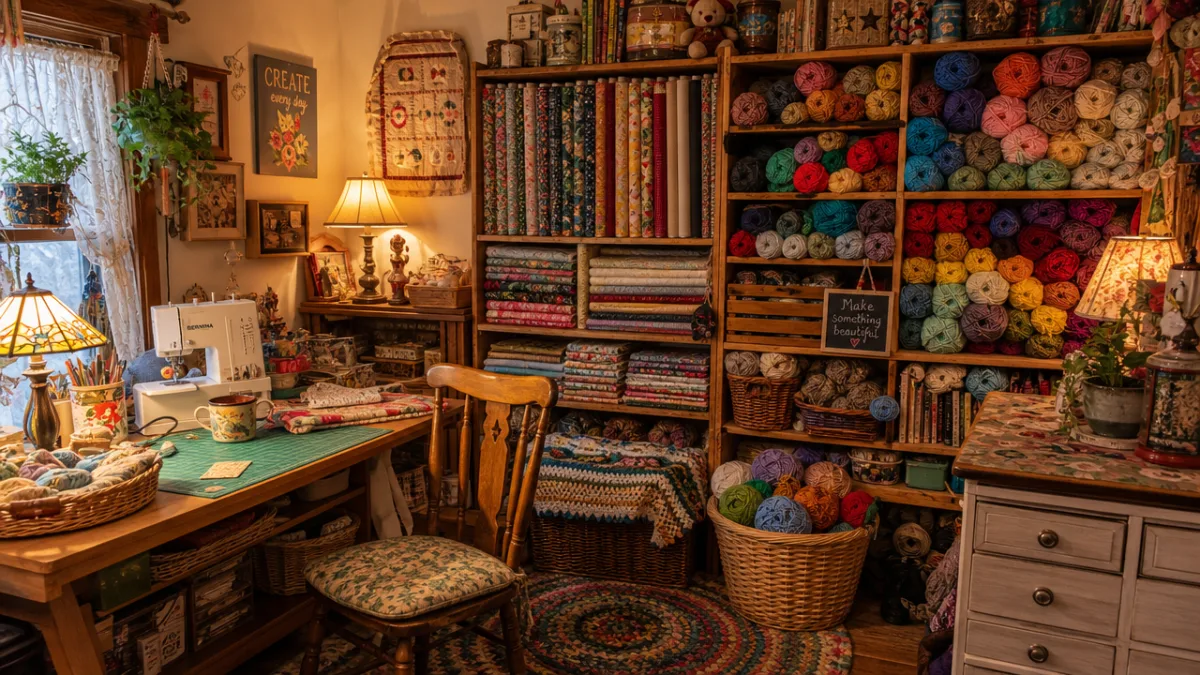
If there’s one truth every crafter can agree on no matter what their medium is, it’s that the supply collection will always outpace the actual crafting. Always. The yarn stash memes alone could fill a library. Knitters and crocheters have built up a whole mythology around the stash — yarn bought for abandoned projects, yarn bought because the color was too good to walk away from, yarn bought on sale because obviously, yarn received as gifts, yarn inherited from other crafters. The stash isn’t a storage problem. It’s a lifestyle.
Fabric hoarders — and quilters especially — have their own rich tradition of this. There’s never quite enough fabric, and it’s never quite the right fabric, and the right fabric needs to be bought immediately before it sells out, which means grabbing several yards to be safe, which means the fabric stash now needs its own room with a cataloging system that exists in theory but mostly not in practice. Memes showing overstuffed closets, bins stacked to the ceiling, and shopping carts piled with bolts land because they come from a very specific, very personal place.
A big part of what makes supply hoarding memes funny is the reasoning crafters use to justify their collections. These justifications are elaborate, internally consistent, and completely unconvincing to anyone outside the hobby. Popular examples include:
- Buying yarn in bulk because it was on sale, which is actually saving money when you think about it
- Keeping fabric scraps smaller than two inches because they will definitely be useful for a future project that has not been conceived yet
- Purchasing a fourth pair of fabric scissors because the others have been misplaced, possibly stolen, certainly lost to some interdimensional scissors void
- Ordering specialty tools for a technique learned in a YouTube tutorial watched at midnight
- Buying “project bags” specifically designed to carry yarn for projects that have not been started
The shared recognition of all this is what takes it from “relatable content” to actual community bonding. When someone posts a meme about buying more embroidery floss when they already have six hundred skeins sorted by color in a dedicated storage tower, and thousands of people immediately tag their crafting friends — that’s a ritual. That’s shared identity. The meme is basically saying: we’re the same, we get each other, and we’re going to the craft store this weekend no matter what.
The Unfinished Project: A Crafter’s Most Relatable Tragedy
No honest conversation about craft humor can skip over the unfinished project, which holds a central and almost sacred place in crafting mythology. Every crafter has them — the half-knitted sweater that’s been living in a bag for two years, the quilt top that only needs binding but has somehow been waiting eighteen months for that final step, the macramé wall hanging that stalled at the fringing stage and now silently judges the room. These are not failures. They are, as crafters everywhere will tell you, simply “resting.”
UFO memes — unfinished objects, in crafting speak — are among the most widely shared in the community, and for good reason: virtually every maker has been here. The pattern is always the same. A project starts with huge enthusiasm, blazes through an initial creative burst, hits some obstacle or distraction or slightly more interesting new project, and then enters a holding pattern that can last anywhere from a few weeks to an honestly unknowable number of years. The crafter knows it’s there. The crafter fully intends to come back to it. The crafter starts two new projects in the meantime.
What makes UFO memes especially funny is the unfailing optimism around eventual completion. Crafters almost never mentally abandon a project, even when it’s been physically neglected for ages. The sweater is still going to get finished — just maybe next winter. The cross-stitch is still going to be framed and gifted, even though the recipient’s birthday was fourteen months ago. This commitment to theoretical future completion is both deeply aspirational and genuinely hilarious, and the memes that capture it do so with real affection, not mockery. The unfinished project isn’t a failure — it’s a promise you made to yourself in a moment of inspired enthusiasm. Those promises deserve to be honored. Eventually. Whenever.
How Craft Memes Build Community and Celebrate Creative Identity
Beyond the laughs, craft memes and quotes actually do something genuinely useful for the maker community. They create a shared language — a set of references that let you recognize a fellow crafter the way a secret handshake identifies club members. When you spot a bumper sticker claiming someone brakes for yarn sales, or a tote bag with a quote about surviving a glue gun, you immediately know you’ve found your people. That recognition creates real connection across all kinds of differences and distances.
The rise of craft memes on Pinterest, Instagram, and Facebook has helped a lot of people feel less alone in their creative obsessions. Someone sitting in rural Montana surrounded by quilting fabric and quietly wondering if maybe their level of enthusiasm is a touch excessive can stumble across one viral meme post and discover ten thousand other people who feel exactly the same way about their fabric collections. That normalization — of passionate crafting, of overflowing supply closets, of optimistic failures — is genuinely valuable. It tells people their creativity is worth celebrating, not managing.
Craft humor also works as a kind of community resilience. A well-timed meme about Pinterest fails can turn genuine frustration into laughter, reframing a disappointing result as participation in a beloved tradition rather than personal inadequacy. The humor says: this is hard, we all struggle with it, the struggle is part of the joy, and the only real response to a failed project is to find it funny and start planning the next one. Which is, honestly, a pretty solid philosophy for approaching life in general, not just crafting.
The quotes that get shared most widely in the crafting community tend to be the ones that nail this spirit of joyful persistence:
- “Mess is just creativity that hasn’t been organized yet” — a generous reframe applied liberally to craft rooms everywhere
- “I don’t have a problem, I have a collection” — the definitive supply hoarder’s manifesto
- “My hands are busy, my heart is full” — the sincere counterpoint to all the self-deprecating humor, reminding everyone why they started crafting in the first place
- “Crafting: cheaper than therapy, and you get a gift at the end” — a practical argument deployed in response to concerned family members
- “I craft, therefore I am slightly covered in glitter at all times” — an existential statement that requires no further explanation
At the end of the day, funny craft quotes and memes are more than just entertainment. They’re a kind of cultural documentation — a record of what it actually looks like to be a maker in the modern world. Someone who chooses to spend their free time creating things by hand in an age of mass production. Someone who battles hot glue burns, tangled yarn, and ambitious patterns with cheerful stubbornness. Someone who has found in the company of fellow crafters a community built on warmth, generosity, creativity, and the shared understanding that scissors just disappear sometimes, nobody knows why, and that’s simply the price of living a crafted life.








What do you think?
It is nice to know your opinion. Leave a comment.