










The Art of Upcycled Denim Patchwork Throw Pillows: A Complete Guide to Crafting with Denim and Linen
The Beauty of Upcycled Denim in Home Décor
Upcycled denim has quietly worked its way into some of the most interesting corners of home décor, and honestly, it makes a lot of sense. Old jeans, worn denim jackets, and beat-up workwear that would otherwise end up in a landfill can have a whole second life as decorative pieces with real character and charm. One of the most satisfying ways to make that happen is by turning denim scraps into patchwork throw pillows — especially when you pair them with natural linen. The combination is something special: rustic but refined, lived-in but intentional.
What makes denim so great to work with goes well beyond the sustainability angle — though that part genuinely matters too. Denim is tough, it ages beautifully, and it naturally gives you this whole range of blues, indigos, and faded whites without any extra dyeing or effort. Every old pair of jeans has its own wear patterns and fading history, and patchwork celebrates all of that. Instead of erasing those marks, you’re weaving them together into something new. The result has a visual depth that you just can’t get from fresh fabric off the bolt.
Linen is what takes it over the top. Those natural ivory, sand, and warm white tones play off denim’s cool blues in a way that feels both striking and surprisingly harmonious. Linen also has a softness and a gentle drape that balances denim’s natural stiffness, so the finished pillow is as nice to touch as it is to look at. These two materials just speak the same design language — organic, considered, and genuinely beautiful.
Incorporating Egret Motifs: Nature Meets Textile Art
If you want to take your patchwork pillow somewhere really special, consider adding a nature-inspired motif — and the egret is one of the best choices you could make. There’s something timeless about these birds: those long necks, the trailing plumes, that calm and unhurried presence. Egrets have shown up in decorative art for centuries, from East Asian ink paintings to Audubon prints, and stitching one onto a handmade denim pillow brings that whole tradition into something personal and contemporary.
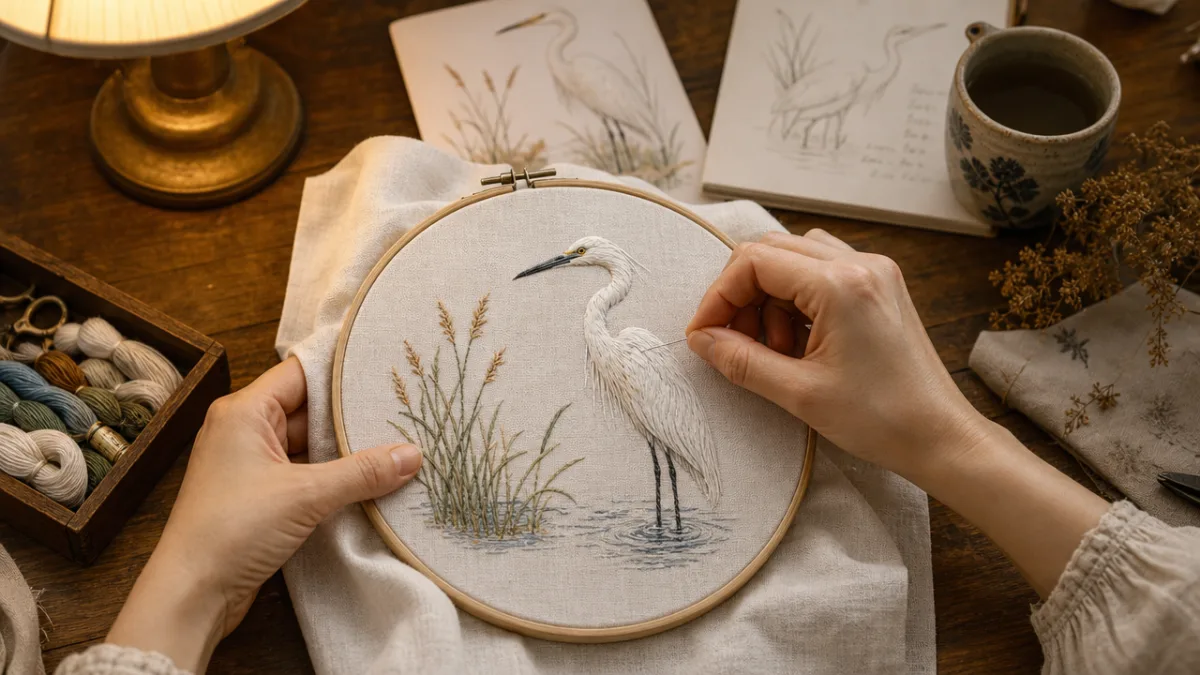
The linen back panel is the perfect place for an egret motif, partly because linen’s smooth surface takes embroidery, block printing, and fabric paint so well. A hand-stitched egret in white thread on natural linen gives you something quietly beautiful — the kind of detail you notice more the closer you look. Go with dark indigo or black thread and the effect shifts completely, becoming bold and graphic. The same bird, the same fabric, totally different mood. That’s a lot of creative range within a single design idea.
There’s also something meaningful about the egret beyond just its looks. Across different cultures and traditions, egrets have been associated with purity, patience, longevity, and a deep connection to the natural world. Putting that kind of symbolism into a handmade object turns it into more than decoration — it becomes something intentional, something made with care. If you’re making this pillow as a gift, the egret motif communicates a thoughtfulness that no mass-produced item could ever quite pull off.
Selecting and Preparing Your Denim for Patchwork
The quality of your finished pillow really does start with how thoughtfully you gather and prepare your denim. It’s worth building up a collection of pieces from different garments — varying weights, washes, and textures — rather than cutting everything from a single pair of jeans. Lightweight summer denim gives you softer, more pliable patches; heavy work jeans bring structure and that rich deep indigo that anchors a composition. Chambray shirts, denim skirts, even old bags or hats — all of these can add something interesting to your patchwork palette.
Before you cut anything, wash and dry all your denim pieces. This prevents shrinkage later on and removes any residual finishes that might cause problems with stitching. Washing also does something nice to the fabric itself — it softens stiff creases, lifts surface lint, and starts that gentle distressing that gives upcycled denim so much of its warmth. Once everything is washed, press each piece with a hot iron. Even small wrinkles or distortions in individual patches can compound into real alignment problems across a full patchwork panel, so it’s worth being thorough here.
When you’re ready to cut, a few approaches will help you get the most interesting results:
- Mix patch sizes deliberately, using larger squares or rectangles as anchor pieces and smaller fragments as accent details that fill gaps and add visual rhythm.
- Preserve interesting features from the original garments whenever possible, including pockets, belt loops, seam lines, and areas of particular wear or fading, as these add authentic character that cannot be replicated.
- Cut some patches on the bias to introduce subtle diagonal texture variation that catches light differently from straight-grain pieces.
- Keep a small reserve of very small scraps for filling unexpected gaps or for adding final accent patches after the main layout is complete.
One more decision worth thinking through before you start sewing: how you handle seam allowances will define the overall feel of the finished surface. Pressed-flat seams — ironed open or to one side and hidden inside the pillow face — give you a smooth, quilt-like look that reads as relatively polished. Raw-edge seams, left unfinished and allowed to fray over time, create something more tactile and dimensional, a surface that honestly gets better with every wash. Many experienced makers use both approaches in the same piece, keeping structural joins neat while letting decorative edges fray freely. There’s no wrong answer; it just depends on the look you’re going for.
Working with Linen: The Perfect Complement and Backing Material
Linen has been around for thousands of years, and the fact that it’s still everywhere — in kitchens, bedrooms, studios, and craft projects — is a pretty good sign that it holds up. Made from flax fibers, it’s naturally strong and breathable, and it has that slightly slubby, textured quality that makes it interesting even when it’s completely plain. For a denim patchwork pillow, linen does double duty: it backs the whole piece with structural integrity and a clean reverse side, while also introducing a warmth and softness that balances denim’s cool, stiff face beautifully.
Weight matters when you’re choosing your linen. Medium-weight linen — sometimes sold as dressmaking or craft linen — is usually the sweet spot for pillow construction. It’s sturdy enough to support a heavy patchwork front without puckering or warping, but still easy enough to work with that it folds cleanly at corners and accepts detailed needlework without fighting you. Heavier upholstery linens can be a good call for larger pillows that will see a lot of daily use, while lighter quilting linens suit smaller, more delicate projects where fine embroidery takes center stage.
Pre-washing your linen is non-negotiable — more so, even, than pre-washing denim. Linen can shift significantly in both length and width during its first wash, and you really don’t want that surprise to happen after your pillow is finished. Wash it in warm water, dry it on medium heat, and then iron it while it’s still slightly damp. That last step makes a bigger difference than you might expect: linen ironed damp comes out genuinely crisp, and that crispness translates directly into more accurate cutting and cleaner seams.
Once your linen is prepped, you have a beautiful blank canvas to work with before the pillow even comes together. Some techniques that work especially well on linen:
- Hand embroidery using simple outline stitches to render an egret or other nature motif with delicate precision and a handmade quality that machine work cannot match.
- Lino or wood block printing using fabric ink to stamp a repeating egret silhouette or botanical border around the perimeter of the backing panel.
- Natural dyeing with materials like black walnut hulls, onion skins, or indigo to create subtle color washes that tie the linen visually to the denim face.
- Machine quilting through the linen and a thin batting layer to create texture and dimensional interest on the reverse side of the pillow.
Assembling Your Patchwork Pillow: Techniques and Tips
This is where everything comes together, and it’s worth slowing down and being methodical. Start by laying all your denim patches out on a flat surface in the arrangement you’re planning, and step back often to look at the overall balance of tones, textures, and sizes. Taking a photo with your phone at this stage is genuinely useful — it gives you a reference to return to when patches inevitably shift around during handling.
Rather than trying to join everything in one long sequential run, work in sections. Group patches into rows or blocks, sew those smaller units first, then join the blocks into a complete panel. This approach keeps the amount of fabric you’re pushing through the machine manageable at any given moment, reduces the risk of the whole thing warping or shifting, and lets you press seams flat at each stage before moving on. If you’re sewing through multiple layers of heavy denim, a walking foot (sometimes called an even-feed foot) is worth its weight in gold — it keeps all the layers moving together evenly under the needle instead of letting them drift.
Once your patchwork front is done and pressed, there are a few ways to handle the closure. An envelope back — two overlapping panels of linen that create a hidden opening — is the most practical option for everyday use. No zipper, no buttons, easy to get the insert in and out for washing. A zipper gives you a cleaner, more polished look and keeps everything snugly in place. Decorative buttons or ties can actually become part of the design themselves, especially if you hunt out vintage or unusual buttons that fit the upcycled spirit of the whole project.
The filling you choose will shape how the finished pillow looks and feels in real life. Down or feather inserts have that lovely way of conforming to pressure and then puffing back up, which suits larger pillows beautifully. Polyester fiberfill is more budget-friendly, holds its shape well in smaller sizes, and is a good option if allergies are a concern. Kapok — a natural plant-based fiber — lands somewhere in the middle and appeals to makers who want to keep the whole project as natural and sustainable as possible. Whatever you choose, go one size up from your pillow cover for a satisfyingly full look rather than something flat and limp.
Care, Display, and the Lasting Value of Handmade Objects
Here’s the good news: a well-made denim patchwork pillow is not precious. Denim and linen are both tough, washable fabrics built to last, and this pillow is meant to be used — sat on, touched, and folded into the actual life of your home. To keep it looking its best, machine wash the cover on a gentle or delicate cycle in cold water. This protects the seams, keeps the denim from losing too much color, and prevents any embroidered motifs from getting distorted. Washing the cover separately from the insert lets you clean each piece the way it needs to be cleaned.
In the dryer, low or medium heat works fine for both denim and linen — but pulling the cover out while it’s still slightly damp and reshaping it by hand before letting it finish air-drying will prevent that slight stiffness that full machine drying can leave behind. And here’s something worth knowing: these pillows actually get better with time. The denim softens and develops a lovely faded quality, the seams relax in a way that feels intentional rather than worn-out, and any raw edges you left unfinished will fray into soft, feathery borders that add real tactile interest to the surface.
When it comes to displaying them, patchwork denim pillows are surprisingly versatile. A few ideas worth considering:
- On a linen sofa or armchair in a Scandinavian or coastal-influenced interior, where the natural tones of both materials harmonize with pale wood, rattan, and organic textures.
- Grouped with other handmade textiles on a bed, layered against a headboard alongside cotton quilts and sheepskin throws for a collected, artisanal bedroom aesthetic.
- On a porch swing or garden bench, where the durability of denim makes it well-suited to light outdoor use and the egret motif connects the object to the natural surroundings.
- As a single statement accent on a minimalist sofa, where its patchwork surface and handmade character provide welcome visual warmth and contrast against clean, simple furnishings.
But the deeper value of a pillow like this isn’t really about décor at all. Making something by hand from worn-out materials connects you to a long tradition of resourceful, skilled makers — quilters, textile workers, and domestic crafters across generations who understood that old things carry value, that beauty lives in the imperfect and the aged, and that the act of making is itself a form of care. The egret motif fits that spirit perfectly: patient, graceful, and quietly connected to something larger than itself.
Whether this is your first patchwork project or one of many, denim and linen with a nature-inspired motif like the egret gives you a framework that’s both approachable and genuinely rewarding to work within. The finished pillow will carry the marks of your hands, the history of its materials, and the attention you gave to making it — and that combination of qualities is exactly what makes a handmade object worth having. Put it on your sofa, give it to someone you love, or keep it as a small reminder that the most beautiful things are often made from what we already have.








What do you think?
It is nice to know your opinion. Leave a comment.