










Straws & Shoelaces: The Surprisingly Fascinating World of Everyday Essentials
A Brief History of the Drinking Straw
Long before plastic became ubiquitous, humans were already searching for better ways to drink their beverages. The earliest known straws date back to around 3000 BCE in ancient Sumer, where gold tubes inlaid with lapis lazuli were discovered in royal tombs. These ornate drinking tubes were likely used to sip beer from large communal vessels, helping to filter out the solid byproducts of fermentation that would otherwise make drinking unpleasant. The idea of channeling liquid through a tube is one of humanity’s oldest and most enduring innovations.
The modern straw as most people recognize it was patented in 1888 by Marvin Chester Stone, a Washington D.C. cigarette manufacturer who grew tired of the taste that natural rye grass straws imparted to his mint juleps. Stone wound strips of paper around a pencil, glued the edges together, and created the first paper drinking straw. His invention was an immediate commercial success, and within a few years he had pivoted his entire manufacturing operation to focus on straw production. The paper straw remained the dominant design for decades, durable enough to last through a drink without dissolving.
The leap from paper to plastic came in the mid-twentieth century, coinciding with the broader postwar plastics revolution that transformed consumer goods across every category. Plastic straws were cheaper to produce, more durable, and could be manufactured in a dazzling array of colors and styles. The flexible straw, with its accordion-pleated bend, was patented in 1937 by Joseph Friedman after he watched his young daughter struggling to drink a milkshake through a straight straw at a soda fountain. He inserted a screw into a paper straw, wound dental floss around the grooves, and discovered he could create a flexible section that would bend without collapsing. That small invention changed the experience of drinking for generations of children and hospital patients alike.
The Shoelace: From Ancient Sandal Ties to Modern Performance Lacing
Shoelaces have a history that stretches back further than most people would guess. Archaeological evidence suggests that some form of lacing system was used on footwear as early as 3500 BCE. The Ötzi iceman, a remarkably preserved Copper Age human discovered in the Alps in 1991, wore shoes that incorporated a sophisticated lacing arrangement using strips of leather. These early lacing systems served the same fundamental purpose as today’s athletic shoelaces: keeping footwear securely attached to the foot during movement. The continuity of this basic design across five millennia is a testament to how well the concept works.
For most of recorded history, shoelaces were made from whatever flexible, strong materials were locally available. Leather thongs, twisted plant fibers, and woven textiles all served the purpose at various times and in various cultures. The industrial revolution transformed shoelace production just as it transformed everything else, making it possible to manufacture uniform, affordable laces at scale. Cotton became the dominant material in the nineteenth century, and the basic woven cotton shoelace remained standard well into the twentieth century. The tips of laces, known as aglets, were originally made from metal or bone and served the critical function of preventing the ends from fraying and making it easier to thread laces through eyelets.
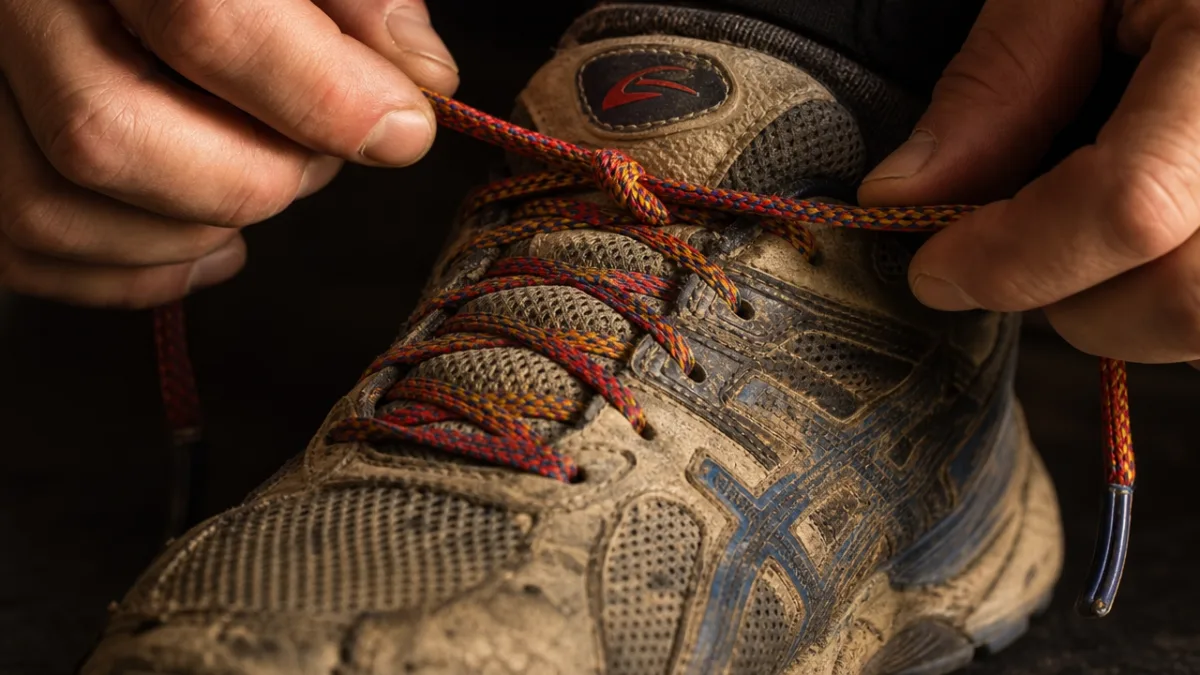
Modern shoelace technology has advanced far beyond the simple cotton lace of previous centuries. Today’s athletic laces incorporate polyester, nylon, and specialized synthetic blends engineered for specific performance characteristics. Flat laces, round laces, oval laces, and waxed laces all behave differently and suit different types of footwear and activities. Rock climbers use flat laces for precision fit in climbing shoes. Trail runners prefer laces with enhanced grip to prevent loosening during aggressive movement. Even the humble aglet has been reimagined in plastic and reinforced polymer materials designed to outlast the lace itself. What began as a simple strip of leather has become an engineered component with measurable performance specifications.

The Science Behind How Straws Work
The physics of straw drinking is more interesting than most people realize, and it provides a wonderful window into the principles of atmospheric pressure and fluid dynamics. When you place a straw in a glass of liquid and draw on it, you are not actually pulling the liquid upward through the straw. Instead, you are reducing the air pressure inside the straw by expanding your lungs and oral cavity. The atmospheric pressure pressing down on the surface of the liquid in the glass then pushes the liquid up through the straw and into your mouth. You are, in the most literal sense, being helped to drink by the weight of the entire column of air above the glass.
This atmospheric pressure mechanism places a hard physical limit on how long a straw can be. Standard atmospheric pressure at sea level is roughly equivalent to the pressure exerted by a column of water about 10.3 meters tall. This means that even with perfect suction, a person cannot draw water through a straw longer than approximately 10 meters. In practice, the human body cannot generate enough suction to approach that theoretical limit, and most people struggle with straws longer than a meter. The flexibility of the straw matters too: a bent straw requires slightly more effort because the liquid must change direction, introducing turbulence and friction losses that the drinker must overcome with additional suction pressure.
Straw diameter also significantly affects the drinking experience in ways that go beyond simple preference. A wider straw allows more liquid to flow per unit of suction effort, which is why bubble tea straws are noticeably thicker than standard straws — they need to accommodate the large tapioca pearls along with the liquid. Narrower straws increase the velocity of liquid flow for a given pressure differential, which can affect both the taste perception and the sensory experience of drinking. Some coffee enthusiasts argue that drinking espresso through an extremely narrow straw concentrates the flavor and changes the aromatic experience. These are not merely subjective impressions; the flow dynamics genuinely alter how the beverage contacts the taste receptors on different parts of the tongue.
Knotting, Lacing, and the Mathematics of Shoelace Patterns
The way you lace your shoes has more mathematical complexity behind it than almost anyone suspects. Ian Fieggen, an Australian webmaster who became an unlikely global authority on shoelace techniques, has catalogued over 40 distinct lacing methods for a standard shoe with six pairs of eyelets. Mathematicians have studied the problem formally: in 2002, researchers at the University of Sydney published a paper in the journal Nature demonstrating that for a shoe with n pairs of eyelets, the number of mathematically valid lacing patterns grows astronomically. For a shoe with just six pairs, there are more than 43 quintillion theoretically valid lacing patterns, though most of them would be impractical to actually use.
Different lacing patterns have genuine practical implications beyond mere aesthetics. Straight lacing, also known as display lacing or fashion lacing, reduces pressure on the top of the foot and is often recommended for people with foot pain or numbness. Army lacing creates a horizontal bar across each eyelet pair that can be cut individually if a lace gets snagged in the field, allowing soldiers to quickly free their feet. Heel lock lacing, sometimes called runner’s loop lacing, uses an extra loop at the top two eyelets to lock the heel firmly into the shoe and reduce blistering — it is widely recommended for distance runners and has become standard advice in the long-distance running community. The specific pattern you choose is a functional decision with real consequences for foot health and performance.
The bowknot used to tie shoelaces has its own fascinating history and biomechanics. Research published in the journal Proceedings of the Royal Society A found that the forces acting on a shoelace knot during walking are surprisingly complex: the knot experiences an inertial force during the swing phase of walking that is about seven times the force of gravity, and this combines with the impact force of the foot striking the ground to create the conditions that cause knots to fail. The study found that the so-called “granny knot” — made by looping the same way twice — is significantly less secure than the “reef knot” or square knot configuration used in a proper bow. This is why shoe tying technique actually matters, and why children who learn to tie their shoes incorrectly end up with laces that come undone far more frequently.
- Straight/European lacing: Runs horizontally across eyelets, reduces pressure across the top of the foot and provides a clean visual line preferred for formal footwear.
- Criss-cross lacing: The most common method worldwide, balancing simplicity, security, and even pressure distribution across the instep.
- Heel lock lacing: Uses an extra loop at the ankle eyelets to anchor the heel, preventing backward slippage during running and reducing blister formation.
- Army lacing: Creates horizontal segments that can be cut individually in emergencies, designed for practical field use and quick release scenarios.
- Lydiard lacing: Developed by legendary running coach Arthur Lydiard, this method reduces pressure on the top of the foot while maintaining overall shoe security.
The Environmental Reckoning: Straws and Sustainability
The environmental conversation around plastic straws intensified dramatically in 2015 when a video went viral showing a sea turtle with a plastic straw lodged painfully in its nostril. The footage sparked global outrage and accelerated a movement that was already building momentum among environmental advocates. Plastic straws became a symbol of single-use plastic waste more broadly, partly because of their ubiquity — the United States alone was estimated to use over 500 million plastic straws every day at the peak of their use — and partly because they are too lightweight to be processed by most recycling equipment and therefore almost always end up in landfills or waterways. The visual of a straw in a turtle became one of the defining environmental images of the decade.
The response from both regulators and the market has been substantial. The European Union banned single-use plastic straws in 2021 as part of a broader directive targeting the ten most common single-use plastic items found on European beaches. Major restaurant chains including McDonald’s, Starbucks, and countless others announced transitions away from plastic straws, either to paper alternatives, compostable plant-based versions, or no-straw policies. The alternatives market expanded rapidly, with manufacturers developing straws from bamboo, stainless steel, silicone, glass, pasta, rice, and even hay. Each material comes with its own environmental trade-offs: metal straws require significant energy to produce and must be reused many times to offset their manufacturing footprint, while paper straws generate their own waste concerns and are criticized by some disability advocates for their inferior performance.
The disability community has raised important and underreported objections to straw bans that deserve serious consideration. For people with certain physical disabilities, neurological conditions, or swallowing difficulties, flexible plastic straws are not a convenience but a necessity. Silicone and metal straws do not flex in the same way, can pose safety concerns for people with limited bite control, and may not meet the specific clinical needs of individuals in care settings. Many disability advocates have argued that blanket bans implemented without adequate accessible alternatives effectively discriminate against disabled people by removing tools they depend on for basic hydration. The most thoughtful policy approaches have consequently moved toward making alternatives available while removing plastic straws from default service rather than prohibiting them entirely, ensuring that those who genuinely need them can still access them upon request.
Unexpected Connections: When Straws and Shoelaces Collide in Culture and Craft
At first glance, straws and shoelaces might seem to have nothing in common beyond their elongated form. But these two everyday objects share a surprising number of structural and functional parallels that have made them both favorites in the world of DIY craft, educational demonstration, and materials experimentation. Both are flexible tubes or cords of roughly similar diameter ranges. Both are cheap, widely available, and easy to work with. And both have inspired an enormous body of creative projects that exploit their simple physical properties in clever ways. In classrooms around the world, plastic straws are used to teach the principles of structural engineering through straw-and-tape bridge building challenges that can support remarkable loads.
Shoelaces have similarly found their way into creative and educational contexts far removed from footwear. The process of learning to lace and tie shoes is considered a significant developmental milestone in early childhood because it requires bilateral coordination, spatial reasoning, and fine motor control simultaneously. Occupational therapists use shoelace boards as therapeutic tools for developing these skills in children with developmental delays or motor difficulties. Beyond childhood development, shoelace-style braiding and knotting techniques have inspired jewelry makers, textile artists, and macramé practitioners who use the same fundamental over-under weaving principles to create everything from friendship bracelets to hanging plant holders to architectural installations.
The intersection of these two objects becomes most playful and imaginative in the realm of childhood creativity and improvised engineering. Threading a shoelace through a series of straws to create a flexible, articulated snake toy is a classic example of children intuitively discovering the principles of segmented structures — the same principles used in the flexible sections of industrial hoses, articulated robot arms, and endoscopic medical instruments. Making a shoelace stiff enough to thread through an eyelet by dipping the end in a straw is a practical trick used by crafters and sewers working with cord in confined channels. These small, everyday acts of problem-solving with humble materials are in their own way a form of practical engineering, connecting children and adults alike to fundamental principles of mechanics and design through objects that most of us handle without a second thought every single day.
- Straw bridge challenges: Teams compete to build the strongest bridge using only straws and tape, teaching compression, tension, and triangulation principles through hands-on experimentation.
- Shoelace weaving: Using laces in place of yarn or cord to create flat woven textiles introduces children to the over-under logic of textile construction in a tactile and accessible way.
- Pneumatic straw rockets: Launching small paper rockets off a straw demonstrates basic aerodynamics and the principles of pressure-driven propulsion with household materials.
- Aglet replacement crafts: Using tape, heat-shrink tubing, or wax to re-tip a frayed shoelace teaches basic material science and problem-solving with found materials.
- Straw and shoelace mobiles: Combining both materials to create hanging kinetic sculptures introduces concepts of balance, counterweight, and center of gravity through artistic making.

Ultimately, the story of straws and shoelaces is a story about how the simplest objects, when examined carefully, reveal themselves to be vessels of history, physics, culture, and human ingenuity. The straw carries within its hollow length centuries of atmospheric science and the entire arc of the plastics age. The shoelace encodes thousands of years of material culture and a surprising depth of biomechanical and mathematical complexity. Together, they remind us that the everyday world, looked at with genuine curiosity, is never as ordinary as it appears.








What do you think?
It is nice to know your opinion. Leave a comment.