










Repurposed Records: The Art of Giving Vinyl a Second Life
The Vinyl Revival and the Upcycling Movement
There’s something about a vinyl record that just hits differently than other objects. Those grooved black discs were the soundtrack of entire generations — spinning out jazz, punk, soul, and everything in between in living rooms, bedrooms, and dance halls all over the world. And now that record players have made their remarkable comeback, a whole different kind of vinyl appreciation has come along with them. One that sees beauty not just in the music, but in the physical object itself — as a canvas, as a material, as something worth transforming.
The upcycling movement has taken off in a big way across craft communities, home decorating circles, and sustainable living spaces. The idea is simple: instead of throwing out something that’s outlived its original purpose, you turn it into something new — and often something more interesting than what you started with. Vinyl records have become one of the most beloved materials in this space, and it’s easy to see why. The circular shape, the reflective surface, the instant cultural recognition — they bring something unique to any project.
Scratched, warped, or just plain unplayable records that would otherwise end up in a landfill are getting second lives as clocks, bowls, wall art, jewelry, and furniture. It’s this sweet spot where nostalgia, sustainability, and creativity all meet — and that’s a pretty compelling combination. Whether you’re a lifelong music lover, a dedicated crafter, or just someone who spotted a cool record bowl somewhere and thought “I want that,” there’s genuinely something here for you.
Understanding Your Materials: Choosing the Right Records
Before you jump into any repurposing project, it helps to understand what you’re actually working with. Vinyl records are made from polyvinyl chloride — a thermoplastic that gets pliable when heated to relatively low temperatures, somewhere around 150 to 200 degrees Fahrenheit. When it cools back down, it’s rigid and durable again. That combination is exactly what makes vinyl such a great crafting material. You can shape it by hand, mold it over forms, and it holds whatever shape you give it once it cools.
Not every record is the same when it comes to crafting, though. Standard 12-inch LPs, 7-inch singles, and 10-inch EPs each have different proportions that suit different projects. Thicker audiophile pressings from the 70s and 80s tend to behave better under heat than thinner budget releases. And if you keep an eye out for colored vinyl, picture discs, or records with particularly cool label art, those details can add a lot of visual interest to your finished piece — so browsing thrift store bins with an artistic eye is just as worthwhile as hunting for good deals.
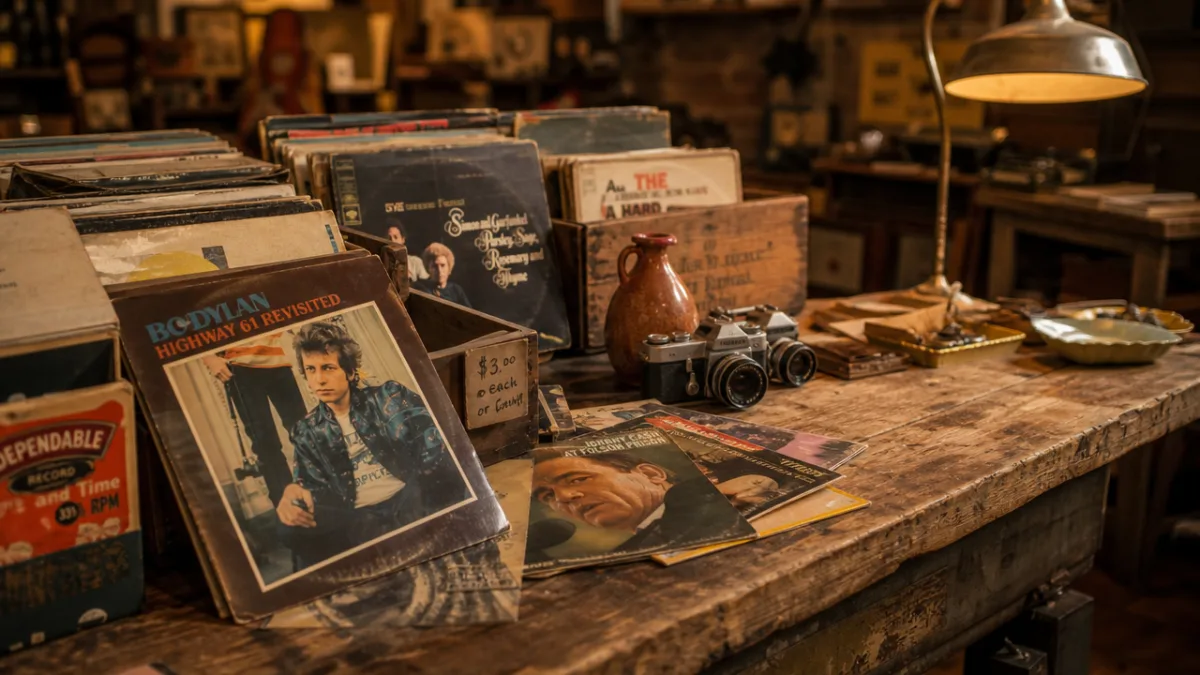
Where you source your records matters too. Thrift stores, estate sales, flea markets, and record store clearance bins are all great places to find damaged or unplayable records that are perfect for crafting. A lot of record shops are happy to part with unsellable stock cheaply, or even for free. One thing worth saying clearly: if a record is still playable or has collector value, it should stay a record. The whole point of repurposing is to give new life to things that have genuinely reached the end of their musical usefulness — not to sacrifice something someone else would love to listen to.
Iconic Projects: From Bowls to Wall Art
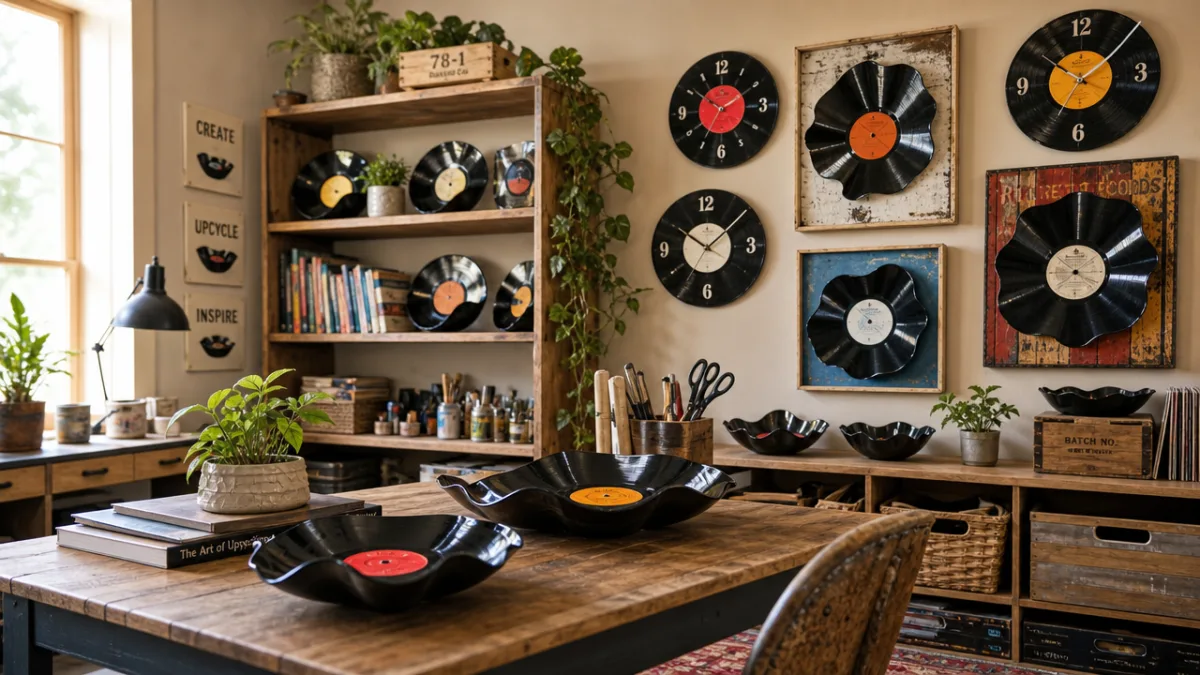
The vinyl bowl is probably the most recognizable repurposed record project out there, and it earned that status for good reason. You place a record on top of an oven-safe bowl, slide it into the oven at around 200 degrees Fahrenheit for a few minutes, and watch it soften and drape itself into a perfectly curved shape. That’s really it. The result looks polished and artistic, and these bowls are genuinely useful as catchalls for keys, trinkets, or whatever ends up on your entryway table. The reflective surface catches light in a way that makes them look far more expensive than they were to make.
Wall art is another huge category, and the range of what people do with it is pretty remarkable. At the simplest end, you paint or draw directly on the record and hang it up — the circular shape works as a ready-made canvas. From there, things get more elaborate: laser-cut silhouettes, shadow boxes that frame records alongside concert tickets and old photos, geometric arrangements of multiple records that turn a whole wall into a visual statement. Even a simple approach carries built-in meaning, because records come loaded with associations — music, memory, a particular time in someone’s life.
Record clocks have been popular for years, and they’re not going anywhere. A basic clock movement kit from any craft store costs just a few dollars, and you thread it through the spindle hole at the center of the record and you’re basically done — the existing label becomes the clock face. Or you paint and decorate the surface first to make something entirely custom. These make great gifts precisely because they’re personal and functional at the same time, and they look good in pretty much any room.
Jewelry and Wearable Art From Vinyl
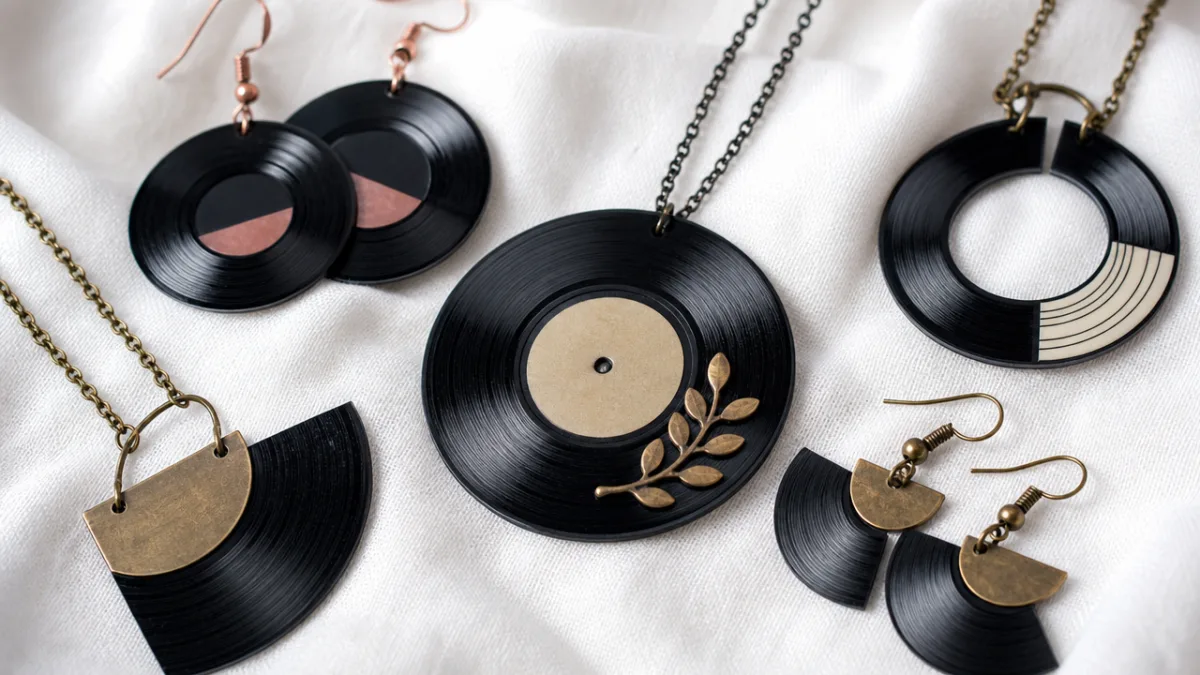
Turning vinyl records into wearable art might be the most creatively exciting corner of the whole repurposing world. Crafters and artists have figured out that small pieces cut from damaged records can become earrings, pendants, bracelets, rings, and brooches of genuinely impressive quality. The reflective black surface gives vinyl a sleek, modern look that works for both minimalist and statement pieces, and the material is light enough that wearing it all day isn’t a problem.
Making vinyl jewelry involves a mix of cutting and heat-shaping. At room temperature, vinyl cuts cleanly with sharp scissors or a craft knife. A heat gun or a short stint in the oven lets you curve, dome, or otherwise shape pieces into three-dimensional forms. Small pieces can be drilled for jump rings, sanded smooth, and sealed with jewelry resin for durability and a nice finish. More experienced crafters have gone further — layering vinyl pieces with different textures, or embedding record fragments in clear resin to create pendants where the musical origins are completely visible.
There’s also something meaningful about vinyl jewelry that goes beyond how it looks. Wearing something made from a record connects you to a bigger conversation about music, memory, and impermanence. Some artists specifically choose records with personal significance — a favorite album, a show souvenir, something that belonged to a parent — and turn them into keepsakes that honor both the music and the story behind it. That kind of intentionality pushes repurposed vinyl jewelry into genuine heirloom territory.
If you’re just getting started with vinyl jewelry making, here’s a solid basic supply list to work from:
- Damaged 7-inch or 12-inch vinyl records in good cosmetic condition
- Sharp craft scissors and a fine-tipped craft knife with spare blades
- A heat gun or access to a conventional oven for shaping
- A small hand drill or rotary tool with fine drill bits
- Jump rings, earring hooks, and other basic jewelry findings
- Fine-grit sandpaper in several grades for smoothing edges
- Jewelry-grade resin for finishing and protective coating
Home Décor and Furniture Applications
Beyond smaller projects, vinyl records have found their way into some genuinely ambitious home décor and furniture work that really changes your sense of what upcycling can do. Some designers and DIY enthusiasts have used records to build mosaic tabletops, cutting them into tiles and setting them in resin or grout. The results are stunning — unmistakably artistic surfaces that hold up to daily use as coffee tables, side tables, or desk surfaces once the resin coat is applied.
Record coasters are one of the simplest practical applications, and they’re a great entry point if you want something useful without a lot of effort. Small records work directly as coasters with felt pads on the bottom; larger ones can be cut into segments or used whole as trivets. Record bookends are similarly straightforward — heat two records into L-profiles, add a bit of weight inside, and you’ve got functional, characterful bookends that look great on any shelf.
The more adventurous projects include decorative drawer fronts made from records, headboards built from arrangements of records mounted on backing boards, light fixtures that use records as shade elements, and small shelving units with brackets fabricated from vinyl reinforced with metal hardware. These take more planning and some basic woodworking knowledge, but they really do demonstrate how versatile vinyl is as a design material. Records bring a combination of texture, reflectivity, and cultural resonance that you genuinely can’t replicate with conventional materials.
If you’re planning a larger home décor project with vinyl, a few practical things are worth keeping in mind:
- Be honest about the structural demands of your project, and reinforce vinyl with wood, metal, or resin wherever you need real load-bearing strength.
- Practice your heat-shaping technique on spare records before working with anything you plan to use in the final piece.
- Think about sunlight — prolonged direct UV exposure can warp and fade vinyl over time, so placement matters.
- Figure out your sourcing before you start, and calculate how many records you’ll need. Records from the same era tend to be more consistent in color and thickness, which matters more than you’d think once everything is assembled.
- Seal finished projects with an appropriate protective coating to guard against moisture, scratches, and everyday wear.
The Sustainability Story Behind Repurposed Vinyl
The environmental side of vinyl repurposing is worth talking about seriously, because it adds real meaning to what might otherwise seem like a purely aesthetic hobby. Polyvinyl chloride — the material records are made from — isn’t recyclable through most standard municipal programs. Records that end up in landfills can sit there for hundreds of years. And the vinyl industry itself continues to generate waste through overruns, defective pressings, and unsold stock. Repurposing those records instead of tossing them is a small act, but it’s a genuinely meaningful one.
The idea of the circular economy — keeping materials in use for as long as possible before they’re ever disposed of — finds a wonderfully tangible expression in the repurposed records movement. When someone picks up a bag of unsellable records from a thrift store and turns them into a dozen clocks, bowls, and pieces of jewelry, they’re extending the useful life of those materials by years or decades. All the energy and resources that went into making those records in the first place — raw materials, manufacturing, transportation — get honored rather than wasted.
That said, it’s worth being honest about where the sustainability argument has its limits. Vinyl crafting produces waste too — trimmings, failed experiments, projects that eventually wear out. The dyes, resins, and finishes used in various techniques have their own environmental footprints. The most responsible approach pairs genuine enthusiasm for the creative work with a real commitment to minimizing waste: saving scraps for smaller projects, choosing non-toxic materials where you can, and bringing actual intentionality to each project rather than treating sustainability as a marketing angle.
The community that’s grown up around repurposed records is itself part of what makes this movement work. Online groups, local craft fairs, and dedicated marketplaces have built networks where people share techniques, swap materials, sell finished pieces, and collectively develop knowledge that makes everyone’s practice better and less wasteful. When someone figures out a way to cut vinyl without a single wasted piece and posts it online, thousands of other crafters learn from it. That kind of shared knowledge accelerates best practices in a way that benefits both the creative quality of the work and its environmental impact.
Getting Started: Your First Repurposed Record Project
If you’re ready to try this for the first time, the record bowl is the perfect place to start. It needs almost no tools, it tends to come out beautifully even on the first attempt, and it teaches you the core skill — heat-shaping vinyl — that shows up in so many more advanced projects down the line. All you need is a damaged record, an oven-safe bowl to use as a mold, a regular oven, and a pair of heat-resistant gloves. The whole thing takes under fifteen minutes, and watching a flat, broken record sag and curve into an elegant sculptural bowl really is one of those satisfying moments that makes you want to immediately do it again.
The record clock is an equally great starting point if you’d rather keep things flat and skip the heat entirely. Clock movement kits are cheap and widely available, and the project comes together without any cutting or shaping. If you want to get more creative, paint or decorate the record before you install the movement — this is a great opportunity to experiment with paint, markers, and decoupage on vinyl. Acrylic paints bond well with a proper primer coat, and a lot of crafters have discovered that metallics and neons look especially striking against that reflective black surface.
The real key to enjoying vinyl repurposing long-term is building your skills gradually. Starting simple gives you confidence and a feel for how the material actually behaves, so that when you’re ready to tackle something more complex, it doesn’t feel nearly as intimidating. A lot of crafters swear by keeping a project journal — writing down temperatures, timing, tool choices, and what worked or didn’t — because it speeds up the learning process and helps you replicate your successes. And the online vinyl crafting community is genuinely one of the friendlier corners of the internet, full of people who are happy to help when you run into problems.
What the world of repurposed records ultimately offers is something you don’t find that often in the crafting space: a genuine convergence of accessibility, sustainability, cultural richness, and creative freedom. Whatever you make — something hung on a wall, worn around your neck, used every day as a clock or bowl, or given to someone who loves music more than anything — carries with it the history of vinyl itself. A material that spent decades bringing people together around the shared experience of sound. In giving those records a second life, crafters become part of that history rather than its ending, adding one more chapter to the long and remarkable story of music and the objects that carry it.








What do you think?
It is nice to know your opinion. Leave a comment.