










The Art and Elegance of 12″ Original Dipped Taper Candles
A Timeless Tradition: The History of Taper Candles
Taper candles have been around for thousands of years — and honestly, it’s not hard to see why they’ve stuck around. Long before anyone flipped a light switch, people relied on taper candles for everything from reading by firelight to gathering around the dinner table. That classic shape, narrow at the top and slightly wider at the base, wasn’t just a design choice. It was practical: a well-made taper burns slowly and evenly with almost no dripping, which mattered a great deal when candles were your only source of light after dark.
Hand-dipping tapers is one of the oldest candle-making techniques still practiced today. The process is exactly what it sounds like: a maker dips a wick into melted wax over and over again, letting each layer cool and harden before going back in. It takes dozens of passes to build up the smooth, dense walls that make a great taper candle. Getting it right requires patience and real know-how — the kind that used to be passed down through generations of craftspeople across Europe and beyond.
By the medieval period, taper candles had worked their way into just about every corner of life. Churches burned them by the thousands. Royal households used elaborately styled tapers as a show of wealth and taste. Then gas lighting came along, then electricity — and yet taper candles never really went away. Instead, they became something different: objects of decoration, celebration, and atmosphere. People still love them today precisely because lighting one feels like a small act of stepping back from the pace of modern life.
What Makes a 12″ Dipped Taper Candle Superior
There’s a reason 12 inches has become the go-to standard for taper candles. At that height, you’re getting somewhere between six and nine hours of burn time — plenty for a long dinner party, an evening ceremony, or just a relaxed night at home. The height also gives you real visual presence in a candlestick or candelabra without being so tall it takes over the whole table. It hits a sweet spot that shorter candles just can’t quite reach.
Hand-dipped tapers stand apart from molded or mass-produced candles in ways that are easy to notice once you’ve used both. Because each wax layer bonds tightly to the one before it, the candle burns down evenly from top to bottom — no tunneling, no lopsided melt pools. The wick stays centered throughout the entire dipping process, which means you get a steady, upright flame that doesn’t gutter or lean to one side. It’s a level of consistency that’s genuinely hard to fake.
The wax itself makes a difference too. Premium dipped tapers use a carefully blended paraffin or natural wax that’s hard enough to hold its shape at room temperature but soft enough to accept pigment deeply, release fragrance gently, and melt cleanly without producing a lot of smoke or soot. When you hold one, it feels solid and substantial — there’s a slight give if you press it, and the surface catches light in a way that quietly signals it was made well.
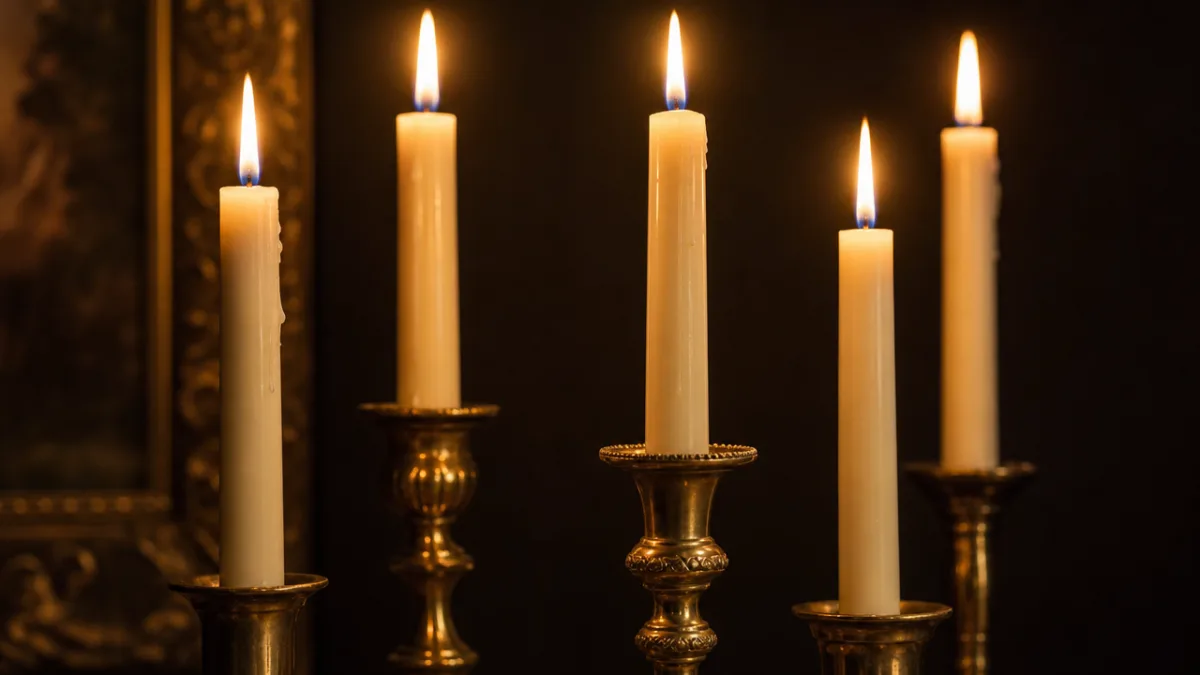
The Dipping Process: Craftsmanship Behind Every Candle
Once you understand how dipped tapers are actually made, it’s hard to look at them the same way again. It starts with getting the wax to exactly the right temperature — usually between 150 and 160 degrees Fahrenheit. Too hot, and the wax starts stripping away the layers you’ve already built up. Too cool, and each dip leaves a rough, uneven coat. Holding that temperature steady through an entire production run is genuinely demanding work.
Wicks — typically braided cotton treated to encourage clean burning — are prepared in pairs, looped over a dowel or dipping frame. The maker dips both into the wax at once, pulls them out slowly and steadily, and lets the excess drip back into the vat. Then the pair hangs to cool for anywhere from half a minute to a few minutes, depending on the temperature and humidity in the room, before going back in. That cycle — dip, cool, dip, cool — repeats anywhere from 25 to 40 times or more, building up the candle layer by layer until it reaches its final diameter.
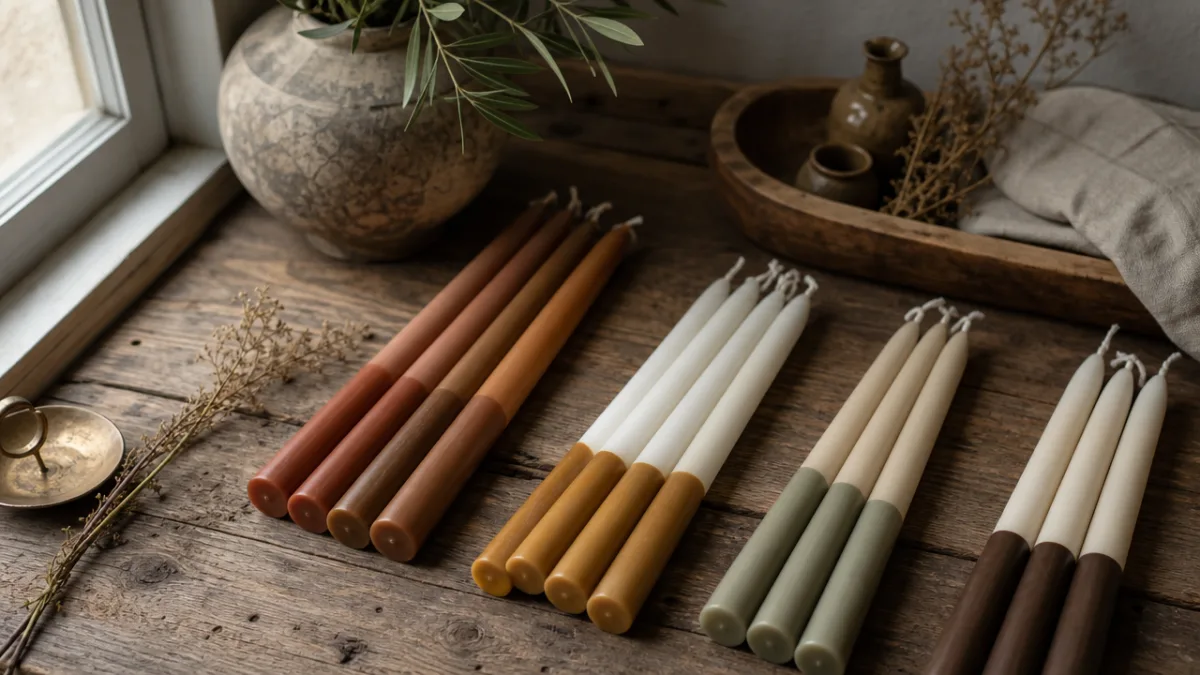
Getting the color right adds another layer of skill to the whole process. Pigment gets added to the wax vat in measured amounts, but here’s the tricky part: wet wax always looks darker than it does once it dries. Hitting a consistent, vibrant color across an entire batch takes experience and a well-trained eye. Some makers start with white or neutral wax for the inner layers, then switch to a colored vat for the outer ones. The result is a candle with a clean-burning white core and a richly colored exterior — a small detail that’s actually a real mark of craft.
Color, Aesthetics, and Interior Design Applications
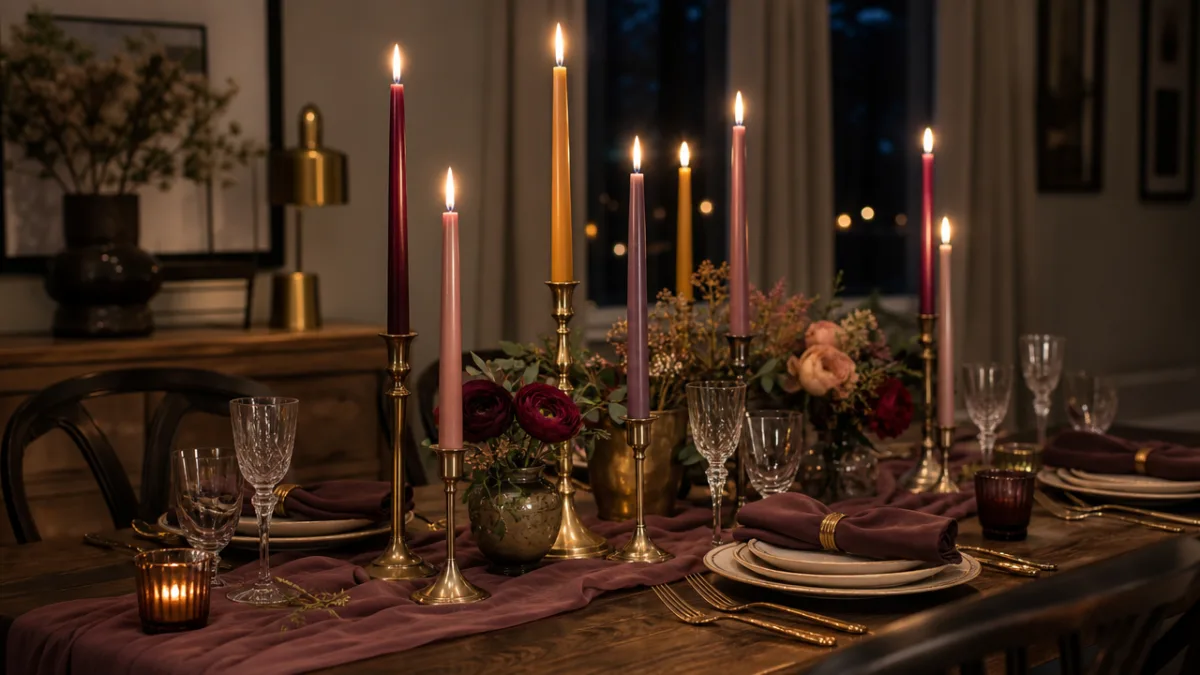
One of the best things about original dipped tapers is the sheer range of colors available. You can find the crispest whites and creams, deep jewel tones like burgundy, forest green, and navy, soft dusty pastels, and bold contemporary hues. Whatever aesthetic you’re going for — whether it’s a formally set dinner table or a relaxed evening at home — there’s a color that fits. That versatility is a big part of why interior designers and event stylists reach for them so often.
On a dining table, taper candles do a lot of work at once. They cast warm, flattering light that no overhead fixture can replicate — that soft, flickering glow that makes food look good and people look even better. They add vertical interest to a table setting, drawing the eye upward and making even a simple meal feel like a bit of an occasion. And color does real communicative work here: ivory or white tapers feel classic and formal; deep red or burgundy reads as romantic and rich; sage green or slate blue feels more relaxed and contemporary.
Beyond the dinner table, 12-inch tapers show up beautifully throughout the home and in all kinds of event settings. Designers and stylists tend to reach for them in several recurring ways:
- Clustered arrangements using candlesticks of different heights to build layered, organic-feeling centerpieces that look collected rather than overly coordinated
- Mantelpiece displays where tapers anchor the space alongside seasonal foliage, dried botanicals, or sculptural objects — a look that works across multiple seasons
- Wedding and celebration tablescapes where a single candle color repeated across dozens of tables creates beautiful visual cohesion at scale
- Altar and ceremony arrangements in both religious and secular settings, where the height and presence of taper candles lend gravity and beauty to meaningful moments
- Intimate bedroom or bathroom setups where a single pair of tapers in simple holders creates a quiet sense of retreat
The candleholder you choose matters more than you might expect. Brass — whether polished bright or worn to a warm patina — brings a sense of heritage and coziness. Silver or pewter reads cooler and more formally elegant. Earthy ceramic holders give tapers a relaxed, artisanal feel, while clear glass lets the candle’s color come through without visual interruption. Pairing candle color with the right holder material is a small creative decision, but it genuinely shapes the whole effect.
Burning Your Taper Candles: Best Practices and Safety
A few simple habits will make a real difference in how well your taper candles perform. Before you light one for the first time, trim the wick down to about a quarter inch. A wick that’s too long creates a large, smoky flame that burns unevenly and can cause dripping. A trimmed wick gives you a flame that’s the right size — bright and attractive, but controlled enough to burn cleanly and not race through the wax.
Where you place your candles matters almost as much as how you light them. Drafts are the main thing to avoid — even a gentle breeze from an open window, a ceiling fan, or people moving around nearby can make a taper flame gutter and lean, which leads to uneven burning, wax drips, and a noticeably shorter burn time. Keep tapers away from air vents and direct airflow, and if you’re burning them outdoors, use hurricane glass or a lantern on breezy days. When you’re burning several tapers together, give them at least four to six inches of space so the heat from neighboring flames doesn’t cause them to soften or bend toward each other.
Storing your candles properly keeps them looking and burning their best. Lay them flat in a cool, dark spot — a drawer, a cabinet, or a dedicated storage box — away from heat and sunlight, which can fade colors and cause warping. Here’s a quick guide to taking care of your tapers:
- Trim the wick to a quarter inch before every use, not just the first time
- Let the candle burn for at least an hour on its first use so it can develop an even melt pool
- Use a candle snuffer to extinguish it rather than blowing — blowing can splatter wax and leave a smoking, smoldering wick
- Never leave a burning candle unattended or anywhere near children, pets, or anything flammable
- Put a candle plate or drip tray under your candlesticks to protect surfaces and catch any stray wax
- Store horizontally at room temperature, wrapped in tissue paper to keep colors from transferring between candles
Dripping is the concern that comes up most often with people who are new to tapers, and it’s worth addressing directly. A quality hand-dipped taper, burned with a properly trimmed wick and out of drafts, really does produce very little dripping. The dense, layered wax melts at a controlled rate that the flame consumes almost entirely as it goes. Dripping usually happens because of a too-long wick, a draft, or simply a lower-quality candle with soft, poorly blended wax. Start with good candles, follow the basics, and you’ll likely find the dripping concern is much smaller than you expected.
Choosing and Gifting Original Dipped Taper Candles
Taper candles might be one of the most reliably good gifts you can give. Unlike a lot of decorative items that depend heavily on the recipient’s specific taste, candles have universal appeal — almost everyone can use them, and almost everyone genuinely enjoys them. A set of well-made 12-inch dipped tapers in a simple box or wrapped in tissue and ribbon feels thoughtful without being over the top. They work for a housewarming, a host gift, a holiday present, or just a genuine thank-you with a little beauty and usefulness built in.
When you’re choosing tapers — for yourself or someone else — a few things tell you whether you’re looking at a quality product. The surface should be smooth and consistent, with no visible bumps, streaks, or air bubbles. The color should be even and saturated from tip to base, not faded or streaky. The wick should be centered and straight, sitting neatly at the tip without fraying. And if you hold the candle up to light, it should look dense and opaque — thin, translucent walls are a sign that not enough wax layers were applied.
There’s also a lot of interesting variety to explore once you start paying attention. Different makers have genuinely different approaches — in their wax blends, their wick choices, their dipping techniques, and their color palettes — and those differences show up in how the candles look and burn. Makers who use traditional methods, natural waxes, and thoughtfully sourced materials tend to produce candles that are better in performance and simply more satisfying to handle. In a world full of disposable, mass-produced things, a hand-dipped taper candle is a small but genuine reminder of what it looks and feels like when something is made with real care.
The Enduring Appeal of Candlelight in Modern Life
We live in a world of screens, buzzing notifications, and light that never really turns off — and somehow, candlelight has only become more appealing because of it. What people have always known intuitively is getting more formal recognition now: the soft, warm, flickering light of a candle creates a quality of experience that no electric light source can replicate. Candlelight slows things down. It softens the edges of a room. It invites you to actually be where you are. Lighting a taper at the dinner table is a small, deliberate act — a way of saying that this meal, this evening, this company, is worth a little ceremony.
The ritual side of candles is worth taking seriously. Humans have always marked important moments with fire and light, and that instinct runs deep. In religious and spiritual traditions around the world, candles represent prayer, remembrance, hope, and presence. In everyday domestic life, they show up at celebrations, at moments of loss, and at the kind of unhurried dinners where conversation actually goes somewhere. A 12-inch taper burning at the center of a table does something a ceiling fixture simply can’t: it creates a warm, shared focal point that draws people in and makes them want to stay.
There’s more to a quality taper candle than just the light, too. The faint scent of warm wax — clean, gently sweet, entirely natural — adds something to a room without overwhelming it the way heavily scented candles sometimes can. The occasional soft crackle, the barely-there whisper of the flame, gives a subtle acoustic presence you don’t notice until you’re aware of it. And then there’s the flame itself — always moving, never quite the same twice, hypnotic in the best possible way. Watching it is a form of quiet contemplation that, honestly, a lot of us could use more of.
Choosing original dipped taper candles — whether it’s a single pair for a quiet Tuesday evening or a dozen sets for a big celebration — is really a choice about the kind of experience you want to create. It’s prioritizing beauty and craft over pure convenience. It’s a small, honest investment in making life a little more pleasant. The tradition is ancient, the craft is real, and the pleasure of a well-made taper candle burning on your table is just as immediate and genuine as it has ever been.








What do you think?
It is nice to know your opinion. Leave a comment.