










Discovering Miss Mustard Seed’s Hand Painted Stencils: A Creative Revolution for Home Décor
Miss Mustard Seed has long been a beloved name in the world of vintage-inspired home décor, celebrated for her signature milk paint, thoughtfully curated furniture makeovers, and an aesthetic that perfectly balances rustic charm with timeless elegance. Her latest offering — a collection of hand painted stencils — has sent ripples of excitement through the crafting and interior design communities alike. These stencils represent something more than a mere product launch; they embody a philosophy that anyone, regardless of artistic training, can bring beauty and originality into their living spaces with just a little paint, patience, and passion.
The announcement of these new stencils arrived through her popular lifestyle blog and social media channels, where followers immediately began sharing their enthusiasm. The stencil designs draw from the same well of inspiration that has always defined Miss Mustard Seed’s brand — nature, vintage typography, botanical illustrations, and architectural motifs that feel both antique and refreshingly current. Whether you are a seasoned DIY decorator or someone just beginning to explore the world of painted finishes, these stencils offer an accessible entry point into truly personalized home design.
What makes this collection particularly exciting is its versatility. The stencils are designed to work on virtually any surface — from furniture and walls to fabric, floors, and even garden pots. Miss Mustard Seed has always championed the idea that great design doesn’t require a large budget, and this stencil line reinforces that message emphatically. With the right stencil and a tin of her signature milk paint, even the most ordinary piece of furniture can be transformed into something extraordinary and deeply personal.
The Design Philosophy Behind the Collection
Every design in the hand painted stencil collection reflects a careful, intentional creative process rooted in Miss Mustard Seed’s lifelong love of antiques, flea markets, and the stories embedded in well-worn objects. She has spoken openly about drawing inspiration from European farmhouses, Scandinavian folk art, and the kind of faded grandeur you might find in a centuries-old manor home. These influences are clearly visible in the stencil motifs — delicate florals, ornate scrollwork, lettering that looks as though it was hand-lettered by a Victorian craftsman.
The hand-painted quality of each design is a deliberate and meaningful choice. Rather than producing perfectly crisp, digitally engineered stencils, Miss Mustard Seed has leaned into slight irregularities and organic lines that mimic the look of authentic hand painting. This approach means that when you apply these stencils, the result never looks machine-printed or sterile. Instead, there is a warmth and humanity to the finished product that feels genuinely artisan — as though a skilled painter sat down and added each motif by hand, one deliberate brushstroke at a time.
This philosophy extends to how the stencils are meant to be used. Miss Mustard Seed encourages users not to worry about perfect registration or flawless edges. In fact, slight variations in pressure, paint loading, and positioning are celebrated as features rather than flaws. The resulting aesthetic — slightly imperfect, layered, and lived-in — aligns beautifully with the broader cottage, farmhouse, and French country decorating trends that continue to resonate with homeowners who crave authenticity over sterile perfection.
Exploring the Stencil Designs and Their Applications
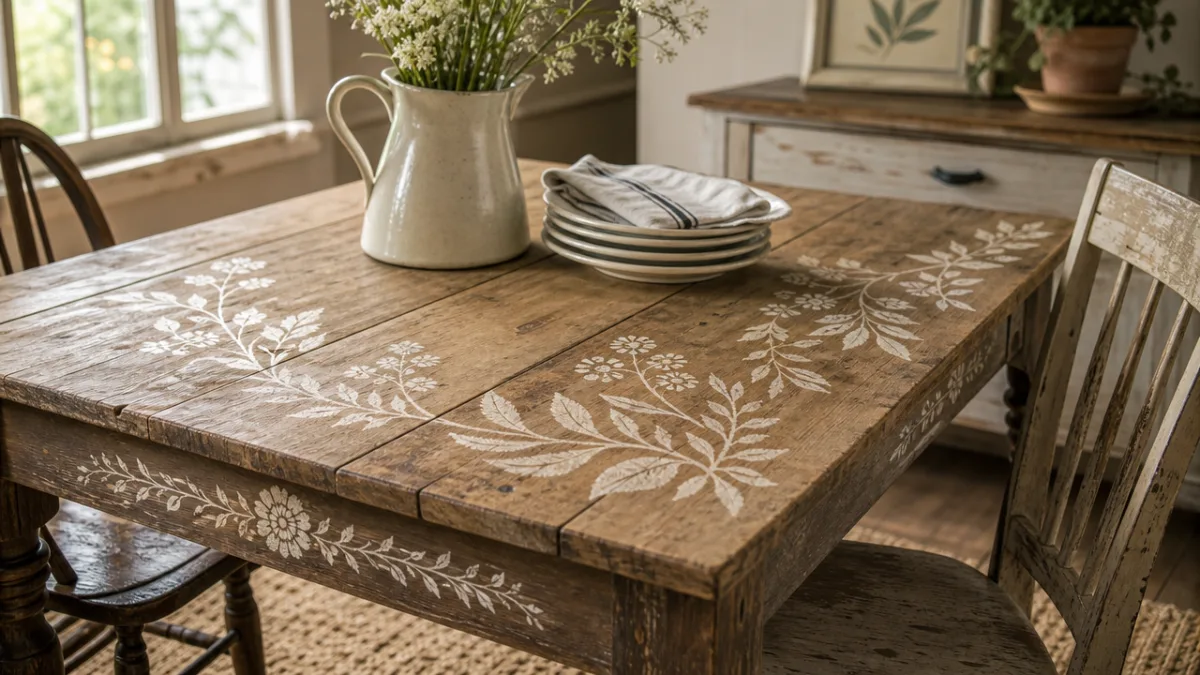
The collection encompasses a wide range of motifs that can be mixed and matched to create cohesive decorative schemes throughout a home. Among the most anticipated designs are the botanical wreaths, which feature hand-drawn leaves, berries, and delicate blossoms arranged in loose, asymmetric compositions. These wreaths work beautifully on the panels of cabinet doors, the tops of wooden trays, or centered on the back of a painted chair. Their organic quality means they complement nearly any color palette, from soft white and grey to rich navy or deep forest green.
Typography stencils are another highlight of the collection, offering phrases and single words rendered in lettering styles that range from elegant script to bold, rustic block letters. These can be applied to furniture pieces to add a sense of purpose or whimsy — imagine a farmhouse bench stenciled with the word “gather,” or a wooden crate bearing a French phrase in faded, chalky script. The lettering designs also translate beautifully onto fabric, making it simple to personalize tea towels, linen pillows, or canvas tote bags with a uniquely vintage touch.
For those interested in larger-scale applications, the collection also includes repeating border and allover patterns that can be used to create stunning feature walls, stenciled floors, or decorative ceiling details. These patterns take their cues from historic wallpaper designs and tile work, offering an affordable alternative to actual wallpaper or custom tile installation. When executed in milk paint with its characteristic chalky matte finish, these large-scale applications create an effect that looks genuinely antique and thoroughly considered.
Pairing Stencils with Miss Mustard Seed’s Milk Paint
The natural companion to these new stencils is, of course, Miss Mustard Seed’s celebrated milk paint. Available in a wide spectrum of carefully curated colors — from the palest whisper of Ironstone to the deep, moody richness of Shutter Gray — milk paint offers a finish that is uniquely well-suited to stencil work. Its slightly porous, chalky surface accepts stenciled designs with wonderful depth, and because milk paint can be diluted with water, it is easy to achieve a range of opacities from bold and saturated to softly translucent and ghostly.
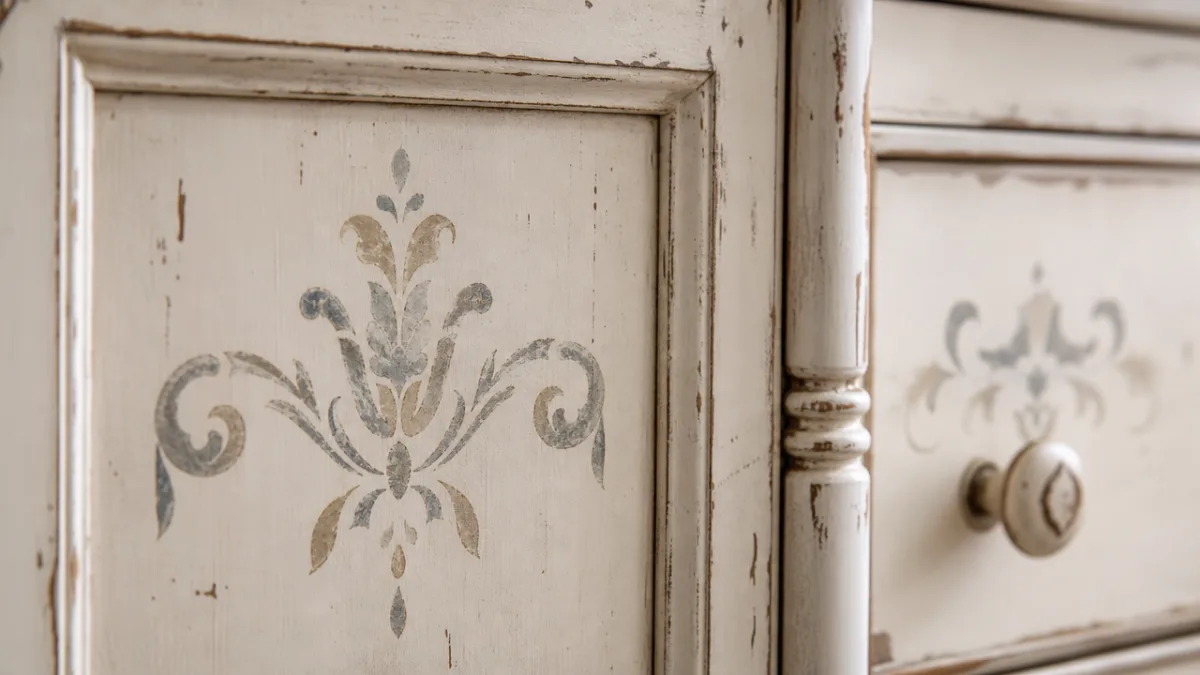
One of the great joys of working with milk paint alongside stencils is the layering potential. Applying a base coat of one color, then stenciling in a second or third tone, creates a dimensional quality that flat, store-bought paint simply cannot replicate. The slight variations in texture that milk paint naturally produces add to this sense of depth, making the stenciled motif appear as though it has been there for decades, gradually worn and softened by time and use. This is precisely the kind of result that home decorators who love vintage and antique aesthetics are chasing.
Miss Mustard Seed also recommends finishing stenciled pieces with her Hemp Oil or Tough Coat topcoat to protect the painted surface without compromising the characteristic matte appearance. Hemp Oil, in particular, enriches the colors subtly while maintaining breathability in the finish — an important quality for furniture that will see daily use. These finishing products ensure that all the time and care invested in a stenciled piece is protected for years to come, without the plastic sheen that conventional varnishes can impose.
Step-by-Step Guide to Using Hand Painted Stencils Successfully
Getting started with stencils is wonderfully straightforward, but a few key techniques make the difference between results that look homemade and those that look genuinely professional and intentional. The first step is always thorough surface preparation. Whether you are working on a piece of furniture, a wall, or fabric, the surface should be clean, dry, and free of dust or grease. For furniture that has a glossy finish, a light sanding or a quick pass with a liquid deglosser helps the paint adhere properly. Milk paint, when mixed with a bonding agent called Miss Mustard Seed’s Bonding Agent, adheres to almost any surface without sanding.
Once the surface is prepared and your base coat is dry, position your stencil carefully using painter’s tape or a repositionable spray adhesive to hold it firmly in place. This step is crucial because any movement during painting will result in smearing or blurring of the design — though, as mentioned, some imperfection is entirely welcome with this aesthetic. Load a stencil brush or a dense foam roller sparingly with paint, then dab or roll in a circular motion to build up the color gradually. Starting with too much paint on the brush is the most common beginner mistake and leads to bleeding underneath the stencil edges.
The following tips will help ensure beautiful results every time you work with stencils:
- Always offload most of the paint from your brush onto a paper towel before applying to the stencil — a nearly dry brush delivers the cleanest lines and the most painterly, aged appearance.
- Work from the outside edges of each stencil opening toward the center to minimize the risk of paint seeping underneath the stencil borders.
- Lift the stencil carefully and straight upward after each application to avoid smearing the wet paint beneath.
- Clean the stencil regularly during use to prevent paint buildup on the underside, which can transfer unwanted marks to your surface.
- Experiment with applying different colors through the same stencil in successive passes to create a layered, multicolored effect that looks particularly rich and artisanal.
After the stenciling is complete, allow the paint to cure fully before applying any topcoat or handling the piece. Milk paint dries relatively quickly, but a full cure takes approximately 24 to 48 hours depending on temperature and humidity. Resist the temptation to rush this stage — the durability of the finished piece depends on allowing the paint to fully harden before sealing. Once sealed, your stenciled creation will be both beautiful and resilient, ready to take its place as a beloved focal point in your home.
Troubleshooting Common Stenciling Challenges
Even experienced crafters occasionally encounter challenges when working with stencils, and knowing how to address them confidently is part of developing your skills. One of the most frequent issues is bleeding, which occurs when paint seeps beneath the stencil edges and creates fuzzy, undefined lines. This almost always results from using too much paint on the brush. The remedy is simple: wipe most of the paint off before applying, use a gentle stippling motion rather than broad strokes, and ensure the stencil is lying flat against the surface without gaps or warping.
Another common challenge is stencil misalignment when working on repeating patterns across a large surface such as a wall or floor. Taking time to measure and mark your surface with a level and light pencil marks before beginning can save enormous frustration later. Many of Miss Mustard Seed’s stencils include registration marks — small notches or holes at the edges — that help you line up each repeat precisely. Using these registration marks consistently ensures your pattern flows seamlessly across the surface without awkward jumps or gaps.
Color choice can also present unexpected challenges. A color that looks beautiful on the swatch card may appear quite different once applied through a stencil onto a colored base. Testing on a piece of scrap wood or cardstock before committing to your actual piece is always worthwhile. You might also find that slightly adjusting the ratio of water in your milk paint changes the opacity and coverage significantly, giving you greater control over the final look. Remember that with stenciling, you can always build up color gradually in multiple passes, but it is much harder to pull back once you have applied a heavily saturated coat.
Incorporating Stenciled Pieces into Your Home’s Aesthetic
One of the most appealing aspects of Miss Mustard Seed’s stencil collection is how effortlessly the finished pieces integrate into a wide variety of decorating styles. The vintage-inspired motifs feel perfectly at home in a French country kitchen, where painted cabinetry, open shelving, and an abundance of natural textures create an atmosphere of cultivated casualness. A stenciled botanical design on a simple pine dresser, for instance, can elevate the piece from functional storage to a genuine decorative statement that anchors the whole room.
For those who lean toward a more modern farmhouse aesthetic, the typography and architectural stencils offer wonderful opportunities. Stenciling a meaningful word or phrase onto a reclaimed wood plank creates instant wall art with deeply personal resonance. Alternatively, using a geometric or tile-inspired stencil pattern on a painted floor can bring visual interest and pattern to a space without the expense or permanence of actual tile installation. These floor treatments, when sealed properly with a durable topcoat, can withstand years of foot traffic while maintaining their charm.
Cottage and coastal style homes also benefit enormously from stenciled accents. Soft, weathered colors combined with botanical or nautical motifs create a sense of breezy informality that invites relaxation and comfort. Consider stenciling the interior panels of a painted bookcase with a delicate leaf pattern, or applying a border stencil around the interior of a window frame to create the illusion of architectural detail in an otherwise plain room. The possibilities are genuinely limitless, and the low cost of stencils compared to other decorating interventions makes experimentation feel entirely risk-free.
Creating a Cohesive Look Throughout Your Home
To achieve a truly polished, magazine-worthy result with stenciled décor, consider selecting two or three complementary designs from the collection and repeating them in different scales and applications throughout adjacent rooms. For example, a large botanical wreath stencil on a dining room cabinet might be echoed by the same motif in a smaller scale on painted napkin rings or a wooden serving board in the kitchen. This kind of thoughtful repetition creates visual continuity that makes a home feel beautifully curated rather than casually assembled.
Color consistency is equally important when using stencils across multiple pieces or surfaces. Selecting two or three milk paint colors from the collection and using them consistently throughout a space — varying only which color serves as the base and which appears in the stenciled motif — creates a harmonious, intentional palette. This approach also makes it easier to introduce new stenciled pieces over time without disrupting the overall aesthetic, since any new piece that uses the established color palette will automatically feel as though it belongs.
Miss Mustard Seed herself frequently demonstrates this layered, collected approach on her blog and social media platforms, sharing how she combines stenciled furniture with antique textiles, vintage ceramics, and carefully chosen plants to build rooms that feel genuinely lived-in and loved. Following her example — mixing new stenciled pieces with genuinely old objects, thrift store finds, and meaningful personal items — is the surest path to interiors that possess real warmth and character rather than the self-conscious quality that can plague rooms decorated too exclusively with new purchases.

The Broader Cultural Moment: Why Handcrafted Home Décor Matters
The enthusiasm surrounding Miss Mustard Seed’s new stencil collection is not happening in isolation. It reflects a broader cultural hunger for handcrafted, personal, and meaningful objects in our homes at a time when mass production and algorithmic design have made so many living spaces feel interchangeable and impersonal. There is a growing recognition that the things we surround ourselves with in our daily lives shape our mood, our sense of identity, and our wellbeing in profound ways — and that handmade or hand-embellished objects carry a kind of energy and story that factory-produced items simply cannot replicate.
The rise of the cottage core aesthetic, the enduring popularity of farmhouse style, and the renewed interest in traditional crafts like embroidery, pottery, and yes, decorative painting, all point to the same underlying desire: a longing for slowness, authenticity, and the visible evidence of human hands and human care in our environments. When you spend an afternoon stenciling a beloved piece of furniture, you are doing more than improving its appearance — you are investing time, attention, and creativity into your home in a way that builds a meaningful relationship between you and your space.
Miss Mustard Seed has always understood this dimension of home decorating, and it is what has made her community so loyal and so vibrant over the years. Her followers are not simply consumers of a product; they are participants in a creative movement that values beauty, craftsmanship, and the joy of making. The new hand painted stencil collection is, in this sense, an invitation — to slow down, pick up a brush, and add something genuinely yours to the walls, floors, and furniture of the place you call home. That is an invitation well worth accepting.
Building Community Through Shared Creative Practice
One of the most delightful byproducts of Miss Mustard Seed’s influence has been the community that has grown up around her work — a warm, generous, and enthusiastic group of makers who share their projects, swap tips, and encourage one another through online groups, blog comments, and in-person workshops. The launch of new stencils has already energized this community, with members posting their first experiments and sharing the techniques they have discovered through trial and joyful error. This kind of peer learning is invaluable and accelerates the creative development of everyone involved.
Workshops and classes centered on decorative painting and furniture makeovers have proliferated in recent years, and Miss Mustard Seed’s products — including these new stencils — frequently take center stage in these educational settings. Learning alongside other enthusiastic makers, guided by an experienced teacher, can dramatically accelerate your stenciling skills and introduce you to approaches and combinations you might never have discovered on your own. Many participants in these workshops report that the experience of making something beautiful with their hands, surrounded by like-minded people, is as valuable as any specific technique they learn.
As the collection continues to grow and more makers share their results across social media and blogging platforms, the catalogue of inspiration available to anyone picking up these stencils for the first time will only become richer and more diverse. From elegant European-inspired interiors to cozy American farmhouses, from bohemian artist studios to pristine Scandinavian-influenced spaces, the applications of Miss Mustard Seed’s hand painted stencils are as varied as the people who use them. That diversity is a testament to the quality and thoughtfulness of the designs — and a very compelling reason to begin your own stenciling journey today.








What do you think?
It is nice to know your opinion. Leave a comment.