










How This Nurse Made $1,695 in 12 Days by Flipping Items and Took Her Daughters to Disney
The Story Behind the Side Hustle
Nursing is no joke. Long shifts, emotionally draining days, and a body that feels it by the time you get home — that’s the reality for millions of healthcare workers. So when one nurse figured out a way to bring in real extra money on her days off — without picking up extra shifts or shortchanging her family — it was kind of a big deal. No hustle culture rhetoric, no passive income fantasy. Just a practical, creative approach that genuinely worked, and that almost anyone could pull off with a little effort and the right mindset.
The method is called “flipping,” and while it’s been around forever in one form or another, platforms like Facebook Marketplace, eBay, Mercari, and OfferUp have completely changed the game. The basic idea is simple: you find undervalued stuff — at thrift stores, garage sales, estate sales — and resell it for more than you paid. The profit margins can be surprisingly good, and you don’t need much money to get started, which is more than you can say for most side businesses.
For this particular nurse, the motivation was personal. She wanted to take her daughters to Walt Disney World — not someday, not if the budget worked out, but actually. So instead of waiting around for the stars to align, she decided to make it happen herself. What followed over the next twelve days was a pretty impressive display of resourcefulness and focus. She walked away with $1,695 in profit and two daughters who got the Disney trip of their lives.
Understanding the Basics of Flipping
Before getting into the how, it’s worth taking a moment to understand why flipping works so well as a side hustle for busy people. Unlike freelance work or gig jobs where you’re trading hours for a set rate, flipping has real upside. A $10 thrift store find can sell for $80 online. A piece of furniture someone left on the curb — seriously, check Facebook Marketplace’s free listings sometime — can be wiped down, photographed nicely, and sold for $150 to $300, sometimes the same day you post it.
The trick is knowing what sells, where to find it, and how to present it. That sounds like a lot, but the research is free and surprisingly easy. On eBay, you can search any item and filter to see only “sold” listings — meaning what buyers actually paid, not just what sellers hoped to get. That distinction matters a lot. It takes the guesswork out of buying decisions entirely. You can walk into a thrift store knowing exactly what something is worth before you spend a dime on it.
Some of the most reliable categories in resale are brand-name clothing, vintage items, electronics, sports gear, musical instruments, collectibles, textbooks, toys, and furniture. Each one has its own quirks, but most seasoned flippers will tell you the same thing: start with one or two categories, get good at those, and expand from there. You’ll make fewer expensive mistakes and develop a real eye for value much faster than if you try to learn everything at once.
Her 12-Day Strategy: Step by Step
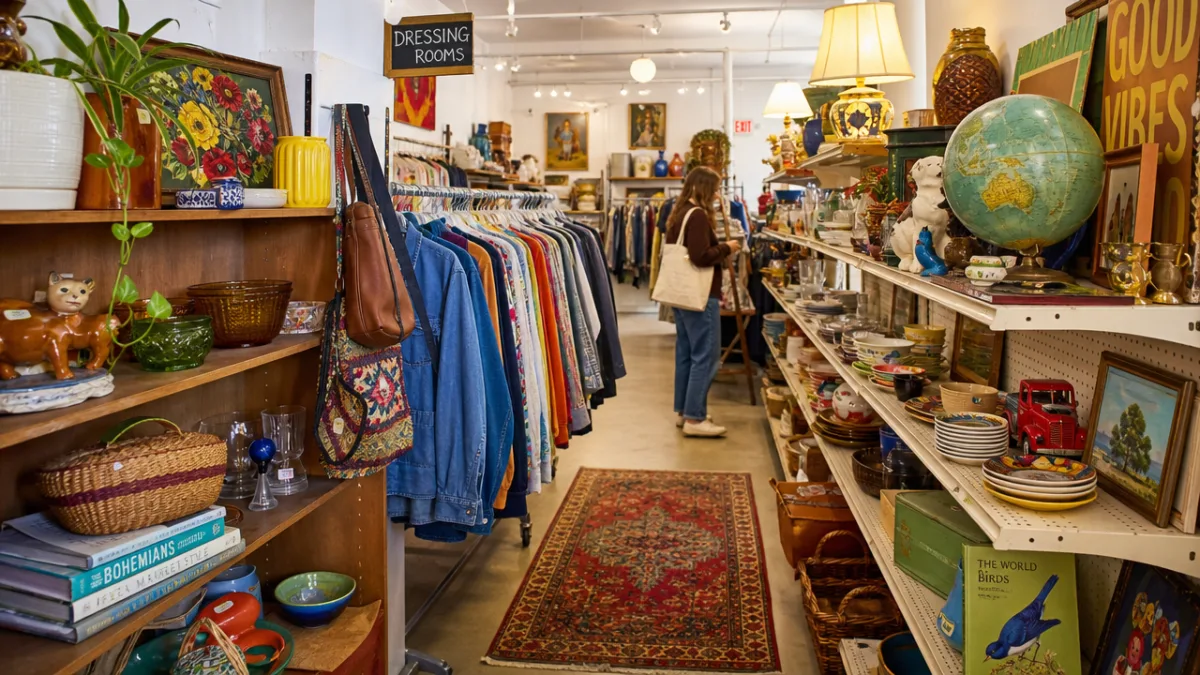
What made this nurse stand out wasn’t luck — it was having an actual plan. She didn’t just wander into Goodwill and hope something good was on the shelf. She went in prepared: phone in hand, a working knowledge of what sells, and a clear target for return on investment. Her sourcing spots included local thrift stores, weekend garage sales, and free or cheap listings on Facebook Marketplace. On her days off, she worked through these systematically, using resale apps to check prices on the spot and only buying things she was confident she could sell for at least two to three times what she paid.
Her listings were also way better than average, which is honestly half the battle. A lot of new flippers take blurry photos in bad lighting, write two-sentence descriptions, and then wonder why things aren’t selling. She did the opposite. Items were cleaned, staged, and shot in natural light against a clean background. Her descriptions included brand names, measurements, condition details, and the kinds of keywords a buyer would actually type into a search bar. Better listings meant faster sales and higher prices — pretty straightforward, but easy to overlook when you’re just starting out.
She also kept her logistics from getting out of hand. Instead of scheduling a separate meetup for every single sale — which can eat your entire day — she batched pickups by location and set up porch pickup when she could. For shipped items through eBay or Mercari, she kept packaging supplies at home so she could drop things off quickly without making a whole production of it. Anyone with a background in healthcare knows how much good systems matter, and she brought that same thinking to her flipping operation.
The Numbers: Breaking Down $1,695 in Twelve Days
Let’s actually talk about the money, because the details are what make this story useful rather than just inspiring. Earning $1,695 in twelve days through flipping isn’t some one-in-a-million fluke. It’s what happens when you source consistently, buy smart, and list well — over and over again for less than two weeks. Averaged out, that’s about $141 a day. And when you realize that could mean selling just two or three decent items instead of dozens of low-margin ones, it starts to feel a lot more achievable.
To make it concrete: a pair of Nike Air Jordans picked up at a thrift store for $12 can sell for $80 to $120 on eBay depending on size and condition. A vintage leather jacket you found for $15 might go for $75 to $150 on Depop or Poshmark. A name-brand kids’ winter coat bought for $4 at Goodwill could sell for $35 to $50 on Facebook Marketplace within a day or two. Stack a handful of transactions like those across twelve days, throw in a furniture flip or two, and $1,695 isn’t just possible — it’s actually on the conservative side.
She hasn’t shared her exact sourcing costs, but flippers generally try to keep the cost of goods under 30 percent of the selling price. At that ratio, she likely spent around $500 or less on inventory, meaning her actual profit margin was strong and her return on every dollar invested was impressive by any measure. That’s the real appeal of flipping done right: high margins, almost no overhead, and you set your own hours.
- Sourcing locations used: Goodwill, Salvation Army, Facebook Marketplace free listings, neighborhood garage sales
- Top-performing categories: Brand-name clothing, children’s items, small furniture, vintage accessories
- Platforms used to sell: Facebook Marketplace, eBay, Mercari, Poshmark
- Key tools: eBay sold listings for price research, resale apps for on-the-spot valuation
- Time invested: Primarily days off between nursing shifts, evenings for listing and shipping
Lessons Any Busy Professional Can Apply
What makes her story resonate beyond the dollar amount is just how accessible it all is. She didn’t have a warehouse, a storefront, or a business degree. She had a smartphone, a car, some time between shifts, and a willingness to figure it out as she went. That’s a combination a lot of working people already have. The real gap between knowing about flipping and actually doing it is almost entirely just the decision to start.
One of the biggest takeaways is to start small and put your profits back in. New flippers often spend their first earnings right away instead of cycling that money back into more inventory. If you treat it like a business from day one — reinvesting a portion of each sale into the next sourcing trip — you can scale up pretty quickly without needing any outside money or loans. Start with $20 to $50, flip it into $100, flip that into $300, and keep going. The compounding is modest compared to, say, a stock portfolio, but when your margins are this healthy it adds up faster than you’d expect.
Time management matters too. The flexibility of flipping is one of its best features, but it can also backfire if you’re not careful. For nurses, teachers, parents, or anyone already stretched thin, having the business eat into every spare hour defeats the purpose. Setting dedicated sourcing days, creating a routine for photos and listings, and using tools like scheduled posts or auto-replies on platforms can keep things running smoothly without taking over your life. It works for you — not the other way around.
From Side Hustle to Disney: What the Money Made Possible
At the end of those twelve days, she’d done more than make some extra money. She’d proven to herself — and honestly to anyone watching — that a goal that feels out of reach can become real when you get focused and strategic about it. The $1,695 went toward a Disney World trip for her and her girls: park tickets, a place to stay, food, and the little extras that take a vacation from “we made it work” to “this was magical.” For two young kids, walking through the gates of the Magic Kingdom is a genuinely big deal, and their mom made it happen on her own terms.
There’s also something meaningful about earning money this way that goes beyond the paycheck. Flipping teaches you to see value where most people see clutter. You start looking at a pile of garage sale stuff differently — not as junk, but as potential. You get better at spotting opportunity, communicating value, making judgment calls. Those skills carry over. A lot of flippers say it quietly changes how they think about money, consumption, and what they’re actually capable of — and that shift tends to stick.
Her daughters are also getting a front-row seat to something pretty valuable: watching their mom set a goal and go make it happen herself. The lesson that you don’t have to wait for a raise or someone else’s approval to create the life you want is one that no classroom really teaches. She modeled it, lived it, and brought them along for the reward. That might end up meaning more than the trip itself.
How to Start Flipping Today
If you’re feeling inspired to give this a try, the barrier to entry is genuinely low. You don’t need much money, special equipment, or any prior experience. What you do need is a little curiosity, some patience, and the willingness to do a bit of research before you buy. Here’s a straightforward starting framework — the kind of approach that experienced flippers, including the nurse in this story, actually use in practice. Stick with it consistently and you’ll likely start seeing results within your first few weeks.
- Start with research: Spend an hour browsing eBay’s “sold” listings in a category that interests you. Pay attention to price ranges, condition notes, and how the best-performing listings are written.
- Choose your starting niche: Pick one or two categories — clothing, electronics, toys, furniture — and focus there first. Knowing one area well beats knowing a little about everything.
- Download resale apps: Get eBay, Mercari, Facebook Marketplace, and Poshmark on your phone so you can check prices on the spot while you’re sourcing.
- Set a small starting budget: Begin with $20 to $50. You’re not trying to make a fortune on your first run — you’re learning how it works with stakes low enough to handle.
- Source strategically: Thrift stores often restock Monday through Wednesday, so those are good days to go. Hit garage sales early on Saturday mornings. Check Facebook Marketplace’s free and cheap local listings daily.
- List with quality: Clean your items, shoot them in good light from multiple angles, and write descriptions with real detail — brand, size, condition, and the keywords someone would actually search for. Good listings sell faster and for more money. It’s that simple.
- Reinvest your profits: Run it like a business. Put a portion of what you earn back into inventory and let the operation grow on its own momentum over time.
The secondhand market has honestly never been better for people getting into resale. Millions of shoppers are actively looking for secondhand goods online right now, and the demand regularly outpaces the supply of well-listed, quality items. That gap is where your opportunity lives. Whether you’re saving for a Disney trip, paying down debt, building up an emergency fund, or just trying to have a little more breathing room each month, flipping is a concrete, realistic way to get there — one thrift store find at a time.








What do you think?
It is nice to know your opinion. Leave a comment.