










9 Reasons to Start an Upcycling Business — and Why It Needs to Be Online
What Is Upcycling and Why Is It Having a Moment?
Upcycling is the creative process of transforming discarded, worn-out, or unwanted materials into something new, useful, and often more valuable than the original item. Unlike recycling, which breaks materials down to their raw components, upcycling preserves the integrity of the object and elevates it through craftsmanship, design, and imagination. A battered wooden ladder becomes a rustic bookshelf. A pile of vintage denim scraps becomes a one-of-a-kind tote bag. The results are as varied as the makers behind them.
The movement has gained extraordinary momentum over the last decade, driven by growing consumer awareness around sustainability, environmental responsibility, and the very real consequences of fast fashion and throwaway culture. People are no longer content to simply buy cheaply and discard quickly. A significant and expanding segment of the market actively seeks out handmade, sustainable, and ethically produced goods — and they are willing to pay a premium for them. This cultural shift has opened a remarkable door for creative entrepreneurs.
What makes upcycling especially compelling as a business concept is the low barrier to entry. The raw materials are often free or inexpensive — sourced from thrift stores, estate sales, curbside pickups, or your own home. The tools required vary by craft but are rarely prohibitively expensive at the start. And the skills, while they take time to develop, are accessible to almost anyone with patience, curiosity, and a willingness to learn. In a landscape littered with expensive franchise models and saturated industries, upcycling stands out as genuinely democratic.
Reason 1 — The Market for Sustainable Products Is Booming
Consumer demand for sustainable goods is not a passing trend. Market research from multiple sources consistently shows that buyers across demographics — and particularly among younger generations — are making purchasing decisions based on environmental values. Studies suggest that a majority of millennials and Gen Z consumers actively prefer brands and products that align with their sustainability goals, and many report being willing to spend more to support businesses that reflect those values. For an upcycling entrepreneur, this is enormously encouraging news.
Platforms like Etsy have seen explosive growth in their handmade and vintage categories, with upcycled and repurposed goods forming a significant and fast-growing segment. Buyers on these platforms are not price-hunting the way they might on a mass retail site — they are curating, collecting, and investing in objects that carry a story and a conscience. This creates an audience that is both emotionally engaged and commercially active, a combination that is a genuine goldmine for the right kind of seller.
Beyond individual platforms, broader retail trends reflect the same appetite. Department stores are dedicating floor space to sustainable brands. Major fashion labels are launching upcycled collections. Interior designers are building entire projects around salvaged and repurposed materials. The mainstream has caught up with what small creative makers have known for years: that upcycled goods are beautiful, distinctive, and worth celebrating. Starting a business in this space now means riding a wave with genuine long-term momentum behind it.
Reason 2 — Low Startup Costs Mean Lower Risk
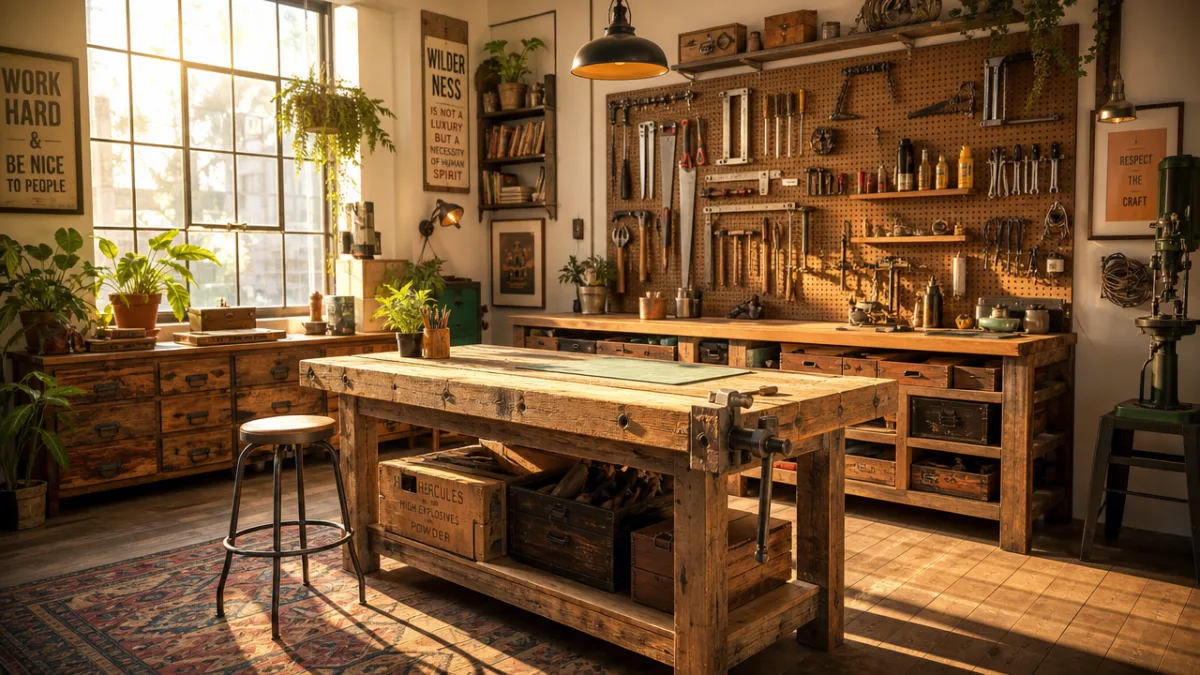
One of the most common barriers to starting any business is capital. Leasing a space, buying inventory, hiring staff, investing in equipment — the traditional checklist can feel overwhelming and financially terrifying. Upcycling sidesteps many of these conventional costs in ways that make it one of the most accessible entrepreneurial paths available. Your starting inventory is material that others have already discarded. Your workshop can be a garage, a spare room, or a kitchen table. Your initial investment is primarily your time and your creativity.
This low-cost structure dramatically reduces the financial risk associated with starting out. You are not taking out a business loan to stock a retail floor that might sit empty. You are not signing a multi-year lease on a commercial space before you have proven that people want to buy what you make. Instead, you can test your ideas, refine your craft, build your brand, and grow your customer base at a pace that matches your actual revenue — a luxury that most traditional business models simply do not afford.
The reinvestment cycle in upcycling also tends to be healthy and manageable. Early profits can go toward better tools, more sourcing trips, a professional photography setup, or improved packaging — all of which strengthen the business without requiring enormous sums. Many successful upcycling entrepreneurs have grown from zero to sustainable income entirely through reinvested earnings, never taking on debt or outside investment. That kind of independence is rare in the business world and deeply valuable for creative makers who want control over their work.
Reason 3 — You Are Turning Waste Into Wealth
There is something profoundly satisfying about the alchemy of upcycling — taking something the world has labeled as finished, useless, or broken and returning it to circulation as something beautiful and functional. But beyond the emotional and creative rewards, this transformation has a very real economic dimension. Materials that cost you little or nothing are being converted into products that can sell for tens or even hundreds of dollars. That is an extraordinary margin structure that most businesses can only dream about.
Consider a common example: a set of mismatched wooden chairs purchased for a few dollars each at a thrift store. With labor, paint, and perhaps some reupholstered seats using salvaged fabric, those chairs can be resold as a curated matching set for many times their purchase price. The value added is almost entirely creative and skilled — it is your eye, your technique, and your presentation that drive the price. In a knowledge and creativity-driven economy, this is precisely the kind of value creation that is most rewarding to build a career around.
This waste-to-wealth model also creates natural storytelling opportunities, and stories sell. When a buyer understands that the reclaimed timber in their new coffee table came from a demolished Victorian schoolhouse, or that the fabric in their cushion covers was rescued from a textile factory’s offcut pile, the object becomes more than furniture — it becomes a narrative. That narrative adds perceived value, deepens the buyer’s emotional connection to the product, and makes them far more likely to return for future purchases and to recommend your business to others.
Reason 4 — Creative Freedom and Personal Fulfillment
Most people who are drawn to upcycling are not motivated primarily by money — they are motivated by making. There is a deep and well-documented psychological satisfaction in creating with your hands, in solving the puzzle of how to transform one thing into another, in standing back at the end of a long afternoon and looking at something that genuinely did not exist before you made it. For people who have spent years in jobs that feel disconnected from any tangible output, the experience of upcycling can be genuinely transformative.
Running an upcycling business means that your creative instincts are not just a hobby — they are your professional asset. You are being rewarded, financially and socially, for the very skills and sensibilities that make you who you are. This alignment between personal passion and professional activity is something that career coaches and workplace psychologists consistently identify as one of the most powerful drivers of long-term job satisfaction, productivity, and wellbeing. You are, in the truest sense, building something that belongs to you entirely.
The creative freedom also extends to the business itself. There is no single correct version of an upcycling business. You might specialize in mid-century modern furniture restoration, or handmade jewelry from reclaimed metals, or bespoke homewares from vintage textiles, or upcycled fashion garments. You can pivot, experiment, evolve, and follow your interests as they develop. This flexibility is particularly valuable for people who are creatively restless and who thrive when they are allowed to grow and change direction without requiring permission from anyone else.
Reason 5 — The Environmental Impact Is Meaningful and Marketable
The environmental case for upcycling is compelling and well-supported. Every item that is upcycled and given a new life is an item that does not end up in a landfill. Every piece of furniture restored is a piece of new timber that does not need to be harvested. Every garment reconstructed from vintage fabric is a reduction in the demand for new textile production — one of the world’s most polluting industries. At scale, these individual decisions accumulate into genuinely significant environmental benefit.
For a business owner, this positive environmental footprint is not merely a feel-good factor — it is a marketing advantage of real and growing commercial significance. Consumers increasingly want to know the story behind what they buy, and “this product kept something out of a landfill” is a powerful and persuasive story. It gives buyers a reason to choose your product over a cheaper mass-produced alternative, and it gives them something to share when they talk about their purchase to friends and followers. Environmental authenticity, when it is genuine, creates brand loyalty that is remarkably durable.
Many upcycling businesses have built their entire brand identity around their environmental mission, and this approach has proven highly effective. It allows the business to attract not just customers but advocates — people who feel that buying from you is a small act of participation in something larger than a transaction. Building that kind of community around a brand is enormously valuable and is something that purely commercial businesses spend fortunes trying to manufacture. For an upcycling entrepreneur, it can emerge organically from the genuine nature of what you do.
Reason 6 — Why Your Business Absolutely Needs to Be Online
A local craft fair table or a roadside sign can sell some products. A well-run online presence can sell to the entire world. The difference is not just one of scale — it is one of kind. When your business exists online, it is open around the clock, accessible from any country, and capable of connecting with exactly the right buyers for your specific aesthetic and product range without the limitations of physical geography. For a creative maker with a distinctive style, this global reach is transformative.
The online landscape for handmade and upcycled goods is rich and well-established. Platforms like Etsy, Depop, eBay, and ASOS Marketplace provide ready-made audiences of buyers who are specifically looking for the kinds of products that upcycling businesses produce. Social platforms like Instagram and Pinterest function as both discovery engines and storefronts, allowing makers to reach new audiences through visual content and to drive those audiences directly to their shops. The infrastructure for selling creative products online has never been more accessible or more powerful.
Beyond individual platforms, having your own website and online presence gives your business a credibility and permanence that marketplace listings alone cannot provide. A well-designed website tells the story of your brand, showcases your work in its best light, builds trust with buyers who might otherwise hesitate to purchase, and creates a home for your community that you own and control regardless of algorithm changes on any given platform. In the long run, your website is your most important business asset — more valuable even than any individual product you make.
Reason 7 — Social Media Makes Your Products Discoverable
Upcycled products are inherently visual, and visual products thrive on visual platforms. Instagram and Pinterest in particular are extraordinarily well-suited to showcasing the kind of before-and-after transformations, material textures, and finished product beauty that define upcycling work. A single compelling photograph of a beautifully restored piece can reach tens of thousands of people organically, attract saves and shares, drive profile visits, and convert a meaningful percentage of that audience into buyers — all at zero advertising cost.
The key is understanding how these platforms work and creating content that is genuinely optimized for them. This means investing in decent photography, developing a consistent visual style that makes your feed immediately recognizable, posting with strategic regularity, using relevant hashtags and keywords, and engaging authentically with your audience and with related communities. None of this requires professional expertise to begin — it requires observation, experimentation, and a willingness to learn from what works and what does not.
Video content has become especially powerful for upcycling businesses. Short-form videos showing the transformation process — a scratched and battered piece going through each stage of restoration to emerge beautiful and finished — perform exceptionally well on platforms like TikTok, Instagram Reels, and YouTube Shorts. These videos satisfy a deep human appetite for process and transformation, they showcase your skill and knowledge in a way that builds trust, and they create the kind of engaging content that platforms actively promote. Many upcycling makers have built substantial followings and thriving businesses on the back of well-executed process videos alone.
Reason 8 — Scalability and Multiple Revenue Streams
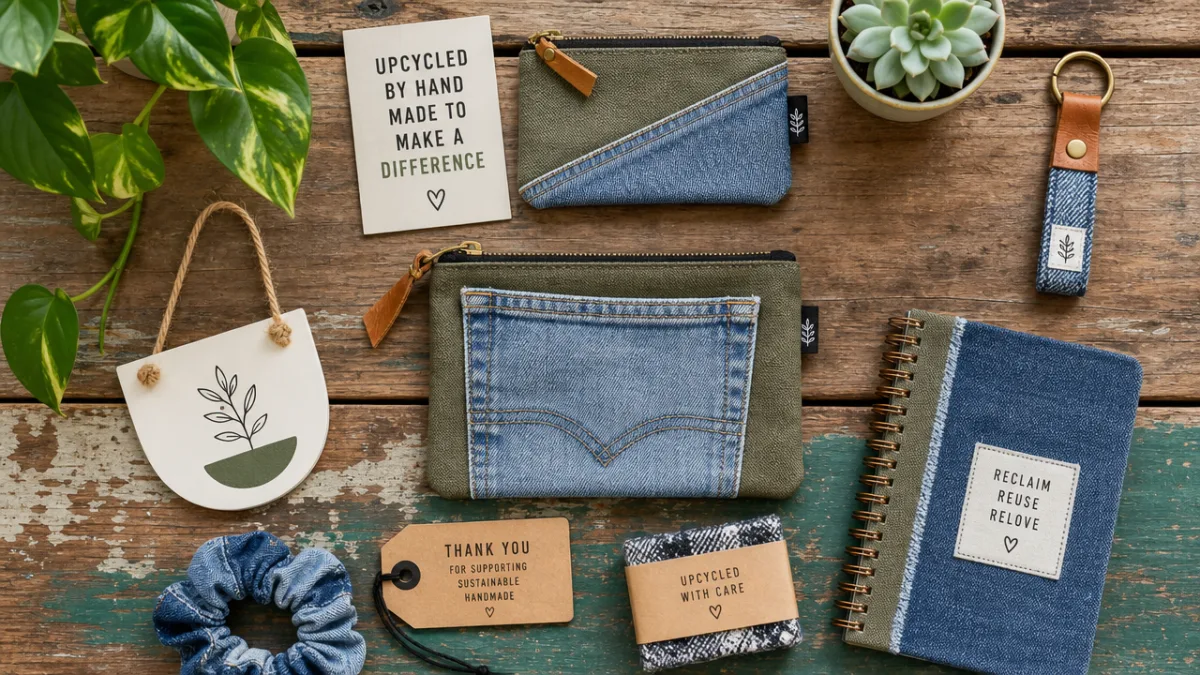
One of the most exciting possibilities of an online upcycling business is that it does not have to be limited to selling physical products. The knowledge, skills, and creative perspective you develop as an upcycling maker are themselves valuable assets that can be packaged and sold in multiple formats. Online courses teaching specific techniques, digital pattern downloads, YouTube tutorials with ad revenue, Patreon memberships offering behind-the-scenes access — all of these are legitimate and potentially lucrative revenue streams that extend well beyond your physical product inventory.
This diversification is important for long-term business resilience. A business that relies entirely on hand-making and selling individual items is inherently limited by the number of hours in a day and the physical capacity of one maker. By adding digital products or educational content, you break the direct link between your time and your income — creating what is often called passive or semi-passive revenue. A course you record once can continue to sell for years. A downloadable pattern can be purchased thousands of times from a single upload. These are powerful financial structures for a solo creative entrepreneur.
Scalability also comes through strategic decisions about which products to prioritize and how to manage production. As your business grows, you might bring in a helper for sourcing or preparation work, allowing you to focus on the skilled creative stages that only you can do. You might develop a signature product line that can be produced more efficiently than one-off custom pieces. You might collaborate with other makers on larger projects or bundle products to increase average order values. The online structure of your business makes all of these growth strategies visible, trackable, and manageable in ways that a purely offline operation simply cannot match.
Reason 9 — You Can Build a Community, Not Just a Customer Base
The most successful upcycling businesses online are not merely shops — they are communities. They attract people who share values, who are interested in sustainability, creativity, and making, who want to learn and be inspired as much as they want to buy. When you build this kind of community around your brand, you create something that is far more valuable and durable than a transaction-based customer list. You create an audience that is invested in your journey, that celebrates your work, and that returns again and again — not just because they need something, but because they feel connected to you and to what you represent.
Building community online takes time and consistency, but the tools available make it more achievable than ever before. A newsletter is one of the most powerful community-building assets a small business can have — it gives you direct, unmediated access to your audience, independent of any platform algorithm. A Facebook group or Discord server can create a space for your community to connect not just with you but with each other, deepening their investment in the broader world you are creating. Regular, authentic communication that goes beyond product promotion — sharing your process, your challenges, your inspirations — builds the kind of trust that underpins genuine loyalty.
Ultimately, starting an upcycling business and building it online is an opportunity to align your livelihood with your values, your skills, and your vision for a more sustainable and creative world. The reasons to begin are compelling and numerous: the market is ready, the costs are manageable, the environmental case is genuine, the creative rewards are real, and the online infrastructure to support your growth is more accessible than it has ever been. The only remaining question is not whether this is a good idea — it clearly is — but whether you are ready to take the first step toward making it yours.
- Start small and start now: You do not need a finished product line or a perfect brand to begin. Choose one item, make it well, photograph it beautifully, and list it online. The learning starts from doing, not from planning indefinitely.
- Invest in your photography early: In an online marketplace, your images are your storefront. Clear, well-lit, attractive photographs make an enormous difference to conversion rates and should be prioritized from the very beginning.
- Tell your story consistently: Your upcycling origin story, your values, your process, and your creative perspective are all part of what buyers are purchasing. Share them generously and authentically across every platform you use.
- Engage with your community: Respond to comments, ask questions, celebrate your customers’ purchases, and participate in the broader conversation around sustainability and making. Community is built through engagement, not broadcasting.
- Track what works and be willing to evolve: Use the analytics available on every platform to understand what content, products, and approaches are generating results, and be willing to follow that data even when it surprises you.








What do you think?
It is nice to know your opinion. Leave a comment.