










Charming Cat Trees: Your Furry Friend’s Fun Paradise
Why Cat Trees Are Essential for Your Feline Companion
Cat trees are so much more than a piece of furniture gathering dust in the corner. They’re a real investment in your cat’s health, happiness, and mental wellbeing. Think about it — in the wild, cats are born climbers. They spend their days perched up high, watching over their territory, hunting, and staying safely out of reach of anything threatening. A good cat tree brings all of that instinct indoors, giving your companion somewhere to actually be a cat, even if home is a third-floor apartment.
When cats don’t have enough vertical space or things to climb, boredom sets in fast — and boredom has a way of turning into real behavior problems. We’re talking shredded sofas, incessant meowing, picking fights with other pets, or anxious overgrooming. A cat tree tackles all of that before it starts by giving your cat somewhere productive to direct all that energy. Once they have a dedicated spot to climb, scratch, and watch the world from above, you’ll likely notice them calming down quite a bit.
There’s a physical fitness angle here too, and it’s one that simple toys can’t really match. Leaping between platforms, digging claws into a sisal post, squeezing through tunnels — all of that keeps muscles working and joints healthy well into old age. Vets are increasingly recommending environmental enrichment like cat trees as a preventive health tool, especially for indoor cats who don’t get the natural exercise that roaming outside would provide. So when you’re picking out a cat tree, know that it genuinely matters.
Understanding the Different Types of Cat Trees Available
Walk into any pet store or browse online and you’ll quickly realize the options are overwhelming — everything from a simple single-perch tower that fits in a studio apartment to enormous multi-level structures that look like they belong in an architecture magazine. Getting a feel for the main categories makes the whole decision a lot easier. Broadly speaking, cat trees fall into three camps: basic towers, modular systems, and designer furniture-style pieces, and each has its own real strengths.
Basic towers are the most affordable and the easiest to find. You typically get a sisal-wrapped scratching post down the middle, a couple of platforms at different heights, and maybe a small enclosed hideaway box. For a single-cat home without a ton of space — or budget — these work really well. They might not win any design awards, but plenty of cats are perfectly happy with a solid basic tower, especially if it’s sitting next to a window with a good view outside.
Modular and designer cat trees are at the other end of the spectrum, and honestly, they’re worth looking at even if they cost more. Modular systems let you swap things around, add new pieces, and reconfigure the whole setup as your cat’s tastes change over time — which makes them a genuinely smart long-term buy. Designer furniture-style trees, meanwhile, are built from materials like solid wood, natural rope, and quality upholstery, and they’re made to actually look good in your home. We’re talking pieces that pass as sculptural decor rather than screaming “pet furniture.” The price range is huge, but you really do get what you pay for in terms of durability and how much your cat will actually use it.
Key Features to Look for When Choosing a Cat Tree
Stability and Build Quality
If there’s one thing that matters above everything else, it’s stability. A wobbly cat tree is a cat tree that won’t get used — and in the worst case, it’s one that could hurt your cat. Look for a wide, heavy base, and ideally one that can be secured to a wall with anti-tip straps. Weight counts here too; a heavier tree made from solid particleboard or real wood tends to hold its ground even when a large cat launches themselves at it from across the room. If you have a bigger breed like a Maine Coon or Ragdoll, definitely check those weight capacity ratings before buying.
The hardware holding everything together is easy to overlook but really tells you a lot about quality. Cheap trees use thin bolts that strip out quickly, and before long you’ve got wobbly platforms that aren’t safe for anyone. Better-built models use thicker bolts, reinforced connection points, and sometimes tool-free locking systems that actually get tighter with use over time. When you’re reading reviews, look specifically for comments about how the tree holds up after six months to a year — that’ll tell you far more than the product description ever will.
Scratching Surfaces and Materials
Scratching isn’t optional for cats — it’s how they keep their claws healthy, stretch their muscles, and mark their space. If a cat tree doesn’t have scratching surfaces they actually want to use, they’ll just ignore it and go back to your couch. Sisal rope is the gold standard here because its rough texture is genuinely satisfying to cats and holds up incredibly well over time. Some trees also include flat sisal fabric panels on platforms for horizontal scratching, which a lot of cats actually prefer to vertical posts. Pay attention to how thickly it’s wrapped — loose, thin sisal falls apart fast, while tightly packed, thick rope can last for years.
Some trees mix in corrugated cardboard, carpet panels, or natural wood branches as well, which is great because cats have their own preferences. Offering a few different textures is a smart way to make sure your particular cat finds something they love. If you notice them gravitating toward one material, file that away for next time. One thing to avoid: trees covered entirely in carpet. It’s actually harder for cats to scratch satisfyingly, and over time loose carpet fibers can become a swallowing hazard.
Platforms, Perches, and Hideaways
The variety of resting spots on a cat tree makes a huge difference in how much it actually gets used. Cats want different things at different times — sometimes they want an open perch with a view of everything happening below, and sometimes they want to disappear into a snug little condo where nobody can find them. A well-designed tree gives them both, at different heights. Also pay attention to perch size: a platform that’s at least 12 by 12 inches lets an adult cat actually lie down comfortably, rather than awkwardly balanced on something too small.
Placement Strategies to Maximize Your Cat’s Enjoyment
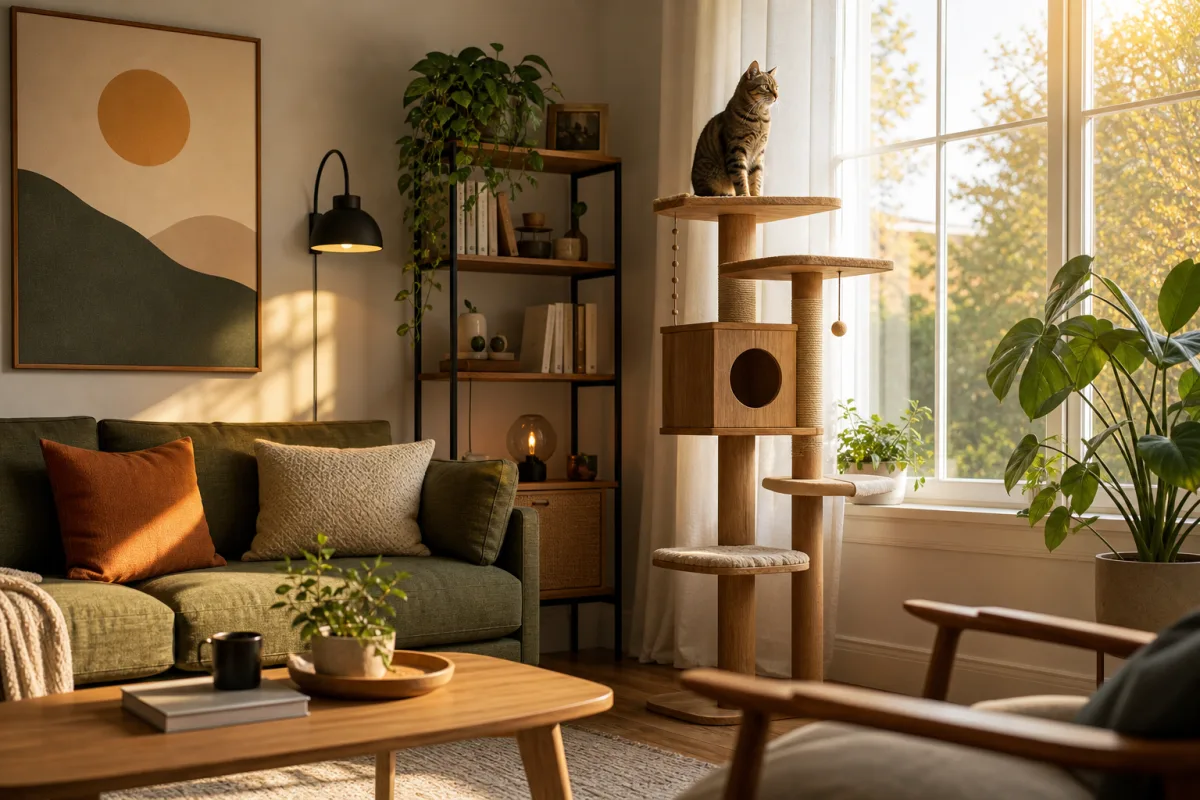
You could buy the most gorgeous cat tree on the market and have it sit completely ignored if you put it in the wrong spot. Cats are all about observation — they want to see what’s going on. The ideal location lets them watch both the household and, if possible, the outdoors at the same time. Near a large window is the sweet spot, giving them a front-row seat to birds, squirrels, passing cars, and changing weather. Add in some morning sunshine streaming through the glass, and that perch becomes basically irresistible.
In a home with multiple cats, placement gets even more important. Cats are territorial, and a single cat tree can actually become a source of tension if one cat controls it. A tall tree that lets different cats settle at different heights helps a lot, and placing trees in more than one room gives everyone their own space. Keep an eye out for any one cat consistently blocking another from the tree — if that’s happening, a second structure will do more to reduce the conflict than anything else you could try.
The spot itself matters beyond just the view. Putting the tree near a wall or in a corner where your cat already likes to hang out makes it feel like a natural extension of their territory rather than something foreign. Avoid high-traffic areas where dogs, kids, or lots of foot traffic might startle a cat trying to relax. A little dried catnip sprinkled around the base, or a piece of worn clothing draped nearby, is a classic trick for convincing reluctant cats to go over and investigate.
Introducing Your Cat to Their New Tree
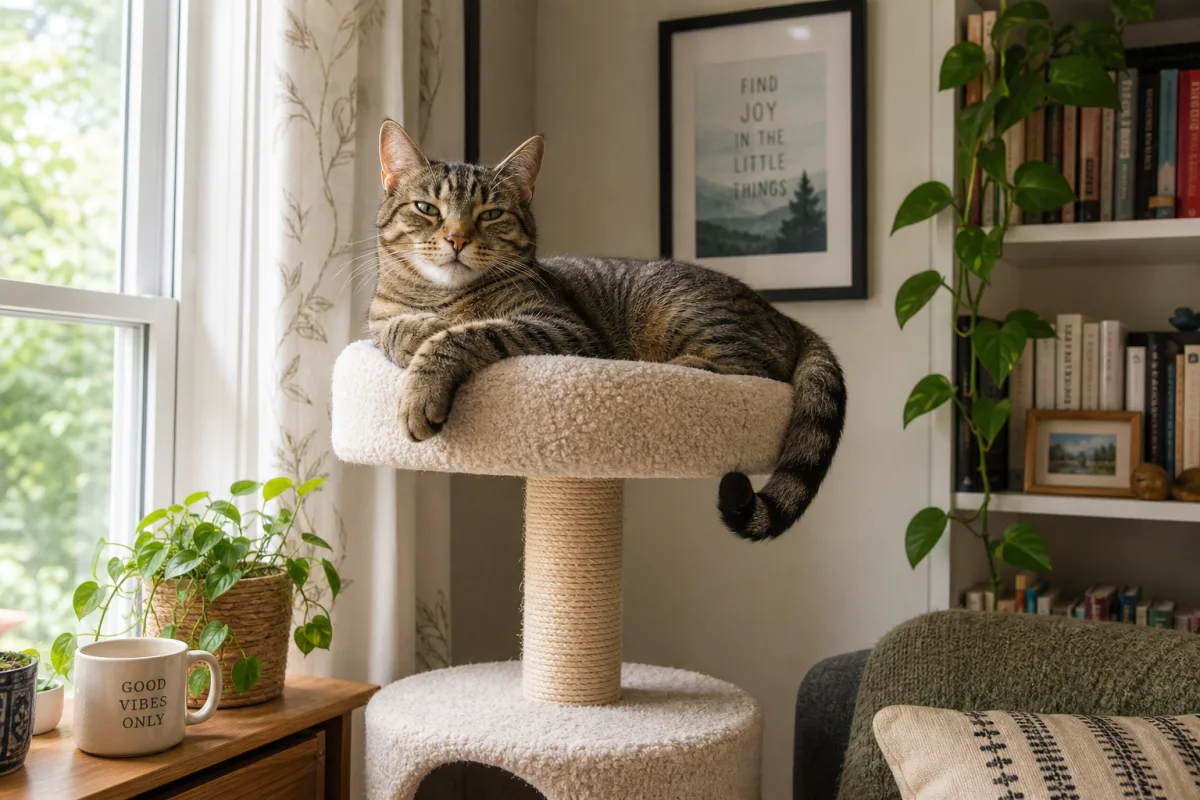
It’s really common to set up a brand-new cat tree and watch your cat completely ignore it for days — sometimes weeks. Try not to take it personally; this is just how cats work. They’re cautious by nature and they’ll check out new things on their own schedule. Pushing or forcing the introduction usually makes things worse by creating a negative association with the tree right from the start. The approach that actually works is patience, positive reinforcement, and letting your cat’s own natural curiosity do most of the heavy lifting.
Play is your best tool here. A wand toy or feather teaser can naturally guide your cat around and eventually onto the tree without any pressure — they’re just playing, and the tree happens to be part of the game. When they jump up onto a platform during a play session, make a big deal of it: enthusiastic praise, a treat, more play. That positive feeling starts to stick, and before long they’re choosing to go back on their own.
For especially cautious cats, go slowly. Start with treats and toys near the base, then gradually work rewards higher up over several days. You can also rub a soft cloth against your cat’s cheek — where they have scent glands — and wipe it on the tree’s surfaces. That marks the tree as familiar and safe in your cat’s mind. And if catnip doesn’t seem to do much for your cat, try silver vine or valerian root, which work really well for cats who don’t respond to catnip. With a little consistency and patience, most cats come around within a few weeks.
Maintaining Your Cat Tree for Long-Term Safety and Appeal
Keeping up with maintenance on your cat tree isn’t just about hygiene — it’s also about keeping your cat interested in using it. Over time, platforms and perches collect fur, dander, and the oils from your cat’s coat, which can make surfaces feel less appealing and harbor allergens. A quick vacuum of all the platforms, perches, and condo interiors once a week handles most of it. For a deeper clean, removable cushion covers usually do fine in the washing machine on a gentle cycle, and hard surfaces can be wiped down with a diluted pet-safe enzymatic cleaner that tackles odors without leaving harsh chemical residue behind.
Getting into the habit of checking the tree’s structure every month or so is a good idea, especially once it’s been in use for six months. Give the connection points between platforms and posts a look, tighten any bolts that have worked themselves loose, and check the sisal wrapping for any sections that are starting to unravel — loose fibers can catch on claws and cause real injury. The good news is that most manufacturers sell replacement sisal rope for rewrapping worn posts, so you can extend the life of an otherwise solid tree without having to replace the whole thing.
At some point, though, even a well-cared-for cat tree will be ready to retire. Persistent wobbling you can’t fix, cracked or gouged load-bearing posts, padding that’s gone completely flat, or mold in the enclosed sections that won’t come clean — any of these are your sign. And honestly, replacing an old tree is a great opportunity to upgrade to something that better suits where your cat is in life now. Think of it less as a chore and more as a periodic refresh of your companion’s favorite spot in the house.
Enhancing the Cat Tree Experience with Accessories and Add-Ons
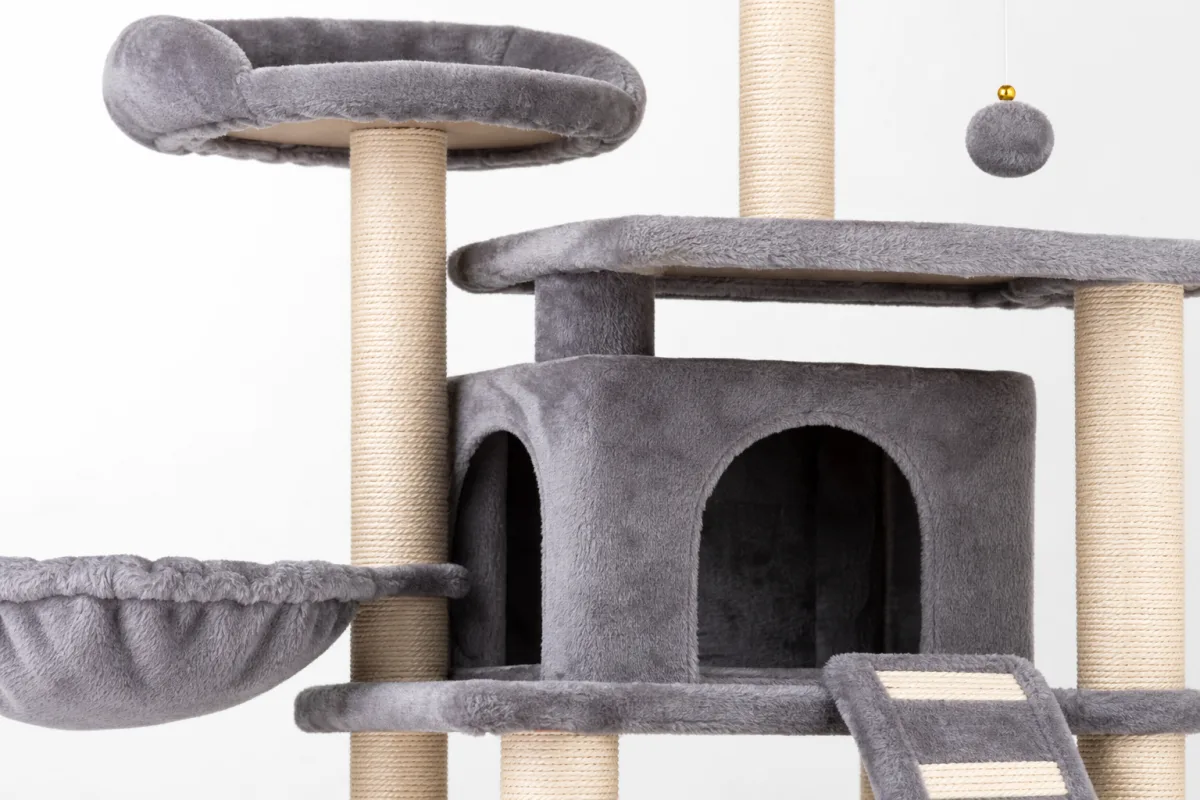
A cat tree doesn’t have to stay the same forever, and keeping things fresh is one of the easiest ways to hold your cat’s interest long-term. Hanging toys clipped to platform edges give your cat something to bat at every time they walk past. Rotating what’s hanging — crinkle balls one week, a feathered dangle the next, a small catnip pouch after that — costs almost nothing but keeps things feeling new. Novelty is genuinely one of the most powerful things you can offer a curious cat, and a simple toy swap goes a long way.
Heated perch inserts and self-warming pad covers are another upgrade that cats tend to absolutely love, especially older cats or those in cooler homes. Warmth is deeply appealing to cats, and a gently heated platform has a way of becoming the most popular spot in the house almost immediately. Pet-specific electric heating pads are thermostatically controlled so there’s no risk of overheating, and some higher-end cat trees now come with heating built right in — which is a nice touch that shows how far cat furniture design has come.
For homes with multiple cats or a particularly adventurous climber, wall-mounted shelves and bridges that connect different parts of a room into a continuous “cat highway” are worth exploring. These floating shelf systems give cats the experience of traveling their whole territory at elevation, linking the main tree to windowsills, bookcases, and perches above doorways. The result is a three-dimensional environment your cats can genuinely explore, and when the design is thoughtful, it ends up being something guests notice and comment on too.
- Rotating hanging toys weekly to maintain novelty and engagement throughout the year
- Adding heated perch inserts during colder months for maximum comfort and attraction
- Connecting your cat tree to wall-mounted shelves for a full-room exploration highway
- Using catnip spray periodically to refresh interest in older or less-visited platforms
- Installing a bird feeder outside the nearest window to create a living entertainment channel
- Placing a water fountain near the tree base to create a comfortable all-in-one territory hub
At the end of the day, the best cat tree is simply the one your cat actually uses. Every cat has their own personality — some are fearless climbers who want to be as high as possible, others are more laid-back and prefer a low, cushioned spot close to the ground. Watching how your cat naturally moves through your home and what kinds of spots they gravitate toward gives you all the information you need to find something that’s genuinely right for them. When the fit is good, a cat tree stops being furniture and becomes something else entirely — the place where your cat starts their morning, retreats in the afternoon, and settles in at the end of the day. That’s a pretty good return on one purchase.








What do you think?
It is nice to know your opinion. Leave a comment.