










15 Easy Plans For Your DIY Bird Feeders: A Complete Guide to Attracting Birds to Your Backyard
Why Building Your Own Bird Feeder Is Worth Every Minute
There is something deeply satisfying about watching a vibrant cardinal or a cheerful chickadee land on a feeder you built with your own two hands. DIY bird feeders have surged in popularity not just as a craft project, but as a meaningful way to connect with the natural world outside your window. Whether you are an experienced woodworker or someone picking up a glue gun for the first time, building a bird feeder is one of those projects that rewards effort at every skill level.
Beyond the personal satisfaction, homemade bird feeders are significantly more cost-effective than store-bought options. Commercial feeders can run anywhere from fifteen to well over a hundred dollars, and they are often made from flimsy plastic that cracks after a single harsh winter. When you build your own, you control the materials, the durability, and the design. You can match your feeder to your garden aesthetic, your fence color, or even the personality of the birds you hope to attract to your yard.
There is also an undeniable educational dimension to this hobby. Building bird feeders with children introduces them to concepts in woodworking, ecology, and patience. Adults find the process meditative and grounding. Once you hang your first feeder and see it visited by a crowd of eager sparrows, you will almost certainly want to build a second one, then a third. This guide will walk you through fifteen achievable plans that range from beginner-friendly recycled projects to more ambitious wooden constructions worthy of a backyard centerpiece.
Essential Tools and Materials Before You Begin
Before diving into the specific plans, it is important to take stock of what you will need. Most beginner-level bird feeder projects require only the most basic of tools: scissors, a hot glue gun, sandpaper, and perhaps a hand saw. Intermediate projects may call for a drill, wood screws, and clamps. For more advanced designs like platform feeders or hopper-style feeders, having access to a table saw or miter saw will make the work considerably cleaner and more precise, though many crafters improvise beautifully with simpler equipment.
In terms of materials, the most common options are untreated pine, cedar, and plywood. Cedar is particularly well regarded because it is naturally resistant to rot and insects, which means your feeder will hold up through rain, snow, and humid summers without warping or deteriorating quickly. Recycled materials like wine bottles, mason jars, tin cans, and wooden pallets are also popular choices, especially for crafters who enjoy upcycling. The key is to avoid any materials that have been treated with chemicals, paints, or varnishes that could harm birds.
Hardware is another consideration that beginners sometimes overlook. Stainless steel or galvanized screws resist rust far better than standard wood screws, and this matters enormously when your feeder is exposed to the elements year-round. Eye hooks, chains, and S-hooks are needed for hanging, and their weight capacity should match the eventual loaded weight of your feeder filled with seed. Investing a few extra dollars in quality hardware at the outset will save you from watching your feeder — and its bird visitors — crash to the ground on a windy afternoon.
Five Beginner-Friendly Bird Feeder Plans to Start With
The simplest and most iconic beginner project is the classic pine board platform feeder. This design consists of nothing more than a flat base with short lip edges to keep seed from blowing away, drilled drainage holes in the floor, and a hanging mechanism at the top. It can be built in under an hour with a piece of scrap wood, a drill, and basic hardware. Platform feeders attract the widest variety of birds because they are open and accessible, welcoming everything from mourning doves to blue jays without the selective entry points that tubular feeders impose.
Another excellent starting point is the recycled plastic bottle feeder, which requires virtually no construction skill. You simply take a large plastic soda or water bottle, puncture small feeding holes near the bottom, thread a wooden dowel through for perches, and attach a hanging wire through the cap. This type of feeder is particularly popular for crafts with children because it is safe, fast to complete, and makes immediate use of something that would otherwise end up in a recycling bin. Finches and sparrows especially seem drawn to this style.
The mason jar feeder is another beginner favorite that doubles as a charming garden decoration. A wide-mouth quart jar is screwed into a specially drilled wooden base or fitted with a metal collar, inverted so seed slowly gravity-feeds onto a small tray below. These feeders photograph beautifully and have become enormously popular on Pinterest and craft blogs. A painted or distressed wooden base adds a rustic farmhouse touch that many gardeners find irresistible. Below are the five easiest plans at a glance:
- Pine Board Platform Feeder — Open tray design that welcomes all bird species, buildable in under an hour with scrap lumber.
- Recycled Plastic Bottle Feeder — Zero-cost, child-friendly project using a repurposed soda bottle and a wooden dowel for perches.
- Mason Jar Gravity Feeder — Inverted jar on a wooden base that looks beautiful and keeps seed dry and flowing.
- Toilet Roll and Peanut Butter Feeder — A seasonal craft project rolled in birdseed that can be hung directly from a branch.
- Tin Can Ring Feeder — Multiple tin cans wired together in a ring, each filled with a different variety of seed or suet.
The toilet roll peanut butter feeder deserves special mention because it is perhaps the most accessible project on this entire list. You simply spread natural peanut butter on the outside of a cardboard tube, roll it generously in mixed birdseed, thread a length of twine through the center, and hang it from a tree branch. It takes approximately five minutes to assemble and costs almost nothing. While it is not a long-term solution since it degrades quickly in rain, it is a wonderful instant-gratification project for children and a good way to start noticing which birds visit your particular yard.
Five Intermediate Plans That Add Style and Function
Once you have built a feeder or two and caught the bird-watching bug, you will naturally want to step up your craft. The hopper feeder, sometimes called a house feeder, is the quintessential intermediate project and for good reason. It consists of a transparent-sided reservoir that holds a large quantity of seed, which gravity-feeds down onto a tray where birds can perch and eat. The transparent walls let you monitor seed levels without disturbing the birds, and the covered roof protects food from rain. Building one requires a drill, a saw, and some patience with cutting angles for the roof, but the result is both beautiful and highly functional.
The teacup feeder is a delightful project for crafters who enjoy whimsy. An old ceramic teacup and saucer are epoxied together at a slight angle, filled with seed, and suspended from a decorative hook or shepherd’s crook. While they hold a smaller amount of food than wooden feeders, they are conversation-starting garden accents that pairs wonderfully with cottage-garden planting schemes. Thrift stores and estate sales are excellent sources for mismatched teacups that are perfect for this purpose, especially vintage floral patterns that look stunning surrounded by summer blooms.
Suet cage feeders are another intermediate project worth highlighting, particularly for those interested in attracting woodpeckers, nuthatches, and wrens to their yards. Suet — rendered animal fat mixed with seeds, nuts, or berries — is an energy-rich food that these species adore, especially during winter months. Building a simple suet cage from hardware cloth (a type of wire mesh), wire cutters, and a few scrap wood pieces for the frame is a highly practical project. Here are five intermediate-level plans to consider:
- Classic Hopper House Feeder — A roofed wooden house with angled transparent seed chambers and a generous perching tray below.
- Teacup and Saucer Feeder — Vintage ceramics repurposed as a decorative seed station for smaller birds.
- Hardware Cloth Suet Cage — A wire-mesh cage feeder that attracts woodpeckers, nuthatches, and clinging bird species.
- Fence-Mounted Trough Feeder — A long, narrow seed trough that mounts along a fence rail, ideal for ground-feeding species.
- Bamboo Tube Feeder — Sections of dried bamboo drilled with feeding holes and sealed at ends, making a natural and striking design.
The bamboo tube feeder is particularly noteworthy because bamboo is one of the most sustainable building materials available, growing rapidly without pesticides or fertilizers. A section of dried bamboo roughly twelve to eighteen inches long, drilled with half-inch feeding ports and fitted with thin wooden dowel perches, makes a feeder that looks completely at home in a naturalistic or Asian-inspired garden. The hollow interior holds seed efficiently, and the material itself is surprisingly weather-resistant when given a coat of tung oil or natural beeswax finish.
Five Advanced and Statement Bird Feeder Projects
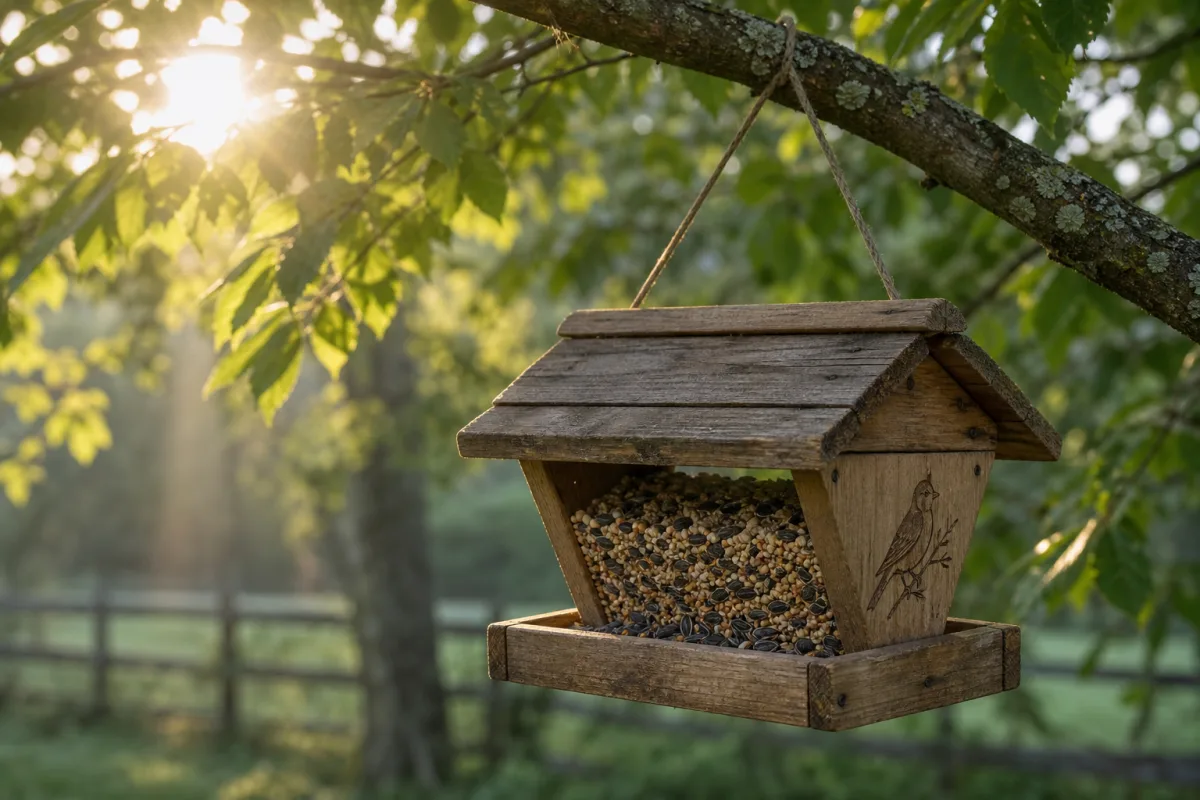
For those ready to invest serious time and skill into a showpiece project, the copper-roofed gazebo feeder is the undisputed crown jewel of DIY bird feeders. This elaborate design features a hexagonal or octagonal base platform, multiple turned or carved support posts, and a peaked roof covered in copper flashing that weathers to a beautiful verdigris patina over time. Building one requires intermediate woodworking skills, a miter saw capable of cutting compound angles, and an afternoon of careful assembly. But the result is a feeder so handsome it could anchor an entire garden design.
The log cabin feeder is another ambitious project that draws admiring comments from everyone who sees it. Small sections of branches or dowels are stacked Lincoln-log style using wood glue and finishing nails to form miniature log walls around a central seed reservoir. A shingle roof made from real cedar shakes completes the illusion of a tiny wilderness cabin. These feeders are as much art objects as functional bird stations, and many crafters display them prominently during winter when gardens are otherwise bare and birds need feeding most urgently.
A multi-station feeding tree is perhaps the most ambitious project on this list, but it rewards the effort with a backyard focal point that can accommodate dozens of birds at once. The design involves mounting a central wooden post in the ground, attaching multiple horizontal arms at different heights, and hanging a variety of different feeder types — tubes, platforms, suet cages, and water dishes — from each arm. This allows you to offer multiple food types simultaneously, which dramatically increases the diversity of species that will visit your yard. Advanced plans to consider include:
- Copper-Roofed Gazebo Feeder — A hexagonal showpiece with turned posts and a weathering copper roof, suitable as a garden focal point.
- Log Cabin Feeder — A meticulous branch-stacked miniature cabin with cedar shingle roof, as much art as functionality.
- Multi-Station Feeding Tree — A mounted post system with multiple arms for hanging diverse feeder types simultaneously.
- Stained Glass Window Feeder — A window-mounted acrylic feeder with stained glass panel inserts that creates colorful light patterns indoors.
- Reclaimed Wood Barn Feeder — A large barn-style structure built from salvaged wood planks, combining rustic character with generous capacity.
The stained glass window feeder deserves recognition for its unique interior benefit. Mounted directly on a window with suction cups, this feeder allows you to watch birds from just inches away inside your home. When sunlight passes through colored glass panels, it casts jewel-toned shadows across your interior walls, turning a simple bird feeding station into a passive art installation. Crafters who enjoy glass-working can create custom panels, while those without glass skills can purchase pre-made decorative glass inserts from craft supply stores and simply frame them within a wooden or acrylic mounting structure.
Placement, Maintenance, and Attracting the Right Birds
Building a beautiful feeder is only half the equation. Where you place it and how you maintain it will determine whether it becomes a thriving bird station or a neglected piece of garden furniture. The general guidance from ornithologists and birding organizations is to hang feeders either very close to windows — within three feet — or very far away — beyond thirty feet. This counterintuitive advice relates to collision risk: birds flying from a feeder less than three feet from glass cannot build up enough speed to injure themselves if they misjudge the reflection, while feeders far from windows give birds enough distance to course-correct.
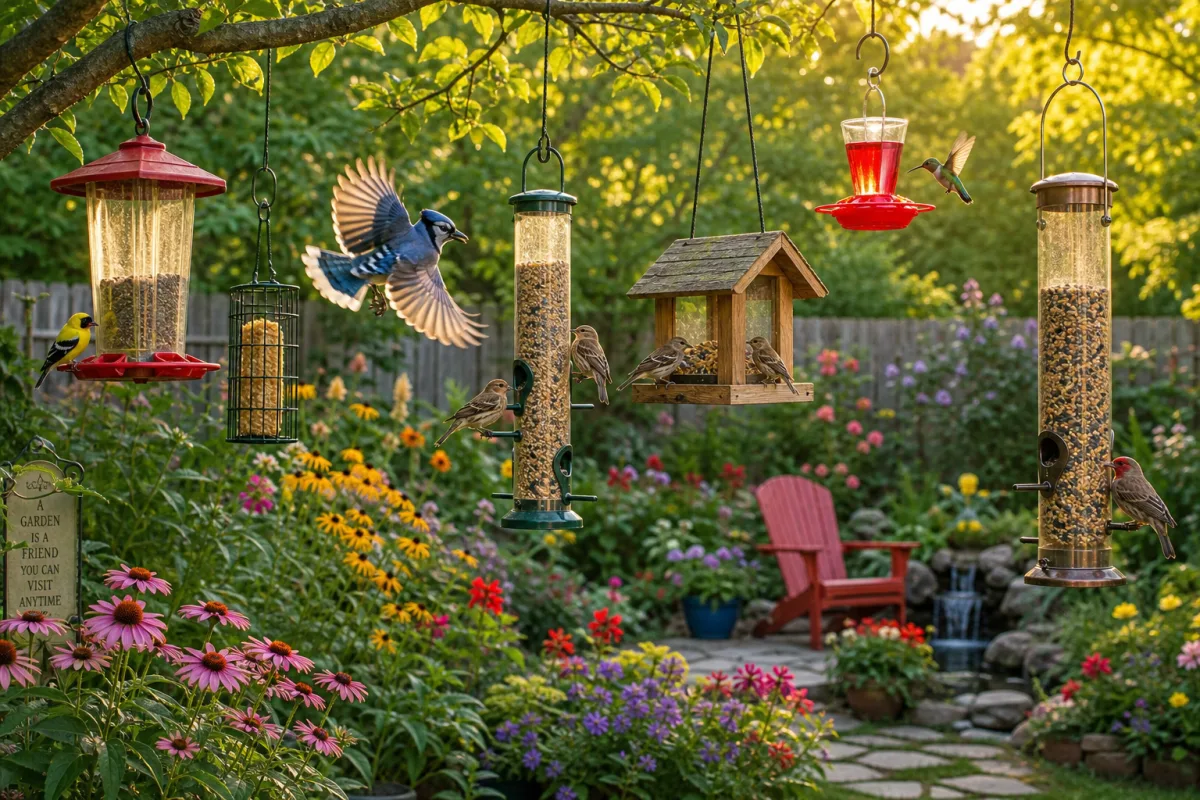
Height and surrounding habitat matter enormously for the types of birds you will attract. Ground-feeding birds like juncos, towhees, and mourning doves prefer low platform feeders set close to protective shrubs they can retreat into when startled. Perching birds such as finches, chickadees, and titmice prefer feeders hung at eye level or higher, five to eight feet from the ground. Woodpeckers and nuthatches are drawn to suet cages mounted against tree trunks or fence posts at a height that simulates natural foraging on standing dead wood. Thinking carefully about which birds inhabit your region and what their preferences are will help you site your feeder collection strategically.
Maintenance is the responsibility that separates good bird stewardship from accidental harm. Feeders must be cleaned regularly — ideally every one to two weeks during warm weather and monthly in winter — to prevent the buildup of mold and bacteria that can sicken and kill birds. A dilute solution of one part bleach to nine parts water, followed by thorough rinsing and complete drying before refilling, is the recommended cleaning protocol from most wildlife organizations. Monitoring seed for clumping or spoilage is equally important, as wet seed can harbor deadly aspergillus mold that causes a respiratory disease called aspergillosis in birds.
The seed you offer is as important as the feeder design itself. Black oil sunflower seed is the single most universally appealing seed across North American bird species and is a reliable choice for any feeder. Nyjer, also called thistle seed, is irresistible to goldfinches and siskins but requires a specialized feeder with tiny ports. Safflower seed is uniquely attractive to cardinals while being largely ignored by squirrels, making it an excellent choice for platform feeders in squirrel-heavy neighborhoods. Suet cakes are indispensable in winter for high-energy species, and fresh fruit like orange halves or grape jelly will attract orioles during spring migration in ways that seed simply cannot.
Making Your Bird Feeder Project a Long-Term Passion
What begins as a single afternoon craft project has a remarkable tendency to evolve into a year-round hobby that reshapes how you experience your outdoor space. Many people who build their first bird feeder report that within weeks they are keeping a species log, learning to identify the difference between a house finch and a purple finch, and planning which feeder design they want to tackle next. The birding community is enormously welcoming and knowledgeable, with local Audubon Society chapters, online forums, and citizen science programs like Cornell Lab’s Project FeederWatch providing structure and community for people at every level of interest.
Photographing the birds that visit your feeders adds yet another dimension to the hobby. Even a smartphone camera held steadily near a window can capture remarkable images of birds that would have seemed impossibly exotic before you started feeding them. Over time, your feeder placement and landscaping choices — adding native berry-producing shrubs, a birdbath, or a brush pile for ground cover — will create an increasingly rich habitat that supports not just birds but a whole web of insects, amphibians, and small mammals. A yard that begins with one pine board platform feeder can, within a few years, become a genuinely significant pocket of urban or suburban wildlife habitat.
The fifteen plans outlined in this guide represent a progression from absolute beginner to accomplished craftsperson, but they also represent a deeper journey of attention and care. Each feeder you build is an act of hospitality extended to creatures that cannot ask for it, a small but meaningful contribution to wildlife in a world where natural habitats continue to face enormous pressure. The satisfaction of watching a flock of goldfinches descend on a feeder you assembled from a few pieces of cedar and a handful of screws is genuinely difficult to overstate. Start with the simplest plan that feels manageable, hang it in a spot where you will see it from a favorite chair or window, fill it with black oil sunflower seeds, and wait. Within days, your yard will have visitors worth watching for the rest of your life.








What do you think?
It is nice to know your opinion. Leave a comment.