










Animal Crafts for Kids: Exciting Tutorials & Ideas
Why Animal Crafts Are Perfect for Child Development
If you’re looking for an activity that kids actually love and that’s genuinely good for them at the same time, animal crafts might be your best bet. Whether your child is making a paper plate lion or a sock puppet rabbit, something more than just a cute project is happening at that table. They’re building fine motor skills, learning to stick with something, and feeling that satisfying rush of “I made this” — a feeling that tends to ripple outward into other parts of their lives too. For parents and teachers alike, it’s hard to beat that combination.
There’s also this wonderful side effect where animal-themed projects get kids genuinely curious about the natural world. A child who spends an afternoon making a felt butterfly is so much more likely to actually stop and watch a real one in the garden the next day. That bridge between art and nature is something classrooms often struggle to build, but crafts do it almost automatically. Suddenly, animals aren’t just things on a screen — they’re creatures your child has touched, shaped, and thought about with their own hands.
And then there’s what happens when kids craft together. When a group of children are building paper bag puppets or painting little ceramic animals side by side, something lovely unfolds — they share supplies, swap ideas, and cheer each other on without anyone telling them to. That’s empathy and communication being practiced in real time, which is hard to manufacture in more structured settings. Plus, there’s always that moment when someone’s elephant comes out looking more like a lumpy potato, and everyone loses it laughing — those are the moments kids actually remember.
Essential Supplies to Keep on Hand for Animal Crafting
Here’s the good news: animal crafts almost never require a special trip to an expensive art store. A solid basic craft bin can open up hundreds of projects, and the real goal is just building a flexible stash of supplies that works across lots of different ideas. When the materials are already there and easy to grab, kids are far more likely to create on their own — no adult required, no waiting around for things to be found and gathered.
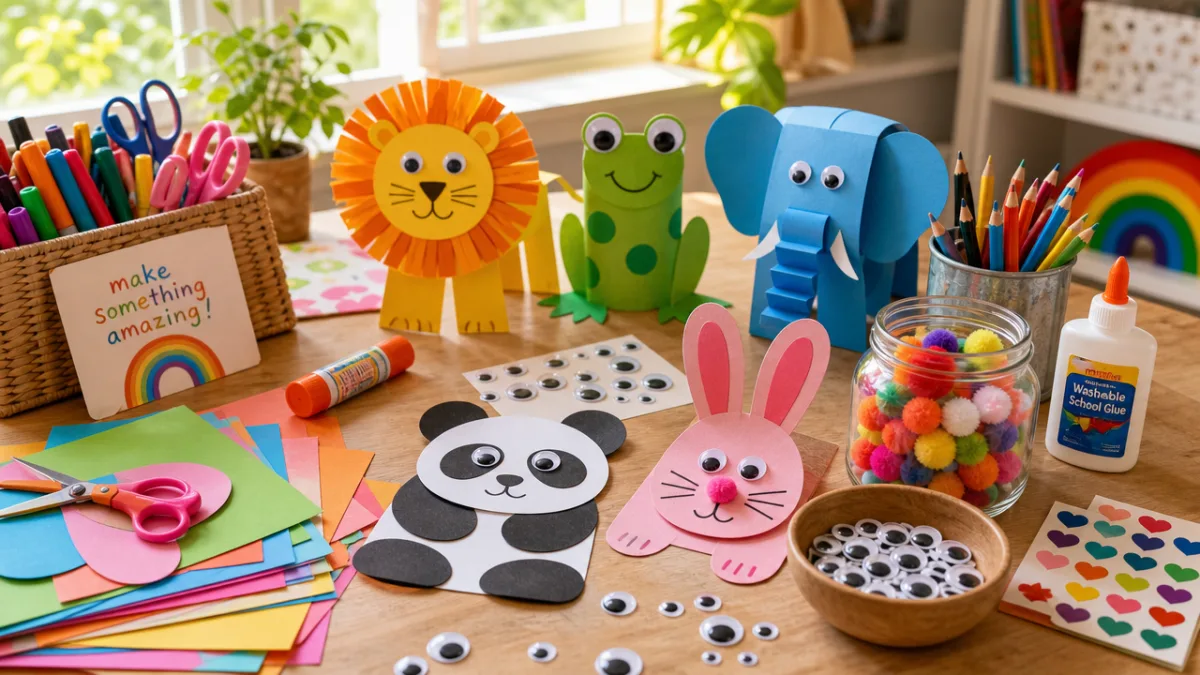
For your everyday essentials, you’ll want a good range of papers (construction paper, cardstock, tissue paper, and newspaper all pull their weight), glue sticks and white school glue, child-safe scissors in a couple of sizes, and — this is important — a big collection of googly eyes in various sizes. Seriously, googly eyes are magic. They can turn a paper cup into a frog or a pine cone into an owl in about thirty seconds flat. Round that out with washable tempera paint for younger kids, acrylic for older ones, and a variety of brushes and sponges, and you’ve got a genuinely powerful toolkit.
Beyond the basics, there are a handful of “treasure materials” worth collecting over time. These include things like:
- Toilet paper and paper towel rolls for 3D animals and puppet bodies
- Egg cartons for caterpillars, spiders, and turtle shells
- Old socks and mismatched gloves for hand puppets
- Feathers, yarn, and pom-poms for textured fur and plumage
- Pipe cleaners and chenille stems for antennae, tails, and limbs
- Foam sheets for scales, fins, and ears
- Paper plates and bowls in multiple sizes for animal faces and shells
Keeping these in clearly labeled bins so kids can actually find things on their own is worth the fifteen minutes of setup — and it quietly teaches them something about organization too. Lots of families keep a dedicated craft cart or closet where everything lives permanently, which means going from “I want to make something” to actually making it takes almost no effort at all. That low friction is exactly what keeps the creative spark alive instead of fizzling out before it starts.
Easy Animal Crafts for Toddlers and Preschoolers
With little ones, the whole point is the experience — the smooshing, the tearing, the sticking things down with wild enthusiasm. A perfect finished product is absolutely not the goal. Hand and footprint crafts are just ideal for this age because they need almost no skill but the results feel like a little miracle. Press a child’s palm into green paint and onto paper, add a few details, and suddenly it’s a turtle. A footprint in brown becomes a bear. Five fingerprints in a row become a caterpillar. The look on a toddler’s face when they realize that squiggly handprint is actually a lion is honestly one of the best things about crafting with young kids.
Paper bag puppets are another one that never gets old with preschoolers. A plain brown lunch bag is all you need — the fold at the bottom becomes the mouth, opening and closing as kids work their hand inside. From there, they can draw, glue, or paint on whatever features they like to make a dog, a frog, a shark, or some creature that exists nowhere in nature but in their imagination. The best part is that the puppet instantly becomes a toy, pulling them right into storytelling and pretend play, which does wonders for language development without feeling anything like a lesson.
And then there are egg carton animals, a classic for a very good reason. One carton can become a long, colorful caterpillar (paint every cup a different color and watch the joy happen), a bumpy turtle shell, or a spiky little hedgehog. Because the basic shapes are already built into the carton, kids don’t need much fine motor control to get impressive results — their job is just to add color and personality. For children who are still working up confidence in their own abilities, that practically guaranteed success is exactly what they need.
Intermediate Animal Craft Projects for School-Age Children
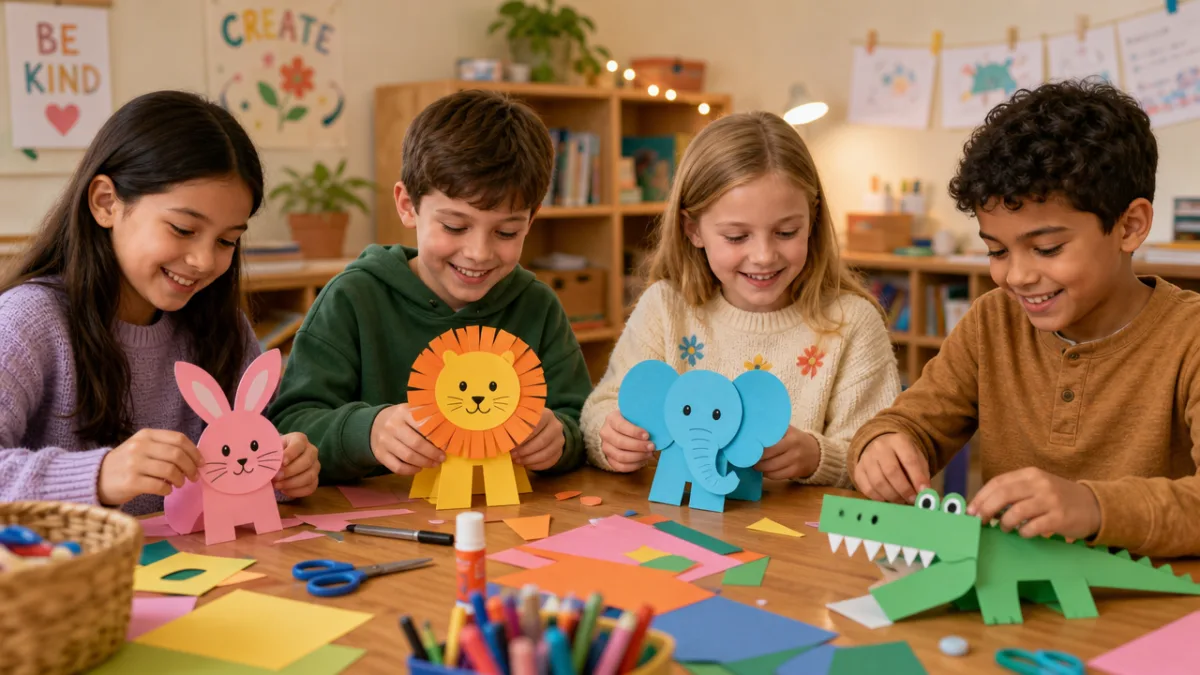
Elementary school age is when things get really interesting, craft-wise. Kids have more patience, more control with their hands, and can actually follow multi-step directions — which opens up a whole new range of possibilities. Origami is a great example. Simple crane and frog folds are very doable for beginners, and for kids who really catch the bug, the models can get remarkably complex. What’s quietly happening underneath all that folding is mathematical thinking — symmetry, sequential logic, visualizing 3D shapes from flat paper — dressed up so well in art that kids don’t even notice.
Weaving and simple textile crafts are also genuinely accessible at this stage. Kids can wrap wool around cardboard loom forms to make animal shapes, or try basic needle felting with the right supervision. Making an animal out of fiber rather than paper introduces a completely different sensory experience, and the results tend to feel more special and keep-worthy. A child who spends a focused afternoon carefully felting a tiny hedgehog has practiced sustained concentration, problem-solving, and real craftsmanship — and they’ll probably still have that hedgehog years from now, unlike most paper projects.
Clay and air-dry modeling compounds open up a third dimension that paper just can’t touch. Kids at this age can learn basic sculpting techniques and then paint their finished pieces. A good progression might look like this:
- Start with pinch pot turtles, where a simple pinched clay dome becomes a shell
- Move on to coil-built snakes and caterpillars, practicing the coiling technique
- Progress to slab-built fish or birds using rolled flat pieces of clay
- Attempt full sculptural animals using basic armature-building principles
- Finish and personalize all pieces with paint, glaze effects, or added detail work
Cardboard construction is another medium that really shines at this age. With some corrugated boxes, an adult on craft knife duty, and paint, kids can build surprisingly impressive three-dimensional animal sculptures. Foxes, owls, wolves, elephants — resourceful kids have pulled all of these off with cardboard and creativity. There’s also something worth noting here: cardboard building appeals to kids who think of themselves as builders rather than artists, and it’s a good reminder that those two things aren’t really separate categories at all.
Seasonal and Holiday Animal Craft Ideas
Tying animal crafts to the seasons gives kids a kind of natural creative calendar that keeps things fresh all year long. Each season brings its own cast of animal characters, its own materials, its own mood. Spring is practically made for baby animals — cotton ball lambs, chicks peeking out of painted eggshells, caterpillars that transform into butterflies through a simple two-part project that mirrors actual metamorphosis in a really satisfying way. These crafts land differently than generic art projects because kids can feel the connection to what’s actually happening outside right now.
Summer opens things up to bugs, ocean creatures, and backyard wildlife. Jellyfish made from paper bowls with trailing ribbon tentacles, paper plate crabs with accordion-folded legs, beehive displays with honeycomb patterned paper — there’s so much to work with. Summer also has the advantage of outdoor crafting, where kids can wander outside first and collect leaves, sticks, seeds, and pebbles to work into their animal creations. That foraging element adds an adventurous quality to the whole experience that kids really respond to.
Autumn is owl season, basically, and for good reason. Their round shapes, big eyes, and earth-toned feathers translate beautifully into leaf collages, paper bag crafts, and torn paper mosaics. Foxes, hedgehogs, and squirrels are equally wonderful autumn subjects — all very achievable with orange, brown, and gold paper and some simple cutting and gluing. Pinecone animals are especially charming because the material does most of the work for you; a pinecone with pipe cleaner legs, a foam ball head, and googly eyes becomes a porcupine in minutes, and it looks genuinely great.
Winter and holiday animal crafts are some of the most beloved in the whole crafting year. Reindeer from traced handprints, polar bears from white paper plates, penguins built from black and white paper with an orange beak — these are the projects families come back to again and again. Arctic animal themes also offer a natural jumping-off point for talking about climate, habitat, and wildlife conservation, which can lead to some surprisingly rich conversations with even young children about the world they’re growing up in.
Tips for Making Animal Crafts a Regular Family Habit
The families who get the most out of crafting with their kids aren’t the ones who plan the most elaborate projects — they’re the ones who make it a regular, low-key thing. A fifteen-minute craft session every Friday after school will do more for a child’s creative development, skill-building, and happy memories than one massive three-hour craft day attempted twice a year. When it’s regular and relaxed, there’s no pressure for every session to be amazing, and creativity starts to feel like a natural part of life rather than a special occasion.
Having a dedicated spot for crafting, even a modest one, also makes a real difference. It doesn’t need to be a whole room — a folding table that comes out of the closet, a corner of the kitchen counter with a craft mat, anything really. What matters is that it signals to your child that making things has a place in your home, that it’s valued enough to have its own spot. Even small kids pick up on that environmental message without needing anyone to explain it to them.
Following your child’s lead on subject matter will always get you further than a Pinterest find you thought was adorable. If they’re obsessed with octopuses right now, make octopus things. The craft a child chooses because it connects to something they already care about will produce more focused effort, more pride in the result, and more genuine enthusiasm for crafting generally than something imposed from outside. Your job as the adult in the room is to set out the materials, make the space, cheer them on, and then get out of the way — even if the butterfly ends up with seven wings and a hat.
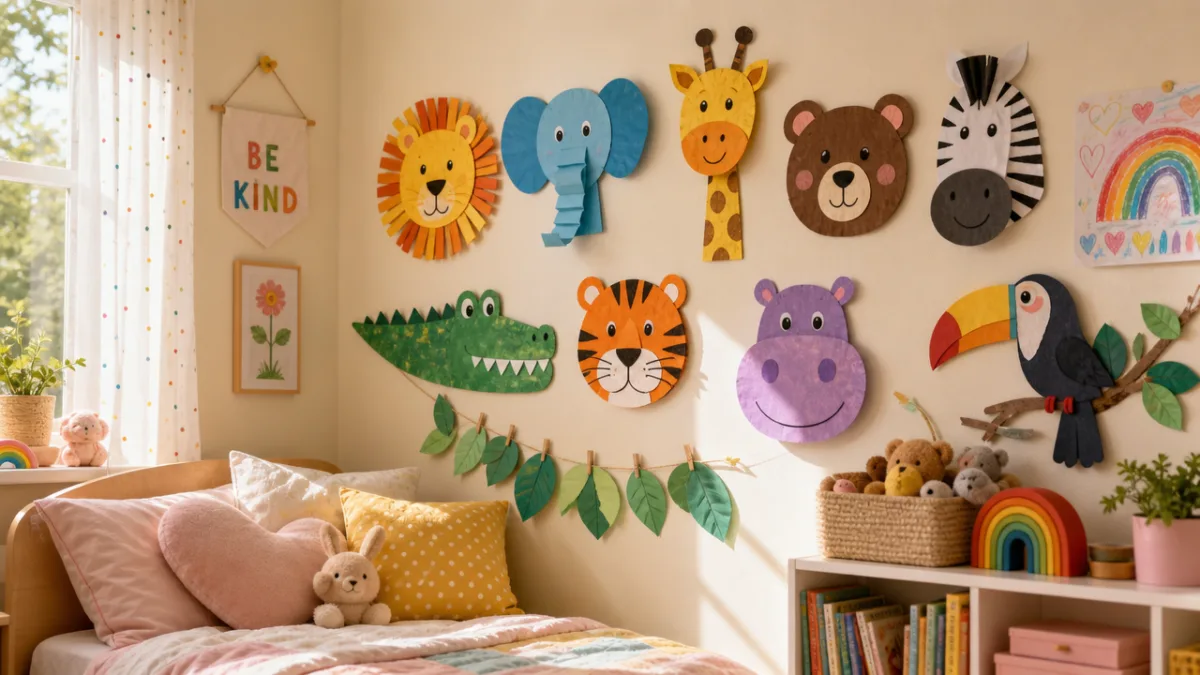
Finally, display what they make. A gallery wall in the hallway, a shelf in the living room, the refrigerator door — wherever it goes, putting their work somewhere visible sends a clear message that what they create matters and deserves to be seen. A child who grows up watching their artwork displayed and admired starts to understand themselves as someone who makes things, and that identity as a creator is one of the most valuable things you can help them build.








What do you think?
It is nice to know your opinion. Leave a comment.