










15 Sustainable Hacks That Are Actually Worth Your Time
Why Sustainable Living Doesn’t Have to Be Overwhelming
The word “sustainability” can trigger a kind of low-grade anxiety in even the most well-intentioned people. Images of expensive organic grocery hauls, zero-waste kitchens with perfectly labeled mason jars, and social media influencers living in off-grid tiny homes can make the whole endeavor feel impossibly out of reach. The truth is that sustainable living has been co-opted by an aesthetic that has very little to do with actual environmental impact and a great deal to do with performance. Real sustainability is quieter, messier, and far more accessible than the curated version we see online.
The most important thing to understand before diving into any list of sustainable hacks is that perfection is the enemy of progress. Environmental scientists and sustainability advocates have long argued that the pressure to be perfectly zero-waste or completely carbon-neutral is counterproductive. It causes burnout, it alienates people who feel they can’t meet the bar, and it shifts focus away from the systemic changes that matter most. Individual action still matters, but it matters most when it’s consistent, habitual, and genuinely integrated into your life rather than performed for an audience.
This article focuses specifically on hacks that have real, measurable impact and are practical enough to stick with long-term. Each suggestion on this list was chosen not just because it sounds good in theory, but because it addresses a genuine source of waste or energy consumption in the average household. Some of these will save you money. Some will save you time. Most will do both, which is ultimately why they’re actually worth your time rather than just your guilt.
Kitchen and Food Waste Hacks That Make a Real Difference
Food waste is one of the most significant contributors to greenhouse gas emissions globally, yet it’s also one of the areas where individual households have the most direct control. According to the Food and Agriculture Organization of the United Nations, roughly one-third of all food produced for human consumption is lost or wasted every year. In your own kitchen, this likely shows up as wilted vegetables at the back of the fridge, forgotten leftovers, and the slow accumulation of pantry items that never quite make it into a meal. The good news is that addressing this doesn’t require a complete lifestyle overhaul.
One of the most effective hacks is to do a “fridge audit” before every grocery run. Simply take five minutes to move older items to the front, check what needs to be used up, and build at least two or three meals around those ingredients before shopping for new ones. Pairing this with a loose weekly meal plan — not a rigid schedule, just a rough idea of what you’ll eat — can dramatically reduce the amount of food that ends up in the trash. Studies have consistently shown that people who plan their meals waste significantly less food than those who shop spontaneously.
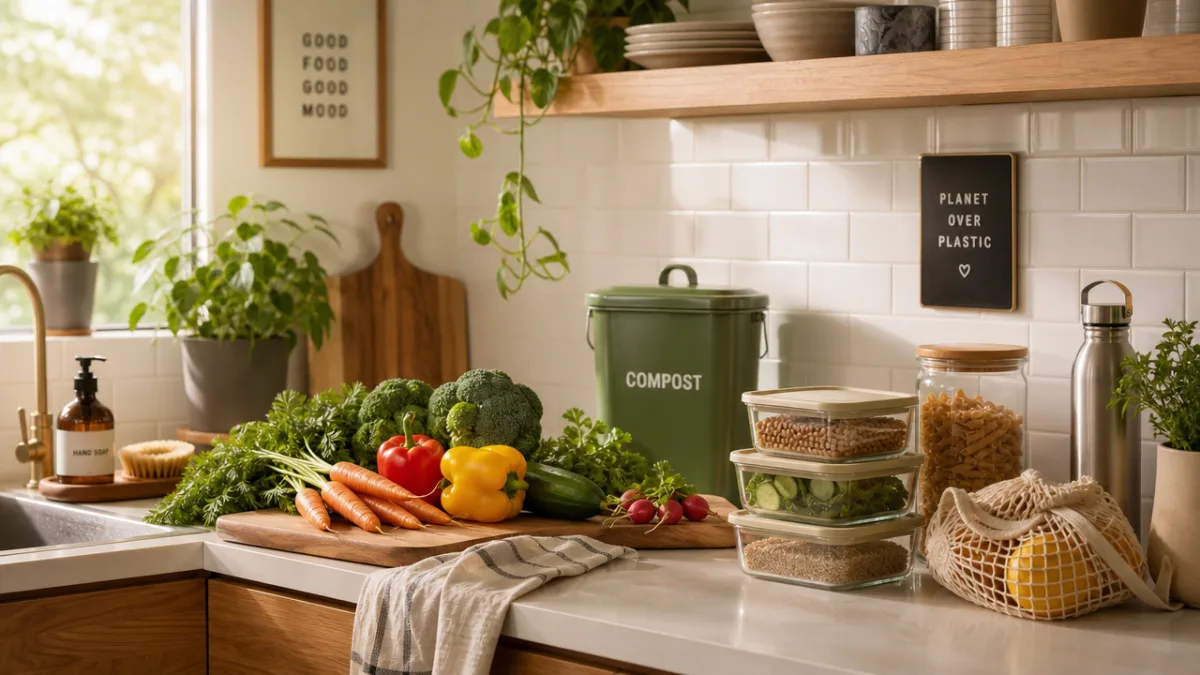
Composting is another kitchen hack that deserves more credit than it gets. Even if you don’t have a garden, many municipalities offer compost pickup programs, and countertop compost bins with charcoal filters have become genuinely compact and odor-free. For those who do have outdoor space, a simple tumbler composter can process kitchen scraps into nutrient-rich material in as little as four to six weeks. Beyond composting, learning a few “root-to-stem” cooking techniques — using carrot tops in pesto, turning vegetable scraps into stock, or blending overripe fruit into smoothies — can make a surprisingly large dent in how much you throw away each week.
- Move older fridge items to the front before every grocery trip to prevent forgotten food from spoiling unnoticed.
- Keep a small “use first” bin or basket in your fridge for items that need to be consumed within the next day or two.
- Freeze bread, cheese, and herbs before they go bad — most people are surprised by how well these items freeze and thaw.
- Make a habit of saving vegetable scraps in a freezer bag and simmering them into homemade stock every few weeks.
- Learn the difference between “best by” and “use by” dates — most foods are still safe and good well past the printed date.
Energy Efficiency Hacks That Actually Lower Your Bills
Energy consumption in the home is one of the clearest places where sustainable choices and financial savings align almost perfectly. Heating and cooling account for the largest share of home energy use in most climates, which means that even small improvements to insulation, thermostat habits, or appliance use can translate into meaningful reductions in both your carbon footprint and your utility bills. The challenge is knowing which changes actually matter versus which ones are mostly symbolic gestures that feel productive without accomplishing much.
One of the highest-impact and lowest-effort hacks is simply adjusting your thermostat by a few degrees. Dropping your heating by just two degrees Fahrenheit in winter and raising your cooling threshold by two degrees in summer can reduce your energy consumption by a surprisingly significant margin. Smart thermostats like those from Ecobee or Google Nest take this further by learning your schedule and adjusting automatically, but even a basic programmable thermostat can achieve similar results if you take the time to configure it properly. The key is consistency — the savings come from maintaining those adjustments every single day.
Addressing “phantom load” — the electricity drawn by devices that are plugged in but not actively in use — is another hack that tends to surprise people with its cumulative impact. Televisions, gaming consoles, coffee makers, and phone chargers all draw power continuously even when switched off or idle. Smart power strips that cut power completely when a device enters standby mode are an easy solution, as is the simple habit of unplugging chargers when they’re not in use. It won’t transform your electricity bill overnight, but across an entire year, phantom load can account for anywhere from five to ten percent of a household’s total electricity consumption.
Switching to LED lighting throughout your home, if you haven’t already, remains one of the best returns on investment in the entire sustainable living space. LED bulbs use roughly seventy-five percent less energy than incandescent bulbs and last significantly longer, which means you’re saving money on replacement bulbs as well as on your electricity bill. The upfront cost has dropped substantially in recent years, making this one of those rare hacks where the math is almost universally favorable regardless of your living situation, whether you rent or own, live in an apartment or a house.
Sustainable Shopping and Consumer Habits
Consumer culture is one of the hardest areas to reform, because shopping is so deeply tied to habit, emotion, and social identity. The fashion industry alone is responsible for roughly ten percent of global carbon emissions, and that figure doesn’t account for the broader category of household goods, electronics, and personal care products that people cycle through at an accelerating pace. Sustainable shopping doesn’t mean never buying anything new — it means being more deliberate about what you buy, how much of it you buy, and from whom.
The single most impactful shopping hack is the simplest one: wait. For any non-urgent purchase, implement a mandatory waiting period — many sustainability advocates suggest anywhere from 24 hours for smaller items to a full week or month for larger ones. This pause serves two purposes. First, it eliminates a large percentage of impulse purchases that you would have regretted or simply not needed. Second, it gives you time to research secondhand options. Platforms like ThredUp, Depop, Facebook Marketplace, and local thrift stores often have exactly what you’re looking for at a fraction of the cost and without the environmental impact of new production.
Buying better quality less often is another principle that sounds obvious but is genuinely difficult to practice in a culture built around cheapness and constant novelty. A well-made pair of boots that lasts ten years has a dramatically lower environmental footprint than three or four cheaper pairs purchased over the same period. This approach requires more thought and often more money upfront, which is why it isn’t accessible to everyone in all categories — but in the areas where it is feasible, the combination of reduced waste, reduced spending over time, and reduced consumption is one of the clearest wins available to individual consumers.
- Implement a 48-hour waiting rule before any non-essential online purchase to eliminate impulse buying.
- Check secondhand platforms first for clothing, furniture, books, and small appliances before buying new.
- Concentrate your spending on companies with verifiable sustainability credentials rather than those that only claim them.
- Choose products with minimal or recyclable packaging whenever there is a comparable alternative available.
- Repair before replacing — learn basic mending, appliance troubleshooting, and furniture restoration skills.

Water Conservation Habits Worth Building
Water is perhaps the resource that people in many developed countries take most for granted, precisely because its scarcity is often invisible from the perspective of someone who turns on a tap and gets clean running water without a second thought. Global freshwater availability is under increasing pressure from climate change, population growth, and agricultural demand, and household conservation, while not the dominant factor, contributes meaningfully to reducing that pressure. More immediately, it also reduces the energy consumed in treating and transporting water, which has its own carbon implications.
Fixing leaks is the highest-impact water conservation hack available to most homeowners and renters, and yet it remains dramatically underutilized because leaks are easy to ignore. A slowly dripping faucet can waste more than three thousand gallons of water per year. A running toilet, which is even easier to overlook because it doesn’t produce a visible puddle, can waste far more — sometimes as much as two hundred gallons per day. Toilet leak detection is as simple as adding a few drops of food coloring to the tank; if color appears in the bowl without flushing, you have a leak that needs to be addressed.
Shifting your relationship with water in the shower is another meaningful area for change. The average American shower uses about two gallons of water per minute, which means that a ten-minute shower consumes roughly twenty gallons. Installing a low-flow showerhead, which typically uses about 1.5 gallons per minute without sacrificing meaningful water pressure, is one of the most cost-effective water-saving investments available. Combined with even modest reductions in shower length, these changes can reduce your household’s water consumption noticeably without requiring any significant sacrifice in comfort or routine.
Low-Effort Hacks for Transportation and Daily Commuting
Transportation is the largest single source of greenhouse gas emissions in the United States, accounting for nearly thirty percent of total emissions. The personal vehicle is central to that figure, and transforming transportation habits is genuinely difficult for most people given how car-centric infrastructure remains in much of the country. That said, there are a number of hacks that reduce transportation emissions without requiring you to give up your car entirely or restructure your life around public transit schedules.
Trip chaining is one of the most underappreciated transportation hacks available. Rather than making separate trips for different errands across multiple days, consolidating errands into a single outing reduces the total miles driven without requiring any sacrifice in what actually gets accomplished. This sounds simple because it is, but it requires a small amount of planning that most people don’t currently do habitually. Keeping a running list of errands and reviewing it before leaving the house is the habit shift that makes trip chaining possible, and the cumulative fuel savings across a year can be quite significant.
Maintaining your vehicle properly is another hack that sits at the intersection of sustainability and financial savings. Keeping tires properly inflated improves fuel efficiency by up to three percent, while a well-maintained engine can improve fuel economy by as much as four percent. Regular oil changes, clean air filters, and properly functioning oxygen sensors all contribute to a car that runs more efficiently and produces fewer emissions per mile. For people who drive regularly, these maintenance habits are genuinely worth building not just for environmental reasons but because fuel efficiency translates directly into money saved at the pump.
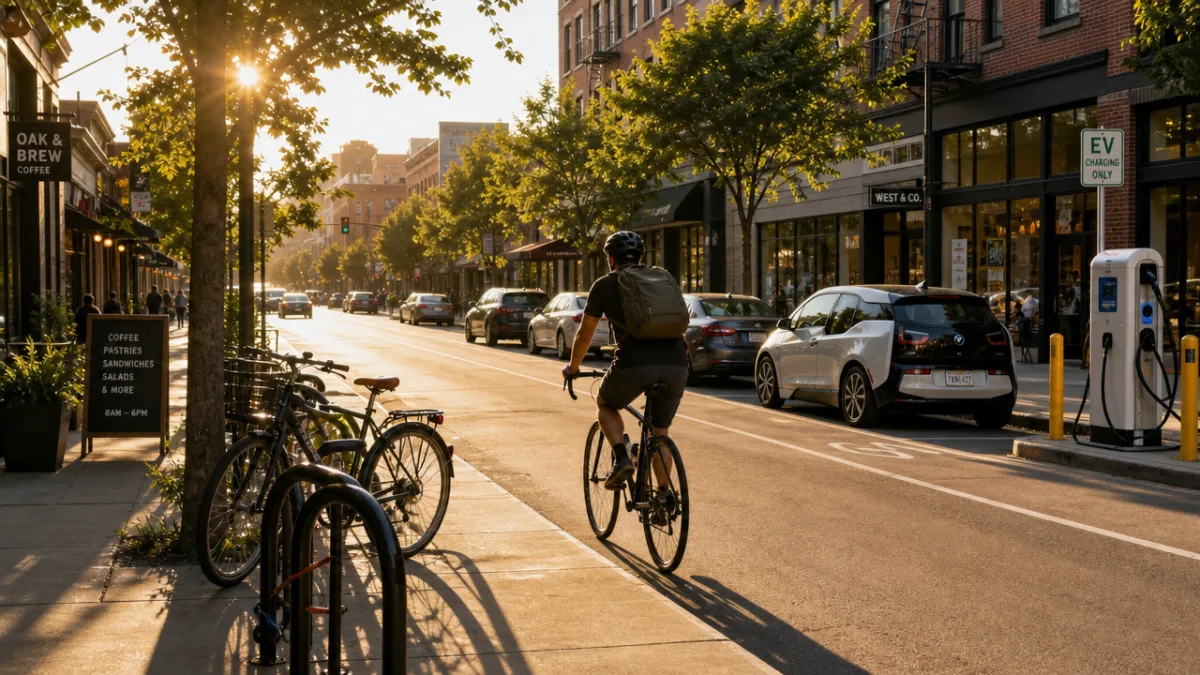
If you live in an area with reasonable public transit or bike infrastructure, even a partial shift — commuting by car only two or three days per week instead of five — can make a meaningful difference over the course of a year. Many people discover that mixed-mode commuting, combining driving with transit or cycling on some days, also reduces stress and provides unexpected benefits like exercise or reading time that make it appealing beyond its environmental rationale. The goal isn’t to be perfect but to find the combination of habits that you can actually maintain, because consistent moderate changes outperform dramatic short-term commitments every single time.
Building Habits That Last: The Psychology of Sustainable Change
Perhaps the most important sustainable hack of all is understanding how habits are actually formed and why so many well-intentioned sustainability efforts fail within weeks. Behavioral science has taught us a great deal about what makes new behaviors stick, and the most consistent finding is that friction matters enormously. The easier a behavior is to perform and the harder the old behavior is to revert to, the more likely the new habit is to persist. This is why reusable bags that live in the car work better than reusable bags stored in a kitchen drawer, and why a recycling bin placed next to the trash bin gets used more than one located across the room.
Starting with just two or three sustainable changes at a time is more effective than attempting a comprehensive lifestyle overhaul. Each new habit requires cognitive effort to establish, and attempting too many simultaneously leads to decision fatigue and eventual abandonment of all of them. A more productive approach is to choose the hacks from any list like this one that feel most naturally aligned with your existing routines and start there. Once those feel automatic — typically after two to three months of consistent practice — you add the next set. This stacking approach, supported by research in habit formation, is how durable behavioral change actually happens.
Finally, connecting your sustainable habits to your values rather than to external pressure is what determines whether they endure beyond the initial burst of motivation. People who make sustainable changes because they genuinely care about the world they’re leaving behind, or because the changes align with their sense of who they are and want to be, sustain those changes far longer than people who make them out of guilt, social pressure, or fleeting trend-following. The hacks on this list are worth your time not because they’ll make you look good on Instagram, but because they represent small, cumulative acts of care for a world that genuinely needs them.








What do you think?
It is nice to know your opinion. Leave a comment.