










Eco-Fabulous! Your Sustainable Fashion Guide for 2025
What Is Sustainable Fashion and Why It Matters More Than Ever
Sustainable fashion isn’t just for die-hard environmentalists anymore — it’s become one of the biggest conversations reshaping the entire clothing industry. At its heart, it’s about making clothes, accessories, and footwear in ways that are kinder to both the planet and the people involved. That means everything from where the raw materials come from to the conditions in the factories where things are made, all the way to what happens when a garment finally ends up in your closet.
Here’s a number that should stop you in your tracks: the fashion industry is responsible for around 10% of global carbon emissions every year — more than international aviation and shipping combined. Making a single pair of jeans can use up to 7,500 liters of water, which is roughly what one person drinks over seven years. Fast fashion has made all of this so much worse, churning out disposable clothes that pile up in landfills where synthetic fabrics sit for hundreds of years before breaking down.
Now that we’re well into 2025, the pressure around climate change has turned sustainable fashion from a nice-to-have into something that actually matters morally and economically. Shoppers are demanding more honesty from brands, governments are cracking down on textile waste, and a new wave of designers is proving every day that looking good and doing good aren’t mutually exclusive. The outfit you put on in the morning? It’s part of a much bigger story.
Understanding Sustainable Materials: What to Look For and What to Avoid
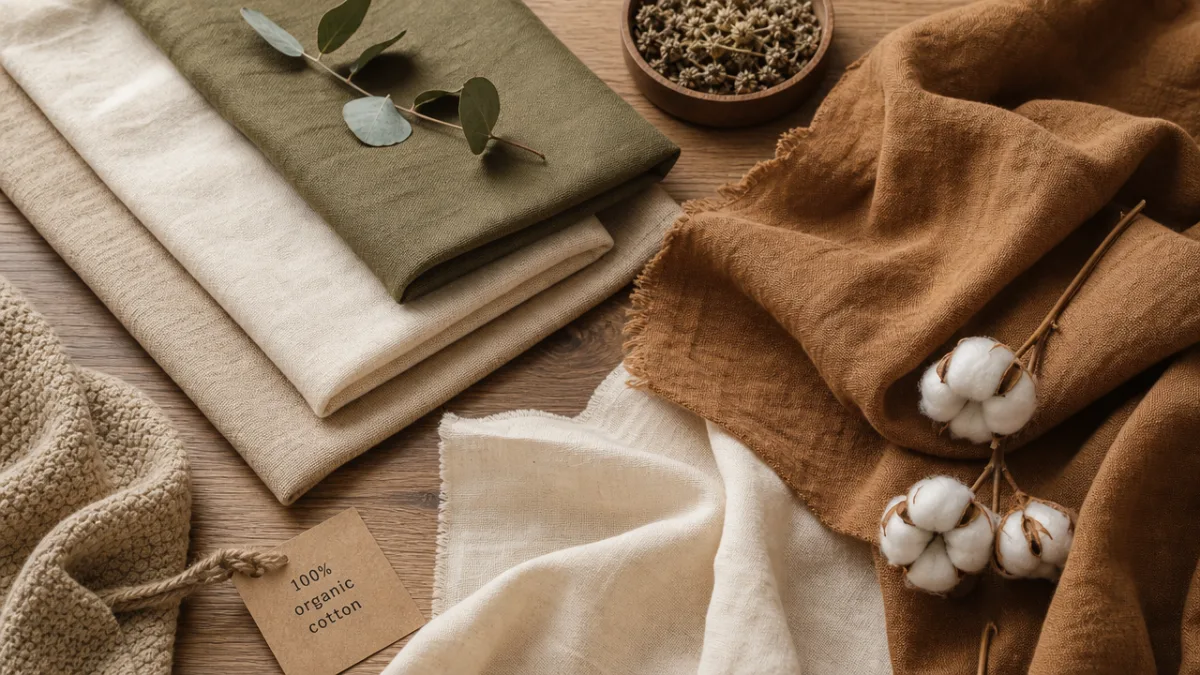
Not all fabrics are created equal, and getting your head around what different materials actually do to the environment is one of the most useful things you can do as a shopper. Natural fibers like organic cotton, linen, and hemp are generally much gentler on the planet than conventional or synthetic options. Organic cotton skips the toxic pesticides and synthetic fertilizers, uses less water, and is better for the soil. Linen, which comes from the flax plant, is naturally drought-resistant and doesn’t need much chemical help to grow well.
On the more exciting end of things, 2025 has brought a real surge in next-generation fabrics that are changing what eco-friendly dressing can look like. Tencel (also called lyocell) is made from sustainably sourced wood pulp using a closed-loop process that recycles its own water and solvents. Piñatex is crafted from pineapple leaf fibers and works as a leather alternative without the animal welfare concerns or the environmental nastiness of plastic-based vegan leather. And mycelium leather — yes, grown from mushroom roots — is biodegradable, cruelty-free, and getting more affordable all the time as production scales up.
Materials worth being cautious about include conventional polyester, nylon, and acrylic — all petroleum-based synthetics that shed microplastics every time you wash them, which eventually end up in the ocean and then in our food. Conventional viscose and rayon are plant-based but often involve chemical processes that are rough on both workers and local ecosystems. When you’re shopping, keep an eye out for certifications like GOTS (Global Organic Textile Standard), OEKO-TEX, Bluesign, or Fair Trade — these are independently verified and mean the product actually lives up to its claims.
- Best sustainable fabrics: Organic cotton, linen, hemp, Tencel, recycled polyester, Piñatex, mycelium leather
- Certifications to look for: GOTS, OEKO-TEX Standard 100, Bluesign, Fair Trade Certified, Cradle to Cradle
- Fabrics to minimize: Virgin polyester, conventional nylon, traditional viscose, acrylic
Building a Sustainable Wardrobe: The Art of Buying Less and Choosing Better
The most sustainable piece of clothing you own is the one that’s already hanging in your wardrobe. Before you pull out your credit card, it’s worth asking yourself honestly: do you actually need something new, or could you restyle what you already have? Capsule wardrobes — those carefully chosen collections of versatile, quality pieces that work together in a hundred combinations — have become so popular for exactly this reason. They cut down on impulse buying while making sure you always have something great to wear.
When you do decide to buy something new, the cost-per-wear framework is a genuinely helpful way to think about it. A well-made linen blazer that costs $180 but gets worn 90 times over five years works out to $2 a wear — which is far better value, financially and environmentally, than a $30 fast-fashion version that starts pilling after a few washes and ends up donated within the year. Good craftsmanship, timeless design, and materials that actually last are what make a wardrobe work for you long-term. That shift from buying more to buying better is really what sustainable fashion is all about.
Secondhand shopping has completely gone mainstream in 2025, thanks to platforms like Depop, ThredUp, Vestiaire Collective, and a thriving local vintage market scene that make preloved clothing feel accessible, cool, and even a little glamorous. Thrifting isn’t just for bargain hunters anymore — it’s become a way to express your personality, hunt for one-of-a-kind pieces, and quietly make a stand for the environment all at once. Buying secondhand keeps clothes out of landfills, reduces demand for new production, and is probably the single most impactful thing you can do individually for sustainable fashion.
Ethical Brands to Know and Support in 2025
The world of ethical fashion has come a long way, and there are now some genuinely exciting brands proving you really don’t have to choose between your values and your style. Patagonia is still the gold standard for outdoor and casual wear — between their Worn Wear repair program, their transparent supply chain reporting, and their commitment to donating 1% of sales to environmental causes, they’ve put their money where their mouth is for decades. Eileen Fisher has built a devoted following with her minimalist, enduring designs made from sustainable materials, and her take-back program gives worn garments a second life rather than a landfill spot.
In luxury fashion, Stella McCartney is still a genuine trailblazer — she built an entire high-end brand on a firm refusal to use fur, leather, or exotic skins, and she keeps pushing the boundaries of sustainable material innovation. Newer names worth knowing include Veja (ethically sourced sneakers with full supply chain transparency), Thought Clothing (bamboo and organic cotton basics), Reformation (trend-forward women’s wear that publishes detailed sustainability data), and Allbirds (footwear made from merino wool and eucalyptus fiber that even labels the carbon footprint of each shoe). Each of these brands has made sustainability central to who they are, not an afterthought tacked onto a marketing campaign.
It’s also worth developing a good eye for greenwashing — when brands use vague environmental language to seem more sustainable than they really are. Watch out for buzzwords like “eco-friendly” or “green” with nothing specific to back them up, one-off “sustainable collections” from brands that otherwise run fast-fashion operations, and sustainability reports that focus on packaging while conveniently ignoring how the clothes are actually made. The brands worth trusting are the ones that are open about their whole supply chain, admit where they’re still falling short, and can point you to real third-party certifications.
- Patagonia — Outdoor and casual wear, repair programs, environmental activism
- Eileen Fisher — Timeless minimalist design, take-back recycling program
- Stella McCartney — Luxury fashion without animal products
- Veja — Ethically sourced sneakers with full supply chain transparency
- Reformation — Trend-forward women’s wear with detailed sustainability metrics
- Allbirds — Natural material footwear with carbon footprint labeling
Care, Repair, and Circular Fashion: Extending the Life of Every Garment
How you take care of your clothes matters just as much as what you buy in the first place. Washing at 30°C instead of 60°C can cut a garment’s energy use over its lifetime by up to 40%. Washing less often, running full loads, choosing eco-certified detergents, and hanging things to dry instead of using the tumble dryer are all small changes that add up to a surprisingly big difference over time. If you have a lot of synthetic clothing, a microplastic-catching laundry bag like the Guppyfriend is worth every penny — it stops thousands of tiny fibers from making their way into waterways with each wash.
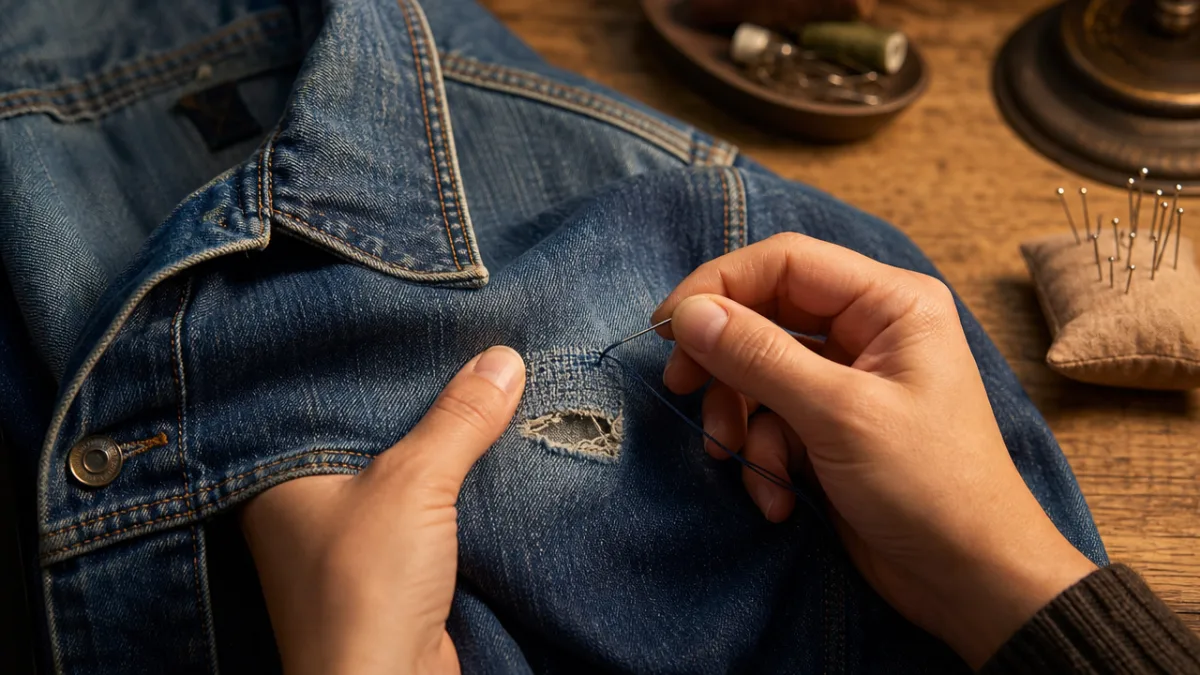
Repair culture is having a real moment in 2025, driven by a mix of economic reality and a growing appreciation for things that last. Knowing how to sew on a button, darn a sock, or patch a pair of jeans is both a practical life skill and a small act of rebellion against throwaway culture. Repair cafes have popped up in cities everywhere, where volunteers help people fix torn jackets, broken zippers, and just about anything else — for free. Brands like Nudie Jeans have gone even further, building free lifetime repairs into their whole business model, recognizing that a mended garment is one of the best advertisements for quality they could ever have.
Circular fashion takes this thinking to its logical conclusion — designing clothes from the very beginning with the end of their life already planned out. In a circular system, garments are made to be fully recyclable, compostable, or repairable, with nothing going to waste. Plenty of brands now offer take-back programs where you can return worn-out pieces for recycling or upcycling. Rental and subscription platforms like Rent the Runway add another layer to this by squeezing the maximum use out of each garment across multiple wearers before it finally reaches the end of the line.
The Future of Sustainable Fashion: Technology, Policy, and Personal Power
The technology reshaping sustainable fashion right now is genuinely mind-bending. Bioengineered fabrics grown in labs from bacterial cellulose, spider silk proteins, and algae are moving from experimental prototypes into actual products you can buy. Digital fashion — clothing that only exists as a digital file, worn virtually in photos and on social media — is carving out a real niche for people who love experimenting with style without using any physical resources at all. And blockchain is being used by a growing number of brands to create a permanent, tamper-proof record of a garment’s entire journey from raw material to finished product, so you can actually verify the sustainability claims you’re seeing on a label.
Policy is finally starting to catch up too. The European Union’s Strategy for Sustainable and Circular Textiles, which moved into implementation in 2024 and 2025, now requires brands to offer take-back programs, meet minimum recycled content standards, and provide detailed product passports showing the environmental footprint of each item. Extended Producer Responsibility legislation in several countries holds brands financially responsible for what happens to their products at the end of their life, which creates a real economic incentive to design for durability and recyclability from the start. Sustainable fashion is becoming less of a choice and more of a requirement.
But when it’s all said and done, the future of sustainable fashion comes down to people — millions of individual decisions made every single day, and the collective power those decisions carry. What you buy shapes what brands make. What you engage with on social media shapes the narrative around what fashion is and who it’s for. What you talk about with the people around you plants seeds and shifts norms in ways that ripple outward further than you might think. Being eco-fabulous in 2025 means understanding that your personal style and your care for the planet aren’t in competition with each other — they’re actually the same thing, worn with pride like your favorite, most enduring piece.








What do you think?
It is nice to know your opinion. Leave a comment.