










Saturday Nights: The Musical World of Madi Vonice
Introduction: Who Is Madi Vonice?
If you haven’t heard of Madi Vonice yet, you probably will soon. She’s an independent artist who’s been quietly building a fanbase across streaming platforms and social media, and it’s not hard to see why. Her voice has this rare combination of warmth and raw vulnerability that just pulls you in. She’s carved out her own corner of the R&B and pop world — one that feels real, not manufactured. Her music is for people who want to actually feel something, not just hear something.
Her story started the way a lot of artists’ stories do — scribbling in notebooks, recording rough voice memos on her phone, sharing little snippets with the people closest to her. But those small moments of sharing gradually grew into something bigger. She has this gift for turning her own personal experiences into songs that somehow feel like they belong to everyone who hears them.
“Saturday Nights” is probably her most talked-about track right now, and it’s taken on a whole second life on Pinterest and TikTok. People have latched onto it as the perfect soundtrack for late-night drives, bittersweet memories, and all those quiet moments of reflection. It’s the kind of song that captures a specific feeling so perfectly that it ends up feeling timeless — and that’s genuinely hard to pull off.
The Story Behind “Saturday Nights”
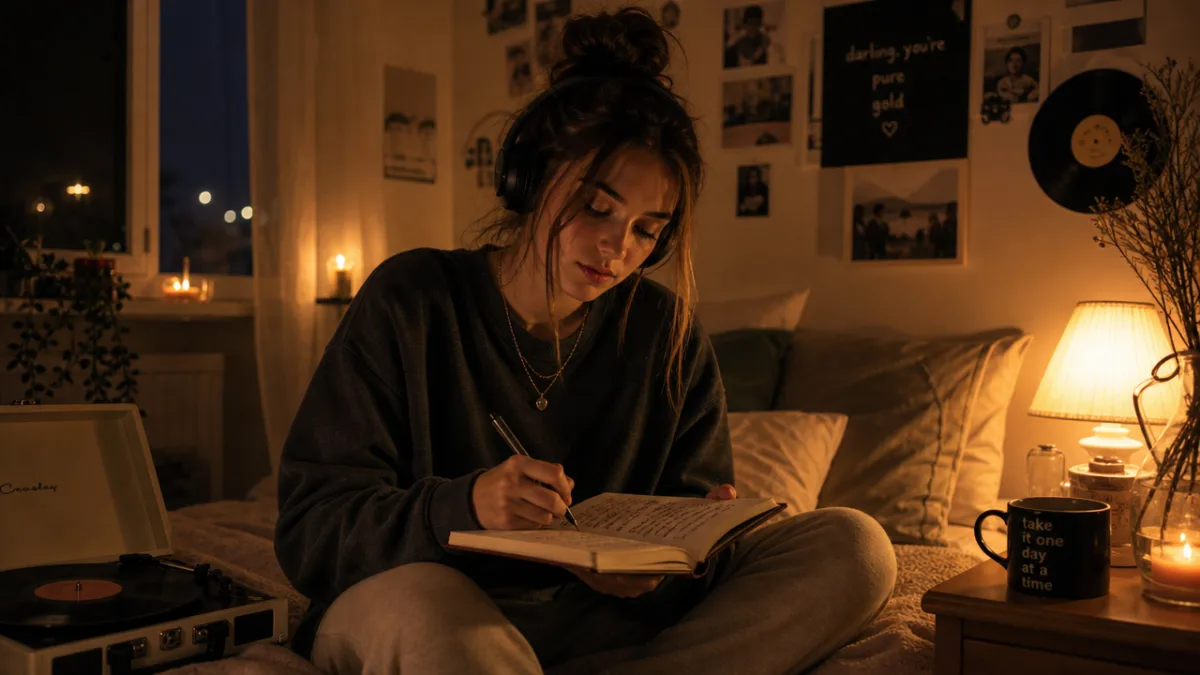
“Saturday Nights” feels like reading someone’s diary — in the best possible way. From the very first note, it sets this intimate, candlelit mood, like it’s late on a Friday and the week’s finally unwound enough for the real feelings to surface. Madi drew from her own experiences with love and longing to write it, and you can feel that. It’s about remembering good times that are gone, and the specific ache that comes with that.
The lyrics seem simple at first, but the more you listen, the more you find in them. She writes about those little weekend rituals — the anticipation of the night ahead, the laughing and connecting, and then that quietness after, when someone isn’t there anymore to share it with. It’s a song about absence, but it’s absence made vivid through memory. If you’ve ever had to let go of something you loved, it’s going to hit you somewhere personal.
Musically, it’s beautifully restrained. There’s no wall of sound here — the production actually gives her voice room to breathe and do the heavy lifting. Soft percussion, gentle piano, subtle atmospheric textures in the background. It manages to feel both intimate and somehow cinematic at the same time. What’s impressive is that it trusts you to feel things without spelling out exactly how you should feel. That’s rarer than it sounds.
Lyrical Themes and Emotional Depth
What really sets “Saturday Nights” apart is how specific it is. Instead of keeping things vague and broadly relatable, Madi anchors the whole thing in tiny, concrete details — a particular song playing somewhere in the background, the quality of light at a certain hour, the comfort of a shared routine with someone you love. Those small moments are exactly the ones that end up carrying the most emotional weight later on.
That specificity is what lifts the song above the crowded field of breakup songs and longing ballads. You don’t just hear someone else’s story — you hear your own story reflected back at you through their lens. That moment of recognition, of feeling genuinely understood, is what’s driven so much of the song’s organic spread. People hear it and immediately think of their own Saturday nights, their own losses, their own memories they wish they could climb back into.
The song also moves gracefully from nostalgia toward something like acceptance. It doesn’t wallow or get bitter, but it doesn’t pretend loss is tidy and simple either. That emotional balance is honestly striking for an artist this early in her career. A lot of songwriters take years to develop that kind of nuance, and the fact that it comes so naturally to her is a big part of why her music connects with such a wide range of people.

Madi Vonice’s Artistic Influences and Sound
To really get what Madi Vonice is doing, it helps to understand where she’s coming from musically. Her sound lives comfortably within a long tradition of soulful, emotionally driven pop and R&B — you can hear decades of American music history woven into what she does. People have drawn comparisons to various classic soul icons and to contemporary artists known for their emotional honesty, but she never sounds like she’s simply copying anyone. She takes those influences and turns them into something that’s distinctly hers.
The artists she tends to be mentioned alongside are the ones who’ve made emotional transparency their whole thing — people who write unflinchingly about heartbreak, identity, and just how complicated it is to be a person in relationships with other people. She shares that commitment to not oversimplifying things. Her songs don’t wrap up with easy answers, because honestly, real life doesn’t either.
Her production choices reflect that same sensibility. She gravitates toward arrangements that feel organic and unhurried — acoustic and semi-acoustic elements rather than heavy electronic processing. It gives her music a warmth that feels a little timeless, sitting at a slight distance from whatever’s trending at any given moment. Whether that’s a conscious artistic decision or just her natural instinct, it means her songs will probably sound just as good in five years as they do right now.
The Role of Social Media in Her Rise
Like a lot of independent artists her age, Madi has built her audience almost entirely through social media rather than the traditional label system. Pinterest has turned out to be a surprisingly powerful platform for her — people keep weaving her songs into aesthetic mood boards, study playlists, and curated collections that capture a particular feeling or season of life. “Saturday Nights” shows up there constantly.
TikTok has played a huge role too, with short clips featuring her music racking up millions of views as creators use her songs to score their own personal stories. There’s a specific kind of magic that happens when a single song becomes the backdrop for thousands of different people’s memories and moments all at once, and “Saturday Nights” has absolutely experienced that. Every new video introduces her to someone who’s never heard her before, while also deepening the connection for people who already love the song.
What stands out about her social media presence, though, is how real it feels. She’s not presenting some heavily polished, aspirational version of herself — she shares actual behind-the-scenes moments from making music, responds to comments like a real person, and talks openly about what it’s actually like to be an independent artist trying to navigate the industry. That honesty has built a community around her music that goes way beyond passive streaming. These are people who genuinely care about what she does next.
The Cultural Resonance of Late-Night Nostalgia
“Saturday Nights” taps into something that goes way beyond Madi’s own personal story. It connects to something a lot of us carry — this deep cultural fixation with nostalgia, and specifically the nostalgia tied to weekend evenings. Saturday nights hold a really unique place in our collective memory. They’re loaded with possibility and ritual, heavy with expectation, and they tend to be when our most vivid memories of connection, celebration, and loss get made.
There’s a reason so many beloved songs across so many genres have used Saturday night as their central image. From disco bangers to quiet ballads, it functions as a kind of emotional shorthand — listeners already know, before you’ve said much else, that what’s coming is going to hit them somewhere deep. Madi is working within that tradition, but she’s found something fresh and genuinely personal to say inside it. Her Saturday nights feel specific to her life, and that specificity is precisely what makes them feel universal.
The nostalgia in the song lands especially hard for younger listeners who are right in the middle of accumulating the kinds of memories that become nostalgic later. College students, people in their first serious relationships, anyone navigating that tender uncertainty of their twenties — they hear “Saturday Nights” and recognize something they’re living through in real time, even before they have the distance to fully name it. The song does that naming for them, and there’s something genuinely comforting about that.
Connection, Loss, and the Weekend as Ritual
Weekends are rituals, and rituals carry weight because they repeat. Dozens or hundreds of Saturday nights spent with someone particular, in a particular place, doing the same particular things — that weight accumulates. And when those rituals end, as they always eventually do, Saturday night itself can become a painful thing, a reminder of everything that used to fill it. Madi understands this intuitively and writes about it with real clarity.
The song also captures something about how shared experiences bind people together — and the emptiness that stays behind when those experiences aren’t possible anymore. It’s not just about romantic loss, though that’s definitely part of the emotional landscape. It’s also about losing a version of yourself — the you that existed inside those Saturday nights, the you that was called into being by that specific relationship, community, or chapter of life. That’s a kind of grief people don’t talk about much directly, but “Saturday Nights” points right at it.
There’s also something true in the song about the way memory works — how it picks and keeps certain moments while letting others blur away, how the past can feel both right there and completely out of reach at the same time. Madi captures that beautifully. The listening experience itself feels like the act of remembering. She’s not just describing nostalgia — she’s actually producing it in you as you listen. That’s a pretty remarkable thing for a song to do.
What “Saturday Nights” Means for Independent Music
The fact that “Saturday Nights” has done what it’s done as an independently released track matters beyond Madi’s personal story. It says something real about where the music industry is right now. A song this intimate, this unhurried, this emotionally complex — made without major label infrastructure — finding its audience purely through social media and word of mouth is genuinely meaningful. The old pathways to success in music aren’t the only pathways anymore, and maybe not even the most reliable ones.
Independent artists today have tools and platforms that would have felt like science fiction a generation ago. Distribution services, streaming, social media, online communities — all of it has opened up the music industry in ways that are still unfolding. Madi is part of a whole cohort of artists proving every day that emotional authenticity and real artistry can find their people without a massive marketing budget or the right industry connections.
This shift matters for what kinds of music get made and what kinds of stories get told. When commercial viability isn’t the primary gatekeeper between an artist and their audience, there’s more room to make something genuinely personal, genuinely experimental, genuinely challenging. “Saturday Nights” is one piece of a much larger story about how independent music is actively reshaping the cultural landscape — and it’s an exciting story to watch unfold.
Looking Ahead: What to Expect from Madi Vonice
If “Saturday Nights” is how you found Madi Vonice, good news — there’s a lot more where that came from. Everything she’s put out so far shows an artist with real depth, a genuinely distinctive voice, and a clear sense of who she is artistically. Those are the qualities that build long careers, and they suggest that what we’ve heard is really just the start.
Watching how her sound evolves from here is going to be fascinating. Artists at this stage are still discovering the full range of what they’re capable of, and Madi could go in so many interesting directions. More expansive production or even deeper minimalism. A wider thematic range or a deeper dive into the emotional territory she’s already made her own. Any of it could produce something extraordinary in her hands.
What feels pretty certain is that she’ll keep making music that actually matters to the people who hear it. The response to “Saturday Nights” has shown she has this rare ability to reach people somewhere music is felt most deeply — and in a crowded landscape, that’s genuinely uncommon. It’s worth paying attention to what she does next. An artist who can write a song like that is clearly capable of a lot more, and the best of it is probably still ahead.
- Stream “Saturday Nights” and other tracks by Madi Vonice on major music platforms including Spotify, Apple Music, and SoundCloud.
- Follow her on social media for behind-the-scenes content, new release announcements, and direct engagement with her growing community of listeners.
- Share her music with friends who appreciate emotionally authentic songwriting and independent artistry — word of mouth remains one of the most powerful forces in music discovery.
- Add “Saturday Nights” to your own late-night playlists, study sessions, and reflective evenings — the song was made precisely for those moments.








What do you think?
It is nice to know your opinion. Leave a comment.