










Creative Upcycling: Easy and Affordable Decor for Every Bedroom
The Art of Seeing Potential in the Overlooked
Upcycling is more than a trend — it is a fundamental shift in how we relate to the objects around us. Rather than discarding items that appear worn, outdated, or broken, upcycling invites us to see them as raw material waiting for a second life. In the context of bedroom decor, this philosophy can transform a tired space into something personal, layered, and genuinely beautiful, all without the financial strain of buying new furniture or hiring an interior designer.
The bedroom is one of the most intimate rooms in any home. It reflects who we are, what we value, and how we want to feel at the start and end of every day. When the pieces within that room carry a story — an old dresser refinished by hand, a stack of vintage suitcases repurposed as a nightstand — the space becomes more than a place to sleep. It becomes a curated reflection of personality and creativity, made richer by the history embedded in each object.
Getting started with upcycling does not require a workshop full of expensive tools or years of craft experience. Many of the most impactful transformations require nothing more than sandpaper, paint, a hot glue gun, and a willingness to experiment. The learning curve is gentle, the rewards are immediate, and the satisfaction of standing back to admire something you created yourself is difficult to replicate with anything bought fresh off a store shelf.
Furniture Makeovers That Cost Almost Nothing
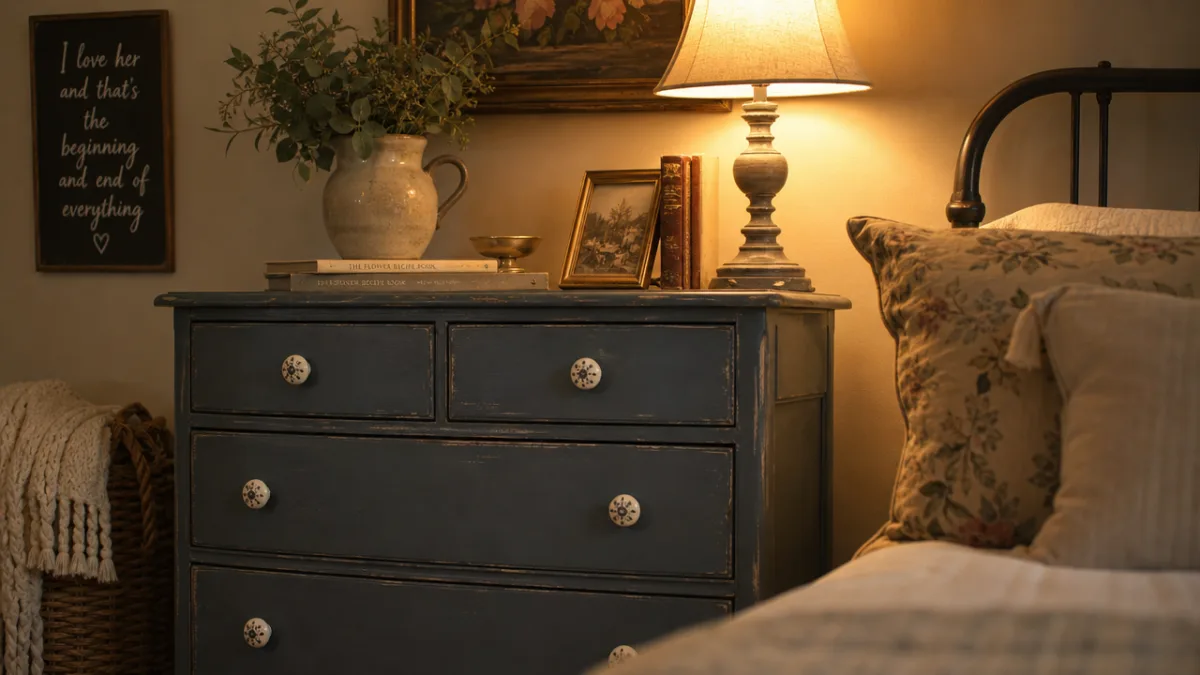
Old furniture is the backbone of bedroom upcycling, and with good reason. A solid wood dresser, even one that looks hopeless under layers of chipped paint or water stains, is typically far better constructed than anything available at a budget furniture retailer today. Stripping back the old finish and applying a fresh coat of chalk paint, milk paint, or even standard wall paint with a protective topcoat can completely resurrect a piece that someone else threw to the curb on collection day.
Hardware is one of the most underestimated elements of furniture transformation. Swapping out generic brass or plastic drawer pulls for ceramic knobs, vintage glass handles, or hand-forged iron pulls costs very little but dramatically changes the character of a piece. Many thrift stores sell loose hardware by the bin, and online marketplaces frequently list mismatched vintage sets at low prices. The key is to look for a unifying material or finish rather than identical shapes, which creates an intentionally eclectic yet cohesive effect.
Headboards are another area where upcycling shines with particular brilliance. Old wooden doors, salvaged window frames, pallets cleaned and sanded smooth, or even a collection of vintage shutters mounted horizontally can serve as a striking headboard focal point. These materials are often free or nearly free, sourced from architectural salvage yards, neighborhood renovation discards, or community recycling groups online. The result is a bedroom centerpiece that is entirely one-of-a-kind and impossible to find in any catalog.
Quick Furniture Upcycling Ideas to Try This Weekend
- Paint a mismatched set of drawers in a gradient of the same color family for a cohesive, modern look that disguises their different origins.
- Line the inside of open bookshelves with patterned wallpaper offcuts or fabric remnants to add visual depth and personality.
- Stack vintage suitcases of descending size beside the bed as a charming and functional nightstand with hidden storage.
- Decoupage an old bedside table with torn pages from vintage maps, sheet music, or botanical illustrations, then seal with matte varnish.
- Convert an old ladder, cleaned and painted, into a leaning shelf for blankets, plants, or framed artwork.
Textile Upcycling for Softness and Warmth
Textiles are the soul of a bedroom. They soften hard edges, introduce color and pattern, and invite physical comfort in a way that furniture alone cannot achieve. The good news for upcycling enthusiasts is that fabric is one of the most versatile and forgiving materials to work with. Old curtains, worn bedsheets, thrifted scarves, and even damaged clothing can all be reimagined into beautiful bedroom additions without any advanced sewing skill required.
Throw pillows are perhaps the easiest textile project for beginners. A simple rectangular or square pillow cover requires little more than straight seams, and the fabric options are endless. Old linen shirts make wonderfully textured pillow covers. Vintage tapestries or kilim rugs cut into panels become instant boho-chic statement cushions. Even burlap coffee sacks, washed and softened, create rustic covers that pair beautifully with natural wood furniture and warm lighting.
For those with slightly more confidence, a patchwork throw blanket assembled from fabric scraps can become the centerpiece of an entire bedroom color scheme. The process is meditative, requiring no pattern beyond basic squares or rectangles, and the result is a deeply personal object that carries the memory of every fabric’s origin. A square from an old flannel shirt, a strip of a childhood curtain, a remnant of upholstery left over from a sofa project — together they create something that a store simply cannot sell.
No-Sew Textile Upcycling Options
- Use fabric glue or iron-on hem tape to create pillow covers, avoiding the need for a sewing machine entirely.
- Tie-dye faded or stained white bedsheets using natural dyes made from avocado pits, onion skins, or turmeric for organic, earthy tones.
- Knot strips of old t-shirt fabric through a canvas backing to create a shaggy, bohemian bedside rug.
- Frame pieces of vintage fabric, lace, or embroidered cloth in mismatched frames for zero-effort textile wall art.
Wall Decor From Unexpected Materials
Bedroom walls are a canvas waiting to be filled, and upcycling offers some of the most inventive and memorable options available. The key distinction between upcycled wall decor and store-bought alternatives is specificity — the items you create will reflect your personal taste with a precision that mass production simply cannot match. Whether the aesthetic leans minimalist, maximalist, rustic, or industrial, there are upcycled solutions that fit the vision perfectly.
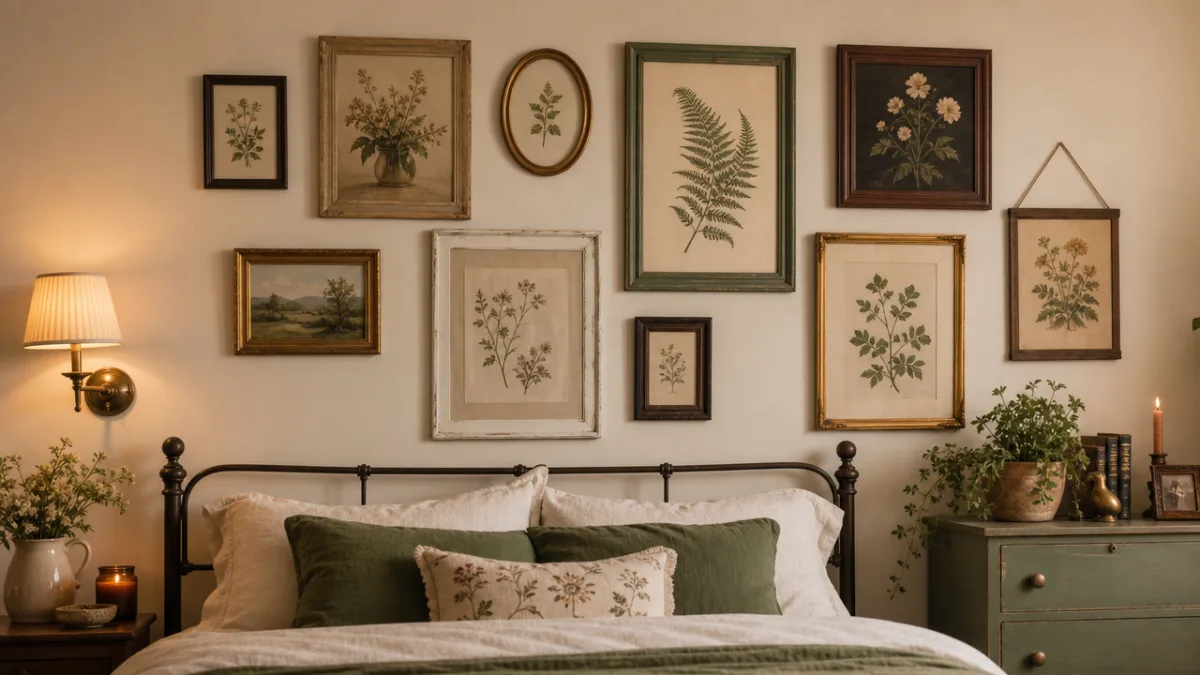
One of the most striking and widely adaptable approaches is the gallery wall assembled from salvaged frames. Thrift stores and flea markets are perpetually stocked with mismatched frames in all sizes, materials, and states of repair. Painting them all in a single color — matte black, warm white, or deep forest green are perennial favorites — creates an instant visual harmony regardless of how different the frames actually are. Inside the frames, anything can become art: pressed botanical specimens, vintage calendar pages, abstract designs painted on scrap paper, or personal photographs printed at home.
Beyond frames, three-dimensional wall installations made from salvaged materials add tactile interest that flat art cannot. Driftwood collected from a beach or riverbank and mounted horizontally creates a sculptural, nature-inspired display. Old wooden spools, window molding offcuts arranged in geometric patterns, or a collection of vintage keys hung from a strip of reclaimed wood all function as conversation-starting installations that cost almost nothing to assemble. The bedroom becomes, in a very real sense, a personal museum of found objects and reimagined materials.
Wall Decor Projects by Skill Level
- Beginner: Collect mismatched frames, spray paint them a single color, and fill with printed photographs or torn magazine pages for a low-effort gallery wall.
- Intermediate: Create a macramé wall hanging using recycled cotton rope or strips of old fabric knotted onto a salvaged wooden dowel.
- Advanced: Build a geometric wood panel display from scrap timber offcuts, sanded smooth and arranged in a herringbone or chevron pattern on a backing board.
Lighting Transformations That Set the Mood
Lighting is the invisible decorator of any room. It determines mood, influences how colors are perceived, and can make a small space feel expansive or a large space feel intimate. In the bedroom especially, where lighting needs shift between the practical demands of getting dressed and the atmospheric desires of winding down for sleep, having layered, controllable light sources makes an enormous difference. Upcycling offers an extraordinary range of ways to create lighting that is beautiful, functional, and genuinely unique.
Pendant lamps are among the most versatile lighting upcycling projects available. A basic pendant cord kit, available inexpensively from hardware stores, can be paired with almost any container that can safely house a bulb. Colanders make playful, perforated shades that cast a dotted light pattern across the ceiling. Large glass mason jars create a farmhouse-style glow. Wire baskets lined with paper or fabric filter light softly downward. Even old ceramic bowls can be mounted face-down as pendant shades, with a hole drilled through the base for the cord, producing a clean, sculptural profile above a reading nook or bedside.
Table lamps offer equally rich territory for transformation. An old wine bottle or whiskey decanter, fitted with a lamp cord kit threaded through the base, becomes an instantly sophisticated light source with a warm amber glow. Stacked vintage books with a cord running through the spine create a whimsical bookworm’s bedside lamp. Terracotta pots, painted or left natural, make beautiful lamp bases when weighted with sand and fitted with a standard hob socket. The options are limited only by the imagination and a basic respect for electrical safety — which means keeping heat-generating bulbs well away from flammable materials and always following cord kit instructions carefully.
Safe Upcycled Lighting Tips
- Always use LED bulbs in upcycled lamp shades, as they produce significantly less heat than incandescent alternatives and reduce fire risk dramatically.
- Purchase certified lamp cord kits from reputable hardware suppliers rather than improvising electrical connections, which can create serious hazards.
- Ensure any vessel used as a lamp base is stable and weighted correctly so it cannot tip under the weight of a shade or cord.
- Test all wiring before mounting or positioning any upcycled light fixture in a permanent location.
Small Details That Make a Big Difference
Grand furniture transformations and dramatic wall installations capture attention, but it is often the smallest details that give a bedroom its true character. Upcycling extends beautifully into the realm of accessories and accents — the items that sit on shelves, hold jewelry, organize books, and add quiet touches of individuality throughout the space. These projects are typically fast, inexpensive, and require minimal tools, making them perfect for an afternoon of creative exploration.
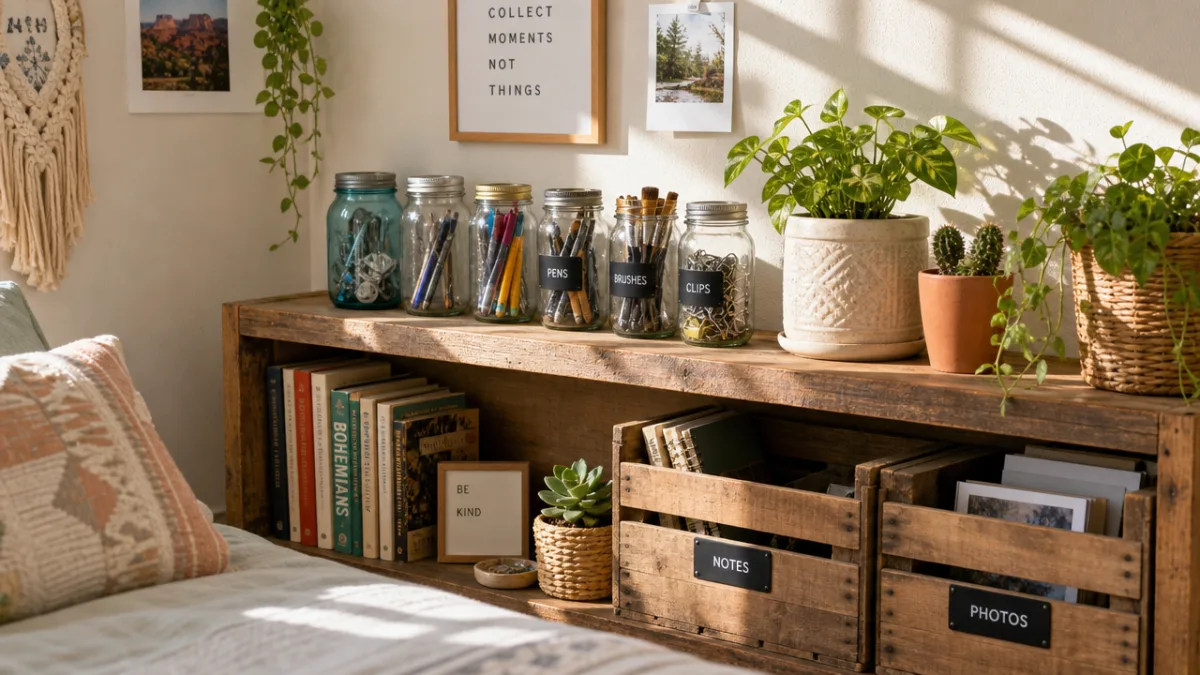
Storage solutions are a particularly fertile area. Glass jars of all sizes, washed and dried, become elegant holders for cotton pads, hair accessories, stationery, and small plants. An old wooden crate mounted on the wall at an angle serves as an asymmetric shelf with considerable charm. Tin cans, their labels removed and their surfaces painted or wrapped in twine or leather cord, hold pens, candles, or small succulents with far more personality than anything purpose-built and sold in a bedroom accessories section. Even a collection of smooth river stones gathered on a walk can be glued together to create a tray or bookend that brings the outside world into the room.
Plants deserve a special mention in any discussion of bedroom upcycling, because the right planter can be as decorative as the plant it holds. Cracked teacups, old colanders, paint tins, hollowed-out books, and even worn-out rubber boots have all found new lives as plant containers with considerable success. The contrast between a living, growing thing and a repurposed object carries a particular visual and philosophical charge — it speaks to renewal, to the persistence of beauty, and to the creative refusal to see anything as truly finished or used up. These small objects, scattered through a bedroom with intention and care, complete the upcycled interior in a way that no single statement piece can achieve alone.
Building a Sustainable Upcycling Practice Over Time
The most rewarding aspect of upcycling is not any single finished project but the cumulative development of a new way of looking at the world. Once the habit of seeing potential rather than refuse takes hold, it becomes difficult to walk past a curbside discard or a thrift store shelf without imagining what it could become. This perceptual shift is genuinely valuable, not just as a creative skill but as a practical life skill that saves money, reduces waste, and builds a more considered relationship with material possessions.
Building a sustainable upcycling practice means developing a small stockpile of essential supplies — sandpaper in various grits, chalk or milk paint in neutral base colors, a quality brush, wood glue, a hot glue gun, and a basic lamp cord kit are enough to begin most projects. It also means learning to source materials strategically: following local community exchange groups online, visiting estate sales and charity shops regularly, and telling friends and family about the kinds of objects you are looking for. People are often delighted to pass along items they were planning to discard, especially when they know those items will be given new purpose rather than simply adding to landfill.
Patience is the final and perhaps most important ingredient. Not every project will succeed on the first attempt, and some objects will resist the transformation initially imagined for them. But the process of trying, adjusting, and trying again builds both skill and confidence in ways that purchasing finished decor never can. A bedroom assembled slowly over time from upcycled and reimagined pieces becomes something truly rare in the modern world: a space that is completely, unmistakably, and irreproducibly your own. That quality of personal authenticity is worth more than anything that arrives in a flat-pack box, and it begins with nothing more than a fresh eye and the willingness to begin.








What do you think?
It is nice to know your opinion. Leave a comment.