










“`html
Crazy Simple Storage Ideas For Small Spaces That Actually Work
Living in a small space doesn’t have to mean drowning in clutter. Whether you’re in a studio apartment, a tiny urban home, or just a room that never seems to have enough room, the right storage ideas can completely change how your space looks and feels. And here’s the thing — the best solutions aren’t fancy or expensive. They’re smart, a little intentional, and honestly? Often right in front of you. This guide covers practical, real-world ideas that people actually use to take back their square footage and feel good in their small spaces.
1. Embrace Vertical Space Like Never Before
Most of us think about storage in two dimensions — what goes on the floor and what goes on a shelf. But when you’re working with limited square footage, your walls are some of the most valuable real estate you’ve got. Thinking vertically means looking all the way up to the ceiling and using wall space that would otherwise just… sit there. Tall bookshelves, stacked cabinets, pegboards, wall-mounted rails — these are all tools that get your stuff off the floor and up into the air, which instantly makes any room feel bigger and more pulled together.
One of the simplest upgrades you can make is installing floating shelves from floor to near-ceiling height. This works great in living rooms, kitchens, and home offices. You don’t need pricey built-ins either — basic wooden planks with brackets can go up in an afternoon. When you mix in books, plants, baskets, and a few decorative things, these shelves pull double duty as storage and as something nice to look at. The trick is alternating functional items with decorative ones so the wall feels intentional rather than overwhelming.
In the kitchen especially, vertical storage can massively expand your capacity without touching a single cabinet. A wall-mounted magnetic knife strip frees up an entire drawer. S-hook rails above the counter let you hang mugs, utensils, and small pots. Open shelves above the stove or sink give you a spot for oils, spices, and things you reach for all the time. When everything has a visible home on the wall, your counters stay cleaner and the whole kitchen just works better — no matter how small it is.
- Install tall bookshelves that reach within a foot of the ceiling and use the very top shelf for seasonal or rarely needed items.
- Use pegboards in entryways, kitchens, and home offices to build a completely customizable wall storage system that you can rearrange any time.
- Mount hooks at different heights near doors for coats, bags, hats, and umbrellas — no more stuff piling up on the floor.
- Stack open cubbies or modular shelving units vertically rather than spreading them out sideways along the wall.
2. Make Every Piece of Furniture Do Double Duty
In a small space, every piece of furniture needs to earn its spot. If a chair is just a chair, a coffee table is just a coffee table, or a bench is just a bench — you’re leaving real storage potential on the table (literally). Multi-functional furniture is one of the smartest things you can invest in when you’re working with a compact home. These pieces look just as good as regular furniture, but they’ve got hidden compartments, fold-out surfaces, or built-in shelving that quietly swallows up everyday clutter.
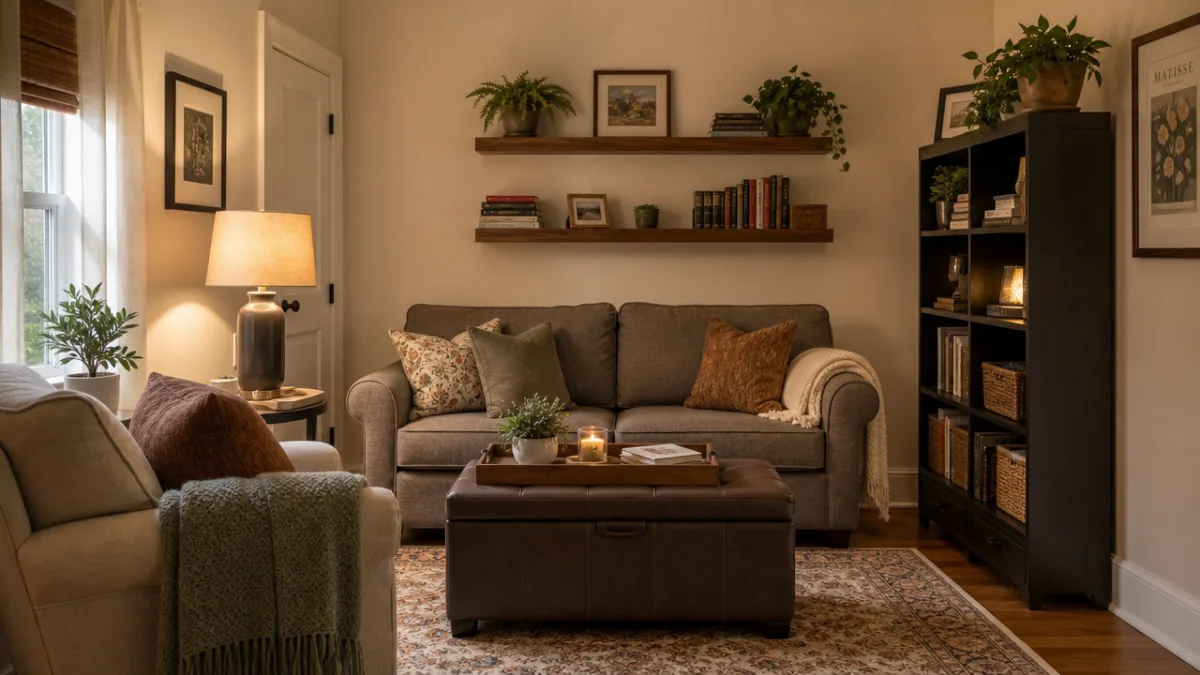
The storage ottoman is a classic for a reason — it never gets old. A big upholstered ottoman with a lift-up lid can hold blankets, board games, extra pillows, magazines, or off-season clothes, all while doubling as a footrest, extra seating, or a coffee table with a tray on top. Bed frames with built-in drawers or lift-up storage platforms are another game-changer, especially when closet space is tight. Instead of under-bed bins that slide around and collect dust bunnies, built-in bed storage keeps everything tidy and actually accessible.
Dining benches with storage underneath are a perfect fit for small dining rooms or eat-in kitchens. They seat people comfortably while hiding linens, rarely used appliances, or even shoes near an entryway. A console table behind the sofa can hold books and decorative objects on top while the lower shelf corrals baskets full of things that would otherwise clutter up your surfaces. When you’re furniture shopping for a small space, ask yourself one question: does this piece give me back more than it takes up? If the answer is no, keep looking.
3. Conquer the Kitchen With Smarter Organization Systems
The kitchen is usually the hardest room in a small home to keep organized. Between appliances, cookware, pantry staples, cleaning supplies, and everyday dishes, the sheer amount of stuff a functional kitchen needs can quickly outpace the cabinet and counter space you actually have. The answer isn’t necessarily owning less — it’s organizing smarter. When you rethink how things are stored, stacked, and grouped, you can often double the usable capacity of a small kitchen without adding a single shelf or cabinet.
Inside cabinets, the vertical space between shelves usually goes to waste. Stackable shelf risers are cheap little additions that create two levels inside one cabinet compartment, essentially doubling your dish or pantry storage overnight. Pull-out drawer organizers inside deep lower cabinets mean you can actually reach stuff at the back without unloading everything in front of it. For those awkward deep corner cabinets, a lazy Susan lets everything rotate into easy reach. These small changes cost almost nothing but make a noticeable difference in how the kitchen feels every single day.
The inside of cabinet doors is another storage surface most people completely ignore. Over-door organizers, adhesive hooks, or mounted spice racks on the inside of pantry or cabinet doors can hold way more than you’d expect — measuring spoons, pot lids, cleaning supplies, snack bags. The sides of your refrigerator, if they’re exposed, can hold magnetic organizers for notes, shopping lists, or small condiment bottles. Even the space above the fridge, which almost everyone ignores, can hold a basket or two for bread, onions, or pantry overflow that doesn’t need refrigeration.
- Use stackable shelf risers inside cabinets to create two levels of storage in the same space.
- Mount an over-the-door organizer on the inside of your pantry door for spices, packets, and small jars.
- Install a tension rod under the sink to hang spray bottles by their triggers, freeing up the floor space in that cabinet.
- Use a tiered rotating turntable inside corner cabinets and deep shelves to eliminate those frustrating inaccessible back corners.
- Decant dry goods like pasta, rice, and cereal into matching clear containers so they stack neatly and you can see at a glance when you’re running low.
4. Transform Your Closets Into High-Efficiency Storage Hubs
Most closets are honestly a mess — and not because their owners are disorganized. The standard single-rod-plus-one-shelf setup is decades out of date, yet most of us are still using our closets exactly the way they came. Rethinking the interior layout of even a small closet can make a huge difference in how much it holds and how easy it is to actually use. Start by taking everything out, looking at what you’ve got, and approaching the redesign with fresh eyes — treat the inside of that closet like a blank slate.
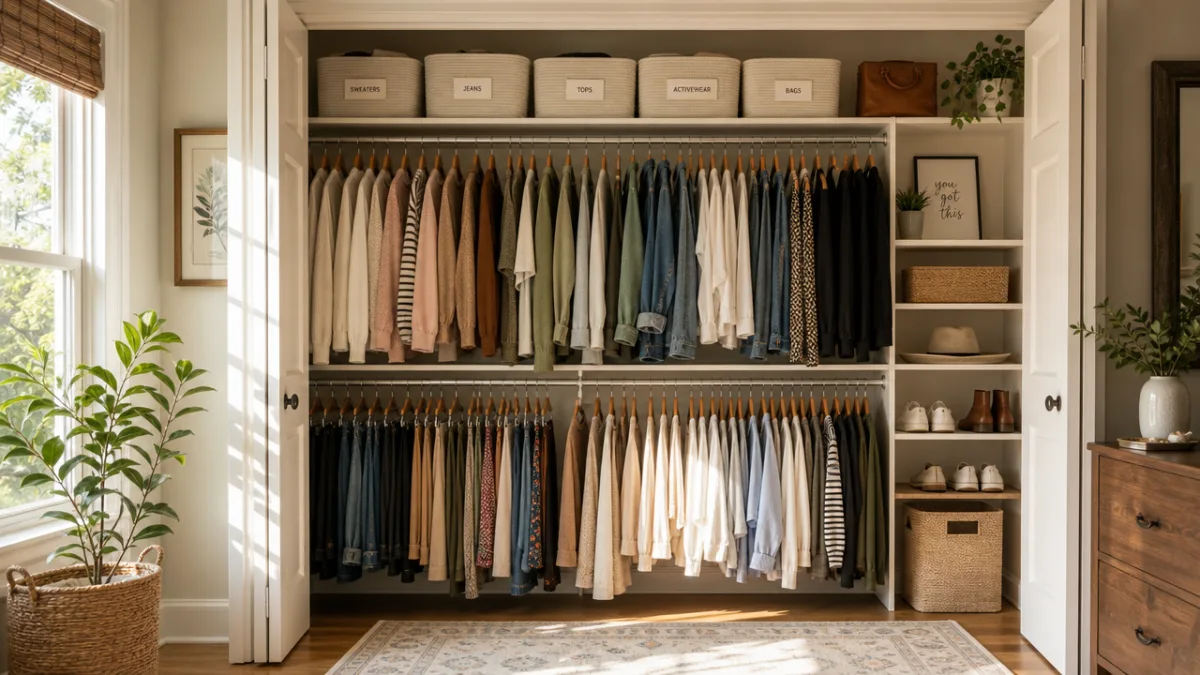
Adding a double hanging rod is probably the single highest-impact change you can make in a clothing closet. A second rod below the main one instantly doubles your hanging space for shorter items like shirts, jackets, folded pants, and blazers. The space beneath the lower rod can then hold a small dresser, stackable shoe shelves, or a set of drawers. Hooks on the inside walls and on the back of the closet door add more surfaces for bags, belts, scarves, and accessories without getting in the way of your hanging clothes. With a handful of inexpensive additions, a standard closet can hold twice the wardrobe it did before.
Linen closets and hallway closets have their own quirks and opportunities. Pull-out bins or wheeled baskets at floor level make it easy to get to cleaning supplies, extra toiletries, or sports gear at the back. Shelf dividers keep stacks of towels and bedding from tipping over into chaos. And labels — even just handwritten ones — make a surprisingly big difference in whether a whole household actually maintains the system, because everyone knows where things go without having to ask. Clear bins at the top are great for seasonal items or things you only pull out a few times a year.
- Install a double hanging rod system to immediately double the usable rod space in any clothing closet.
- Add an over-door shoe organizer to the inside of closet doors — it works just as well for accessories, cleaning tools, or craft supplies.
- Use labeled bins or baskets on shelves to group similar items together and make the system easy for everyone in the house to follow.
- Put a small set of drawers or a dresser at the floor level of a closet so you can skip the bedroom dresser entirely.
5. Maximize Bathroom Storage With Creative Compact Solutions
Small bathrooms are tough. They’re some of the most space-constrained rooms in any home, yet they’re expected to hold an enormous amount of stuff — toiletries, towels, cleaning products, medications, hair tools, and every personal care item you own. When cabinet and counter space runs dry, it’s tempting to just let things pile up everywhere, and then the whole bathroom starts to feel cluttered and stressful. The better move is to look at every surface — walls, the back of the door, the space over the toilet, the inside of the vanity — and see it for what it is: untapped storage just waiting to be used.
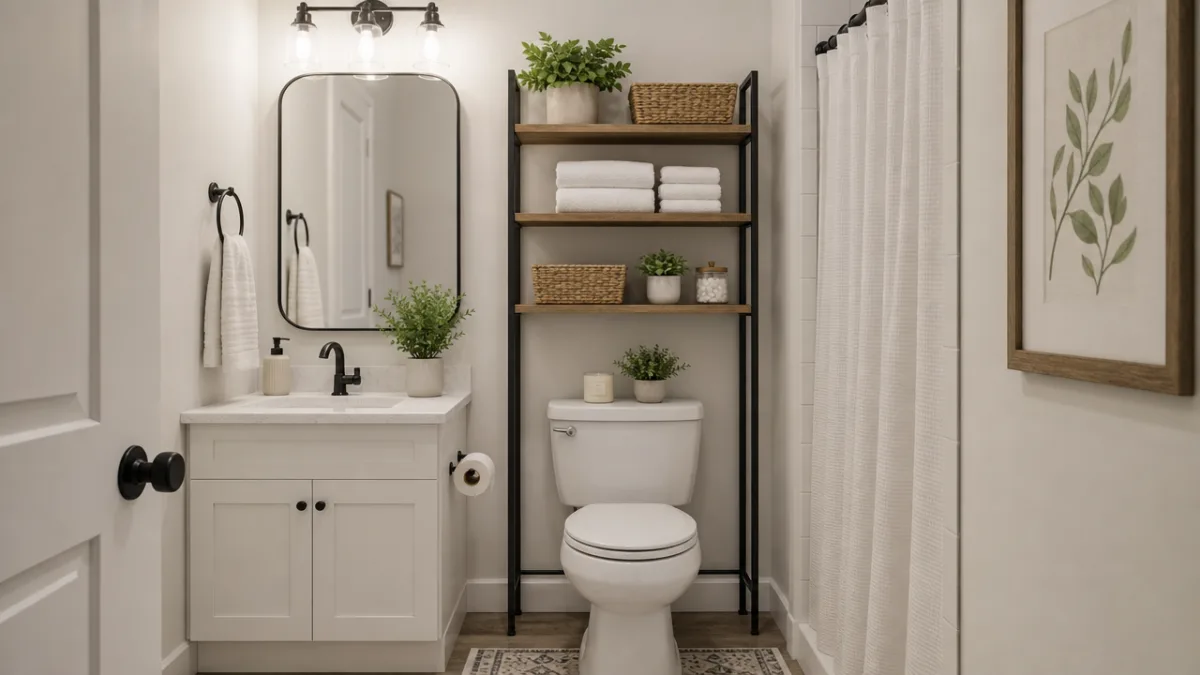
Over-the-toilet shelving units are popular for a reason — they use airspace that’s otherwise doing absolutely nothing. Freestanding or wall-mounted units in that spot can hold rolled towels, extra toilet paper, plants, candles, and daily bathroom essentials without using any floor space. Inside the vanity cabinet, small bins, drawer organizers, and risers bring order to what usually devolves into chaos. A pull-out trash can mounted to the inside of the cabinet door keeps your waste bin off the floor entirely. Magnetic strips on the inside of the cabinet door are perfect for holding small metal items like tweezers, nail clippers, and bobby pin cases.
The shower itself can be reorganized to work a lot better. Instead of a corner caddy that barely holds anything and eventually rusts, try a tension rod shower organizer that spans the width of the shower and gives you multiple tiers of storage — no drilling required. Suction cup caddies with hooks can hold razors, loofahs, and bottles right on the wall. Outside the shower, a simple hook rail or a towel bar with a small shelf above it gives your daily-use towels a dedicated home without needing extra furniture. When everything in the bathroom has a clear, easy-to-reach spot, the space feels bigger and your morning routine actually runs smoothly.
6. Use Underutilized Zones Throughout Your Home
Every home — no matter how small — has spots that are chronically ignored. Under the bed, the tops of kitchen cabinets, corners of rooms, the area under the stairs, the backs of doors throughout the house — all of these spaces add up to a significant amount of hidden storage that most people never touch. Activating these zones doesn’t require a renovation or a big budget. It just takes a fresh set of eyes, a little creativity, and a willingness to think differently about where things can actually live.
Under the bed is probably the most obvious example of wasted space. A standard bed frame sits several inches off the floor, leaving a big rectangular void that’s completely empty. Flat rolling bins with lids are made exactly for this purpose and can hold shoes, off-season clothes, extra bedding, luggage, or hobby supplies. If your bed frame doesn’t have enough clearance, bed risers under each leg can add four to six inches. For a cleaner look, a bed skirt hides whatever’s underneath while still letting you slide things in and out from the sides.
Staircase storage is one of the most creative opportunities in homes that have them. The triangular space under a staircase is often just walled off and forgotten, but with a modest renovation it can become drawers, cabinets, or an open display nook. Even without structural changes, the steps themselves can be converted into pull-out drawers — a popular DIY project that creates ten or more storage compartments out of something that previously just helped you get to the next floor. In hallways, a narrow console table with drawers and a lower shelf turns dead wall space into a functional drop zone for everyday items and a surface for plants or artwork.
- Measure the clearance under your bed and get flat rolling storage bins sized to fit that exact space.
- Put decorative baskets on top of kitchen cabinets to store rarely used serving pieces, appliances, or seasonal items.
- Use tall corner shelving units to make efficient use of the corners that regular rectangular furniture just can’t reach.
- Hang a shoe organizer on the back of every door in your home — entryway, pantry, bathroom, bedroom — each one gives you dozens of small storage pockets for almost free.
- Install a narrow floating shelf along a hallway wall at a comfortable height to serve as both storage and a landing spot for the things you grab every day.
The biggest mindset shift in small-space living is going from reactive to proactive organization. Instead of finding room for things wherever they happen to fit, you design a system where every item has a home before it even enters your space. That approach cuts clutter, cuts stress, and makes it so much easier to stay organized over time. The ideas in this guide aren’t hacks or quick fixes — they’re real changes to how you think about and use your space. And when you apply them consistently, even the smallest home starts to feel like more than enough.
“`








What do you think?
It is nice to know your opinion. Leave a comment.