










18 Easy DIY Home Organization Ideas to Transform Your Space
Why Home Organization Matters More Than You Think
A cluttered home is more than just an eyesore — it quietly affects your mental health, your productivity, and even the quality of your sleep. Research consistently shows that people who live in organized spaces report lower stress levels and a greater sense of control over their lives. When you walk into a room and everything has a place, your brain can relax instead of constantly processing the visual noise of misplaced items and accumulated clutter.
The good news is that you don’t need to hire a professional organizer or spend thousands of dollars on custom cabinetry to achieve a tidy, functional home. DIY organization projects are not only budget-friendly, but they also allow you to create solutions that are perfectly tailored to your specific needs and space constraints. From repurposing household items you already own to spending a few dollars at the dollar store, the possibilities for creative organization are genuinely endless.
This guide walks you through 18 practical and easy DIY organization ideas that cover every room in your home. Whether you’re dealing with a chaotic kitchen, an overflowing closet, a cluttered bathroom, or a disorganized garage, there’s something here that will help you reclaim your space. Think of this not as a one-time decluttering session, but as a long-term investment in the way you live and feel at home every single day.
The Psychology Behind an Organized Home
Understanding why organization feels so good can actually motivate you to stick with it. When your surroundings are orderly, your brain doesn’t have to work as hard to filter out distractions. Psychologists refer to this as reducing “cognitive load” — the mental effort required to process your environment. A tidy home essentially gives your mind permission to focus on what truly matters rather than nagging reminders of undone tasks hiding in every corner.
Beyond the mental benefits, an organized home can also improve your relationships. When shared spaces are functional and clutter-free, household tension tends to decrease significantly. Families argue less about misplaced items, guests feel more welcome, and daily routines run more smoothly. Something as simple as a labeled bin in the entryway or a designated charging station in the kitchen can eliminate dozens of small frustrations that quietly erode your peace of mind over time.
There’s also a powerful sense of accomplishment that comes with completing even a small organization project. Starting with one drawer or one shelf gives you a tangible win that builds momentum for tackling larger spaces. This is why many organization experts recommend beginning with quick, visible wins — the kind that remind you every time you open that drawer that you are capable of creating the home you want to live in.
Kitchen Organization Ideas That Actually Work
The kitchen is the heart of the home, and it’s also one of the easiest places for clutter to accumulate. Between mismatched food storage containers, tangled utensil drawers, overflowing spice racks, and countertops crowded with appliances, it can feel impossible to cook efficiently. The key to kitchen organization is grouping items by function and keeping the things you use most frequently the most accessible. Everything else can be stored further out of reach.
One of the most satisfying and affordable kitchen projects is creating a DIY pegboard organizer for your pots, pans, and utensils. A sheet of pegboard mounted to a wall or inside a cabinet door, combined with inexpensive hooks and holders, can free up enormous amounts of drawer and cabinet space. You can paint the pegboard to match your kitchen’s color scheme, making it both a functional tool and a decorative feature. This project typically costs under twenty dollars and can be completed in an afternoon.
Another transformative kitchen hack involves the often-neglected space inside cabinet doors. Adhesive hooks or small tension rods mounted on the inside of a cabinet door can hold cutting boards, pot lids, measuring cups, or cleaning supplies. Lazy Susans placed inside corner cabinets solve the notorious dead-zone problem that plagues most kitchen layouts. Meanwhile, drawer dividers — whether purchased from a dollar store or cut from cardboard — can instantly bring order to a chaotic utensil drawer and make every cooking session feel more effortless.
Pantry and Food Storage Solutions
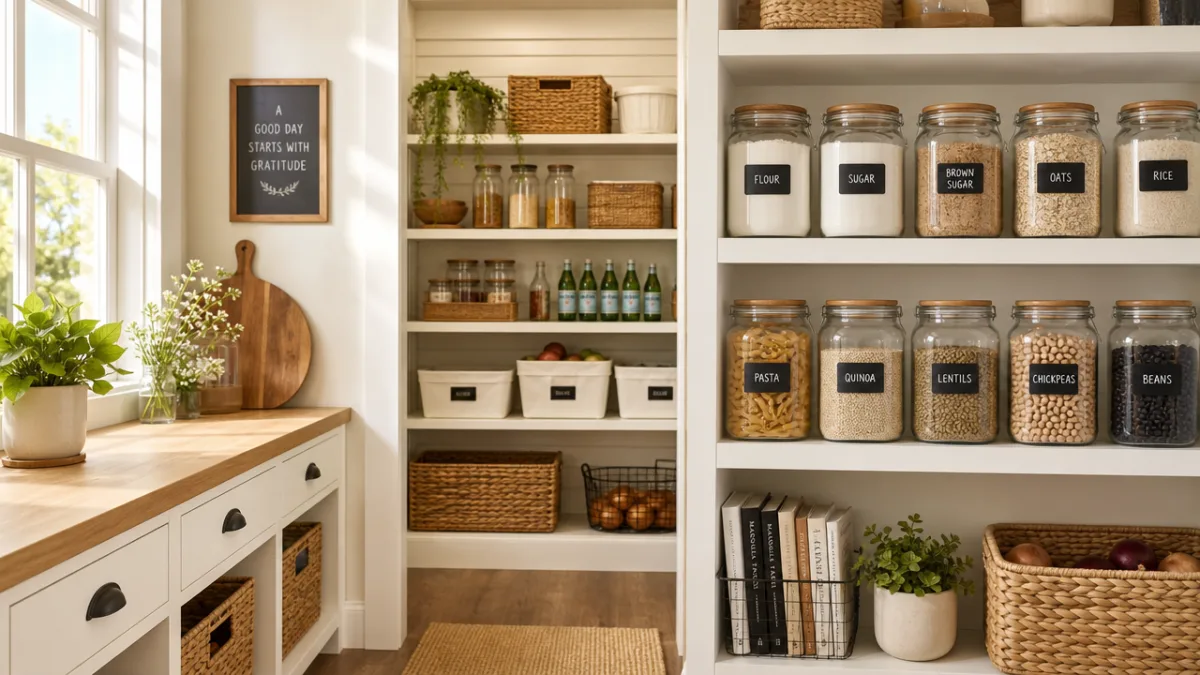
A well-organized pantry can genuinely change the way you cook and shop. When you can see everything you own at a glance, you stop buying duplicate items, you waste less food, and meal planning becomes significantly easier. The foundation of a great pantry system is decanting dry goods — rice, pasta, flour, sugar, cereal, and snacks — into clear, uniform containers. Matching containers make a pantry look intentional and polished, and they allow you to see exactly how much of each ingredient you have remaining.
Labels are the unsung heroes of any pantry organization system. Whether you use a label maker, printable labels, or hand-lettered chalkboard tags, clearly labeling each container ensures that every family member can find what they need and return it to the right place. Grouping items by category — baking supplies together, snacks together, canned goods together — further reduces the time you spend searching for ingredients when you’re in the middle of preparing a meal.
For canned goods and bottled items, a simple DIY solution involves creating tiered risers from scrap wood or foam boards covered with contact paper. These risers allow you to see items at the back of the shelf without having to move everything in front. Stackable wire baskets or fabric bins work beautifully for grouping loose items like packets, seasoning pouches, and snack bags. With just a few hours of work and minimal investment, your pantry can go from a source of daily frustration to one of your favorite spaces in the entire house.
Closet and Bedroom Organization Strategies
Closets are among the most personal spaces in a home, and they’re also among the most challenging to keep organized. The problem with most closets is that they were designed as afterthoughts — a single rod and one shelf rarely meet the real storage needs of a modern wardrobe. The most impactful thing you can do for a disorganized closet is to add vertical storage. Doubling your hanging rod space by installing a second rod below the first is one of the highest-return DIY projects you can undertake with minimal effort.
Shelf dividers are another simple addition that can prevent folded sweaters and jeans from toppling into each other. These inexpensive clips or brackets slide onto existing shelves and create neat sections for different categories of clothing. Stackable clear shoe boxes are beloved by organizers for good reason — they protect shoes from dust, allow you to see what’s inside at a glance, and can be stacked vertically to maximize height. Over-the-door shoe organizers, meanwhile, are versatile enough to hold far more than shoes: accessories, scarves, bags, belts, and even small cleaning supplies all find a home in those pockets.
Drawer organization is where many people give up on tidiness, but it doesn’t have to be that way. Folding clothes using the KonMari vertical method — standing items upright in the drawer rather than stacking them flat — allows you to see every item at once and eliminates the avalanche effect of pulling one thing out of a stack. Combine this with inexpensive fabric or cardboard drawer dividers, and your dresser drawers can maintain their organization with almost no effort. The key is assigning every item a specific home and returning it there after each use.
Under-Bed Storage Maximization
The space under your bed is one of the most underutilized storage areas in the entire home, and it’s ideal for items you don’t access every day — seasonal clothing, extra bedding, gift wrap supplies, or archived documents. Flat rolling bins or bags designed specifically for under-bed storage make it easy to slide items in and out without disturbing the rest of the room. You can label these containers clearly so you always know exactly which bin holds your winter sweaters and which one holds your extra pillowcases.
If your bed sits too close to the floor for standard bins, bed risers are an incredibly affordable solution. These small plastic or wooden blocks lift your bed frame by several inches, creating meaningful storage clearance underneath without requiring any permanent modifications to your room. For those who are handy with basic tools, building a simple platform bed frame with built-in drawers is a rewarding weekend project that can provide an enormous amount of hidden, accessible storage in even the smallest bedroom.
Vacuum storage bags are another under-bed game-changer, particularly for bulky items like duvets, comforters, and winter coats. By compressing these items to a fraction of their normal volume, vacuum bags allow you to store what would otherwise require an entire extra closet underneath your bed in neat, flat packages. Pair them with a simple under-bed rolling frame, and you have a highly functional storage system that keeps seasonal items protected, accessible, and completely out of sight.
Bathroom Organization on a Budget
Bathrooms present a unique organizational challenge because they tend to be small, high-moisture environments that accumulate an astonishing number of products. Shampoos, conditioners, styling tools, medications, makeup, skincare products, first aid supplies — the bathroom has to do an enormous amount of work in very little space. The good news is that bathrooms also respond beautifully to simple organizational interventions, many of which cost just a few dollars and take only minutes to implement.
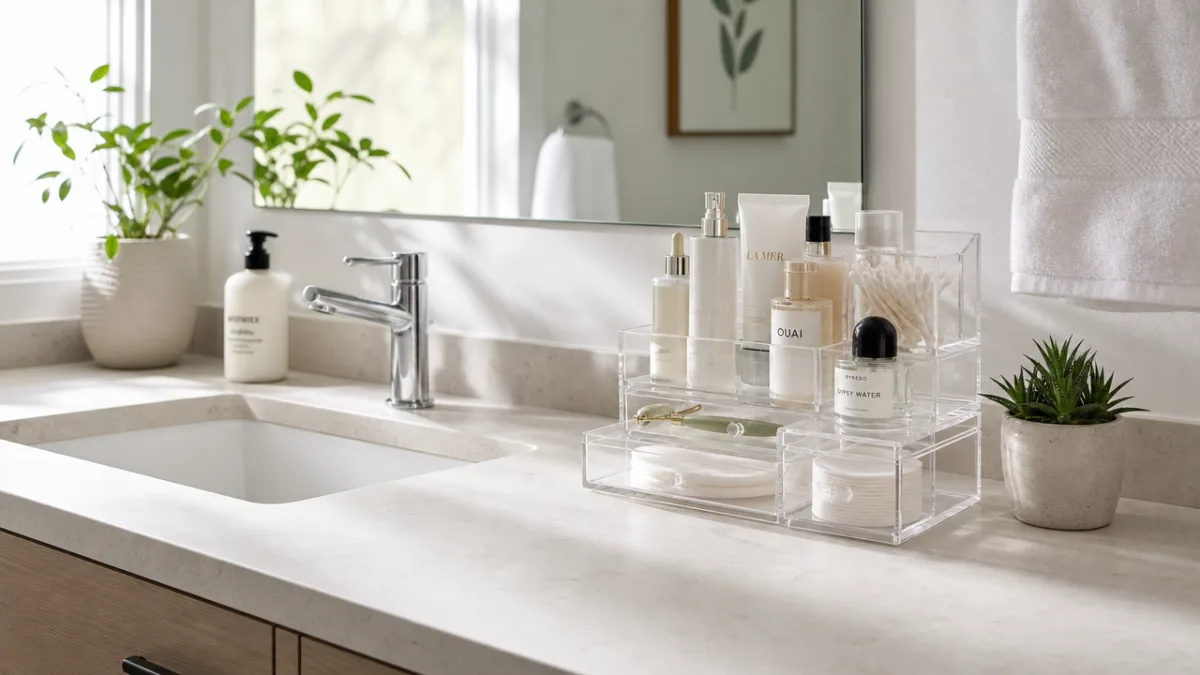
The area under the bathroom sink is often a graveyard of cleaning supplies, extra toiletries, and random items that have no other home. Installing a small tension rod under the sink allows you to hang spray bottles, instantly freeing up the floor space below for neatly arranged bins and baskets. Clear stackable drawers are ideal for this space because they allow you to categorize items — hair care, skincare, first aid, cleaning — while making everything visible and accessible without digging through a jumbled pile of products.
Command hooks and adhesive organizers are the unsung heroes of bathroom organization. A magnetic strip mounted on the inside of a cabinet door can hold metal tweezers, nail clippers, bobby pins, and small scissors. A simple suction-cup shower caddy adds vertical storage to otherwise wasted wall space. Over-the-toilet shelving units, which require no tools or drilling, add several square feet of storage in a spot that would otherwise go entirely unused. These solutions work especially well in rental apartments where permanent modifications aren’t permitted.
Makeup and Skincare Organization
For makeup and skincare enthusiasts, a dedicated organization system isn’t a luxury — it’s a necessity. A rotating acrylic organizer on your vanity or countertop keeps frequently used products accessible while keeping the surface clear of clutter. Clear acrylic is particularly effective because it allows you to see your entire collection at a glance, making it easier to choose products and harder to forget about items buried in the back of a drawer. Organizing products by category — foundations together, eyeshadows together, skincare steps in order — further streamlines your daily routine.
Repurposing everyday containers for makeup storage is both economical and creative. A small glass jar or ramekin makes a beautiful holder for makeup brushes on a vanity. Ice cube trays work surprisingly well for organizing small items like lipsticks, eyeshadow singles, and jewelry inside a drawer. Spice racks mounted to a bathroom wall can hold small skincare bottles and serums in a way that is both functional and genuinely attractive. These creative repurposing ideas often result in organization solutions that feel more personal and charming than anything you could buy off the shelf.
One of the most important habits to pair with any bathroom organization system is regular auditing. Beauty and skincare products expire, and holding onto products you no longer use simply crowds out the things you actually love and reach for every day. Building a small habit of checking expiration dates and purging unused items every few months keeps your carefully organized bathroom system from reverting to chaos. Organization is not a one-time event — it’s an ongoing practice that becomes easier and more rewarding the longer you commit to it.
Garage, Entryway, and Multi-Use Space Solutions
The garage and entryway are the two spaces that arguably set the tone for the entire home experience. An entryway that functions well — with a place for shoes, bags, keys, and coats — creates a smooth transition between the outside world and your private sanctuary. A garage that is organized and functional makes everything from home maintenance to recreational activities more enjoyable and less frustrating. Both spaces benefit enormously from vertical storage strategies and clearly designated zones for different categories of items.
A DIY mudroom wall, even in a small entryway, can be assembled with just a few boards, some hooks, and a small bench or shelf. Assigning each family member their own hook or cubby creates both a functional drop zone and a sense of personal ownership over the shared space. A small basket or tray for keys and mail near the door eliminates the frantic morning search that derails so many households. A low bench with hidden storage inside is one of the most hardworking pieces of furniture you can add to any entryway, providing seating for putting on shoes and concealed storage for seasonal items.
In the garage, the most transformative investment you can make is in wall-mounted storage. French cleats — a simple system of angled wooden strips that can support a variety of hooks, shelves, and holders — are incredibly versatile and can be rearranged as your needs change over time. Pegboards work equally well and are familiar to most DIYers. Overhead storage platforms that hang from the ceiling joists can hold seasonal items, sporting equipment, and camping gear well out of the way while leaving the floor clear for vehicles and workspace. A garage organized by zone — tools here, sports equipment there, gardening supplies in this corner — functions dramatically better than one organized by no system at all.
Home Office and Paper Organization
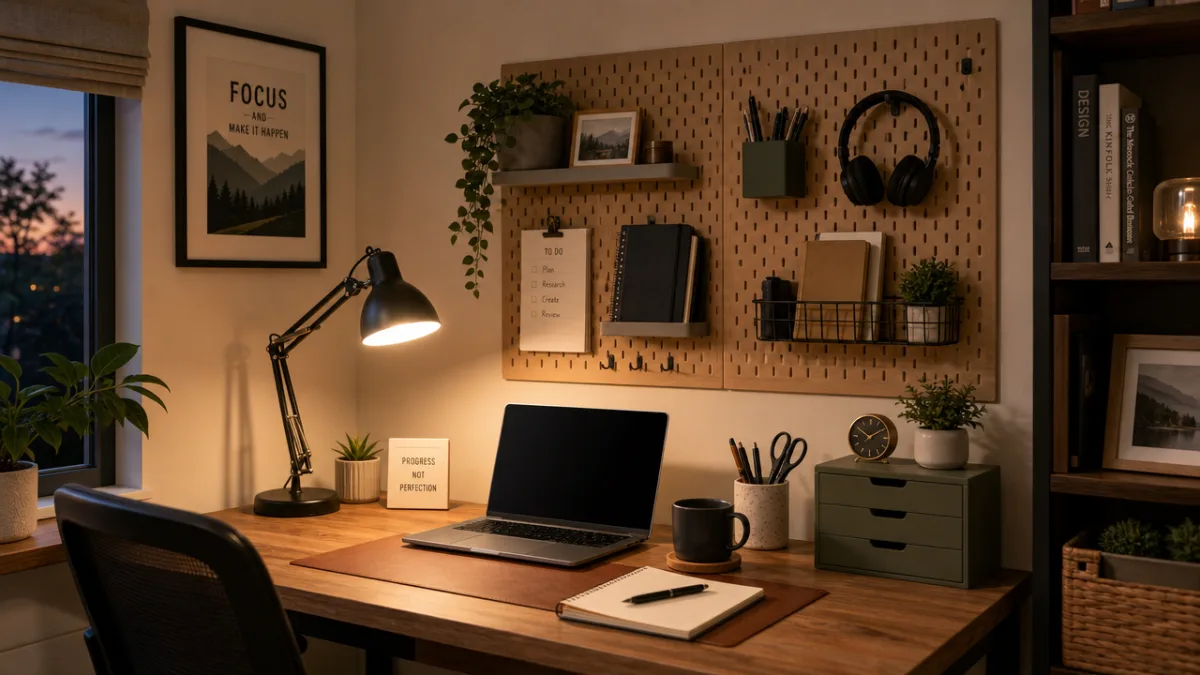
With more people working from home than ever before, a functional home office space has become essential rather than optional. Even if you don’t have a dedicated room, carving out a well-organized corner of a bedroom or living space can significantly improve your focus and productivity. The most important element of any home office is a clear, functional filing system for paper documents. A simple accordion folder or a small set of hanging file folders, labeled by category, can prevent the paper pile-up that overwhelms so many home workspaces.
Cable management is another area where a small investment of time yields enormous visual dividends. Velcro cable ties, adhesive cable clips, and simple cable boxes can transform a tangle of charging cords and power strips into a tidy, professional-looking setup. A dedicated charging station — even just a power strip in a small basket with holes cut for cords — gives every device a home and keeps countertops and desks clutter-free. This is especially valuable in kitchens and living rooms where devices tend to colonize available surfaces if no designated charging zone exists.
For creative and craft spaces, clear storage is almost always the best choice. When you can see your supplies, you’re more likely to use them and less likely to duplicate purchases. A pegboard above a craft table can hold tools, scissors, tape, and small containers of supplies in a visually satisfying and highly accessible arrangement. Drawer organizers, clear bins with printed labels, and a consistent habit of returning items to their designated places after each use are the three pillars of any organization system that actually holds up over time. The goal is never perfection — it’s a system that works well enough to make your everyday life measurably easier and more enjoyable.








What do you think?
It is nice to know your opinion. Leave a comment.