










10 DIY Art Pieces That Fool Everyone: Your Complete Guide to Museum-Worthy Home Décor
Why DIY Art Has Become the Secret Weapon of Savvy Decorators
There is a quiet revolution happening on the walls of beautifully decorated homes across the country, and most guests never suspect a thing. The art hanging in those carefully curated spaces — the abstract canvases, the minimalist prints, the sculptural wall installations — was not purchased at a gallery or sourced from an expensive boutique. It was made by hand, often for a fraction of the cost, by someone armed with a little creativity, a few basic supplies, and the willingness to experiment. DIY art has officially crossed the threshold from craft project into genuine design statement.
The appeal is not just financial, though the savings are undeniably significant. Creating your own artwork gives you something that no store-bought piece can: a perfectly tailored match to your existing color palette, your room dimensions, and your personal aesthetic vision. When you mix the paint yourself, you are not settling for something that is almost the right shade of terracotta — you are achieving exactly the right shade. That level of customization is something even high-end interior designers struggle to offer without bespoke commissions that cost thousands of dollars.
Beyond savings and customization, there is an increasingly sophisticated body of DIY techniques available to everyday creators. Advances in accessible materials, online tutorials, and affordable tools mean that textured abstract paintings, resin pours, and layered mixed-media pieces are no longer the exclusive domain of trained artists. With the right approach, your handmade canvas can sit beside a designer sofa and look as though it belongs in a contemporary gallery. This guide walks you through ten of the most convincing DIY art methods, complete with tips for achieving results that genuinely fool even the most discerning eye.
Texture Painting Techniques That Mimic High-End Abstract Art
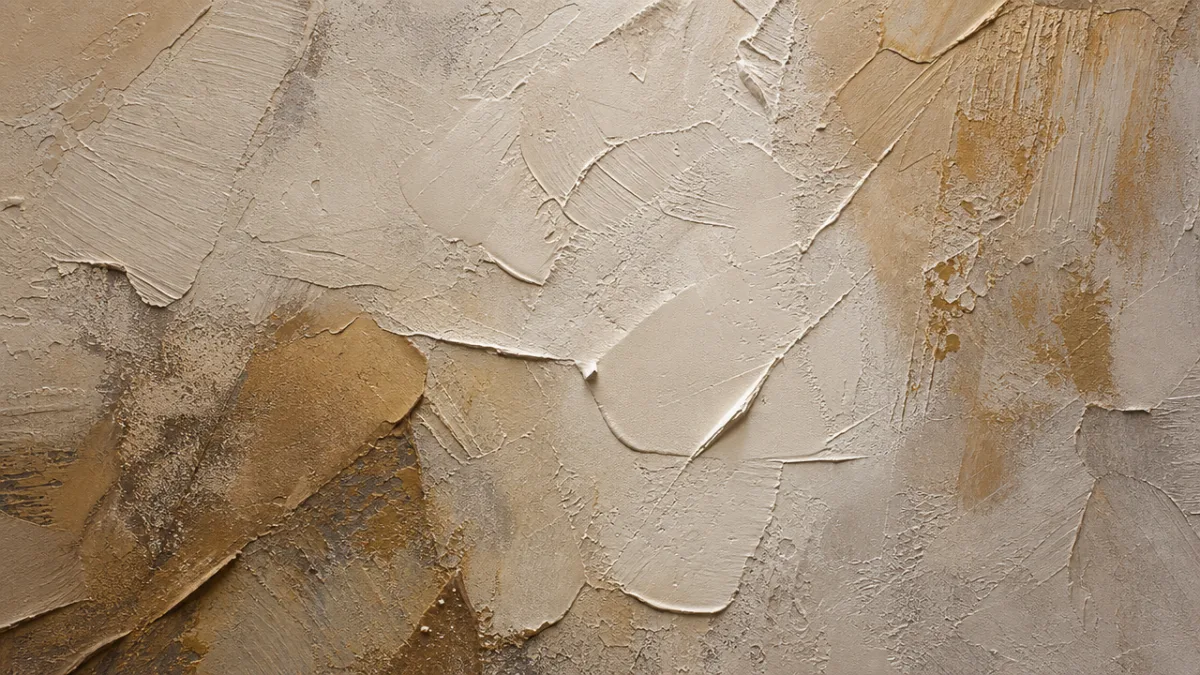
One of the most effective ways to create art that looks professionally made is to lean heavily into texture. Flat, uniformly painted canvases tend to read as amateur, but surfaces with physical dimension — peaks, valleys, ridges, and layers — automatically read as intentional and sophisticated. The good news is that achieving this kind of tactile complexity requires almost no formal painting skill. What it requires is an understanding of materials and a willingness to work intuitively rather than precisely, which is actually liberating for most beginners.
Joint compound, also known as drywall mud, is perhaps the most underused material in the DIY art world. Applied to a canvas with a palette knife, putty knife, or even a piece of cardboard, it creates thick, sculptural surfaces that dry hard and can be painted over in any color. By dragging the knife in broad, confident strokes and then layering thinned paint over the dried compound, you can achieve effects that closely resemble the work of artists whose pieces sell for thousands in contemporary galleries. The key is to work in deliberate layers and let each one dry completely before adding the next.
Sand, sawdust, and modeling paste are other inexpensive additives that can transform a flat painted surface into something with genuine visual weight. Mixing sand directly into acrylic paint and applying it with a brush or palette knife creates a gritty, organic texture reminiscent of Mediterranean plasterwork. Modeling paste, available at any art supply store, can be applied in thick ridges and then dry-brushed with metallic paint to create the look of embossed or carved relief. These materials cost very little and produce results that consistently impress visitors who assume they are looking at something purchased and professionally installed.
When finishing a texture painting, the choice of color scheme matters enormously. Neutrals — warm whites, deep charcoals, dusty taupes, and soft greiges — tend to look the most gallery-like because they allow the texture itself to become the focal point. A single-color palette applied in varying tones across a textured surface creates a sophisticated monochromatic effect that reads as deeply intentional. Adding one or two subtle accent tones in the same color family, perhaps a soft gold or a muted rust, elevates the piece further without veering into the territory of something that looks obviously handmade.
Resin Pouring: The Art Form That Looks Impossibly Professional
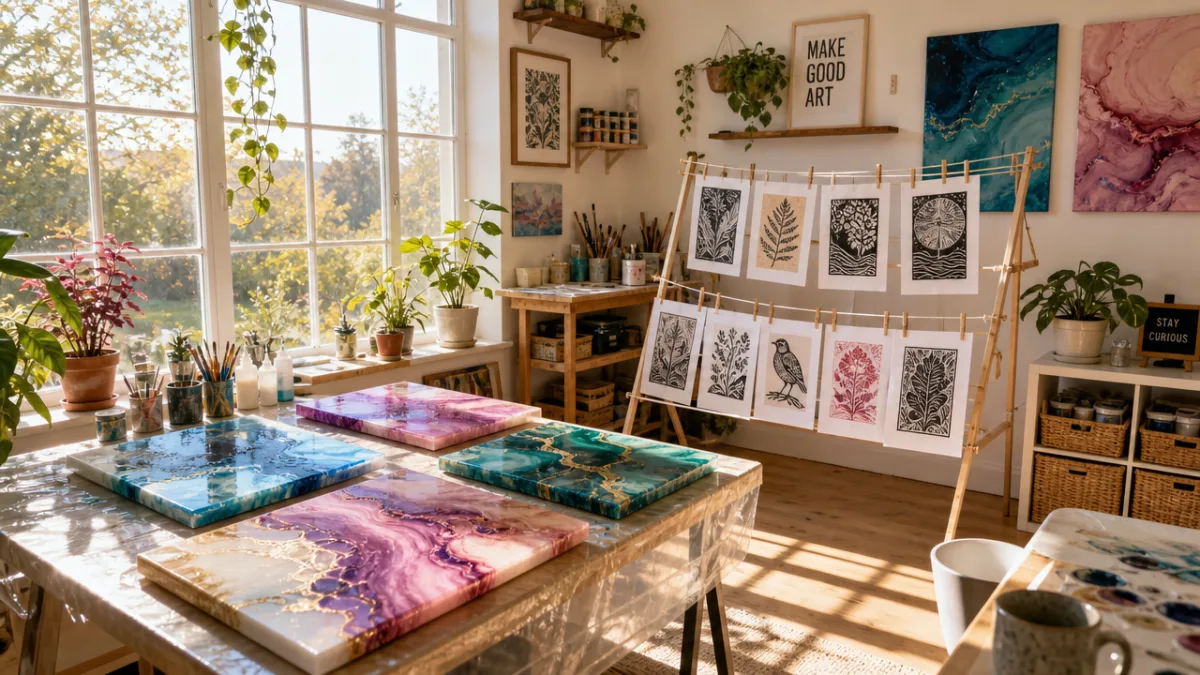
Resin pouring has exploded in popularity over the last several years, and for good reason — when done well, the results look like nothing short of magic. The swirling, organic patterns created by mixing pigmented resin and pouring it across a surface resemble natural stone, marbled luxury goods, and abstract expressionist paintings all at once. More importantly, the glossy, glass-like finish that resin produces as it cures gives the finished piece an inherently high-end appearance that is almost impossible to replicate with standard paint and varnish.
The basic materials for resin pouring are a two-part epoxy resin, alcohol inks or acrylic paint for pigmentation, a canvas or wooden panel, and disposable mixing cups. Safety is important: always work in a well-ventilated area and wear gloves and eye protection, as uncured resin can be a skin irritant. Once the resin is mixed according to the manufacturer’s instructions, you divide it into several cups, add different pigments to each, and pour them onto the canvas in layers or simultaneously. Tilting the canvas allows the colors to flow together organically, and you can use a heat gun or torch to pop surface bubbles and encourage the formation of beautiful lacing patterns.
Color selection is the single most important variable in producing a resin pour that looks sophisticated rather than chaotic. For pieces that read as genuinely elegant, limit your palette to three or four colors that share a tonal relationship — for example, navy, teal, seafoam, and white, or black, charcoal, warm gold, and cream. Adding a cell-activating medium or a few drops of silicone oil to your pigmented resin encourages the formation of round, organic cells within the pour, a detail that immediately elevates the visual complexity of the finished piece. Once cured, a well-executed resin pour mounted in a simple float frame is virtually indistinguishable from gallery artwork priced at several hundred dollars.
Printmaking and Transfer Techniques for Photographic Impact
Not all convincing DIY art involves painting or pouring. Some of the most impressive homemade pieces are built on transferred images, whether from magazines, laser-printed designs, or hand-carved blocks. Gel medium image transfers, in particular, produce results with an aged, painterly quality that looks completely unlike a standard printed photograph and more like a thoughtfully treated fine art print. The technique is well within reach for anyone willing to spend an afternoon on it, and the materials cost almost nothing beyond the gel medium itself.
To execute a basic gel medium transfer, you print your chosen image using a laser printer (inkjet ink will not transfer), coat a canvas or wooden panel with a thick layer of acrylic gel medium, press the paper face-down onto the surface, and allow it to dry completely — typically overnight. Once dry, you wet the paper with water and gently rub it away, revealing the ink transferred onto the gel medium layer beneath. The result is an image with a slightly distressed, translucent quality that looks deliberately artistic. Applying additional washes of diluted paint over the transferred image adds further depth and ensures that it reads as a painting rather than a print.
Block printing and linocut techniques offer another path to art that looks professionally considered. Carving a simple geometric or botanical design into a soft linoleum block and printing it repeatedly across a large sheet of paper or fabric creates the kind of pattern-based art that is enormously popular in contemporary interiors. The slight imperfections in hand-printed work — the uneven ink coverage, the tiny variations from print to print — are actually what make it look artisan and intentional rather than mass-produced. Framed in a clean, modern frame with a wide mat, a hand-printed linocut becomes a statement piece that most visitors will assume came from a boutique art print shop.
- Gel medium transfer: Works best with high-contrast images; the translucent quality adds an antique, painterly finish that reads as intentional artistic treatment rather than a reproduction.
- Linocut block printing: Repeat the same block across a large sheet for a bold, graphic pattern that suits modern and Scandinavian-inspired interiors particularly well.
- Wax paper transfers: A simpler alternative using wax paper and rubbing technique that creates soft, impressionistic image transfers ideal for romantic or vintage-style spaces.
- Cyanotype printing: A sunlight-based photographic process that produces striking blue-and-white botanical prints with a scientific, archival aesthetic.
Cyanotype printing deserves special mention because it produces results that are genuinely difficult to replicate through any other means. By coating paper or fabric with light-sensitive chemicals, laying botanical specimens or cut paper shapes on top, and exposing the whole thing to sunlight for several minutes, you create deep Prussian blue images with crisp white silhouettes. The process has a long history in architectural and scientific documentation, which lends cyanotype prints an inherent sense of gravitas. Framed with care, a large cyanotype botanical print has the look of a museum artifact — and costs about three dollars in materials to produce.
Sculptural Wall Art: Creating Three-Dimensional Installations That Stop Conversations
Some of the most impressive art in contemporary interiors is not flat at all. Wall-mounted sculptural installations — arrangements of geometric shapes, woven fiber pieces, or assembled found objects — carry an immediate visual authority that flat artwork often struggles to match. The reason is simple: three-dimensional objects interact with light in a way that flat surfaces cannot, casting shadows that shift throughout the day and creating a sense of presence and depth that photographs and paintings inherently lack. Building your own sculptural wall art is more accessible than it sounds, and the results can be genuinely extraordinary.
Wooden geometric wall installations are among the easiest sculptural projects to execute without advanced craft skills. Using pre-cut wood shapes available at craft stores, or cutting your own basic shapes with a jigsaw, you can arrange hexagons, triangles, or irregular polygons into a dynamic wall composition. Painting each shape in a slightly different tone from the same color family — or alternating between natural wood, white, and a single accent color — creates a mosaic effect with enormous visual impact. Mounted flush to the wall using small nails or picture-hanging strips, these arrangements look like the kind of custom installation you might find in a boutique hotel or design-forward restaurant.
Macramé and fiber art wall hangings have experienced a genuine cultural renaissance, and the contemporary versions of these pieces look nothing like the dated crafts of decades past. Modern fiber art emphasizes bold scale, natural materials, and restrained color — typically undyed cotton rope, neutral wool rovings, and occasional touches of natural dyed fiber in terracotta, sage, or charcoal. A large-scale macramé or woven piece above a bed or sofa anchors the room in a way that feels organic and deeply considered. The learning curve for basic macramé knots is genuinely gentle, and a full-size wall hanging can be completed over two or three evenings with minimal prior experience.
Paper sculpture is another avenue that produces dramatically impressive results from inexpensive materials. Techniques such as paper quilling, origami wall composition, and layered paper cutting can produce intricate, delicate-looking pieces that appear to require specialist skill but are actually built from methodical, repeatable steps. A large shadowbox frame filled with a layered paper-cut landscape or a densely quilled botanical design carries the kind of detailed craftsmanship that makes viewers lean in for a closer look — and rarely guess that the maker had no formal artistic training. The key to making paper art look gallery-worthy is investing in a high-quality frame and ensuring the mat and mounting are as pristine as the artwork itself.
Finishing, Framing, and Displaying Your Work Like a Professional
The single most important factor separating DIY art that looks homemade from DIY art that fools everyone is not the technique — it is the finishing and presentation. A genuinely skillful piece presented in a cheap frame with poor matting will always look like a craft project. Conversely, a relatively simple piece presented with professional framing, careful color coordination, and thoughtful placement in the room can look like something that belongs in a serious collection. Understanding the principles of professional art presentation is as important as any painting or sculpting technique in this guide.
Varnishing your finished paintings is non-negotiable for a professional result. A final coat of gloss, satin, or matte varnish (depending on the aesthetic you are aiming for) unifies the surface, deepens the colors, and protects the work from dust and UV damage. More importantly, it gives the piece a consistent surface sheen that signals completion and intentionality — unvarnished paintings often look slightly unfinished because different areas of paint absorb light differently and the surface reads as patchy. Apply varnish with a wide, soft brush in long, even strokes, and allow it to dry in a dust-free environment for the cleanest result.
Frame selection should be treated as an extension of the artwork itself. For abstract and contemporary pieces, simple gallery-style float frames in natural wood, black, or white almost always work beautifully. Float frames, which suspend the canvas slightly away from the frame edge and reveal the sides of the canvas, are particularly effective for painted works because they create a sense of the art existing in space rather than being trapped behind glass. For paper-based works and prints, a clean mat in off-white or warm white adds breathing room between the image and the frame edge — a detail that professional framers know creates a sense of quality and deliberateness that dramatically changes how the piece is perceived.
- Varnish all painted surfaces with at least two thin coats, sanding lightly between applications for a flawless finish that protects the work and unifies its visual surface.
- Choose frames intentionally rather than defaulting to whatever is available; the frame should complement both the artwork and the room where it will hang.
- Use proper picture-hanging hardware rated for the weight of your piece, and use a level to ensure absolutely straight installation — crooked art immediately undermines the impression of a curated space.
- Consider lighting when selecting placement; a small picture light or nearby lamp that washes across the surface of a textured piece dramatically enhances its visual complexity and perceived quality.
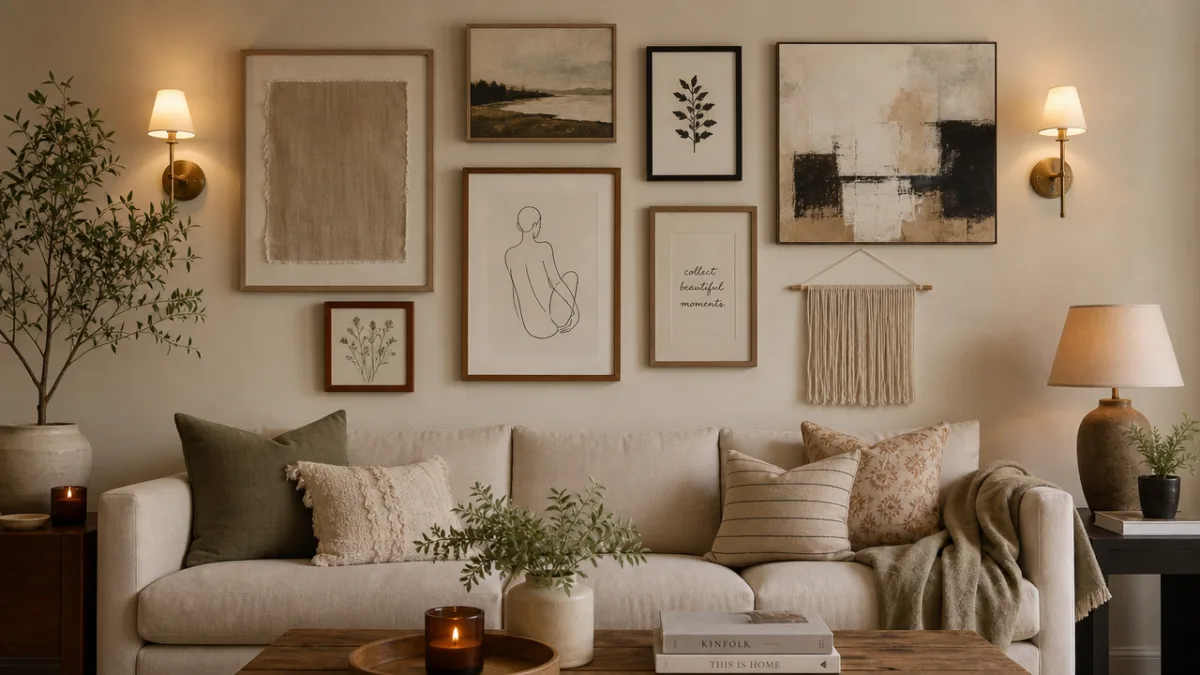
- Group pieces thoughtfully in gallery walls, using consistent frame styles or a deliberate mix, with even spacing and a clear organizing principle such as a shared color palette or subject matter.
The placement of art within the room is the final layer of the presentation equation, and it is one that many home decorators underestimate. Art hung too high — a near-universal mistake — loses its connection to the furniture below it and reads as an afterthought. The general principle used by professional installers and gallery curators is to hang art so that its center point sits at approximately eye level, typically around 57 to 60 inches from the floor. When hanging art above a sofa or console table, the bottom edge of the piece should sit roughly 6 to 8 inches above the furniture surface. These seemingly minor details are what give a room its sense of visual coherence and proportion — the same qualities that make professionally decorated spaces feel so effortlessly composed.
Ultimately, what makes DIY art convincing is the combination of genuine craft, thoughtful finishing, and confident presentation. None of the techniques described in this guide require formal training or expensive equipment. What they require is patience, a willingness to learn from early experiments, and the understanding that presentation is half the art. When you stand back and look at a wall holding your own textured canvas, resin pour, or sculptural installation — beautifully framed, perfectly hung, and lit to show off its best qualities — the satisfaction is extraordinary. And when a guest asks where you found it, you can smile and say you made it yourself.








What do you think?
It is nice to know your opinion. Leave a comment.