










Top 14 DIY Spring Garden Trellis Ideas to Try
Why Every Spring Garden Needs a Trellis
Once the days start getting longer and the temperature creeps back up, most gardeners naturally start eyeing their vertical space. A trellis might just be the single most versatile thing you can add to your outdoor space — and building one yourself makes it even more satisfying than anything you’d find at a garden center. Whether you’re working with a big backyard or a tiny balcony, a DIY trellis can completely change the way your plants grow and the way your garden feels throughout the season.
There’s a real practical side to all of this too. Climbing vegetables like cucumbers, beans, and peas do so much better when they can grow upward instead of sprawling across the ground — air gets around them more freely, disease has less of a foothold, and suddenly harvesting isn’t a back-breaking scavenger hunt. And flowering vines like clematis, sweet peas, and morning glories? Give them something beautiful to climb and they become absolute showstoppers, turning a flat garden bed into something layered and dynamic that catches the eye no matter where you’re standing.
The best part of doing it yourself is that you’re not locked into some standard size or style. You can build exactly what your space needs, in whatever material fits your aesthetic. Rustic bamboo, an elegant wooden fan shape, something in between — there are so many directions you can go. This guide covers fourteen ideas that are genuinely doable for all kinds of gardeners, whether you’re comfortable with power tools or you’d rather just get creative with what’s already lying around the yard.
Classic Wooden Trellis Designs for Timeless Appeal
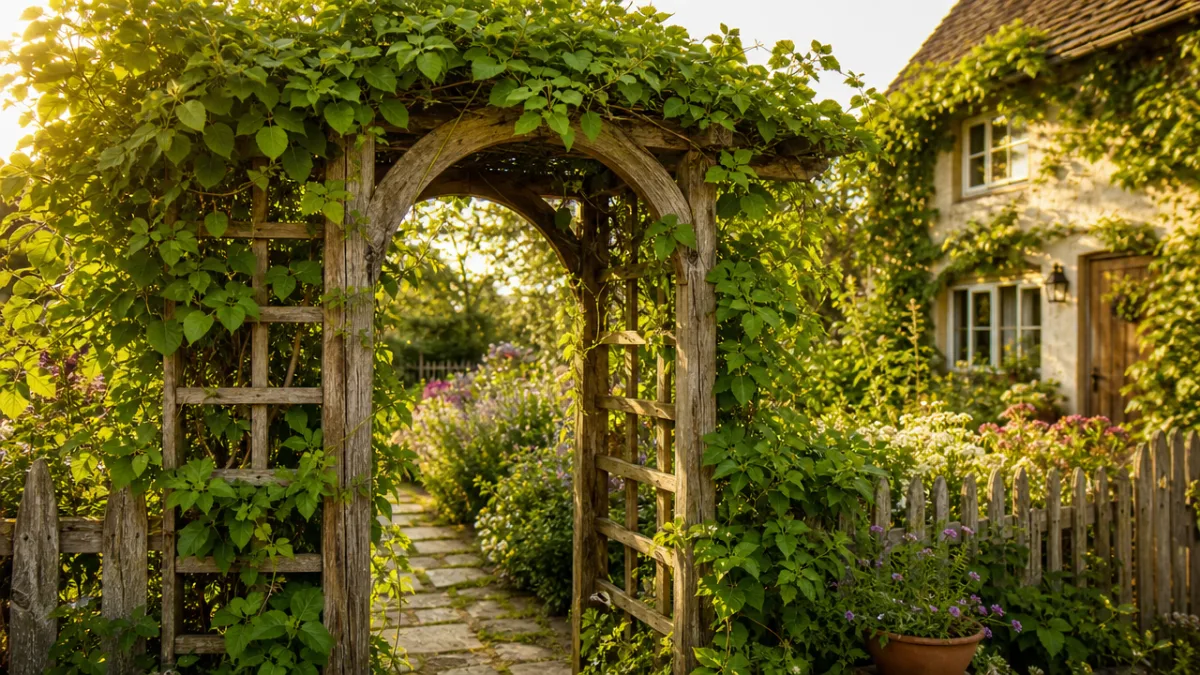
Wood is still the go-to material for most DIY trellises, and it’s not hard to see why. It’s easy to find, easy to work with, looks right at home in almost any garden, and takes paint or stain beautifully. A classic square lattice trellis in cedar or redwood is one of those designs that never really goes out of style. Cedar is particularly worth the slight extra cost — it naturally resists rot and insects, so you’re looking at many seasons of use with just the occasional coat of sealant to keep it in good shape.
A fan-shaped wooden trellis is another classic that looks especially lovely against a wall or fence. The basic idea is simple: cut several wooden stakes in varying lengths, anchor them together at a single base point, and fan the tops outward like a sunrise. It’s a great match for roses, clematis, and espalier fruit trees, all of which take really well to the radial support and look gorgeous as they fill in throughout spring and summer. You can easily adjust the spread and height to fit whatever wall or planting area you’re working with.
If you’re up for a slightly bigger build, a freestanding A-frame trellis made from lumber is a fantastic option. Two rectangular lattice panels hinged at the top and spread at the base give you a sturdy, portable structure that’s perfect for cucumber tunnels or bean teepees in the vegetable garden. Because it doesn’t need to be dug in or anchored, it’s also a great choice for renters or anyone who likes to rearrange things between seasons. Early in spring, you can even drape shade cloth over it to improvise a cold frame for getting seedlings going outdoors.
Bamboo and Natural Material Trellis Ideas
Bamboo is a genuinely remarkable material, and gardeners have known this for centuries. It’s light, surprisingly strong, naturally moisture-resistant, and grows so fast it can be harvested without any real environmental guilt. If you’re looking for a low-cost, eco-friendly trellis option, a few bamboo stakes and some jute twine can get you something that’s both highly functional and really lovely — especially in cottage gardens or Japanese-inspired spaces where that organic, naturalistic look is part of the whole aesthetic.
The classic bamboo grid is probably the most popular configuration, and for good reason — it’s simple, versatile, and works for a huge range of plants. You just lay stakes horizontally and vertically at regular intervals and tie each intersection with jute twine. Mount the whole thing between two posts, lean it against a fence, or lash it between trees — it works any way you approach it. The spacing is easy to adjust too; tighter grids suit delicate vines, while wider spacing handles heavier climbers like squash or climbing roses without any trouble.
Willow, hazel, and other flexible woody branches open up a whole other world of natural material trellises. Woven willow panels are a centuries-old tradition in European gardens, and they’re surprisingly achievable at home — you weave pliable green branches in and out of upright stakes pushed into the ground, and as everything dries out and hardens, the panel becomes genuinely rigid and durable. There’s an artisan quality to a woven willow panel that makes it a garden feature on its own merits, honestly beautiful even weeks before the first plant starts climbing it.
Creative and Upcycled Trellis Concepts
Some of the most memorable trellises out there are built from things that were headed for the landfill. An old wooden ladder leaned against a wall makes an instant trellis with perfectly spaced rungs for plants to weave through. Vintage iron bed frames — especially the ornate headboards and footboards you find at estate sales or salvage yards — have become genuinely sought-after garden features, and they’re stunning when covered in roses or clematis. There’s a worn-in, storied quality to these repurposed pieces that brand-new materials just can’t fake.
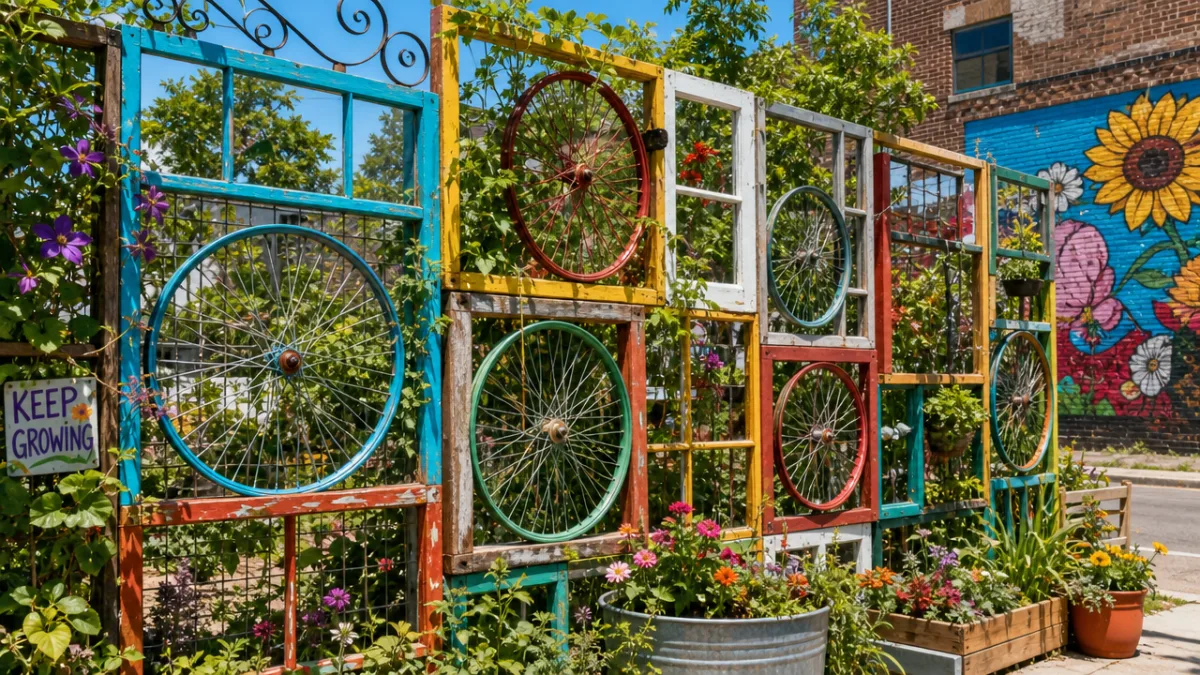
Bicycle wheels, old window frames, and wooden pallets can all become something special with a bit of creativity and a few basic tools. A row of bicycle wheels mounted on a horizontal bar makes a playful, eye-catching trellis that looks incredible draped in morning glories or nasturtiums. Window frames with the glass removed, strung with wire or twine, become elegant wall trellises that frame a planting bed almost like outdoor artwork. These kinds of ideas shine especially in urban gardens, where every element really does need to pull double duty as both a working support structure and something worth looking at.
Wooden pallets deserve their own mention here because they’re so easy to get hold of — many businesses give them away for free. Stand one upright, secure it to a fence post or wall, and you have an instant slatted trellis with natural gaps that plants are happy to grow through. Leave it raw for a rustic, industrial look, hit it with a bold color for something more playful, or stretch additional wire or twine between the slats to give climbers even more to grab onto. Just make sure any pallet you use is stamped HT (heat-treated) rather than MB (methyl bromide-treated), especially if you’re growing food.
Trellis Ideas for Small Spaces and Container Gardens
A small garden, balcony, or patio is absolutely no reason to skip a trellis — if anything, it’s more reason to have one. When you don’t have much ground to work with, growing upward is one of the best strategies you have. A simple obelisk or tower trellis — four wooden stakes tied at the top and braced with wire rings or horizontal rungs — is one of the most space-efficient designs around, and it looks genuinely elegant rising out of a large container filled with sweet peas or climbing nasturtiums.
For smaller containers, mini trellises made from copper pipe, dowel rods, or decorative wire slip right into the pot and do the job beautifully. Copper is especially nice because it develops that warm patina over time, giving container gardens a polished, refined feel. You can also bend copper wire into arches, hearts, spirals — whatever suits you — and end up with something sculptural enough to be interesting even in winter when nothing’s actively climbing it. These small-scale trellises are lightweight and easy to move or swap between containers, which makes them a natural fit for renters and apartment gardeners.
Wall-mounted trellis panels are another excellent solution when floor space is at a premium. A panel of wire mesh or wooden lattice mounted flush to a wall or fence takes up essentially no ground space but gives climbing plants a huge surface to work with. You can train productive crops like runner beans and cherry tomatoes across them and turn a blank wall into a living, producing vertical garden. Add a small shelf or planter box at the base and you’ve got a self-contained growing station that’s both useful and attractive, even in the tightest urban outdoor space.
Building Tips and Plant Pairings for Success
Whatever design you go with, a few core building principles will make a big difference in how well your trellis holds up over time. Use materials that can genuinely handle outdoor life — untreated softwood rots faster than you’d expect, lightweight wire buckles under heavy vines, and thin bamboo stakes can snap in a strong wind. Spending a little more on quality cedar lumber, galvanized wire, or heavy-gauge bamboo is almost always worth it. A well-built trellis that lasts for years beats replacing a cheap one every season.
Anchoring is where a lot of DIY trellises fall apart — sometimes literally. Something that feels rock-solid when you first put it up can get wobbly fast once it’s covered in pounds of plant material and taking a beating from summer storms. Freestanding trellises need their upright posts driven at least twelve to eighteen inches into the ground, ideally set in concrete or gravel. Wall- and fence-mounted trellises should go up with proper screws or bolts rather than nails, which have a way of pulling loose as wood swells and contracts through the seasons. Getting the anchoring right at the start saves a lot of headaches later.
Choosing which plants to grow up your new trellis is honestly the most fun part. Annual climbers like sweet peas, morning glories, and climbing nasturtiums are perfect if you want quick, colorful results right in your first season. Perennial climbers like clematis, roses, and wisteria take a bit more patience to establish, but they come back year after year and just keep getting more impressive. For edible gardens, cucumbers, pole beans, sugar snap peas, and indeterminate tomatoes all love trellis support and produce noticeably better harvests when they have vertical room to grow. Mixing edible and ornamental climbers on the same structure is a great move — you get beauty and bounty at the same time.
- Sweet Peas: Fast-growing annuals with heavenly fragrance, perfect for bamboo or wire grid trellises in full sun locations.
- Clematis: Perennial flowering vine available in dozens of colors; thrives on wooden fan or lattice trellises against warm walls.
- Cucumber: Productive vegetable that benefits enormously from vertical support, improving fruit quality and making harvesting effortless.
- Climbing Roses: Classic trellis companions that look spectacular on A-frame wooden structures or repurposed iron bed frames.
- Runner Beans: Vigorous annual vegetable climbers ideal for bamboo teepee trellises in the vegetable garden patch.
- Morning Glory: Rapid-growing annual with trumpet-shaped blooms in vivid purples and blues, excellent for upcycled or wire trellises.
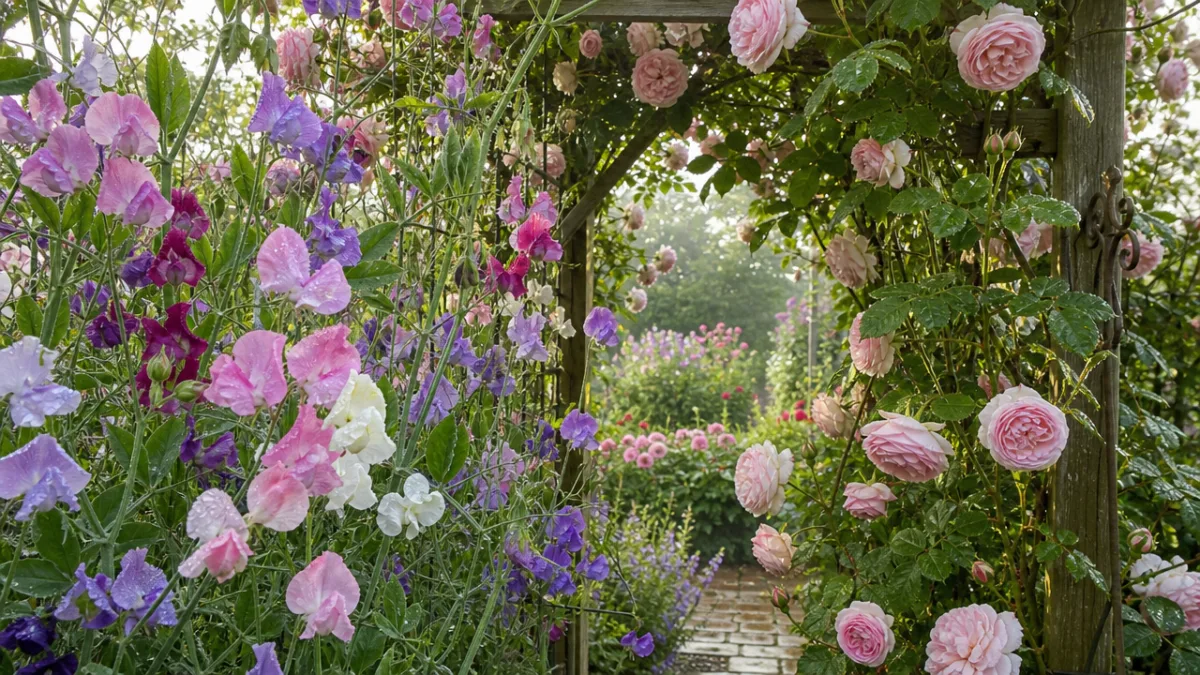
At the end of the day, the best DIY spring trellis is simply the one that makes you want to go outside and build it. Whether you’re drawn to the simple, natural look of bamboo, the classic charm of painted cedar lattice, or the creative satisfaction of turning something old into something your garden couldn’t do without — there’s an idea here that will fit your space, your budget, and your style. Spring is the perfect time to start, and the climbing plants that will eventually cover whatever you build are among the most rewarding things any garden can grow. Grab your materials, pick your design, and let things climb.








What do you think?
It is nice to know your opinion. Leave a comment.