










How to Make a Gnome Garden: A Complete Guide to Creating Your Own Magical Miniature World
Introduction to Gnome Gardens
A gnome garden is one of the most delightful and imaginative ways to bring personality and charm to your outdoor or indoor space. Whether you have a sprawling backyard or a modest balcony, a gnome garden transforms an ordinary corner into a whimsical miniature world filled with tiny figures, lush plants, and carefully chosen accessories. The concept has deep roots in European folklore, where gnomes were believed to be guardians of the earth and protectors of gardens, and today that tradition lives on in a thoroughly modern and creative hobby.
The beauty of creating a gnome garden is that it is incredibly accessible to gardeners of all skill levels. You do not need years of horticultural experience or a large budget to get started. All you truly need is a sense of wonder, a little patience, and the desire to craft something that feels genuinely magical. From children delighting in placing tiny mushroom houses to adults finding meditative joy in arranging moss and stone pathways, gnome gardens have an almost universal appeal that cuts across age groups and gardening experience levels.
This guide will walk you through every step of the process, from choosing your container and selecting the right plants to placing your gnome figurines and adding finishing decorative touches. By the time you finish reading, you will have all the knowledge and inspiration you need to build a gnome garden that is uniquely your own, one that reflects your personality and brings joy to everyone who encounters it. Let the planning begin, and remember that in a gnome garden, there are no strict rules — only creativity and imagination.
The History and Appeal of Garden Gnomes
Garden gnomes as decorative figures trace their origins to nineteenth-century Germany, where terracotta figurines began appearing in ornamental gardens across the country. The tradition spread to England and the rest of Europe throughout the Victorian era, when elaborate garden design became a mark of social status and personal taste. Over the decades, gnomes evolved from simple clay figures into richly detailed sculptures representing all kinds of characters, from fishing gnomes to dancing gnomes to gnomes holding lanterns or shovels.
Today, garden gnomes occupy a beloved space in popular culture that blends nostalgia with genuine creative expression. The appeal lies partly in their playfulness — a well-placed gnome adds an element of surprise and humor to a garden — and partly in the storytelling potential they carry. Each gnome seems to suggest a tiny narrative, a hint of a life being lived at a scale just below our notice. Building an entire garden around that idea magnifies the effect into something truly enchanting and deeply personal.
Choosing the Right Container and Location
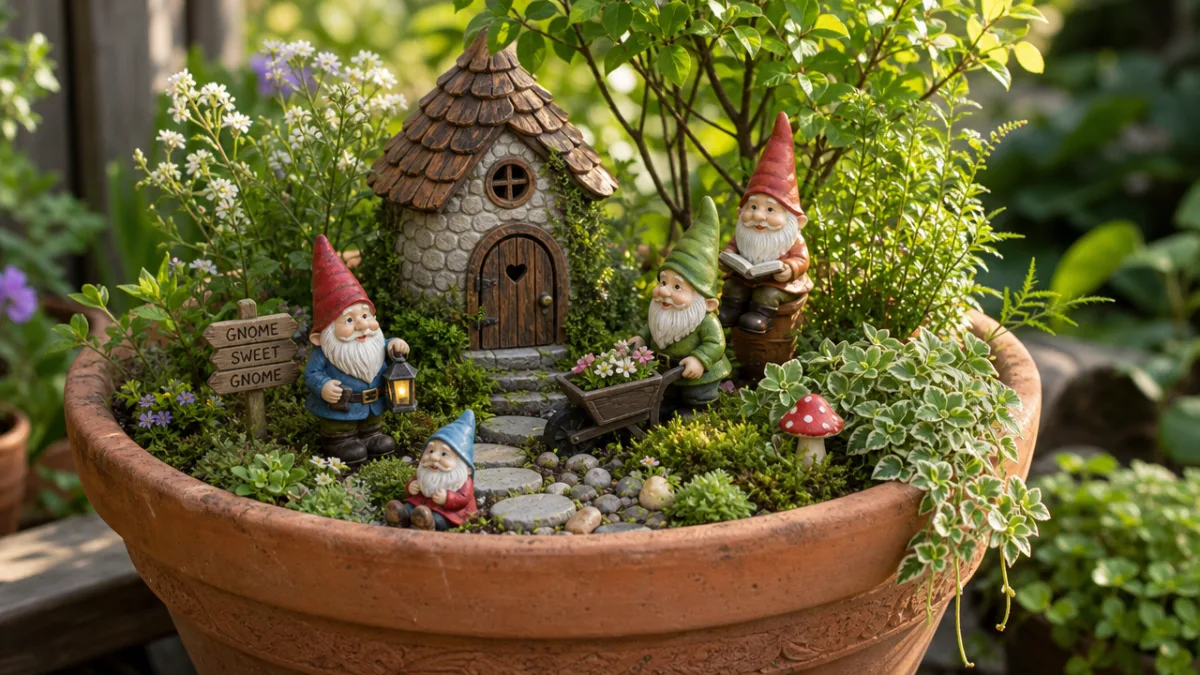
The foundation of any successful gnome garden is its container, and choosing the right one will shape everything else about the design. Large terracotta pots are a classic and practical choice, offering excellent drainage and a natural earthy aesthetic that complements the woodland theme most gnome gardens evoke. Wooden barrels, whiskey half-barrels, and galvanized metal tubs are also popular options, each bringing its own visual character to the finished piece. If you are working indoors, a wide, shallow ceramic dish or a decorative planter can work beautifully.
Beyond the container itself, location is an equally important consideration. Most gnome gardens thrive in a spot that receives partial shade to full sun, depending on the plants you intend to use. An area beneath a tree, beside a garden wall, or tucked into a shaded corner of a patio can all work wonderfully. The key is to observe the light conditions throughout the day and match your plant selection accordingly. A location that feels slightly secluded or tucked away adds to the sense of discovering a secret world, which is very much part of the gnome garden’s charm.
Drainage is a critical practical concern that many beginners overlook. Whatever container you choose, ensure it has adequate holes in the bottom to prevent waterlogging, which can rot plant roots and destroy the garden quickly. If you are repurposing a decorative container without drainage holes, you can layer the bottom with gravel or perlite to create a reservoir below the root zone. Alternatively, drill your own drainage holes with an appropriate bit for the material. Getting this right from the start will save you considerable frustration and help your miniature landscape thrive for years to come.
Indoor Versus Outdoor Gnome Gardens
Deciding whether your gnome garden will live indoors or outdoors will significantly influence your material and plant choices. Outdoor gnome gardens benefit from natural rainfall, wider temperature ranges, and the rich context of a real garden environment, which makes them feel more organic and integrated with the natural world. However, they are also exposed to harsh weather, pests, and seasonal changes that require more maintenance and occasional winterizing in colder climates.
Indoor gnome gardens, by contrast, give you greater control over conditions and allow you to use more delicate plants and decorations that would not survive outside. They also bring the magic of a miniature garden into your living space, where it can be enjoyed up close and appreciated as a piece of living art. Succulents, air plants, and small ferns are all excellent choices for indoor gnome gardens, requiring relatively little care while providing interesting textures and forms that suit the miniature scale perfectly.
Selecting Plants for Your Gnome Garden
Plant selection is where the real character of your gnome garden begins to take shape. The goal is to choose plants that are appropriately scaled to your container and to the figurines you plan to include, so that everything looks like it belongs together in the same miniature world. Low-growing ground covers, compact mosses, tiny ornamental grasses, and dwarf flowering plants are all excellent choices that create a sense of lushness without quickly outgrowing the space. Think in terms of layers — tall background plants, medium-height mid-ground plants, and low creeping plants for the foreground.
Moss is arguably the single most important plant in any gnome garden. It provides that essential carpet of green that makes the garden feel ancient and magical, as if it has existed undisturbed for centuries. Sheet moss, cushion moss, and Irish moss are all widely available and relatively easy to establish. Some gardeners source moss from their own yards, while others purchase it from garden centers or online suppliers. Either way, establishing a healthy moss layer early in the garden’s life creates a foundation from which all other design elements can grow.
Beyond moss, consider incorporating miniature hostas, creeping thyme, baby’s tears, and dwarf conifers for variety and year-round interest. Miniature roses add a romantic touch, while small succulents bring sculptural interest and drought tolerance. Herbs like thyme and chamomile are especially fitting for a gnome garden because they release a pleasant fragrance when touched and have a folkloric association with healing and magic that suits the theme beautifully. As you select your plants, keep mature sizes in mind — a plant that looks perfect at six inches tall may quickly overwhelm the design as it matures.
Seasonal Planting Considerations
A thoughtfully designed gnome garden can offer visual interest across all four seasons if you plan your plant palette carefully. In spring and summer, flowering plants like alyssum, lobelia, and miniature pansies provide vibrant color and a sense of abundance. As the season transitions into autumn, ornamental grasses take on golden tones and small sedum varieties turn jewel-like shades of red and orange. With careful planning, your gnome garden can feel like a living calendar that reflects the turning of the year in miniature.
In colder climates, winterizing your gnome garden is an important step that protects both the plants and the decorative elements from freeze damage. Remove ceramic and resin gnome figurines before the first hard frost, as temperature fluctuations can cause cracking. Some gardeners choose to bring the entire container indoors for the winter, placing it near a bright window where cool-season plants can continue to grow slowly. Others let the garden go dormant and take pleasure in the quiet, frost-touched beauty of moss and bare branches under winter light.
Designing the Layout of Your Gnome Garden
Before you place a single plant or figurine, take time to sketch out a rough layout plan for your gnome garden. Even a simple pencil sketch on paper can save hours of rearranging later and help you visualize how the different elements will relate to one another. Think about focal points — where will the eye naturally travel first? In most successful gnome gardens, the primary gnome figure occupies a central or slightly off-center position, with pathways, plants, and accessories radiating outward from that anchor point in a way that feels natural and organic rather than rigidly symmetrical.
Pathways are one of the most important design elements in a gnome garden because they imply the movement of tiny lives through the space and draw the viewer’s eye through the composition. You can create pathways using flat pebbles, crushed gravel, fine sand, or even broken pieces of terracotta arranged in a winding line. The pathway does not need to lead anywhere in particular — its purpose is as much visual and narrative as it is functional. A path that curves mysteriously out of sight around a mossy rock suggests that the gnome world extends far beyond what we can see.
Levels and elevation are another powerful design tool that transforms a flat container into a dynamic landscape. Use rocks, mounds of soil, or small pieces of driftwood to create hills, valleys, and plateaus within the garden. Tucking a small gnome figure into a rocky crevice or placing a tiny house at the top of a moss-covered hill creates a sense of depth and discovery that makes the garden endlessly interesting to explore with the eye. Remember that in miniature design, small variations in height read as dramatic topographical features, so even a few inches of elevation can have a significant visual impact.
Creating Gnome Homes and Structures
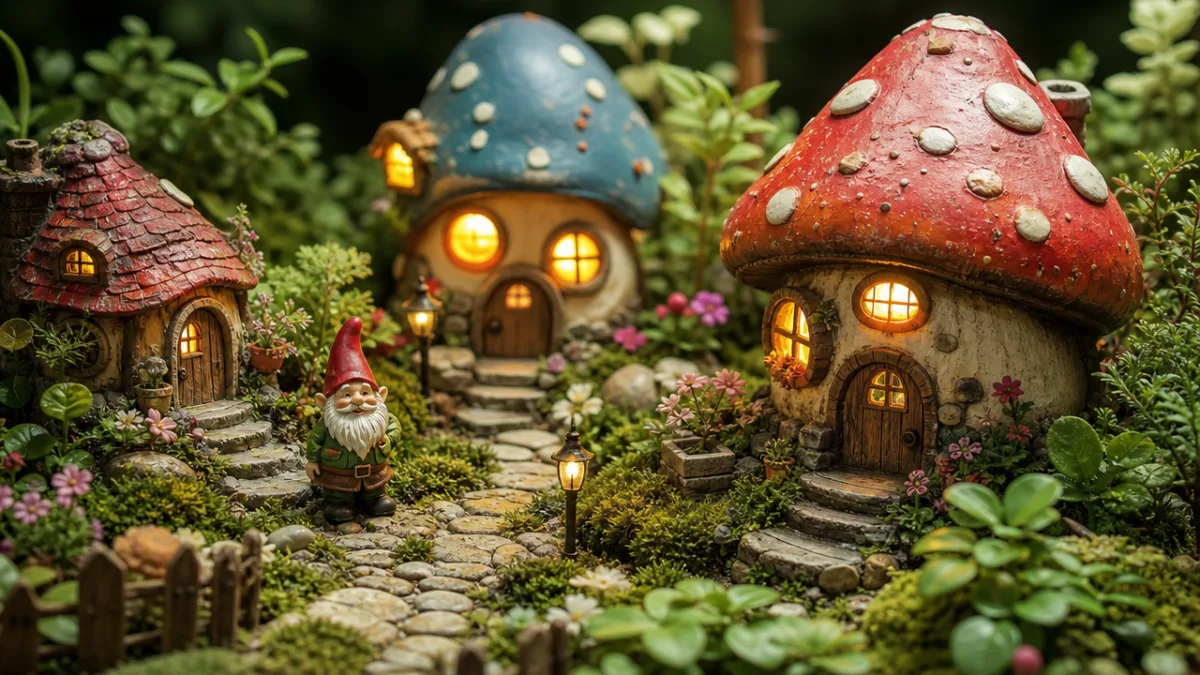
The structures you include in your gnome garden are what truly bring the narrative to life. Gnome houses made from ceramic, resin, or natural materials like bark and stone provide shelter for your figurines and create the sense of an inhabited community rather than a simple collection of objects. You can purchase ready-made fairy and gnome houses from garden centers and craft stores, or you can make your own using clay, painted stones, or repurposed natural materials found in your yard.
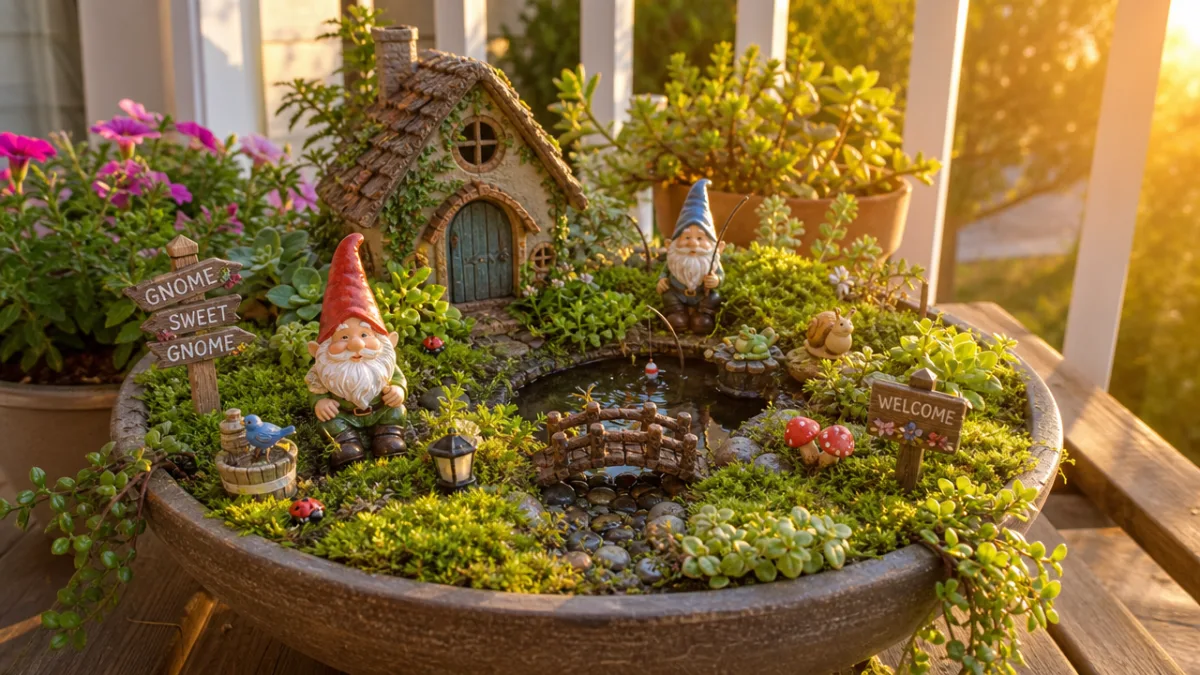
Beyond the main dwelling, consider adding supplementary structures that suggest a full and active gnome lifestyle. A tiny wooden fence made from craft sticks, a miniature well built from stacked pebbles, a small wooden bridge spanning a gap between two rocks, or a wee garden shed constructed from bark pieces all add wonderful detail and story to the scene. Each structure gives the viewer something new to notice and appreciate, rewarding closer inspection with fresh discoveries.
Adding Gnome Figurines and Decorative Accessories
The gnomes themselves are obviously the stars of the show, and choosing the right figurines is one of the most enjoyable parts of the entire project. Gnome figurines come in an enormous range of styles, from hyper-realistic hand-painted ceramic figures to whimsical resin characters full of humor and personality. When selecting your gnomes, think about the story you want your garden to tell. A gnome carrying a fishing rod suggests a pond nearby; a gnome reading a book implies a peaceful scholarly life; a gnome holding a lantern adds a magical quality especially suited to evening viewing.
Scale consistency is critically important when assembling your gnome garden. If your gnomes are two to three inches tall, your houses, accessories, and even your plant choices should all be proportioned accordingly. Mixing wildly different scales breaks the visual illusion and prevents the garden from feeling like a cohesive world. As a general rule, keep all figurines and structures within a similar size range and choose plants that, at their mature height, still feel appropriately sized relative to the inhabitants of your miniature world.
Decorative accessories beyond the gnome figures themselves can include fairy lights threaded through the plants for evening ambience, small mirrors used to simulate ponds or streams, tiny clay pots planted with even smaller plants, and decorative stones painted with patterns or words. Natural found objects — interestingly shaped twigs, small pine cones, acorn caps, smooth pebbles — are free, beautiful, and perfectly scaled for miniature garden use. Collecting these items on walks and incorporating them into your design gives the garden a personal, handcrafted quality that purchased accessories alone cannot provide.
Maintenance and Care of Your Gnome Garden
Like any living garden, a gnome garden requires regular attention to keep it looking its best. Watering needs will vary depending on your plant selection and container size, but as a general guideline, check the soil moisture every two to three days and water thoroughly when the top inch of soil feels dry. Smaller containers dry out more quickly than larger ones, so keep that in mind especially during hot summer months. Overhead watering can damage delicate moss and displace small decorative elements, so a gentle watering can with a fine rose attachment is the ideal tool.
Pruning and trimming are essential maintenance tasks that keep the garden in proportion and prevent vigorous plants from overwhelming their neighbors. Even slow-growing miniature plants will eventually spread and encroach on pathways or crowd out smaller specimens. A small pair of scissors or fine-pointed pruning snips is perfect for the delicate work of trimming gnome garden plants, and regular light trimming is far easier than dealing with overgrown specimens that have taken over the entire design. Think of maintenance as an ongoing act of creative stewardship rather than a chore.
Personalizing and Evolving Your Gnome Garden Over Time
One of the greatest joys of a gnome garden is that it is never truly finished. Unlike a painting that is completed and hung on a wall, a gnome garden is a living, evolving composition that grows and changes with the seasons, with your own creativity, and with the life of the plants themselves. Embracing this quality rather than resisting it transforms the garden from a project into an ongoing practice of observation, adjustment, and imaginative play that can provide pleasure for many years.
As you gain experience and confidence, you will naturally begin to develop a personal aesthetic for your gnome garden. Some gardeners gravitate toward a deeply naturalistic woodland style, using primarily found materials and native moss with simple, earthy figurines. Others prefer a more elaborate fantasy aesthetic filled with colorful painted figures, glittering accessories, and fairy lights. Still others take a humorous approach, populating their garden with gnomes in absurd situations or creating elaborate scene-based vignettes inspired by stories or films. All of these approaches are equally valid, and the right one is simply whichever brings you the most joy.
Sharing your gnome garden with others multiplies its magic considerably. Photographing it through the seasons creates a beautiful visual diary of its evolution. Introducing children to the garden and inviting them to add their own elements or invent stories about the inhabitants turns it into an interactive creative experience that can spark a lifelong love of gardening. Joining online communities of miniature garden enthusiasts connects you with a worldwide network of people who share your passion and can offer endless inspiration, practical advice, and the simple pleasure of knowing that your small, handcrafted world is part of a much larger tradition of human creativity and love of the natural world.
Tips for Getting Started Right Away
If you are feeling inspired and eager to begin, here are some practical first steps to get your gnome garden underway without delay. Start by gathering your basic materials before you go shopping for plants or figurines, so you have a clear sense of scale and container size to work with from the beginning. Visit a local garden center with your container in hand if possible, so you can hold plants up against it and visualize how they will look in proportion. Take your time in the selection process — the best gnome gardens are built thoughtfully, not hastily assembled.
A useful shopping list for a first gnome garden might include the following items to ensure you have everything you need from the start:
- A container with drainage holes, at least twelve inches in diameter for a comfortable working space
- Quality potting mix blended with perlite for drainage
- A selection of three to five small plants in varied textures and heights
- Sheet moss or cushion moss to establish ground cover
- One to three gnome figurines in a consistent scale
- Small pebbles, stones, or gravel for pathways
- A miniature structure such as a house, bridge, or well
- Found natural materials such as small branches, pine cones, and interestingly shaped stones
With these elements in hand, you have everything you need to build a gnome garden that will delight and inspire. Trust your instincts as you arrange and rearrange the elements, and do not be afraid to make changes after the initial planting. The most important thing is to enjoy the process, to spend time with your hands in the soil, and to let your imagination roam freely in the tiny world you are creating. Your gnome garden awaits — and its inhabitants are counting on you to give them a beautiful place to call home.








What do you think?
It is nice to know your opinion. Leave a comment.