










Charming Outdoor Garden Craft Ideas for All
Introduction: Bringing Creativity to Your Outdoor Space
There is something deeply satisfying about stepping into a garden you have shaped with your own hands. Outdoor garden crafts offer a unique opportunity to blend artistic expression with the natural world, creating spaces that feel both personal and alive. Whether you have a sprawling backyard, a modest patio, or a collection of container plants on a balcony, handmade decorations can transform any outdoor area into a charming retreat that reflects your personality and creativity.
The appeal of garden crafting goes far beyond aesthetics. Working with your hands outdoors connects you to the rhythms of nature, reduces stress, and provides a satisfying sense of accomplishment when a project comes together. Many garden crafts can be completed in an afternoon, meaning you can refresh your outdoor space without committing to a lengthy renovation. The accessibility of these projects also makes them ideal for beginners and experienced crafters alike, since many rely on repurposed materials and simple techniques.
What makes outdoor garden crafts especially rewarding is how they evolve alongside your garden. A painted stone placed beside a seedling in spring becomes a cherished marker by summer. A handwoven wind chime begins to weather and develops its own patina. These living, aging qualities give garden crafts a soul that purchased decorations rarely possess. As you explore the ideas in this article, consider how each project might grow and change alongside the plants and seasons in your own outdoor space.
Repurposed and Upcycled Garden Decorations
One of the most rewarding categories of garden crafting is the art of upcycling. Before reaching for new materials, take a look around your home and garage for objects that could find new life in the garden. Old wooden ladders become beautiful plant display shelves. Chipped teacups and mismatched ceramic bowls transform into quirky succulent planters. Worn rubber boots, cracked colanders, and even vintage suitcases can be filled with soil and flowers, adding whimsy and a sense of storytelling to your outdoor space.
Wooden pallets are among the most versatile materials for garden upcycling. With minimal effort, a single pallet can become a vertical herb garden, a decorative wall hanging, or a raised planting bed. Sand down the rough edges, apply an outdoor-safe stain or paint in a color that complements your garden’s palette, and attach small pots or planting pockets to the slats. Vertical pallet gardens are particularly useful for smaller spaces where ground planting area is limited, allowing you to grow upward instead of outward.
Glass bottles offer another wonderful upcycling opportunity that many gardeners overlook. Wine bottles, olive jars, and mason jars can be repurposed in dozens of ways throughout the garden. Line a pathway with inverted wine bottles for a colorful, budget-friendly border that catches the light on sunny afternoons. Fill mason jars with fairy lights and hang them from tree branches or fence posts for magical evening ambiance. Painted bottles placed neck-down in the soil around flower beds create cheerful polka-dot borders that add color even in winter when blooms are scarce.
- Old colanders make excellent hanging baskets because their built-in drainage holes prevent overwatering and allow air circulation around plant roots.
- Vintage tin cans, cleaned and painted, create charming herb gardens for kitchen windowsills or outdoor patios when grouped together in clusters.
- Broken terracotta pots can be arranged on the ground to create a “fairy garden” effect, with small plants and miniature decorations nestled among the shards.
- Wooden window frames salvaged from renovation projects become beautiful garden mirrors or trellis panels when given a fresh coat of weather-resistant paint.

Painted Rocks and Stone Crafts
Painted rocks are among the most beloved and enduring garden craft traditions, and for good reason. Stones are universally available, require no special preparation, and accept paint beautifully when properly primed. The practice of decorating rocks dates back thousands of years and spans cultures across the globe, connecting modern gardeners to a long heritage of artistic expression using the most elemental of natural materials. Whether you prefer detailed botanical illustrations, bold geometric patterns, or simple cheerful faces, painted rocks offer infinite creative possibilities at minimal cost.
Getting started with rock painting requires only a few basic supplies. Smooth, flat river stones work best, as their surfaces accept acrylic paint without the texture interfering with your designs. A base coat of white acrylic primer helps colors appear vibrant and ensures better adhesion. Once your designs are complete and fully dry, sealing with an outdoor-grade varnish or Mod Podge protects your artwork from rain, sun, and frost. With proper sealing, painted rocks can last for years in the garden, developing a pleasingly weathered quality that actually enhances their charm over time.
Beyond simple decoration, painted rocks serve practical functions in the garden. Use them to label plant varieties and herb species, painting the plant name in bold lettering with a weather-resistant paint pen. Create a painted stone border around garden beds, choosing colors that echo the flowers growing within. You can also arrange larger painted stones to create mosaics or pathway markers that guide visitors through your garden. For families with children, painted rocks offer an excellent rainy-day activity that produces results everyone can enjoy outdoors for seasons to come.
More advanced stone crafts include mosaic work, which involves cutting or breaking ceramic tiles and adhering the fragments to larger stones or stepping stones using exterior tile adhesive and grout. Mosaic stepping stones are particularly striking when arranged along a garden path, catching sunlight with their reflective surfaces. Spiral patterns, sunburst designs, and floral motifs are popular choices that complement the organic shapes of garden plantings. While mosaic work requires more time and specific materials than simple painting, the results are genuinely stunning and remarkably durable when properly grouted and sealed.
DIY Wind Chimes and Garden Sound Features
Sound is an often-overlooked dimension of the garden experience, yet it has a profound effect on the atmosphere of an outdoor space. Wind chimes, water features, and other sound-producing garden crafts add a sensory layer that transforms a visual garden into an immersive retreat. The gentle music of handmade wind chimes moving in a summer breeze is one of the most soothing sounds in the domestic world, and creating your own allows you to choose materials, tones, and aesthetics that perfectly match your garden’s character.
Making a basic wind chime requires surprisingly few materials. A piece of driftwood, a thick branch, or even a repurposed picture frame serves as the top bar from which the chime elements hang. The hanging pieces themselves can be made from almost anything: vintage silverware, glass beads, seashells, ceramic pieces, bamboo segments, or metal keys. Each material produces a distinct sound — shells produce a soft, organic rustling; metal keys create a bright, tinny ring; bamboo offers a hollow, melodic knock. Experimenting with combinations of materials allows you to tune the overall sound to your preference.
Hanging your wind chime in the right location is as important as the construction itself. Position it in a spot that catches prevailing breezes — typically near the edge of an overhang, beneath a pergola, or from a tree branch in an open area of the garden. Avoid placing wind chimes directly against a wall or in corners where air movement is limited. Consider the sound from neighboring perspectives as well, ensuring that the chime’s music is pleasant rather than intrusive. A beautifully made wind chime placed thoughtfully becomes a constant, ever-changing conversation between your garden and the wind.

Fairy Gardens and Miniature Landscapes
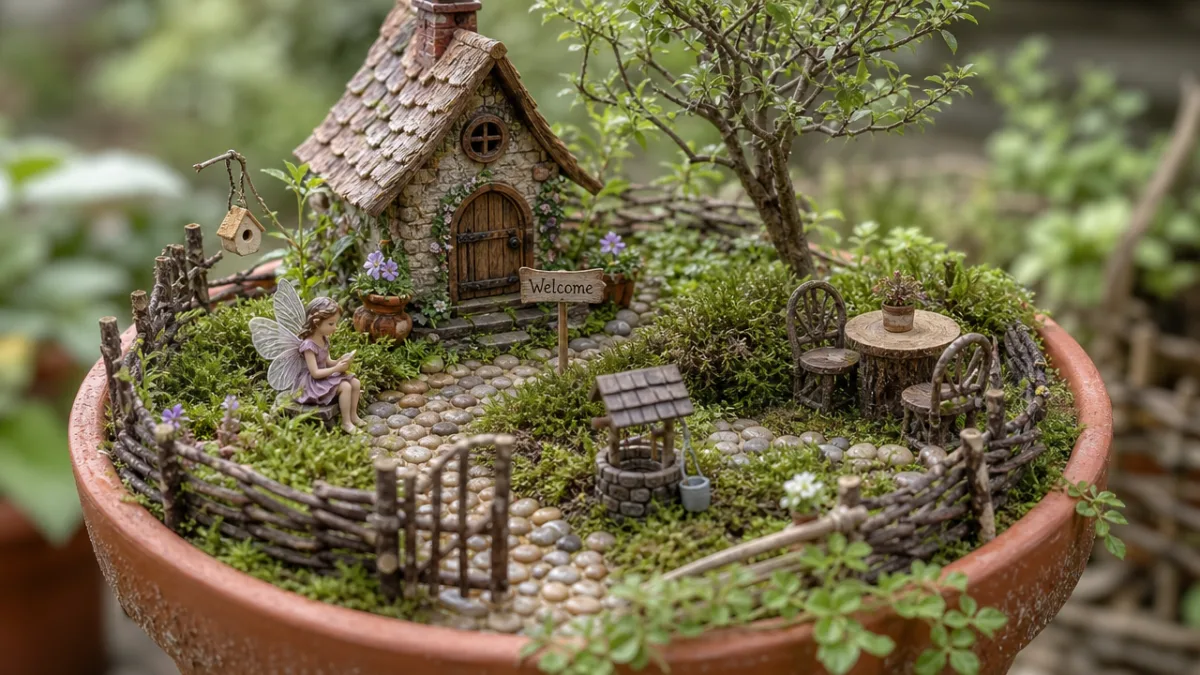
Fairy gardens have captured the imagination of gardeners of all ages for generations, and their popularity shows no signs of waning. These miniature landscapes combine the pleasures of gardening with the magic of storytelling and the satisfaction of detailed craftsmanship. A fairy garden can occupy a single large pot, a repurposed wheelbarrow, or an entire dedicated corner of your yard, and the materials used can range from store-bought miniatures to entirely handcrafted elements made from natural materials gathered on walks and hikes.
Building a fairy garden begins with choosing your container or site. Ensure adequate drainage and select plants that will remain proportionally small — dwarf varieties of thyme, moss, miniature hostas, and small ferns create a convincingly lush landscape at a reduced scale. Once your plantings are established, begin adding structural elements: tiny pathways made from pebbles or broken tile pieces, miniature fences constructed from twigs lashed together with garden twine, and small arched bridges made from bent wire and air-dry clay. Each addition should feel as though it belongs to a coherent, inhabited world rather than a random collection of miniatures.
Crafting your own fairy garden accessories is far more rewarding than purchasing ready-made pieces, and the results are uniquely personal. Small houses and cottages can be fashioned from air-dry clay, decorated with twig shutters and pebble pathways. Miniature garden furniture made from wine corks, popsicle sticks, and fabric scraps creates charming seating areas. Bottle cap bird baths, acorn cap bowls, and walnut shell boats all use natural materials in ways that feel organically suited to the fairy garden aesthetic. The process of making these tiny objects is meditative and deeply enjoyable, requiring the kind of focused attention that quiets the mind.
- Start with a clear theme for your fairy garden — a woodland cottage, a seaside cove, or a wildflower meadow — to guide your plant and decoration choices toward a unified vision.
- Layer your plantings by height, placing taller plants at the back and trailing varieties near the edges to create the illusion of a real landscape viewed from a distance.
- Add water features even at a miniature scale using small mirror fragments or shallow bottle caps filled with water to represent ponds and streams.
- Refresh seasonal decorations throughout the year, swapping summer flowers for autumn leaf arrangements and winter evergreen sprigs to keep the garden feeling current and alive.
Garden Lighting and Lantern Crafts
Lighting transforms a garden’s character at dusk, extending the hours you can enjoy your outdoor space and creating an entirely different atmosphere from the daytime garden. Handcrafted garden lanterns and lighting features are among the most impactful projects you can undertake, offering dramatic visual results from relatively simple construction. The warm glow of a handmade lantern illuminating a garden path or sitting area invites lingering outdoors long after sunset, turning ordinary evenings into something genuinely special.
Mason jar lanterns remain a perennial favorite in garden crafting, and their enduring popularity is well deserved. Fill jars with sand and tea light candles for ground-level lanterns, or thread sturdy wire handles through the jar necks for hanging versions. Frosted glass paint applied to the outside of the jar creates a soft, diffused glow, while stenciled designs in opaque paint allow the light to shine through the negative space in beautiful patterns. For a more dramatic effect, fill jars with layers of colored sand, shells, or river stones before adding the candle, creating a layered decorative element that looks beautiful by day and magical at night.
Solar-powered fairy lights have become widely available and affordable, making them a fantastic material for garden lighting crafts. Weave them through handmade willow wreaths to create glowing wall decorations. Fill large glass vases or decorative cloches with coiled fairy light strands for luminous garden sculptures that require no electrical connections. Wrap them around handmade driftwood frames or suspend them in cascading curtain arrangements from pergola beams or tree branches. Solar lights eliminate the need for extension cords and electrical connections, making these projects accessible even to those without outdoor power outlets.
For gardeners who enjoy working with more substantial materials, tin can lanterns offer a satisfying metalworking-adjacent project using only basic tools. Fill a clean tin can with water and freeze it solid, then use a hammer and nail to punch decorative patterns through the metal — the ice prevents the can from denting during puncturing. Once thawed and dried, paint the exterior with rust-resistant paint and place a tea light inside. The punched holes allow candlelight to escape in your chosen pattern, whether that’s a simple scatter of stars, a geometric design, or a silhouette of a garden bird or flower. Grouped together on steps or along a pathway, tin can lanterns create a dramatically beautiful effect at very low cost.
Seasonal and Holiday Garden Craft Displays
One of the joys of maintaining a crafted garden is the opportunity to refresh and evolve it throughout the year, marking the passing seasons with new decorative elements that celebrate each chapter of the gardening calendar. Spring welcomes painted egg decorations nestled among bulb plantings, handmade flower crowns draped over fence posts, and painted terracotta pots bursting with seedlings. Summer calls for colorful wind spinners, outdoor bunting strung between trees, and herb garden markers crafted from driftwood and painted river stones.
Autumn offers some of the richest materials for garden crafting, as the season provides an abundance of natural elements that lend themselves beautifully to decorative projects. Dried seed heads, pressed leaves, gourds, and pinecones all become raw materials for wreaths, garlands, and sculptural arrangements. A simple grapevine wreath form gathered from garden prunings and decorated with dried hydrangea heads, rosehips, and cinnamon sticks creates a stunning autumnal display that costs almost nothing and takes only an hour to assemble. Corn husk dolls, dried flower bundles, and carved vegetable lanterns round out the seasonal palette.
Winter garden crafts focus on bringing warmth and life to a dormant landscape. Suet bird feeders crafted from pinecones rolled in seed and fat provide both decoration and essential nutrition for garden wildlife during the coldest months. Evergreen swags and wreaths made from garden trimmings of holly, ivy, and pine bring greenery to bare walls and fences. Painted bare branches arranged in large outdoor urns and decorated with weather-resistant ornaments create striking sculptural displays that stand out against winter skies. These seasonal projects ensure that your crafted garden remains a source of beauty and engagement even when the growing season has ended.
The practice of marking seasons through garden craft creates a wonderful rhythm in your relationship with your outdoor space. Each project undertaken in autumn prepares you for spring; each decoration made in winter is placed with a vision of how it will look when surrounded by summer blooms. This forward-thinking, cyclical engagement with your garden deepens your connection to both the space and the natural world it inhabits. Over years of seasonal crafting, your garden accumulates layers of personal history — each handmade piece a marker of time spent, creativity expressed, and seasons shared with the people and plants you love most.








What do you think?
It is nice to know your opinion. Leave a comment.