










25 Recycled Garden Ideas for Patio Decor: Transform Your Outdoor Space Sustainably
Why Recycled Garden Decor Is the Future of Outdoor Living
The concept of recycled garden decor has moved well beyond a niche trend and into the mainstream of thoughtful, intentional living. More homeowners than ever are recognizing that beautiful patios and outdoor spaces don’t require expensive trips to home improvement stores. Instead, they’re discovering that the most charming and character-rich garden decorations often come from items that were destined for the trash or recycling bin. This shift in perspective is as much about creativity as it is about environmental responsibility.
When you choose recycled materials for your patio decor, you’re participating in a broader movement toward circular living — one where resources are valued, repurposed, and extended rather than discarded. Old wooden pallets, chipped ceramic plates, worn-out boots, rusted tin cans, and cracked terracotta pots all carry a history that new, store-bought items simply cannot replicate. That sense of story and patina adds warmth and personality to any outdoor space in a way that feels genuinely lived-in and welcoming.
Beyond aesthetics, the financial savings of embracing recycled garden ideas are significant. A single upcycled pallet can become a vertical herb garden worth hundreds of dollars at a garden center, and a collection of mismatched thrift store mugs can transform into a whimsical succulent display for next to nothing. The creative satisfaction of making something beautiful from something discarded is its own reward, making recycled garden decor a rewarding practice on every level — environmental, financial, and artistic.
Repurposed Containers: Giving Old Items New Life as Planters
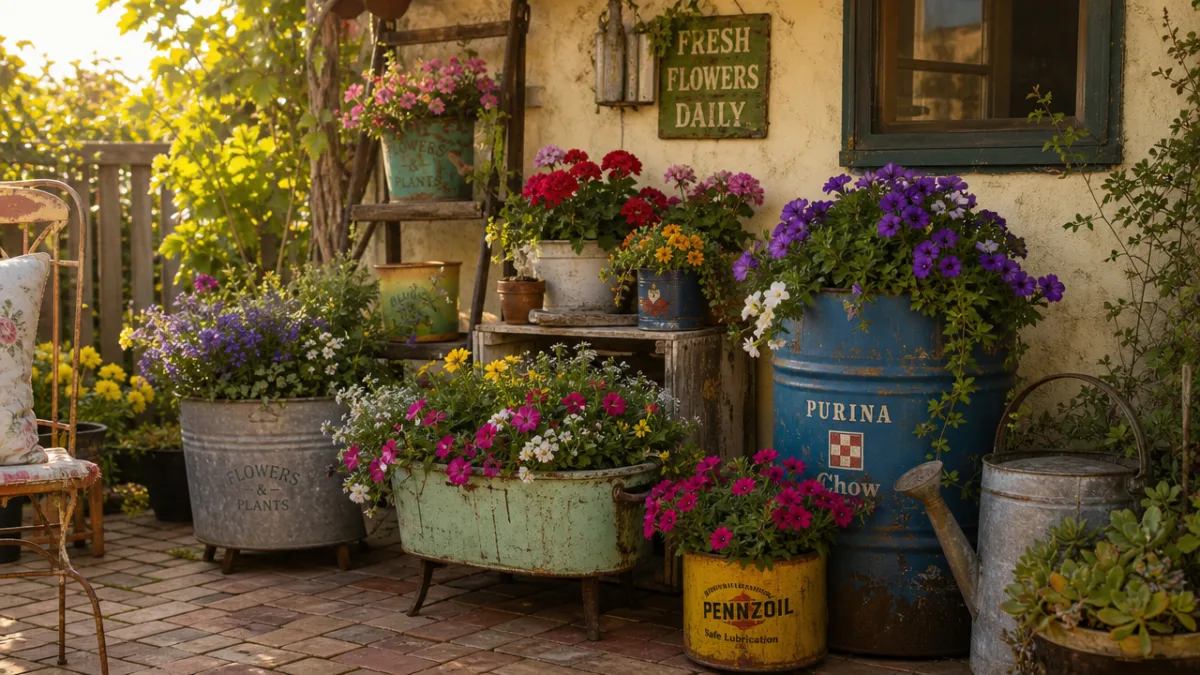
One of the most accessible entry points into recycled garden decorating is the humble repurposed planter. Almost any container that can hold soil and has some form of drainage can become a home for plants. The beauty of this approach lies in its complete flexibility — there are no rules about what qualifies as a planter, which means your imagination is the only limit. Old colanders make excellent hanging planters with their built-in drainage holes, while wooden wine crates add a rustic, vineyard-inspired charm to patio arrangements.
Some of the most visually striking recycled planters come from the most unexpected sources. A pair of old rubber rain boots planted with trailing petunias or bright marigolds creates an instantly charming focal point near a front door or garden gate. Chipped enamel colanders, cracked ceramic pitchers, and even old tin watering cans that have seen better days all make wonderful planters with minimal preparation required. The key is to ensure adequate drainage and to choose plants that suit the size and depth of your chosen container.
For those wanting a more cohesive look, consider grouping repurposed containers by material, color palette, or era. A collection of vintage tin cans painted in a coordinating palette of muted greens and terracotta tones creates a curated, intentional display that feels designed rather than accidental. Similarly, a grouping of old wooden boxes and crates at varying heights creates depth and visual interest on a patio. The following types of containers work particularly well as recycled planters:
- Wooden pallets and pallet boards broken down into individual planks
- Old galvanized metal buckets, tubs, and watering cans
- Ceramic crockery including pitchers, bowls, and mugs
- Leather or rubber boots and wellies
- Vintage suitcases lined with plastic sheeting
- Colanders, pasta pots, and enamel cookware
- Tin cans in a variety of sizes, from coffee tins to tomato cans
- Wooden wine, fruit, and vegetable crates
Upcycled Furniture and Structures for the Patio
The patio furniture market has exploded in recent years, but some of the most beautiful outdoor seating and structures can be created from materials already headed to the landfill. Wooden pallets are perhaps the most well-known material for DIY outdoor furniture, and for good reason — they’re freely available, structurally sound, and extremely versatile. Stacked and secured pallets can become sofas, coffee tables, daybeds, and even raised garden beds with minimal tools and effort. Sanded smooth, painted, or stained in a weather-resistant finish, pallet furniture rivals anything available in stores.
Old doors and window frames offer particularly striking opportunities for recycled patio structures. A salvaged wooden door laid flat across two sawhorses becomes a generous and characterful dining table. A collection of mismatched window frames hung as a decorative screen or privacy divider creates an architectural feature with enormous visual impact. Old window frames can also serve as trellises for climbing plants like jasmine, clematis, or sweet peas, combining structure with living beauty in a way that evolves beautifully through the seasons.
Even items that seem too broken or weathered to be useful often have structural potential when viewed with creative eyes. The legs of a broken wooden ladder can be repurposed as the framework for a tiered plant display. An old iron bedframe becomes a whimsical garden trellis or a raised planting bed with the addition of chicken wire. A bicycle wheel mounted to a fence post makes a sculptural and charming support for climbing plants. The key is to look at the structural form of an object rather than its original function and ask what that form might naturally support or become in a new context.
Creative Recycled Garden Art and Decorative Accents
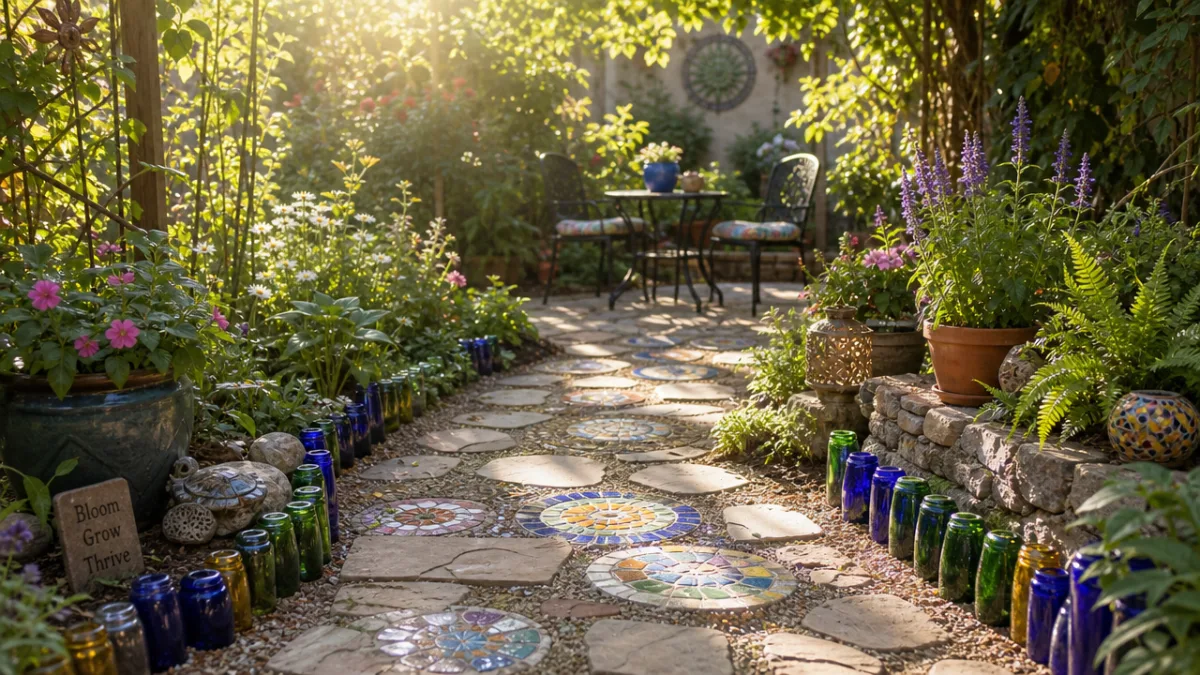
Garden art made from recycled materials brings a depth of character and individuality to outdoor spaces that mass-produced garden ornaments rarely achieve. Broken ceramic tiles and crockery can be used to create stunning mosaic stepping stones, planters, or tabletops using traditional mosaic techniques. The irregular edges and varied glazes of broken pottery create a richness of texture and color that purposely bought mosaic tiles often lack. Even children can participate in creating mosaic garden art, making it a wonderful family project that leaves a lasting and personal mark on your outdoor space.
Metal items that have rusted and worn carry an aged beauty that works particularly well in garden settings. Old garden tools — rakes, shovels, and forks — can be mounted on fences or walls as decorative features, their worn wooden handles and weathered metal adding layers of texture and agricultural nostalgia. Bent and shaped metal wire or copper piping salvaged from renovations can be sculpted into garden art, from abstract forms to recognizable insects, birds, and flowers. The natural patina of aged metal blends harmoniously with plant life in a way that polished, new materials often struggle to achieve.
Glass items offer yet another avenue for recycled garden decoration with striking results. Wine bottles embedded neck-down in the soil around garden beds create a glittering, jewel-toned edging that catches the light beautifully. Bottles in blues, greens, and ambers grouped together in a sunny spot create an impromptu stained-glass effect. Old glass insulators, mason jars hung from tree branches, and even broken glass arranged in patterns in concrete stepping stones all use the light-catching quality of glass to create moments of unexpected beauty throughout the garden. Consider these ideas for incorporating glass:
- Line garden beds with inverted wine bottles in coordinating colors for a vibrant border effect
- Hang mason jars from tree branches with candles or fairy lights inside for evening ambiance
- Embed colored glass pieces in concrete to create decorative and luminous stepping stones
- Use glass insulators as candle holders on patio tables and fence posts
- Create a bottle tree by mounting colored bottles on the upturned branches of a dead tree or metal rod structure
Vertical Gardening with Recycled Materials
For patios with limited floor space, vertical gardening using recycled materials is a transformative strategy that maximizes growing and decorating potential without sacrificing precious square footage. The most fundamental vertical gardening structure is the recycled pallet, which can be stood upright, filled with landscape fabric and soil, and planted with herbs, flowers, or succulents in the gaps between boards. Within a single growing season, a pallet herb garden can become a lush, fragrant living wall that also serves as a practical kitchen resource just steps from the back door.
Beyond pallets, a wide range of recycled structures and materials lend themselves beautifully to vertical planting. Old wooden ladders leaned against a wall become instant plant display structures, with each rung capable of holding a collection of potted plants at varying heights. Guttering sections salvaged from a roof replacement can be mounted horizontally on a fence to create long, trough-like planters perfect for strawberries, herbs, or trailing flowers. Even old metal filing cabinets or storage units placed upright against a wall and planted with succulents in their open drawers have become a celebrated feature in urban gardens.
Shoe organizers — both the over-door fabric variety and the hard plastic wall-mounted type — make surprisingly effective vertical planters for small herbs and compact flowers. Hung on a sunny fence, filled with a lightweight growing medium, and planted with thyme, basil, parsley, or pansies, a recycled shoe organizer becomes a functional and charming feature. Wire mesh panels, old picture frames, and sections of chain-link fencing can all be used as the structural basis for vertical gardens, with small pots wired on or climbing plants trained across their surfaces. The vertical plane of a patio fence or wall is one of the most underutilized spaces in outdoor living and recycled materials make it accessible to virtually any budget.
Recycled Lighting Ideas to Transform Your Patio at Night
The magic of a well-lit patio cannot be overstated, and some of the most atmospheric and beautiful outdoor lighting comes from recycled and repurposed materials. Tin cans with holes punched in patterns using a nail and hammer become enchanting lanterns when a small candle or tea light is placed inside. The warm glow that filters through the punched pattern casts intricate, dancing shadows that transform an ordinary patio into an intimate and atmospheric outdoor room. For a more permanent version, these tin can lanterns can be wired with small LED bulbs and hung from tree branches or patio beams.
Glass jars of all kinds — from mason jars to pasta sauce jars to old jam jars — serve beautifully as recycled lanterns and candle holders in outdoor settings. Filled with a handful of sand and a tea light, they sit stably on tables, steps, and walls while offering a warm and flickering glow. Grouped in different sizes and heights, a collection of glass jar lanterns creates a romantic, candlelit table setting for outdoor dining that costs almost nothing to assemble. For a colored effect, glass paint available at craft stores can transform clear jars into glowing gems of amber, cobalt blue, or emerald green.
Old wine bottles offer a particularly elegant solution for outdoor lighting. Fitted with copper wire fairy lights fed through the neck and coiled inside, a wine bottle becomes a sculptural and glowing table centerpiece with no electricity required if battery-powered lights are used. Alternatively, bottles fitted with torch inserts and filled with citronella oil serve double duty as atmospheric lighting and insect deterrent on warm summer evenings. Larger items like old metal lanterns found at thrift stores, rewired pendant light fixtures, and salvaged industrial cage lights can all be repurposed as striking patio lighting features that add ambiance and personality to outdoor spaces long after the sun has set. The following approaches are among the most impactful for recycled patio lighting:
- Punched tin can lanterns with tea lights or small LED bulbs for patterned, atmospheric glow
- Glass jars in varied sizes grouped together as table centerpieces with candles inside
- Wine bottles fitted with fairy lights for sculptural, glowing table or shelf displays
- Salvaged industrial cage lights or pendant fixtures rewired for outdoor use
- Thrift store metal lanterns polished or painted and fitted with candles or solar lights
- Mason jar solar light inserts that charge by day and glow automatically at night
Bringing It All Together: Designing a Cohesive Recycled Patio
The risk with any collection of recycled and repurposed items is that the result can feel cluttered or chaotic rather than intentionally designed. The key to avoiding this outcome is to approach your recycled patio with the same design principles you would apply to an interior room. Begin by establishing a color palette and stick to it. If you’re painting tin can planters or wooden furniture, choosing two or three colors that work harmoniously together will unify even the most eclectic collection of upcycled items into something that feels considered and coherent.
Scale and proportion matter enormously in outdoor spaces. A single large statement piece — a repurposed water trough planted with a dramatic arrangement, a pallet sofa with brightly colored cushions, a striking mosaic tabletop — will anchor the space and give it a focal point around which smaller recycled elements can be arranged. Without this anchor, even the most beautifully crafted individual pieces can feel scattered and unrelated. Think about the space the way a set designer might: what is the first thing a visitor sees, and what journey does the eye take from there?
Finally, embrace the evolution of a recycled patio as one of its greatest pleasures. Unlike a carefully curated store-bought outdoor setting, a space built from recycled and repurposed materials will grow and change over time as new finds are incorporated, plants mature and fill their containers, and materials weather naturally into their surroundings. This is not a flaw but a feature — the patina, the imperfection, and the ongoing creative engagement with the space are what give a recycled garden its irreplaceable soul. Each piece carries a story, and together they make a space that is uniquely, unmistakably yours.








What do you think?
It is nice to know your opinion. Leave a comment.