










22 Recycled Pallet Garden Swings: Transform Waste Wood into Backyard Magic
The Growing Appeal of Pallet Garden Swings
There is something deeply satisfying about turning discarded wood into something beautiful, functional, and full of charm. Recycled pallet garden swings have surged in popularity over the past decade, and it is easy to understand why. These projects combine sustainability, creativity, and a genuine sense of accomplishment, giving homeowners and DIY enthusiasts a way to enhance their outdoor spaces without spending a fortune. The rustic aesthetic of reclaimed pallet wood blends naturally with garden environments, making these swings look as though they grew right alongside the flowers and trees surrounding them.
What makes pallet swings especially appealing is their accessibility. Wooden pallets are among the most freely available materials on the planet. Warehouses, hardware stores, garden centers, and furniture retailers often have more pallets than they know what to do with, and many are happy to give them away for free or at a very low cost. This means that with a modest investment of time and a few basic tools, virtually anyone can construct a stunning garden swing that would cost hundreds of dollars if purchased from a traditional retailer. The barrier to entry is remarkably low, making this one of the most beginner-friendly DIY projects around.
Beyond the financial and environmental benefits, there is also a deeply personal dimension to building your own garden swing. Each pallet carries a history — marks, stamps, grain patterns, and imperfections that give the finished piece a one-of-a-kind character impossible to replicate with factory-produced furniture. When you sit on a swing you built with your own hands, from materials that were destined for the landfill, the experience is layered with pride, creativity, and a quiet kind of joy that store-bought furniture simply cannot offer. This is craftsmanship in its most democratic and accessible form.
Sourcing and Preparing Your Pallets Safely
Before you can start building, you need to find the right pallets, and not all pallets are created equal. The most important thing to look for is the International Plant Protection Convention stamp, commonly known as the IPPC mark. Pallets marked with “HT” have been heat-treated, making them safe for home use. Pallets marked with “MB,” on the other hand, have been treated with methyl bromide, a chemical fumigant that can be hazardous to human health, particularly in outdoor furniture that people and children will be in regular contact with. Always check for this marking before collecting any pallet for use in a garden swing project.
Once you have sourced safe pallets, preparation is the next critical step. Begin by inspecting each pallet carefully for protruding nails, splinters, cracks, and signs of rot or mold. Use a hammer or nail punch to drive any sticking nails flush with the surface, and sand all exposed wood thoroughly, working through progressively finer grits of sandpaper until the surface feels smooth to the touch. For a garden swing that will see regular use by adults and children alike, this step is not optional — rough or splintered wood can cause injuries and will dramatically reduce the longevity of your finished project.
After sanding, consider whether you want to apply a wood preservative, stain, or paint. Outdoor pallet wood is vulnerable to moisture, UV rays, and insects, all of which will degrade the wood over time if left untreated. A good quality exterior wood stain or sealant will protect the wood while preserving its natural grain and rustic appearance. If you prefer a more colorful look, exterior-grade paint in virtually any shade can transform your swing into a vibrant focal point for the garden. Chalk paints have become particularly popular for this application, offering a soft, vintage look that suits the handmade aesthetic perfectly.

Classic Pallet Swing Designs to Inspire You
The simplest and most popular pallet swing design involves using a single pallet as the seat platform, suspended by four lengths of sturdy rope or chain from a tree branch or wooden frame overhead. This approach requires minimal cutting or modification to the pallet, making it an ideal starting point for beginners. The flat, wide surface of a standard pallet provides ample seating space for one or two adults, and with the addition of a few outdoor cushions and throw pillows, it becomes an extraordinarily comfortable and inviting garden retreat. The look is effortlessly rustic and can be dressed up or down depending on your garden’s overall style.
For those with slightly more woodworking experience, a pallet swing with a built-in backrest is a popular next step. This involves attaching a second, smaller section of pallet wood at an angle behind the seat to provide lumbar support, giving the swing a more traditional chair-like feel. Some builders add armrests on each side, further enhancing the comfort and visual appeal. This style of swing works particularly well when hung from a purpose-built A-frame structure, allowing it to be positioned anywhere in the garden regardless of whether there is a suitable tree nearby. The A-frame can itself be constructed from pallet wood or larger reclaimed timber for a fully cohesive look.
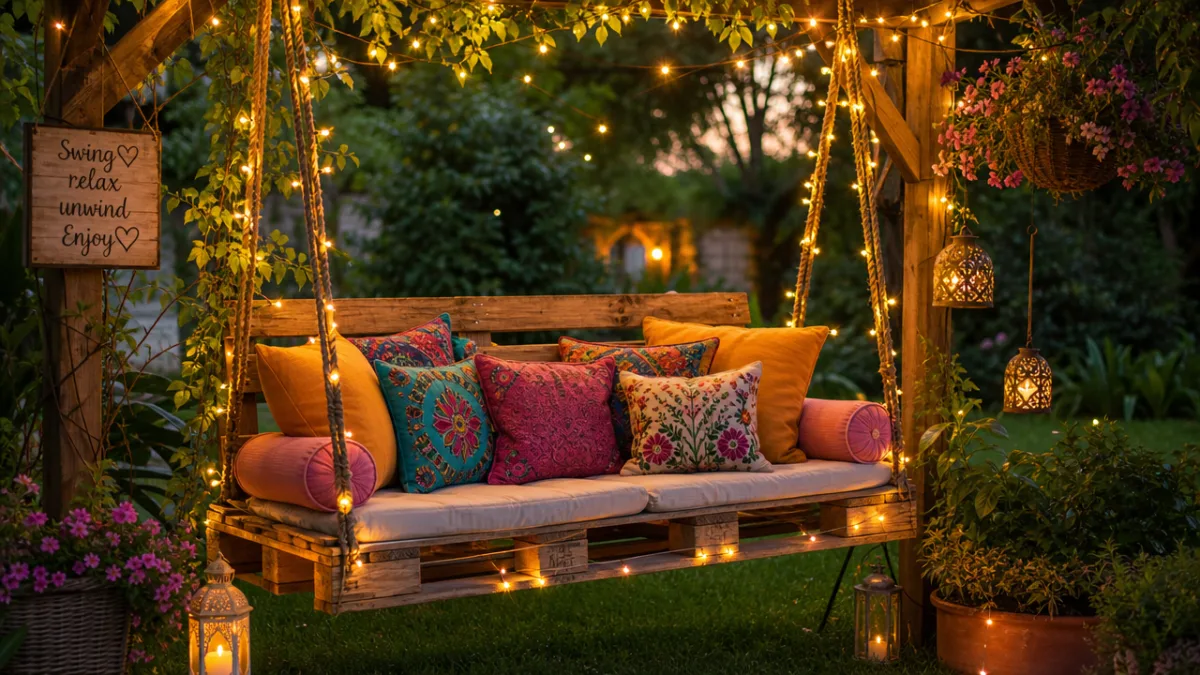
Among the most creative interpretations is the pallet daybed swing, which extends the platform to full lounger length, allowing you to stretch out and relax in complete comfort while gently swaying in the breeze. These larger swings are typically hung from a robust pergola or dedicated swing frame and are often dressed with thick mattress-style cushions, weather-resistant throws, and even canopy fabric to create shade on sunny days. They bring a luxurious, resort-inspired feel to any garden and can serve as a stunning centerpiece around which the rest of the outdoor space is organized.
Creative and Decorative Variations
One of the greatest joys of pallet swing projects is the extraordinary range of creative variations available to you. Because the raw material is so flexible and forgiving, it lends itself beautifully to personalization. Some of the most imaginative builders incorporate live-edge wood accents, weaving natural branches or gnarled driftwood into the pallet frame to create swings that look almost as though they were conjured directly from the forest floor. Others embed planters directly into the pallet structure, filling cavities between slats with trailing plants, succulents, or herbs that cascade decoratively while you swing.
Lighting is another dimension that can take a pallet garden swing from pleasant to truly magical. Solar-powered fairy lights strung along the rope or chain suspensions, woven through the slats, or draped overhead from the supporting structure create an enchanting atmosphere as evening falls. Lanterns hung from the frame or placed on built-in pallet shelves add warm, flickering candlelight that transforms the swing into a romantic garden nook perfect for summer evenings. Some builders even incorporate weatherproof LED strip lighting beneath the seat platform for a subtle, ambient glow that makes the swing visible and inviting long after the sun has set.
Color and finish choices open up yet another avenue for creative expression. A swing painted in deep navy blue with white rope and nautical-themed cushions creates a coastal, seaside atmosphere even in a landlocked garden. A swing in soft sage green with natural rope and botanical-print fabric feels relaxed and organic. Bold jewel tones — emerald, terracotta, or mustard — can make the swing a vibrant statement piece that draws the eye immediately upon entering the garden. Some builders leave the wood entirely raw and unfinished, allowing it to weather naturally into a beautiful silvery grey that suits wildflower and cottage garden styles particularly well.
- Single-pallet hanging seat — the perfect beginner project, requiring minimal tools and materials while delivering maximum visual impact with outdoor cushions and rope detailing.
- Double-pallet loveseat swing — two pallets positioned side by side create a wider platform ideal for couples or for relaxing with a good book and a cup of tea.
- Pallet daybed swing — a full-length lounger configuration suspended from a pergola, dressed with cushions and canopy fabric for a resort-style garden centerpiece.
- Pallet swing with integrated planter — slat cavities filled with trailing plants or herbs turn the swing into a living piece of garden art.
- A-frame pallet swing set — a freestanding structure built entirely from reclaimed wood, allowing placement anywhere in the garden without relying on trees or existing structures.
- Painted and stenciled pallet swing — exterior paint and decorative stenciling transform the raw wood into a cheerful, personalized piece full of color and personality.
Building Your Pallet Swing: A Step-by-Step Overview
Constructing a basic pallet garden swing is well within the capabilities of most adults with access to basic hand tools. The process begins with selecting a suitable pallet in good structural condition — look for one with no cracked or missing slats and with all its supporting blocks intact. Once you have sanded and treated your pallet as described earlier, the next step is to determine your hanging configuration. Most standard pallet swings use four attachment points, one at each corner, which distributes the weight evenly and keeps the platform level during use. Mark these points carefully, ensuring they align symmetrically before drilling.
The choice of rope or chain for suspension is both a practical and aesthetic decision. Natural manila or sisal rope offers a beautiful, organic look that complements the rustic character of the wood, but it does require periodic inspection and replacement as it can degrade over time when exposed to moisture and UV light. Synthetic ropes in polypropylene or nylon are more durable and weather-resistant while still offering an attractive appearance. Heavy-duty galvanized chain is the strongest and most durable option, though it has a more industrial look that suits some design aesthetics better than others. Whatever you choose, ensure it is rated to carry at least five times the expected load, accounting for the weight of the swing itself plus the maximum number of users.
Attaching the swing safely to its support structure is the single most important step in the entire project, and it deserves careful attention. If you are hanging the swing from a tree branch, select a branch that is at least 20 centimeters in diameter and shows no signs of disease or structural weakness. Use tree-friendly hanging hardware such as eye bolts or swing straps designed not to damage the bark or girdle the branch over time. If you are using a purpose-built frame, ensure all joints are secured with carriage bolts rather than screws or nails, and consider adding diagonal bracing to prevent lateral swaying of the frame structure itself under dynamic loads.
- Source and inspect your pallets, checking for the HT stamp and examining for structural damage, rot, and protruding hardware.
- Remove any protruding nails and sand all surfaces thoroughly, progressing from coarse to fine grit sandpaper for a smooth, splinter-free finish.
- Apply your chosen wood treatment — preservative, stain, or exterior paint — and allow it to cure fully before proceeding.
- Mark and drill your four hanging attachment points symmetrically at the corners of the pallet, using appropriately sized eye bolts or shackles.
- Cut your rope or chain to the desired length, accounting for the height of the support structure and your preferred seat height above the ground.
- Attach the rope or chain securely to both the pallet and the overhead support, checking that all connections are tight and that the platform hangs level.
- Test the swing gradually by applying increasing weight before allowing full use, and inspect all hardware and connections regularly thereafter.
Styling, Comfort, and Seasonal Care
A pallet garden swing is only as inviting as the comfort and styling that surround it. Outdoor cushions are perhaps the single most important accessory, transforming a hard wooden platform into a genuinely relaxing seat. Look for cushions filled with quick-dry foam and covered in solution-dyed acrylic fabric, which resists fading, mildew, and moisture far better than standard indoor upholstery. Colours and patterns can be chosen to complement or contrast with your garden planting scheme, and changing the cushion covers from season to season is an easy way to refresh the swing’s appearance without any structural work at all.
Creating a sense of destination around the swing significantly enhances the experience of using it. Position the swing so that it faces a particularly beautiful view of the garden, a water feature, or a bed of flowering plants. Surround it with potted plants at various heights to create a sense of enclosure and intimacy without blocking airflow. A small side table — itself potentially constructed from a section of pallet wood — placed nearby to hold drinks, books, or a candle adds practical convenience and completes the vignette. Some gardeners plant fast-growing climbing plants such as clematis, jasmine, or climbing roses at the base of the support structure, training them upward to eventually create a living canopy of foliage and flowers overhead.
Seasonal maintenance is essential to ensure your pallet swing remains safe, structurally sound, and beautiful for many years to come. At the start of each season, inspect all hardware connections for signs of rust, loosening, or wear, tightening or replacing components as needed. Check the wood for any new cracks, splinters, or signs of moisture damage, sanding and retreating affected areas promptly. In climates with harsh winters, consider bringing cushions indoors for storage and covering the swing with a weatherproof furniture cover, or even temporarily removing and storing the pallet indoors to significantly extend its lifespan. With reasonable care and attention, a well-built pallet garden swing can provide a decade or more of daily enjoyment.

Environmental Impact and the Bigger Picture
Every pallet garden swing built from reclaimed wood represents a small but meaningful act of environmental stewardship. The global pallet industry produces hundreds of millions of wooden pallets every year, and while many enter circular reuse systems, significant quantities end up in landfill or are incinerated. By intercepting even a single pallet from this waste stream and transforming it into a piece of garden furniture that will be used and enjoyed for years, you are saving the embodied energy of the wood’s original production, avoiding the emissions associated with its disposal, and reducing the demand for newly manufactured garden furniture — which often travels thousands of kilometres from factory to consumer.
The broader DIY and upcycling movement of which pallet swings are a part represents a genuinely meaningful cultural shift in how many people relate to materials, consumption, and the objects in their lives. When you build something yourself from reclaimed materials, you develop a deeper relationship with that object — you understand how it is made, you can repair it when it needs attention, and you are far less likely to discard it the moment a newer version appears in a shop window. This kind of mindful engagement with the material world is one of the most practical and accessible forms of sustainable living available to ordinary people, requiring no specialist knowledge, no expensive equipment, and no dramatic lifestyle changes.
Sharing these projects online through platforms like Pinterest, Instagram, and dedicated DIY communities amplifies the impact further by inspiring others to take up the practice. A single beautifully photographed pallet swing shared on social media can inspire dozens or hundreds of similar projects across the world, each one diverting materials from waste and building skills, confidence, and creativity in the people who undertake them. In this way, the humble pallet garden swing becomes not just a piece of outdoor furniture but a node in a growing network of resourceful, environmentally conscious makers who are quietly demonstrating that beauty, comfort, and sustainability are not competing values — they can, and should, coexist.








What do you think?
It is nice to know your opinion. Leave a comment.