










20 Fairy Garden Ideas: Easy DIY Magic for Any Space
What Is a Fairy Garden and Why You Should Make One
A fairy garden is a miniature, enchanted landscape designed to evoke the whimsical world of fairies, gnomes, and magical woodland creatures. These delightful small-scale gardens can be as simple as a few carefully chosen plants and a tiny wooden door tucked against a tree trunk, or as elaborate as a fully built miniature village complete with stone pathways, tiny bridges, and glowing lanterns. The concept has roots in Celtic and European folklore, where people would leave small offerings and create welcoming spaces to attract benevolent fairies to their homes and gardens.
The beauty of fairy gardens lies in their extraordinary versatility. Whether you have a sprawling backyard, a compact balcony, or nothing more than a sunny windowsill, you can create a magical miniature world that brings joy and creativity to your space. They are equally beloved by children, who delight in the imaginative play they inspire, and by adults who find the meditative process of building and tending these tiny landscapes deeply satisfying. The act of selecting miniature plants, handcrafting small accessories, and arranging everything into a cohesive scene is both an art form and a deeply personal form of self-expression.
Beyond aesthetics, fairy gardens offer real horticultural benefits. Because they typically incorporate living plants, mosses, and ground covers, they encourage gardeners of all skill levels to learn about plant care, soil composition, drainage, and seasonal maintenance. For beginners, a small fairy garden container is a low-stakes way to develop a green thumb. For experienced gardeners, the challenge of choosing appropriately scaled plants and maintaining the miniature ecosystem provides an engaging creative outlet that differs meaningfully from traditional gardening. Once you build your first one, it is nearly impossible to stop at just one.
Choosing the Right Container or Location for Your Fairy Garden
One of the most important decisions you will make when creating a fairy garden is selecting your container or location, since this choice will shape everything from plant selection to the overall aesthetic of your design. Outdoors, you might use a shallow terracotta pot, a vintage wheelbarrow, an old wooden crate, a stone trough, or even a hollowed-out tree stump. Each vessel brings its own character to the finished garden, and choosing one that suits your personal style is half the fun. For indoor fairy gardens, a large glass terrarium, a ceramic planter, or a wide decorative bowl all work beautifully.
Drainage is a practical consideration that should not be overlooked regardless of the container you choose. Most fairy garden plants, including succulents, thyme, and dwarf mondo grass, prefer well-draining soil and will suffer or die if left sitting in waterlogged conditions. If your container does not have drainage holes, you can add a layer of gravel or perlite at the bottom before adding soil to help manage moisture levels. For fully indoor arrangements that you want to remain dry and decorative rather than living, you can use artificial moss, dried flowers, and faux plants without worrying about drainage at all.
Location matters enormously for the health of your fairy garden plants and the longevity of your decorative elements. Most outdoor fairy gardens thrive in partial shade, which keeps delicate moss and ferns from drying out while still providing enough light for small flowering plants. Fully exposed, sunny spots work well for succulent-based fairy gardens, which love heat and dry conditions. Wooden accessories and painted resin figurines will last longer when sheltered from heavy rain and direct midday sun, so consider placing your creation under a tree canopy, on a covered porch, or near a garden wall for natural protection.
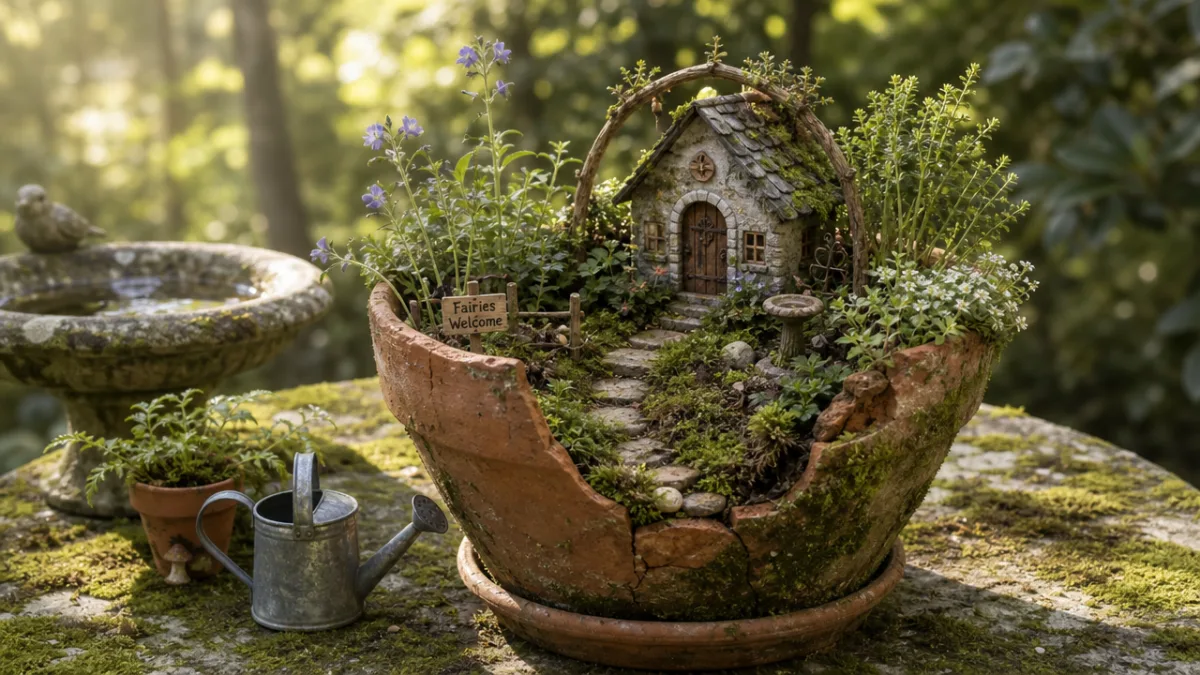
The Best Plants for a Fairy Garden
Plant selection is arguably the most critical element in creating a convincing and thriving fairy garden, and the good news is that there is an enormous variety of miniature and slow-growing plants perfectly suited to the task. The key is choosing species that remain small in scale, both in height and in the size of their leaves and flowers, so that they feel proportionate to the tiny world you are building. Some of the most popular choices include creeping thyme, which forms a lush, fragrant carpet and produces tiny purple flowers in summer; baby tears, a delicate ground cover that looks like a carpet of soft green stars; and Irish moss, which creates a velvety, cushioned surface ideal for fairy lawns.
For fairy gardens that need a sense of height and structure, consider using dwarf conifers such as Chamaecyparis or miniature Alberta spruce, which grow very slowly and maintain their compact shape for years. Miniature roses add a touch of old-world romance and come in dozens of varieties specifically bred for container growing. Small ferns like the maidenhair fern or bird’s foot fern lend an airy, woodland feeling that is perfectly in keeping with fairy garden aesthetics. For a more exotic look, tiny succulents such as Echeveria, Haworthia, and Sedum can create a magical desert landscape filled with rosette shapes that look almost otherworldly.
When planning your plant palette, think in terms of layers, using taller plants at the back or center to create a sense of depth, medium-height plants in the middle ground, and low creeping varieties at the front and edges. This layered approach makes even a simple container feel like a fully realized landscape rather than a collection of random plants. Seasonal interest is also worth considering. Mixing evergreen plants with seasonal bloomers ensures that your fairy garden looks beautiful year-round, with different plants taking center stage as the seasons change. A few well-chosen bulbs such as miniature daffodils or grape hyacinths can add spring color before the summer plants fill in.
20 Creative Fairy Garden Ideas to Inspire You
With so many possibilities available, it can be helpful to have a starting point. The following ideas range from simple beginner projects that can be completed in an afternoon to more ambitious designs that will develop and evolve over an entire growing season. Each idea can be customized to suit your available space, budget, and personal aesthetic, and many of them can be adapted for both indoor and outdoor settings. The most important thing is to let your imagination lead the way and remember that there are no rules in a world made entirely of magic.
For those who love a woodland theme, consider building a fairy village nestled among mosses and ferns, complete with tiny mushroom houses, a pebble pathway, and a small mirror used as a reflective pond. A beach-themed fairy garden using sand, shells, driftwood, and coastal plants like sea thrift creates a charming seaside retreat in miniature. A fairy tea party scene with tiny furniture, miniature teacups, and sweet-smelling herbs like chamomile and lavender is perennially popular, especially as a project to build with children. A night-garden design incorporating solar-powered fairy lights, white-flowering plants, and silver-leafed varieties creates a garden that truly comes alive after dark.
- Woodland Village: Use bark, mosses, and tiny wooden cottages nestled among ferns to create an enchanted forest scene that feels ancient and magical.
- Succulent Desert Oasis: Combine varied succulents, fine sand, and tiny cactus figurines for a sun-loving, low-maintenance design with an exotic feel.
- Fairy Beach Retreat: Sand, shells, driftwood, and coastal miniature plants evoke a seaside escape complete with a tiny beach chair and parasol.
- Enchanted Teacup Garden: Plant moss and tiny flowers inside an oversized vintage teacup for an instantly charming and surprisingly easy indoor display.
- Moonlit Night Garden: White blooms, silver foliage, and solar fairy lights create a garden that glows softly and mysteriously after sunset.
- Fairy Herb Garden: Miniature culinary herbs like thyme, chives, and chamomile serve double duty as both beautiful plants and useful kitchen ingredients.
- Treehouse Village: Mount small platforms and miniature staircases on a living tree to create a vertical fairy community climbing into the canopy.
- Zen Fairy Garden: Incorporate raked gravel, smooth stepping stones, and minimalist plantings for a serene, Japanese-inspired interpretation of the fairy garden concept.
- Fairy Mushroom Ring: Arrange a circle of decorative mushroom figurines around a central flowering plant to create a classic fairy ring with magical folklore associations.
- Storybook Cottage Garden: Surround a central tiny cottage with climbing miniature roses, a picket fence, and a winding flagstone path for irresistible cottage charm.
Additional ideas worth exploring include a fairy market scene with tiny stalls and miniature produce, a dragon’s lair built from volcanic rock and metallic-leaved plants, a fairy library constructed inside a hollowed-out book, a seasonal holiday garden that changes with each major celebration, a rainbow garden planted with flowers in spectrum order, a fairy waterfall using a small recirculating pump, a secret door installed at the base of a garden wall or tree, a fairy farm with miniature animals and a barn, a witch’s cottage garden filled with intriguing dark-leaved plants and mysterious accessories, and finally a luminous winter garden using white plants, crystals, and silver ornaments to celebrate the quiet beauty of the cold season.
Essential Accessories and DIY Decorations for Your Fairy Garden
Accessories are what transform a simple container of miniature plants into a truly magical fairy world, and the good news is that many of the most charming elements can be made at home using inexpensive or recycled materials. Small pebbles gathered from a garden path or purchased in bulk from a garden center make excellent pathways, patios, and decorative borders. Flat stones can be painted with tiny door and window designs and placed against tree stumps or rocks to create the impression of fairy homes hidden within the landscape. A small mirror or a piece of reflective mylar, partially buried and surrounded by stones, becomes a convincing fairy pond in an instant.
Handcrafted furniture adds tremendous personality to a fairy garden and is a wonderfully creative project in its own right. Tiny benches can be made by gluing small sticks together with wood glue, then sealing them with outdoor varnish for weather resistance. Fairy tables can be constructed from sliced tree branches and twig legs. Small clay pots, beads, and acorn caps become planters, lanterns, and bowls. Fencing made from twigs, bamboo skewers, or even wine corks creates boundaries and structure within the garden. Shells become birdbaths, ladybugs made from painted stones add whimsy, and small wind chimes fashioned from beads and wire add movement and sound.
When purchasing rather than making accessories, quality varies enormously, so it is worth investing in weather-resistant resin figurines for outdoor gardens rather than opting for cheaper plastic options that will fade and crack within a season or two. Terracotta and ceramic accessories tend to weather beautifully, developing a mossy patina over time that only adds to their charm. Metal accessories such as small lanterns, gates, and benches are extremely durable outdoors but may rust in humid climates unless they are coated or made from galvanized materials. For indoor fairy gardens, the range of materials is much broader since weather resistance is not a concern, and you can incorporate delicate paper, fabric, and glass elements freely.
Maintaining Your Fairy Garden Through the Seasons
A fairy garden is not a set-it-and-forget-it project. Like any garden, it requires regular attention to stay healthy and beautiful, though the small scale actually makes maintenance quicker and more manageable than caring for a full-sized garden bed. Watering needs will vary significantly depending on the plants you have chosen, the season, and whether your garden is indoors or outdoors. As a general rule, it is better to underwater slightly than to overwater, since most fairy garden plants tolerate dry conditions better than they tolerate sitting in soggy soil. Checking the soil moisture with your finger before watering is the most reliable method.
Pruning and trimming are essential for maintaining the miniature scale that makes fairy gardens so visually appealing. Even slow-growing plants will eventually outgrow their designated spaces if left untrimmed, and a fairy garden that has become overgrown loses the sense of proportion that gives it its charm. Pinching back stems encourages bushy, compact growth rather than leggy sprawl. Deadheading spent flowers keeps the garden looking tidy and encourages continued blooming. Removing dead leaves promptly prevents the development of fungal disease, which can spread quickly in the close quarters of a container garden.
Seasonal refreshes are one of the most enjoyable aspects of maintaining a fairy garden over time. In spring, you might add small bulbs, replace any plants that did not survive the winter, and introduce new accessories to signal the change of season. Summer calls for keeping plants well-watered during heat waves and perhaps adding a solar-powered fairy light for warm evenings spent outdoors. Autumn is a wonderful time to incorporate miniature pumpkins, dried seed heads, and copper-toned accessories that echo the colors of falling leaves. Winter maintenance for outdoor gardens may involve moving tender plants indoors, mulching container soil to protect roots from frost, and dressing the garden with evergreen sprigs and small frost-proof decorations.
Fairy Gardens as a Creative and Therapeutic Practice
Beyond their considerable decorative appeal, fairy gardens have gained recognition as a genuinely therapeutic creative practice. The combination of working with natural materials, engaging in focused detail-oriented activity, and nurturing living plants touches on several well-established areas of therapeutic benefit. Horticultural therapy, which uses gardening activities as a tool for improving mental and physical health, has documented benefits including reduced stress hormones, improved mood, and enhanced feelings of purpose and accomplishment. A fairy garden, with its intimate scale and deeply personal creative expression, distills these benefits into a manageable and highly accessible form.
For children, building and tending a fairy garden is a rich developmental activity that encourages imaginative play, fine motor skill development, responsibility, and an early connection to the natural world. Children who help build a fairy garden and take ownership of watering and maintaining the plants develop a genuine sense of pride and stewardship. The open-ended narrative possibilities of a fairy garden, where new characters can be introduced, stories can unfold across multiple play sessions, and the landscape can be rearranged according to evolving creative visions, make it a far more engaging and developmentally valuable toy than most manufactured alternatives.
For adults dealing with stress, anxiety, or the need for a creative outlet, the process of designing, building, and caring for a fairy garden offers a rare combination of right-brain creativity and left-brain problem-solving. Choosing a coherent visual theme, selecting compatible plants, solving practical challenges like drainage and scale, and then executing the design with careful hands-on work creates a state of absorbed focus that psychologists sometimes describe as flow. Many fairy garden enthusiasts describe the experience of working on their miniature worlds as meditative, a quiet space where worries recede and the simple pleasure of making something beautiful with your hands takes precedence over everything else.
Getting Started: Your First Fairy Garden in Five Simple Steps
If you are ready to build your first fairy garden but feeling slightly overwhelmed by the possibilities, breaking the process down into simple sequential steps makes it far more approachable. The first step is to choose your theme and location, whether that means a woodland scene in a terracotta pot on your patio or a beach retreat in a glass bowl on your coffee table. Having a clear theme from the start will guide all your subsequent decisions and help you create a cohesive design rather than a random collection of cute things. Spend a little time looking at inspiration images to clarify what speaks to you before purchasing anything.
The second step is to select and prepare your container, ensuring it is the right size for your vision and has adequate drainage. The third step is to choose your plants, keeping scale and growing conditions firmly in mind and purchasing only what will realistically fit and thrive in your chosen setting. The fourth step is the most exciting: planting and arranging your garden, starting with larger structural plants and working down to ground covers and decorative accessories, adjusting the composition until it feels balanced and magical. The fifth and final step is ongoing care, establishing a simple maintenance routine that will keep your fairy garden healthy and beautiful through the seasons.
- Choose your theme and location — Decide on an indoor or outdoor setting and select a visual theme that excites and inspires you personally.
- Prepare your container — Ensure good drainage, add appropriate soil or substrate, and position your container in its permanent home before planting.
- Select your plants — Choose species appropriate to your light conditions, climate, and scale, combining textures, colors, and heights for visual interest.
- Plant, arrange, and decorate — Work from largest to smallest elements, stepping back frequently to assess the overall composition as you build.
- Establish a care routine — Water appropriately, trim regularly, and refresh seasonal accessories to keep your fairy garden looking magical year-round.
The most important thing to remember as you embark on your first fairy garden project is that perfection is not the goal. These gardens are meant to feel organic, slightly wild, and full of personality, not rigidly manicured or perfectly symmetrical. Imperfections, such as a slightly wonky fence, a stone pathway that meanders unexpectedly, or a plant that grows a little taller than intended, only add to the charm and authenticity of the miniature world you are creating. Allow your fairy garden to surprise you, evolve over time, and reflect your own unique imagination. The fairies, after all, prefer things a little wonderfully wild.








What do you think?
It is nice to know your opinion. Leave a comment.