










18+ Creative DIY Gnome Garden Ideas to Enchant Your Outdoor Space
The Magic of Gnome Gardens: Why Every Yard Needs One
There is something undeniably whimsical and heartwarming about a gnome garden. These miniature magical landscapes have captured the imagination of gardeners for generations, blending folklore, creativity, and horticultural artistry into a single charming display. Whether you have a sprawling backyard or a compact balcony, a gnome garden brings a sense of wonder and personality to any outdoor space, transforming it into a place that feels truly alive with character and story.
The tradition of garden gnomes dates back to 19th-century Europe, where small clay figurines were believed to bring good luck to the home and protect the garden from evil spirits. Over time, these beloved little creatures evolved from simple statuary into centerpieces of elaborate themed landscapes. Today, DIY gnome gardens represent one of the most popular and accessible forms of creative gardening, allowing people of all skill levels to express their personalities through plants, miniature accessories, and hand-painted figures.
What makes gnome gardens particularly appealing is the sheer freedom they offer. There are no rigid rules about what your gnome garden must look like or how large it must be. You can create a tiny fairy-tale world tucked into a terracotta pot, or you can dedicate an entire garden bed to an immersive gnome village complete with miniature paths, tiny bridges, and carefully chosen low-growing plants that mimic the scale of a real forest floor. The only limit is your imagination, and even that can be expanded with a little creative inspiration.
Choosing the Right Location and Container for Your Gnome Garden
Selecting the ideal location for your gnome garden is one of the most important decisions you will make in the entire creative process. Gnome gardens thrive in spots that receive partial sunlight, which protects both the decorative elements and the plants from harsh UV damage while still providing enough light for healthy growth. A sheltered corner of a patio, the base of a large tree, or a raised garden bed along a fence line are all excellent choices that provide natural framing and a sense of secluded magic.
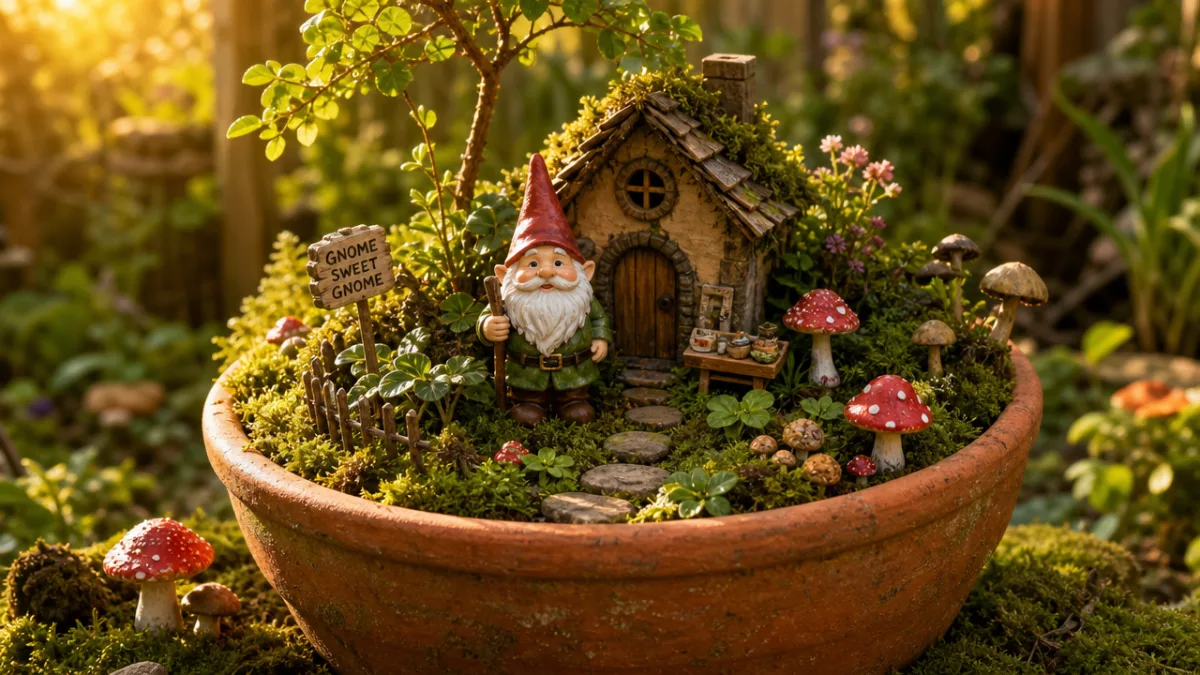
When it comes to containers, the possibilities are wonderfully diverse. Large terracotta pots, old wooden barrels, repurposed galvanized tubs, and even cracked or vintage suitcases can all serve as the foundation for a stunning gnome garden. The container you choose will set the tone for the entire display, so consider its texture, color, and style carefully. A mossy, weathered stone planter suggests an ancient, forgotten world, while a bright painted barrel might evoke a more playful and festive atmosphere that suits a family-friendly garden space.
Drainage is a practical consideration that should never be overlooked. Whatever container you choose, it must have adequate drainage holes to prevent waterlogged soil, which can rot plant roots and cause miniature wooden accessories to deteriorate quickly. If you are working with a container that lacks holes, you can drill them yourself or create a thick layer of gravel at the bottom before adding soil. Proper drainage ensures your gnome garden remains healthy and vibrant throughout the growing season and beyond.
Essential Plants for Creating a Gnome Garden Atmosphere
The plants you select for your gnome garden are just as important as the gnomes themselves, because they create the living backdrop that makes the scene feel genuinely magical. The key is to choose varieties that remain small and grow slowly, maintaining the miniature scale that gives gnome gardens their enchanting quality. Creeping thyme is a perennial favorite, forming a lush, low carpet of tiny leaves and delicate purple flowers that perfectly mimics the look of a miniature meadow. It is also wonderfully fragrant and surprisingly drought-tolerant once established.
Beyond creeping thyme, there are dozens of plant varieties that work beautifully in gnome garden settings. Miniature hostas bring lush, layered foliage that creates a sense of dense forest undergrowth. Sedum and succulents add sculptural interest with their rosette shapes, resembling exotic alien plants when viewed at gnome scale. Dwarf conifers such as the Picea glauca ‘Conica’ serve as perfect miniature pine trees, anchoring the scene with vertical height and year-round greenery. Baby tears, Irish moss, and scotch moss are ideal ground covers that fill gaps and create the illusion of a natural forest floor.
When planning your planting scheme, think in layers just as a real landscape designer would. Place taller plants like dwarf conifers or ornamental grasses at the back or center of the arrangement, mid-height plants like miniature ferns or small heucheras in the middle zone, and low-growing ground covers like moss and creeping phlox at the front edges. This layered approach creates depth and visual interest, drawing the eye through the scene as if you were exploring a real landscape at a much smaller scale. Adding seasonal plants like miniature pansies or tiny bulbs keeps the display fresh and ever-changing throughout the year.
DIY Gnome Crafting: Making Your Own Characters from Scratch
One of the most rewarding aspects of building a gnome garden is the opportunity to craft your own gnome figures rather than purchasing mass-produced ones. Handmade gnomes carry a unique charm and personal meaning that store-bought versions simply cannot replicate. There are several accessible methods for creating DIY gnomes, ranging from simple fabric-and-stuffing techniques to more involved clay or cement sculpting, and each produces a distinctly different aesthetic that can be matched to your garden’s overall style and mood.
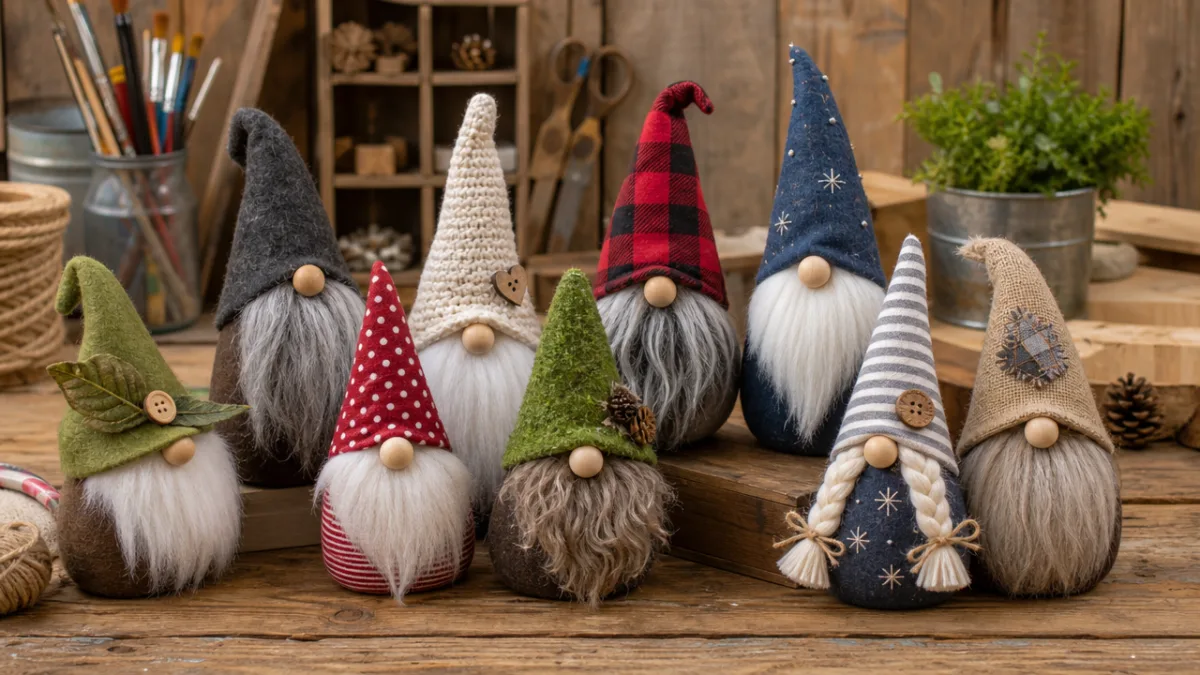
The sock gnome method is perhaps the most beginner-friendly approach and requires nothing more than a few basic craft supplies. You will need a long sock, polyester stuffing, rubber bands, twine, a small foam cone for the hat, and optional fabric scraps for clothing details. Begin by filling the sock with stuffing to create the gnome’s body, securing the base with a rubber band to form a flat bottom. Twist and tie another rubber band near the top to create a small round head, then fashion a pointed hat from the remaining sock fabric or a separate piece of felt. Add a nose made from a small wooden bead and a pom-pom beard for instant personality.
For gardeners who want a more durable and weather-resistant gnome, working with hypertufa or quick-setting cement opens up exciting sculptural possibilities. Hypertufa is a lightweight, porous material made from a mixture of Portland cement, peat moss, and perlite that mimics the look of aged stone beautifully. You can press this mixture into molds, shape it by hand, or use it to coat Styrofoam forms, then carve details once it has partially set. Cement gnomes made this way can withstand years of outdoor exposure without fading or deteriorating, developing a genuinely aged and moss-covered appearance that enhances their magical quality over time.
- Sock gnomes: Quick, colorful, and perfect for beginners or children’s craft projects, made with minimal supplies.
- Clay gnomes: Air-dry or oven-bake clay allows for detailed sculpting and smooth painted finishes that pop with color.
- Hypertufa gnomes: Durable, weatherproof, and naturally aged-looking, ideal for permanent outdoor garden installations.
- Upcycled gnomes: Transform old garden stakes, wooden spools, or painted rocks into charming gnome characters with minimal effort.
- Pinecone gnomes: Use large pinecones as gnome bodies, adding felt hats and twine beards for a fast and festive seasonal decoration.
Creative Themes and Storytelling in Your Gnome Garden
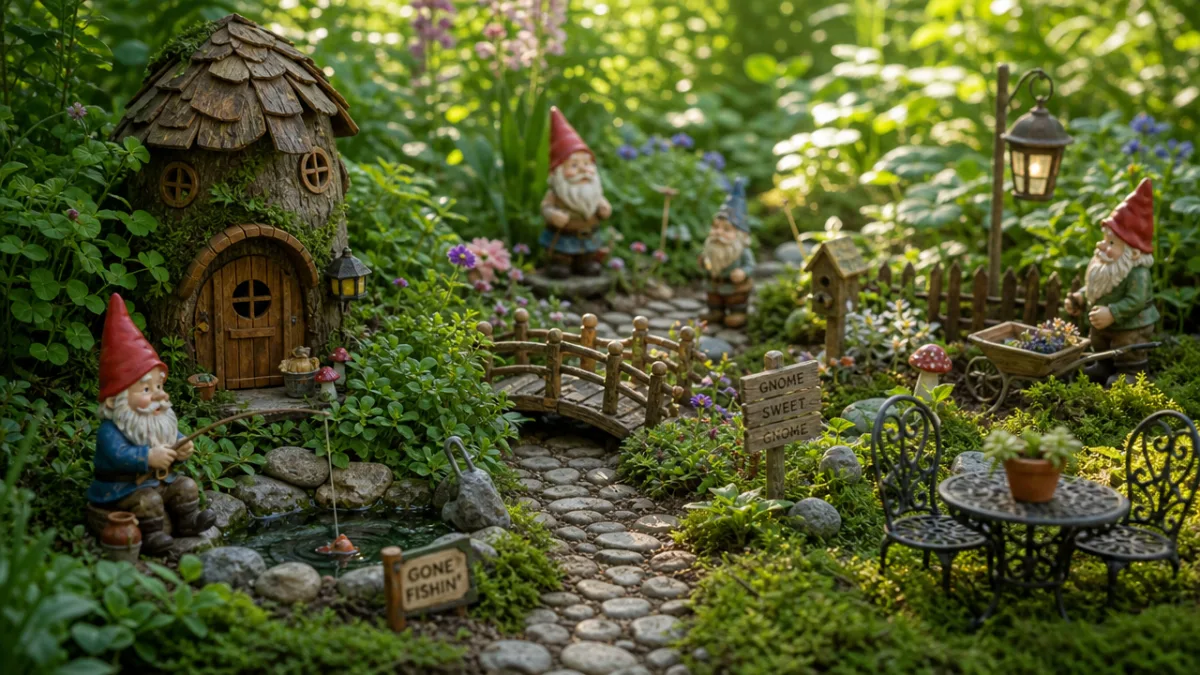
The most memorable gnome gardens are those that tell a story. Rather than simply placing a few gnomes among some plants, consider developing a cohesive narrative theme that gives your garden a sense of life, humor, or wonder. A gnome fishing village might feature tiny gnomes perched beside a birdbath pond, holding miniature fishing rods made from twigs and thread, with tiny painted wooden fish hanging nearby. A gnome bakery scene could include a tiny storefront made from a painted terracotta pot, with miniature bread loaves crafted from air-dry clay and a gnome baker wearing a tiny apron.
Seasonal storytelling is another wonderful way to keep your gnome garden fresh and engaging year-round. In spring, your gnomes might be planting miniature seed packets and tending to tiny flowerbeds bursting with new growth. Come summer, they could be lounging in miniature hammocks strung between small sticks or hosting a tiny outdoor barbecue complete with a clay grill and miniature food items. Autumn brings the opportunity to surround your gnomes with tiny pumpkins, acorns, and fallen leaves, while winter transforms the scene into a magical snow village with cotton batting snow, tiny ice-skate accessories, and a miniature frozen pond made from a mirror shard.
Incorporating humor into your gnome garden is a wonderful way to spark joy and conversation among visitors to your outdoor space. Many gardeners enjoy creating gnome scenes with a comedic twist, such as a gnome caught sleeping on the job with a tiny “Do Not Disturb” sign, a gnome with a miniature television remote refusing to do garden work, or a group of gnomes staging a tiny protest with hand-lettered signs. These playful vignettes invite people to look closely, laugh, and engage with your garden in a way that purely decorative planting never quite achieves. Humor transforms a garden from a backdrop into a destination.
Accessorizing Your Gnome Garden with DIY Miniature Details
The tiny accessories scattered throughout a gnome garden are what truly bring the scene to life, and the good news is that most of them can be made at home with inexpensive materials. Miniature furniture is among the most popular addition to gnome gardens, and it is surprisingly simple to construct. Small benches can be made by gluing flat stones together with waterproof adhesive or by cutting and sanding small pieces of scrap wood. Tiny tables emerge from large bottle caps or sliced cork rounds, while chairs can be fashioned from bent wire, popsicle sticks, or twisted natural twigs.
Pathways and architectural elements add tremendous depth and realism to a gnome garden scene. A winding path made from small river pebbles or tumbled glass creates a sense of movement and direction through the miniature landscape, guiding the eye from one point of interest to the next. Tiny fences made from craft sticks or natural twigs tied with jute twine define spaces and add structure. Miniature gates, archways, and doorways set into the sides of pots or tree stumps suggest hidden rooms and secret spaces beyond what the eye can see, fueling the imagination and deepening the sense of enchantment.
Water features, even at miniature scale, add a truly magical touch to gnome gardens. A shallow dish or overturned shell pressed into the soil and filled with water becomes a gnome-scale pond or swimming hole. Tiny stepping stones made from flat pebbles lead across the water, and a miniature bridge built from popsicle sticks or flat stones completes the scene beautifully. For gardeners who want to go even further, small recirculating water pumps designed for fairy gardens are widely available and can create a genuine trickling stream effect that adds both visual and auditory magic to the display.
- Start with a strong theme or story concept before purchasing or crafting any materials.
- Choose a container and location that suits your theme and provides proper drainage and light.
- Select slow-growing, small-scale plants appropriate for your climate and the container’s size.
- Create or collect miniature accessories in consistent scale to maintain visual realism.
- Add your gnome figures as the final step, positioning them to interact naturally with the scene.
- Maintain your garden regularly by trimming plants, cleaning accessories, and refreshing seasonal details.
Maintaining Your Gnome Garden Through Every Season
A gnome garden, like any living display, requires ongoing care and attention to remain vibrant and visually appealing throughout the year. The good news is that because gnome gardens are typically small in scale, maintenance is neither time-consuming nor physically demanding. A weekly check of soil moisture levels, a quick removal of dead leaves or spent blooms, and occasional pruning to keep plants within their intended proportions will go a long way toward preserving the beauty and integrity of your miniature landscape. Consistency in care is far more important than the amount of time you invest in any single session.
Protecting your gnome garden through winter requires a bit of advance planning, particularly if you live in a region that experiences hard frosts or heavy snowfall. Many of the decorative accessories used in gnome gardens, including painted wooden pieces, fabric gnomes, and delicate ceramic items, are not designed for prolonged exposure to freezing temperatures and should be brought indoors for storage during the coldest months. Hardier items like stone figures, cement gnomes, and metal accessories can typically remain outdoors year-round, and may even develop beautiful patinas over time that enhance their aged, magical appearance.
Spring is the perfect season for refreshing your gnome garden with new plants, updated accessories, and perhaps an entirely new theme or storyline. Take this opportunity to replace any plants that did not survive the winter with fresh new varieties, and consider rearranging your gnomes and accessories to tell a new chapter in their ongoing story. Adding fresh moss, new ground cover, or a seasonal flowering plant instantly revitalizes the entire display and signals the beginning of another wonderful garden year. The cyclical nature of maintaining a gnome garden is part of its enduring appeal, offering a creative seasonal ritual that many gardeners come to treasure deeply.
Inspiring Others: Sharing Your Gnome Garden with the Community
One of the most joyful aspects of creating a stunning gnome garden is the opportunity it provides to connect with others who share your passion for creative outdoor spaces. Photographing your gnome garden and sharing it on social media platforms like Pinterest, Instagram, and gardening forums invites an enthusiastic global community of fellow enthusiasts to engage with your work, offer encouragement, and share their own ideas in return. The gnome gardening community online is remarkably warm and generous, full of people eager to share tips, trade seeds, and celebrate each other’s creative achievements.
If you have children or grandchildren in your life, involving them in the creation and ongoing storytelling of a gnome garden is a profoundly meaningful activity. Children are naturally drawn to the small scale and magical narrative possibilities of gnome gardens, and they bring an uninhibited creativity to the process that can inspire even the most experienced adult gardener. Let them name the gnomes, invent stories about their daily lives, and contribute handmade accessories to the scene. These shared creative experiences build lasting memories and cultivate a love of gardening, crafting, and storytelling that can carry through an entire lifetime.
Consider hosting a gnome garden workshop or garden tour for neighbors and friends, inviting them to see your creation in person and perhaps guiding them through the basics of starting their own. Community gardens increasingly feature gnome garden displays as focal points that draw visitors and create conversational gathering spaces. Whether your gnome garden lives in a private backyard or becomes part of a shared community green space, it has the remarkable power to bring people together, spark imagination, and remind us all that there is room for magic, playfulness, and wonder in the everyday world right outside our doors.








What do you think?
It is nice to know your opinion. Leave a comment.