










17 Water Features You Can Build in a Weekend: Transform Your Outdoor Space with DIY Fountains, Ponds, and More
Why Weekend Water Features Are Worth Your Time and Effort
There is something almost universally soothing about the sound of moving water. Whether it is the gentle trickle of a small fountain or the soft burble of a garden stream, water has a remarkable ability to transform an ordinary backyard into a sanctuary of calm. The good news is that you do not need to hire a professional landscaping crew or spend thousands of dollars to enjoy this kind of tranquility. With the right planning and a single free weekend, even a beginner DIY enthusiast can install a beautiful, functional water feature that will add lasting value and charm to their outdoor space.
Many homeowners assume that water features require complex plumbing, heavy excavation equipment, or specialized skills that take years to develop. In reality, the modern marketplace offers an impressive range of pre-formed pond liners, submersible pump kits, self-contained fountain units, and easy-to-assemble components that make the process far more accessible than it used to be. The learning curve is surprisingly gentle, and with careful preparation, most of the 17 project types covered in this article can be completed comfortably within 48 hours, often for well under a few hundred dollars in materials.
Beyond aesthetics and relaxation, adding a water feature to your yard carries several practical benefits that are easy to overlook. Moving water naturally attracts birds, butterflies, and beneficial insects, turning your garden into a vibrant little ecosystem. A well-placed pond or fountain can also serve as a focal point that ties together different planting zones, making even a modest backyard feel thoughtfully designed. Property value studies consistently show that quality landscaping, including water features, can improve a home’s curb appeal and resale potential, making this weekend project an investment as much as a pleasure.
Choosing the Right Water Feature for Your Space and Skill Level
Before you purchase a single piece of equipment or dig a single hole, the most important step is honest assessment. Look at the space you have available, consider how much sunlight that area receives, think about whether you have young children or pets who might be at risk near open water, and set a realistic budget. A bubbling boulder fountain placed on a small urban patio has very different requirements than a naturalistic koi pond installed in a sprawling suburban backyard, and matching your project to your circumstances will save you frustration and wasted money down the road.
For complete beginners, self-contained tabletop and patio fountains represent the easiest possible entry point. These units arrive almost fully assembled, require no digging, and typically plug into a standard outdoor electrical outlet. They are portable, inexpensive, and can be moved or stored seasonally without any permanent changes to your yard. Once you have enjoyed success with a simpler project and developed a feel for how pumps, tubing, and water flow work together, you will be far better prepared to tackle something more ambitious like a liner pond or a recirculating stream bed.
Intermediate and advanced weekend builders have a wider and more exciting menu to choose from. Pondless waterfalls, millstone fountains, rain chain barrels, container water gardens, and naturalistic bog gardens all fall comfortably within a two-day build window when approached with good preparation. The key distinction between these mid-tier projects and the simpler tabletop units is that they typically require some excavation, a buried reservoir or basin, and a bit more careful attention to leveling and waterproofing. None of these challenges are insurmountable, but they do reward careful planning and a willingness to read instructions thoroughly before starting.
Essential Tools, Materials, and Safety Tips Before You Start
Walking into a home improvement store without a clear list is one of the most common and costly mistakes DIY builders make. For almost any water feature project on this list, you will need at minimum a submersible pump rated appropriately for your feature’s size, flexible tubing or rigid pipe to move water where you want it, a waterproof liner or basin, and an outdoor GFCI-protected electrical outlet nearby. Beyond those core components, most projects also benefit from landscape fabric to suppress weeds around the edges, decorative stone or gravel to conceal mechanical elements, and aquatic-safe sealant or foam for filling gaps.
Your tool list will vary by project complexity, but a well-equipped weekend builder should have access to a round-point shovel and a flat spade for any digging, a carpenter’s level for ensuring that pond edges and fountain basins sit perfectly flat, a utility knife for trimming liner material, and a measuring tape. For projects involving stone or concrete work, a rubber mallet and work gloves are essential, and safety glasses should always be worn when cutting or breaking rock. If your project requires connecting to your home’s electrical system beyond plugging into an existing outlet, consult a licensed electrician rather than attempting the wiring yourself.
Water safety is a topic that deserves direct and serious attention, especially for families with young children or pets. Even a very shallow decorative pond presents a drowning risk for small children, and this risk should be weighed honestly before installation. Options for making water features safer include installing a sturdy metal grate just below the water’s surface over a buried reservoir, choosing pondless designs that eliminate standing water entirely, or building a surrounding fence or barrier. Mosquito prevention is another practical consideration; moving water is far less hospitable to mosquito larvae than still water, so keeping your pump running regularly and adding mosquito dunks or a few small fish to ponds goes a long way toward keeping the feature pleasant throughout the warm months.
17 Weekend Water Feature Projects You Can Actually Build
The variety of projects available to the motivated weekend builder is genuinely impressive, ranging from the almost effortlessly simple to the satisfyingly complex. The following list covers all 17 project types, organized loosely from easiest to most involved, so you can find your natural starting point and perhaps chart a path toward more ambitious builds in future weekends. Each of these projects has been chosen because the core work can realistically be completed within one to two days by a single person or a small team working together.
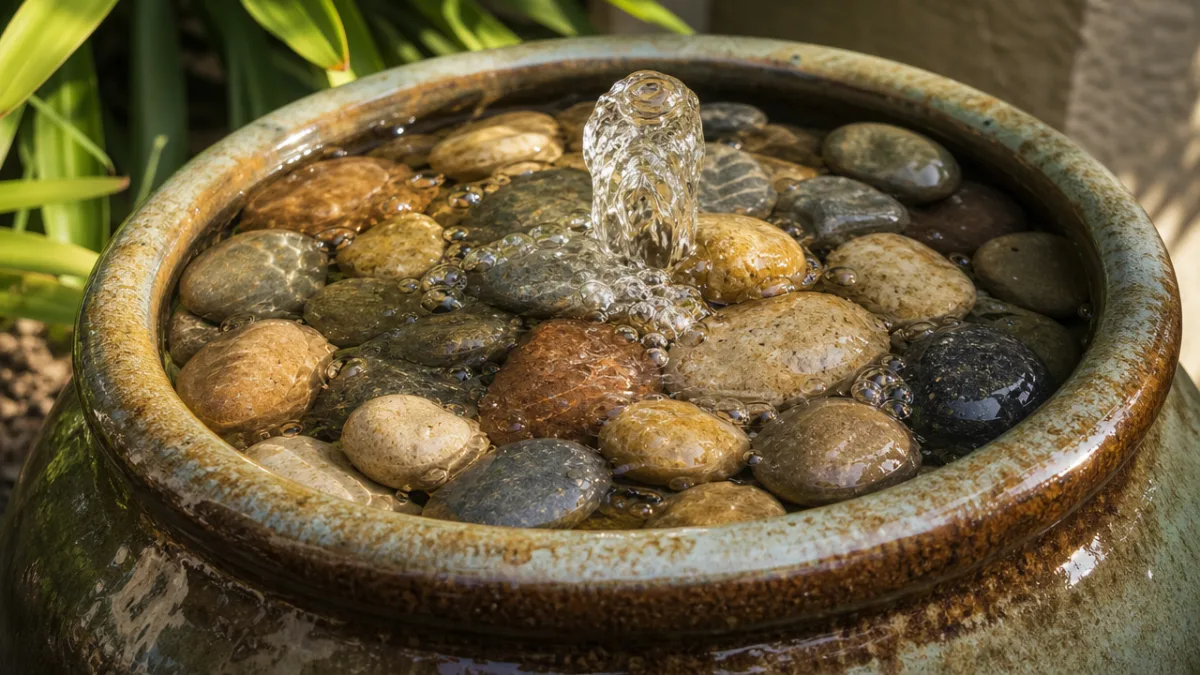
The simpler end of the spectrum includes some projects that produce outsized visual impact for minimal effort. A glazed ceramic pot fountain, for example, requires only a waterproof pot, a small submersible pump, a length of tubing, and a bag of river pebbles. The result is an elegant, self-contained water feature that looks professionally designed and costs under fifty dollars to build. Similarly, a half-barrel water garden planted with miniature water lilies and a single lotus variety creates a lush, naturalistic effect on any patio or deck without any digging or liner work whatsoever. These quick wins build confidence and develop the intuition that makes larger projects feel less intimidating.
The more involved projects in this collection include genuinely transformative builds that will anchor your landscape for years. A pondless waterfall, for instance, involves excavating a shallow reservoir pit, installing a basin with a pump vault, running tubing up through a stacked stone or boulder waterfall structure, and finishing with gravel infill to conceal everything below the surface. The completed feature sounds and looks like a natural spring or mountain stream, but because there is no exposed pond, it is far safer for children and pets and requires minimal ongoing maintenance. A Japanese-inspired tsukubai stone basin with a bamboo spout, a recirculating rain chain leading into a decorative barrel, or a simple liner pond with a beach entry are all similarly achievable within a weekend and deliver lasting beauty and enjoyment.
- Ceramic Pot Fountain — A watertight decorative pot, a submersible pump, and river pebbles. No digging required; ideal for patios and balconies.
- Half-Barrel Water Garden — A whiskey barrel liner planted with aquatic plants. Gorgeous, self-contained, and completely portable.
- Tabletop Fountain — Pre-made units available at most garden centers. Plug-and-play simplicity for indoor or sheltered outdoor use.
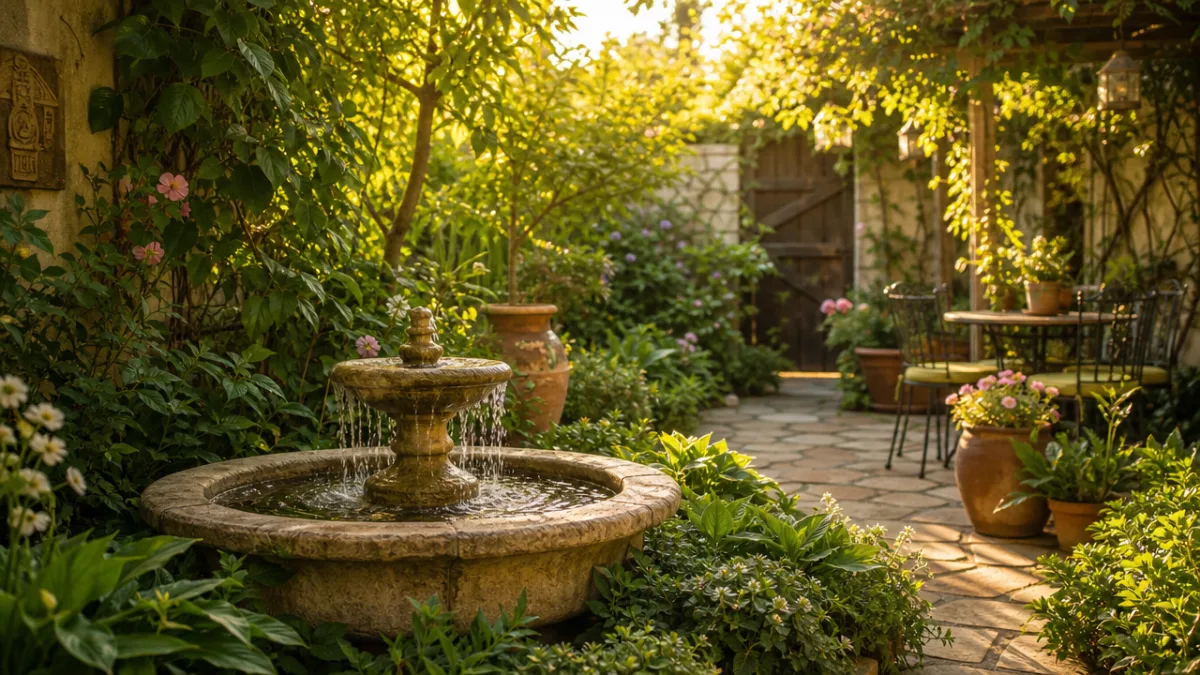
- Millstone or Bubbling Boulder Fountain — A drilled stone or concrete disc over a buried reservoir with a pump. Timeless and low-maintenance.
- Stacked Slate Spitter — Thin slate pieces stacked over a basin with tubing threaded through the center. Minimalist and modern.
- Rain Chain Barrel — A decorative rain chain directed into a barrel reservoir with overflow drainage. Functional and beautiful in rainy climates.
- Concrete Block Fountain Wall — Stacked landscape blocks with a hidden pump channel and a spillway lip. Great for retaining wall integration.
- Tsukubai Stone Basin — A Japanese garden staple featuring a carved stone basin, bamboo spout, and raked gravel surround.
- Pondless Waterfall — Stacked boulders over a buried basin with a pump vault. The most dramatic beginner-friendly build on this list.
- Liner Pond with Marginal Plants — A pre-formed or flexible liner pond installed in a weekend, planted with iris, cattail, and water hyacinth.
- Stream Bed Feature — A shallow liner channel with river rock and a recirculating pump. Creates a winding stream through any part of the yard.
- Copper Pipe Wall Fountain — A mounted copper pipe structure on a fence or wall with water flowing into a trough below.
- Hypertufa Trough Pond — A handmade concrete-and-peat container that mimics old stone troughs. A satisfying craft project that doubles as a planter.
- Solar Birdbath Fountain — A standard birdbath fitted with a small solar-powered pump that creates gentle surface agitation. Zero electrical costs.
- Bog Garden — A shallow liner bed filled with moisture-retaining medium and planted with carnivorous or bog-loving plants. No pump required.
- Recirculating Garden Spigot — A vintage or decorative spigot mounted on a post over a gravel-filled basin, giving the appearance of a working pump.
- Natural Swimming Pond — An ambitious but achievable weekend project for experienced builders, combining a liner pond with a planted biological filtration zone.
Step-by-Step Guide to Building a Pondless Waterfall in One Weekend
Of all 17 projects on this list, the pondless waterfall earns its reputation as the most rewarding single-weekend build for intermediate DIY enthusiasts. It delivers the sight and sound of a genuine waterfall without the ongoing maintenance demands of a full pond, and because the water reservoir is completely buried and covered with stone, it presents no standing water hazard for children or animals. The following walkthrough covers the essential steps from planning through final testing, giving you a realistic picture of what the two-day build process looks like from start to finish.
On day one, begin by marking out the footprint of your reservoir pit and your waterfall mound using spray paint or garden hose. A typical beginner-scale pondless waterfall uses a reservoir basin of roughly four feet by three feet by two feet deep, which is small enough to excavate by hand in an afternoon. Dig the pit, compact the bottom slightly, and install your pre-formed basin or line the pit with a protective underlay and then a heavy EPDM rubber liner, leaving generous overlap around all edges. Set your pump vault — a perforated plastic box that keeps the pump accessible and protected — inside the basin, connect your tubing, and run the tube up toward where your waterfall structure will sit. Fill the basin with water and do a quick test to ensure the pump is working before you move any stone.
Day two is where the build transforms from functional to beautiful. Begin stacking your boulders and flat cap stones around and above the reservoir, concealing the liner edges as you go and threading the tubing up through gaps in the stone to emerge at your chosen spillway point. The final spillway stone should be flat, level, and slightly angled forward so water sheers cleanly off the edge rather than running down the back side of the rock. Once the stone structure is complete and the tubing is connected at the top, refill the reservoir, power on the pump, and adjust the tubing position until the flow looks natural. Finish by filling any gaps between stones with gravel, tucking the liner edges under stone, and planting creeping thyme, moss, or fern around the base to soften the hard edges and make the feature look like it has always been there.
Maintaining Your Water Feature Through the Seasons
Building a beautiful water feature is only half the equation; keeping it clean, functional, and visually attractive through changing seasons is an ongoing commitment that is easy to manage when you understand what each season demands. Spring is the busiest time for water feature maintenance, since winter debris, algae blooms triggered by warming temperatures, and any damage from freezing conditions all need to be addressed before the feature can look its best. A thorough spring cleaning involves removing accumulated leaves and organic matter, checking pump function and flow rate, cleaning or replacing filter media if your feature includes a filter, and topping up water levels lost to winter evaporation.
Summer maintenance revolves primarily around water quality and evaporation management. In hot weather, a small to mid-sized feature can lose several inches of water per week to evaporation alone, so topping up regularly with a garden hose is a routine task. Algae growth accelerates in warm, sunny conditions, and while some algae on rocks and pond walls is completely natural and even beneficial, excessive string algae or green water can quickly make a feature look neglected. Regular removal of string algae by hand, use of barley straw extract as a natural algae inhibitor, and ensuring that any pond has adequate plant coverage to shade the water are all effective strategies for keeping summer algae manageable without resorting to harsh chemical treatments.
Autumn and winter preparation are the final chapters in the seasonal maintenance cycle. As leaves begin to fall, a fine net stretched over the feature will dramatically reduce the amount of organic debris that ends up decomposing in the water and degrading its quality. In regions that experience hard freezes, submersible pumps should be removed, cleaned, and stored indoors for the winter to prevent damage to seals and impellers. Many gardeners choose to leave a small floating pond de-icer or aerator running through winter to maintain a small hole in any ice that forms, which allows beneficial gas exchange to continue in ponds that house fish. With consistent seasonal attention, a well-built water feature can remain beautiful and functional for many years with minimal effort.
Budgeting, Sourcing Materials, and Making the Most of Your Investment
One of the most common misconceptions about DIY water features is that significant spending is unavoidable. In reality, the cost range across these 17 projects is enormous, from under twenty dollars for a simple solar birdbath fountain insert to several hundred dollars for a full pondless waterfall with quality boulders and a high-capacity pump. Understanding where to invest and where to economize is the key to getting the best possible result within your budget. Generally speaking, the pump is not the place to cut corners; a reliable, energy-efficient submersible pump from a reputable brand will outlast a cheap alternative by years and prevent the frustration of mid-season failures.
Sourcing materials creatively can dramatically reduce costs without sacrificing quality or beauty. Landscape stone and boulders are often available at significant discounts when purchased directly from a local quarry rather than a garden center markup. Craigslist, Facebook Marketplace, and neighborhood buy-nothing groups are excellent sources for used pond liners, pre-formed basins, and decorative pots that previous homeowners no longer want. Many municipalities also offer free or low-cost compost and sometimes even reclaimed stone from road or park projects, and a quick call to your local public works department can uncover surprising opportunities. Aquatic plants for ponds and water gardens are another area where community generosity thrives, since established water gardeners frequently divide and give away excess plants each spring.
Thinking about your water feature as a long-term investment rather than a one-time expenditure helps frame the cost in a more encouraging light. A well-built liner pond or pondless waterfall, properly maintained, can remain beautiful and functional for fifteen to twenty years or longer. When you spread the initial material cost across a decade or more of daily enjoyment, the per-year cost of even a several-hundred-dollar project becomes genuinely modest. Add to that the documented improvements in mental health and stress reduction associated with regular exposure to natural water sounds, the wildlife habitat value, the potential property value enhancement, and the simple satisfaction of having built something lasting with your own hands, and it becomes clear that a weekend water feature project may be one of the most rewarding home improvement investments you can make.








What do you think?
It is nice to know your opinion. Leave a comment.