










15 DIY Recycled Trellis Ideas For Your Garden
A good trellis might be one of the best things you can add to a garden — it gives climbing plants somewhere to go, adds height and structure, and just makes the whole space feel more intentional. The catch is that buying one from a garden center can set you back more than you’d expect, and honestly, the ones you find there tend to look pretty much like everyone else’s. The good news? Some of the most beautiful trellises out there are built from recycled and repurposed materials that cost next to nothing. All it really takes is a little creativity and a willingness to look at old stuff with fresh eyes.
There’s something else going on with recycled trellises, too — they carry a kind of character that brand-new products just can’t replicate. An old ladder leaning against a fence, a coil of salvaged wire, a bundle of fallen branches — these things have history to them. And when you build something with your own hands from materials that would otherwise end up in a skip, the result feels genuinely yours in a way that a flat-pack trellis never will. Gardening and caring about the environment have always gone hand in hand, and this is one of the most satisfying ways to bring those two things together.
So here are fifteen ideas for making your own recycled trellises, grouped by the type of material you’ll be working with. Whether you’re gardening on a tiny balcony or have a sprawling backyard to play with, whether you’re growing delicate sweet peas or hefty cucumbers, there’s something here that’ll work for your space, your skill level, and your taste. Read on, start collecting your materials, and get ready to have a lot of fun with this.
Wooden Wonders: Repurposing Timber and Lumber
Old wood is one of the most versatile things you can work with when building a trellis. Wooden pallets have practically become the mascot of upcycled garden decor at this point, and for good reason — stand one upright against a sunny wall and you’ve instantly got a trellis framework with evenly spaced slats that climbing roses, beans, or morning glories will love. Just sand down any rough spots, give it a coat of weather-resistant sealant, and secure it firmly to your wall or fence post with brackets or heavy-duty zip ties.
Old wooden ladders — especially the wide A-frame kind that painters used to use — make incredibly charming trellises with barely any effort. Stand a vintage one in a garden border, let it weather through a season, and it’ll look like it’s always been there. You can train sweet peas, nasturtiums, or clematis up through the rungs, weaving stems in and out to get that full, cascading effect. Lean two ladders together in an inverted V and you get a lovely tunnel arch that looks spectacular draped in fragrant climbing roses.
Salvaged window frames and old picture frames are also worth looking out for. String wire, twine, or netting across the interior and you’ve got a flat trellis panel that’s as pretty as it is practical. A big vintage window frame painted a bold color and mounted against a plain fence makes a real statement, and once climbing plants start covering it, it becomes something genuinely special. Door frames, cabinet doors with the panels knocked out, even old headboards — they all work on the same principle. The trick is to stop seeing these things for what they were and start seeing the structural framework they offer to your plants.
Metal Magic: Giving New Life to Iron, Wire, and Mesh
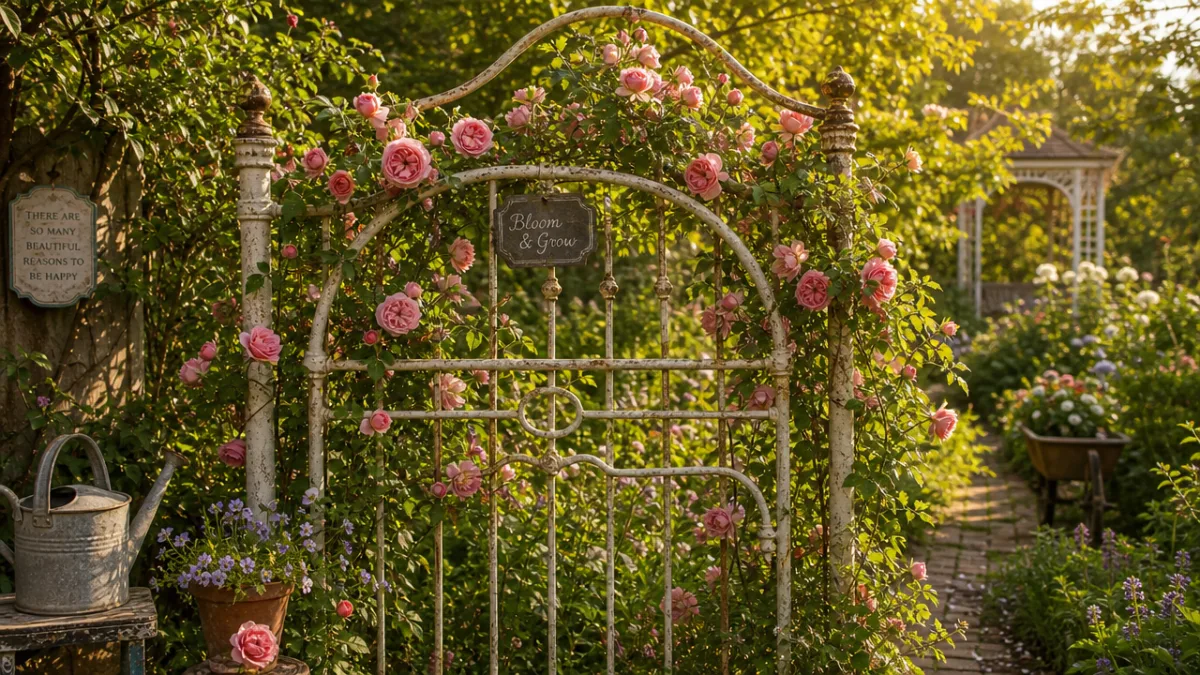
Metal gives you a completely different feel from wood — bolder, more industrial, and often surprisingly modern even when the material itself is a century old. Old bed frames, particularly ornate wrought iron or cast iron Victorian ones, are absolute finds for the recycled trellis maker. Stand an iron headboard upright in a garden border or mount it between two posts, and you’ve got a spectacular trellis that packs history, artistry, and genuine practicality into one piece. All that intricate scrollwork gives twining plants countless places to grip and climb.
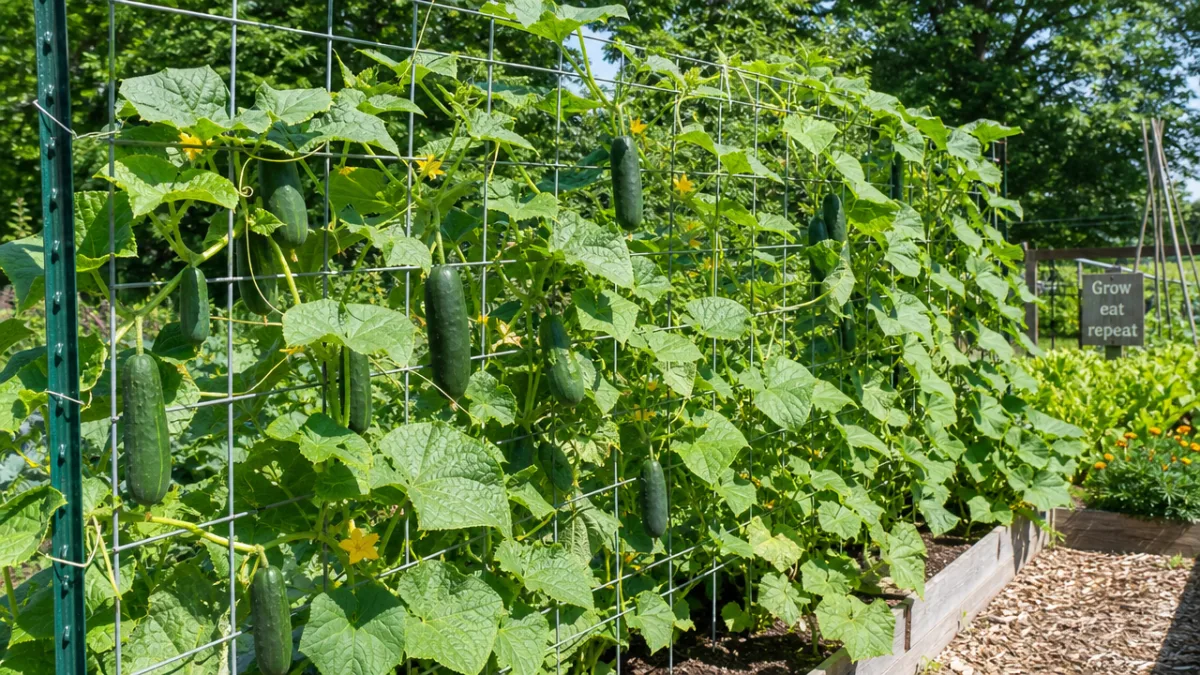
Wire mesh and chicken wire are probably the most practically useful recycled materials you can get your hands on, and they’re often free — farms, construction sites, and neighbors doing renovations frequently have excess they’re glad to pass on. A panel of wire mesh stretched between two sturdy posts makes a flat, grid-style trellis that’s brilliant for cucumbers, squash, and other heavy-fruiting vegetables. The grid lets you weave stems through at regular intervals, which keeps plants well-supported and makes harvesting much easier. If you want something a bit more decorative, wire mesh can also be shaped into cylinders, cones, or arches before it goes into the ground.
Old garden fencing, metal shelving units, and even springs from old mattresses have all been put to work as trellises by creative DIY gardeners. Mattress springs are particularly fun — they have that naturally coiled structure that climbing plants can grip really easily, and a row of them standing upright in a vegetable bed has a wonderfully quirky, slightly surreal look to it. Old copper pipes can be bent and soldered into geometric trellis frames that develop a beautiful green patina over time. Whatever metal you’re working with, just make sure to check for sharp edges and hit any bare metal with a rust-inhibiting primer before it goes in the garden.
Branch and Bamboo: Natural Materials from Your Own Land
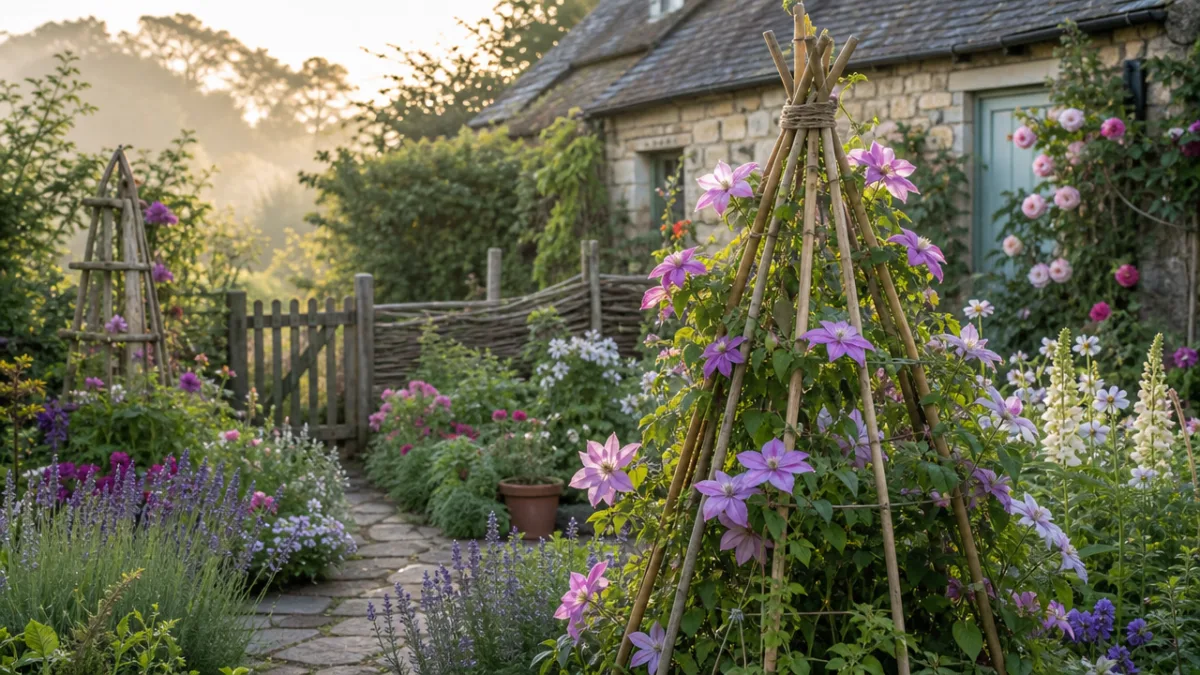
Not everything has to come from a factory or a skip — some of the best trellis materials are ones you can harvest sustainably from your own backyard or the local environment. Fallen branches, pruned limbs, and cut bamboo canes can be assembled into beautiful rustic trellises that look completely at home where they’re planted. A bundle of straight hazel, willow, or bamboo poles tied together in a tipi or wigwam shape is both a perfectly functional climbing support and the kind of thing that makes people stop and say “oh, I love that.”
Fan-shaped branch trellises are another great option, and the only things you need are a collection of similarly sized sticks and a bit of patience. Gather some straight, reasonably uniform branches — roughly half an inch to an inch in diameter works well — arrange them in a fan, secure them at the base with wire or twine, and weave thinner, more flexible branches horizontally across them at regular intervals. This technique is called wattle work, and it’s one of the oldest forms of garden construction around. Done properly it’s both beautiful and surprisingly strong.
Bamboo deserves its own mention because it really is exceptional trellis material — strong, light, flexible, and genuinely lovely to look at. If you grow bamboo in your garden, or know someone who does, you’ve essentially got an unlimited supply of excellent trellis poles on tap. Bamboo can be split, bent, tied, and stacked into almost any configuration, from simple flat grids to elaborate three-dimensional structures. A bamboo trellis woven into a decorative pattern and used as a screen between different parts of a garden is one of the most elegant things you can make, and beyond the time it takes to harvest and assemble, it costs you nothing.
Fabric and Rope: Unexpected Softness in the Garden
Fabric and rope probably aren’t the first things that come to mind when you’re thinking about building a trellis, but they open up possibilities that rigid materials simply can’t. Old fishing nets — the kind you can sometimes find on beaches or pick up from boat yards — make extraordinary lightweight trellises. Hang them between posts, drape them over arches, or suspend them from overhead beams. The natural texture of weathered netting looks fantastic alongside growing plants, and the flexible structure means you can reshape and reposition as the season unfolds and your plants develop minds of their own.
Heavy-duty rope and cord strung between posts, hooks, or anchor points gives you a horizontal or diagonal trellis with a nautical or boho vibe that can look really striking. Old climbing ropes from gyms or schools, retired maritime ropes from harbors, even bundles of salvaged electrical cable with the outer sheathing stripped off — all of these can work beautifully. The big advantage of rope trellises is that they can span large distances without needing intermediate supports, which makes them ideal for covering building facades, creating shaded walkways, or marking out boundaries in a larger garden.
Strips of torn fabric — denim, canvas, heavy cotton — woven through a frame of sticks or poles creates a textile trellis that’s as much an art piece as a practical garden structure. Old jeans cut into long strips and woven through bamboo poles produces something that genuinely looks intentional and creative. As the fabric weathers and fades through the season it takes on a soft, muted quality that works beautifully alongside the greens and flowers of climbing plants. There’s also the nice option of gradually refreshing the look by swapping in new fabric strips as the old ones wear out.
Upcycled Household Items: Thinking Outside the Box
Some of the most memorable recycled trellises come from repurposing household objects that have simply run their course. Old bicycles with the wheels still attached can be mounted vertically on posts or walls to create circular trellis panels unlike anything you’d find in a shop. The spokes give twining plants a natural framework to work with, and the circular shape creates a lovely contrast with the mostly vertical growth habit of climbing plants. Mount a row of old bicycle wheels in different sizes along a garden fence and you get a rhythmic, playful visual effect that also happens to be a really functional trellis system.
The kitchen turns out to be a surprisingly good source of trellis material. Old metal cooling racks, wire dish drainers, and oven shelves all have that ready-made grid structure that makes them perfect trellis panels when stood upright. A set of identical wire cooling racks linked together with cable ties creates a modular system you can extend, rearrange, or take apart as needed — particularly handy if you’re renting or the kind of person who likes to change things up every year. And old colanders mounted on walls, their bowls filled with soil, can be paired with trellis panels to make living wall installations where climbing plants grow upward from planted containers beneath.
Bed springs, window shutters, decorative iron gates from old driveways, even the wooden bodies of old upright pianos — all of these have found second lives as remarkable garden trellises in the hands of people willing to think creatively. The idea behind all of them is the same: look at an object’s structure — its framework, its grid, its scaffolding — rather than what it used to be, and ask whether a climbing plant might find it useful. Once you start thinking that way, potential trellis materials turn up everywhere, and the possibilities genuinely feel endless.
Building and Installation Tips for Your DIY Recycled Trellis
Whatever materials you end up working with, there are a few universal principles that will make a real difference to how long your trellis lasts and how well it holds up. The big one is anchoring. A trellis covered in mature climbing plants gets surprisingly heavy, and once you factor in wind, the forces on your anchor points can be substantial. Drive stakes or posts at least eighteen inches into the ground wherever you can, use multiple anchor points rather than relying on one, and check everything over at the start of each growing season to make sure nothing has shifted.
Choosing the right plants for your trellis matters just as much as building the thing well. Lightweight annuals like sweet peas, nasturtiums, and morning glories are a good match for trellises made from fabric, thin wire, or lightweight bamboo. Heavier perennial climbers like roses, wisteria, and clematis need something much more robust, so save your sturdiest recycled materials — iron frames, thick wooden pallets, heavy wire mesh — for those. Matching plant weight and growth habit to trellis strength is one of those decisions that seems minor until you find your trellis face-down in the garden in August.
A few more practical things worth keeping in mind as you plan and build. Treating bare wood with a weather-resistant sealant before it goes in the ground will add years to its life. Using galvanized or stainless steel fixings instead of ordinary screws and bolts prevents rust staining on the trellis and the plants growing over it. Position your trellis where the plants you’re planning to grow will actually get the sun they need — the most beautiful structure in the world is a failure if nothing thrives on it. And if you’re mounting a trellis against a wall, leave a small gap between the two to improve air circulation around stems and reduce the risk of fungal problems.
- Always sand down rough wooden edges before placing anything near plants or bare skin — splinters are nobody’s idea of a good time.
- Check metal pieces for sharp protrusions and use a metal file or grinder to smooth any dangerous points before installation.
- Use UV-resistant twine or garden wire for binding sections together, since cheaper options break down quickly in direct sunlight.
- Think about painting or staining wooden components in colors that work with the rest of your garden before you put them up.
- Label each trellis with a waterproof marker noting the materials used and when you built it — it helps you track what holds up well and plan for replacements.
- Photograph your finished trellis before the plants cover it completely. The structural beauty of a well-made recycled trellis is worth recording.
What makes DIY recycled trellises really special isn’t just that they’re cheap to make or kinder to the planet — it’s the satisfaction of creating something genuinely useful and beautiful from materials the world had written off. Every climbing rose threading its way over a salvaged iron headboard, every sweet pea tendril curling around a bamboo pole you cut yourself, every cucumber hanging from a wire mesh panel rescued from a construction site — each of those is a small, real act of creative stewardship. Your garden gets richer, your costs stay low, and the whole cycle of use and reuse that healthy ecosystems depend on gets honored in the most practical and joyful way possible.








What do you think?
It is nice to know your opinion. Leave a comment.