










10 Easy Garden Crafts to Transform Your Outdoor Space
Why Garden Crafts Are the Secret to a Truly Personal Outdoor Space
There is something deeply satisfying about stepping into a garden that feels entirely your own — not a catalog showroom, not a generic patio from a big-box store, but a space that carries your fingerprints in the most literal sense. Garden crafts give you that power. When you create something by hand and place it among your plants and pathways, you are doing far more than decorating. You are establishing a relationship with your outdoor environment that store-bought décor simply cannot replicate. The imperfections in a hand-painted pot or the slight wobble of a homemade trellis are not flaws; they are signatures.
Beyond the aesthetic rewards, making your own garden crafts is remarkably practical. Materials are often inexpensive, frequently repurposed, and always customizable to your exact space and style. Whether your garden is a sprawling backyard or a narrow balcony lined with containers, craft projects scale to fit. You can work with what you have — leftover lumber, chipped terra cotta, glass bottles from the recycling bin — and turn overlooked objects into features that anchor the entire look of your outdoor area. The craft process itself is also therapeutic, offering a slow, focused activity that pulls you away from screens and into something tactile and rewarding.
This guide walks you through ten genuinely easy garden crafts, organized by theme so you can pick the projects that suit your skill level, your available materials, and your garden’s personality. Whether you want whimsy, elegance, function, or a little of everything, there is something here that will shift your outdoor space from ordinary to extraordinary. All you need is a free afternoon, some basic supplies, and a willingness to get your hands a little dirty — which, if you are a gardener at all, you already have in abundance.
Painted Pots and Upcycled Containers: Color That Lasts
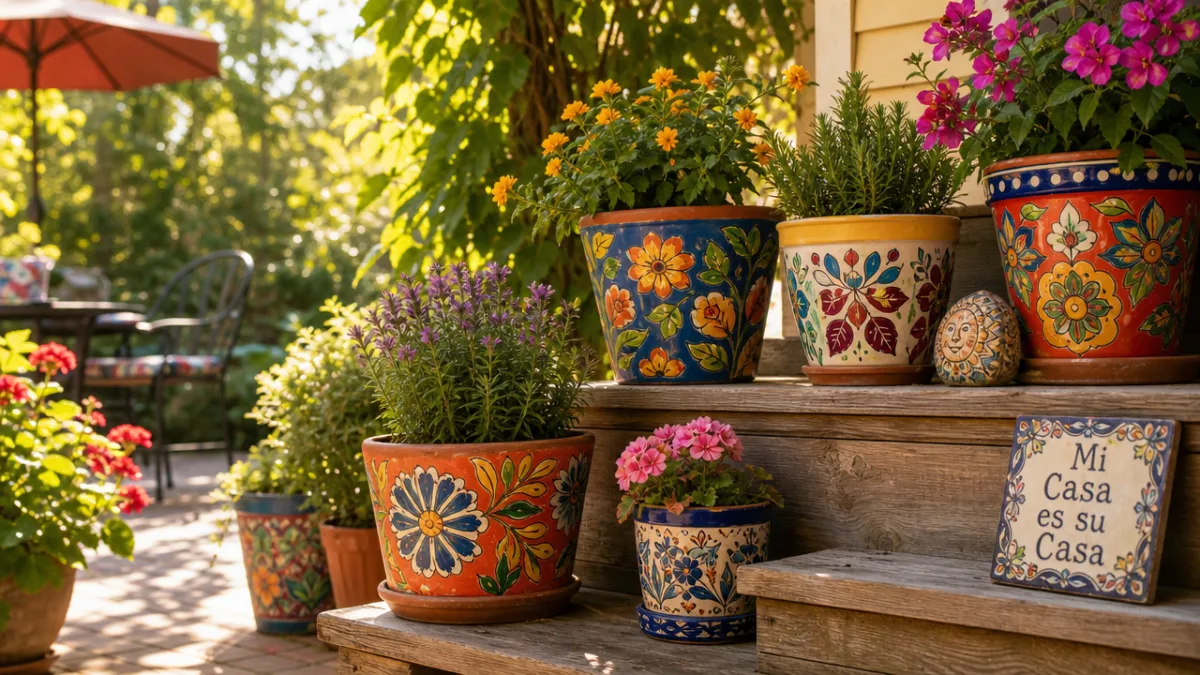
Painted terra cotta pots are one of the oldest and most enduring garden crafts, and they remain popular for very good reason: they work. A simple terra cotta pot, primed with a coat of exterior-grade paint and then decorated with geometric patterns, botanical illustrations, or abstract brushwork, instantly becomes a feature rather than a vessel. The key to durability is sealing the finished design with a clear outdoor varnish, which protects your work from rain, UV exposure, and the general rigors of outdoor life. Even complete beginners can achieve beautiful results using painter’s tape to create clean lines and shapes.
Upcycling goes even further than painting. Consider transforming galvanized metal buckets, wooden wine crates, old colanders, worn leather boots, or even cracked ceramic mixing bowls into planters with genuine character. Drill drainage holes where needed, line wooden containers with landscape fabric to slow moisture loss, and fill them with good quality potting mix. The contrast of unexpected materials against lush greenery or bright blooms creates a visual tension that feels intentional and curated rather than random. A weathered wooden crate planted with trailing nasturtiums, for example, has a charm that no manufactured planter can match.
For those who want to go even further, consider creating a coordinated collection of containers in a limited palette — two or three complementary colors repeated across pots of different sizes and shapes. This approach ties together what might otherwise feel like a mismatched assortment and gives your garden or patio a cohesive, designed quality. Group odd numbers of pots together at varying heights using upturned pots or wooden blocks as risers, and you have a display that looks genuinely professional. The entire project, from primer to final varnish coat, can be completed in a single weekend and costs very little if you already have paint on hand.
Mosaic Stepping Stones and Pathway Markers
Few garden crafts make as dramatic an impact as a handmade mosaic stepping stone. The process is far more accessible than most people assume: you mix a bag of concrete or use a pre-made mold, press broken tiles, glass gems, smooth pebbles, or ceramic fragments into the surface before it sets, and wait twenty-four hours for a result that looks genuinely artisanal. The materials for mosaic work are easy to source — broken crockery from thrift stores, glass nuggets from craft shops, smooth river stones from a garden center, or even fragments of mirror that catch light at different times of day and add a luminous quality to the path.
The design possibilities are truly limitless. You can lay out a simple geometric pattern, a spiraling flower, a mosaic sun, or even a set of letters or numbers that mark a house entrance or a special garden section. Children are natural collaborators on mosaic projects because pressing pieces into wet concrete is both satisfying and low-stakes — there are no wrong moves, only interesting arrangements. For pathway markers that go beyond stepping stones, wooden stakes painted in bright colors and topped with hand-lettered plant names or simply decorated with painted dots and stripes add a playful, handmade character to vegetable plots and herb gardens.
Once your stepping stones are cured and placed, consider the spacing and rhythm of the path itself as part of the design. Stepping stones placed too far apart feel awkward to walk; those placed just slightly shorter than a natural stride invite a comfortable, flowing movement through the garden. Offset alternate stones slightly to create a gentle zigzag rather than a perfectly straight line, which tends to feel more natural and inviting in a garden setting. Edge the pathway with low-growing herbs like thyme or creeping chamomile, which release fragrance when stepped on nearby and blur the boundary between path and planting bed in a way that feels wonderfully alive.
DIY Trellises, Plant Supports, and Vertical Garden Structures
Vertical structure is one of the most transformative elements you can add to any garden, and building your own trellises and plant supports allows you to tailor them precisely to your space, your plants, and your aesthetic. A simple trellis made from bamboo canes lashed together with jute twine can be constructed in under an hour and will support climbing beans, sweet peas, cucumbers, or morning glories through an entire season. For a more permanent structure, thin wooden laths or dowels can be assembled into a fan shape, a grid, or a more elaborate diamond lattice pattern using waterproof wood glue and small nails or staples.
Old wooden ladders, whether found at yard sales or constructed from rough-cut timber, make exceptionally versatile vertical structures. Leaned against a fence or wall, a ladder can support climbing plants threaded through its rungs, hold hanging baskets from its steps, or display a collection of small potted herbs arranged at different heights. The aged, weathered quality of an old ladder adds texture and warmth to a garden that newer materials simply do not have. If you want something more substantial and long-lasting, a classic A-frame trellis made from pressure-treated lumber can serve as the backbone of a kitchen garden for many years, anchoring climbing vegetables while dividing the space into productive sections.
For balconies and small spaces, a vertical pallet garden is one of the most efficient garden crafts available. A single heat-treated wooden pallet — look for the HT stamp to ensure it has not been chemically treated — can be lined with landscape fabric, filled with potting mix, and planted with herbs, strawberries, succulents, or annual flowers. Mounted securely to a fence or wall, it transforms a flat, empty surface into a living, textured feature that requires no more square footage than the pallet itself. Over a season, the plants fill in and the structure virtually disappears behind a curtain of leaves and flowers, creating something that feels genuinely lush and abundant in even the most constrained outdoor space.
Wind Chimes, Sun Catchers, and Sensory Garden Accents
A garden that engages multiple senses is one that you want to spend time in, and handmade sensory accents are among the most delightful garden crafts to create. Wind chimes built from found objects — copper pipe offcuts, driftwood, old keys, shells, clay beads, or even mismatched silverware — produce sounds as individual as the materials themselves. To make a simple wind chime, you need nothing more than a piece of driftwood or a sturdy branch as a crossbar, lengths of fishing line or thin twine, and a collection of objects that make pleasant sounds when they tap against each other. The design process is largely intuitive and deeply enjoyable.
Sun catchers bring light into the garden in ways that feel almost magical. Stained glass sun catchers can be made using lead-free copper foil tape and glass pieces cut with a simple glass cutter, but even simpler versions — glass gems or colored beads threaded on wire and hung from branches — catch and scatter light beautifully. Old CD discs strung from tree branches create prismatic rainbow effects across the garden on sunny days, and they have the added benefit of deterring birds from fruit trees and vegetable beds. For a more polished look, pour colored resin into silicone molds to create your own custom sun catcher shapes, embedding dried flowers, leaves, or glitter for additional visual interest.
Beyond sight and sound, consider crafts that introduce fragrance and texture. Bundles of dried lavender, rosemary, or eucalyptus tied with twine and hung from a fence post or pergola beam release their scent on warm days and after rain. Painted river stones arranged at the base of a planting bed invite touch and add a sculptural quality at ground level. Small wind spinners made from aluminum cans cut into spiral shapes and suspended from branches catch the breeze and add movement to what might otherwise be a static space. The cumulative effect of several thoughtfully placed sensory accents is a garden that feels alive, layered, and endlessly interesting across different times of day and weather conditions.
Fairy Gardens, Miniature Landscapes, and Story Spaces
Miniature gardens occupy a wonderfully creative corner of garden craft, one where imagination genuinely has no limits. A fairy garden can be established in a wide shallow container, a broken birdbath, a hollowed tree stump, or a section of a raised bed, and it combines tiny plants with miniature accessories to create a scene that looks as though it has always existed on a different, smaller scale. The plants most suited to fairy gardens are those with naturally fine or delicate textures: mind-your-own-business, baby tears, creeping thyme, moss, and miniature ferns all create the illusion of a landscape in miniature without overwhelming the tiny structures placed among them.
The accessories that populate a fairy garden can be bought from craft stores, but making them yourself adds a layer of meaning and originality that transforms the whole project. Tiny doors can be carved from balsa wood and painted in bright colors, then fixed to tree stumps or large rocks to suggest hidden dwellings. Miniature furniture — benches, tables, arbors — can be constructed from twigs and small branches lashed together with thin wire or strong thread. Flat stones become patios; a small mirror or a piece of reflective aluminum foil becomes a pond. Even pebbles painted to look like tiny cobblestones or painted with spots to resemble toadstools contribute to a scene that rewards close inspection and delights both children and adults.
Beyond fairy gardens, the broader concept of a story space — a corner of the garden designed to suggest narrative and imagination — applies to gardens of any size and style. A moss-covered stone seat positioned at the end of a winding path, flanked by tall grasses and shaded by an overhanging branch, creates a destination with its own quiet drama. A collection of smooth stones painted with simple faces or animal features and arranged on a garden wall tells a story that changes depending on how you arrange them. These are not merely decorations; they are invitations to slow down, to notice, and to let the garden become a place of genuine rest and imaginative engagement rather than simply a backdrop to the house.
Seasonal Garden Crafts: Keeping Your Outdoor Space Fresh All Year
One of the most effective ways to keep a garden feeling dynamic and engaging across the year is to rotate a selection of seasonal crafts that reflect the rhythm of the natural world. In spring, homemade seed paper — crafted from blended recycled paper pulp embedded with wildflower seeds and pressed into flat sheets to dry — makes a beautiful and functional craft that can be given as gifts or pressed directly into the soil to germinate. Painted wooden Easter eggs hung from the bare branches of deciduous trees bridge the gap between late winter and the first flush of spring growth, adding color to a garden that has not yet come fully back to life.
Summer calls for crafts that celebrate abundance: pressed flower artwork made from blooms harvested at their peak, sealed between glass in simple clip frames and hung from fence posts; herb bundles gathered and tied for drying; hand-painted garden signs that label beds with cheerful lettering and playful illustrations. Autumn brings its own rich palette of materials — gourds, seed heads, dried grasses, berries, and leaves — that can be arranged into wreaths, table centerpieces, or hanging bundles that acknowledge the turning of the season with genuine warmth. A simple wreath of twisted vine adorned with dried hydrangea heads and small pinecones hung on a garden gate or fence post makes a striking seasonal marker.
Winter is not the end of garden craft but a different kind of beginning. Homemade bird feeders — pine cones rolled in suet and seed, wooden frames filled with solidified seed cake, or simple platform feeders built from scrap timber — bring life and movement to a dormant garden during its quietest months. Painted glass lanterns filled with outdoor candles or battery-powered fairy lights placed along a path or clustered on a table extend the garden’s usability into the darker evenings of the year and create an atmosphere of warmth and invitation that the garden in full summer growth cannot quite replicate. Returning to your outdoor space through craft across all four seasons builds a relationship with that space that deepens and enriches with every year that passes.








What do you think?
It is nice to know your opinion. Leave a comment.