










Salvia nemorosa ‘Amethyst’: The Complete Guide to Growing and Enjoying This Stunning Perennial Sage
Introduction to Salvia nemorosa ‘Amethyst’
Salvia nemorosa ‘Amethyst’ is one of the most captivating ornamental sages available to gardeners today. Known for its striking soft pink to lilac flower spikes and compact, well-behaved growth habit, this perennial has earned a devoted following among both beginner and experienced gardeners. Unlike some plants that disappoint up close, ‘Amethyst’ delivers breathtaking beauty whether viewed from across the garden or observed in intimate detail, making it a true standout in any planting scheme.
Native to central Europe and western Asia, Salvia nemorosa as a species has long been cultivated for its medicinal and ornamental qualities. The ‘Amethyst’ cultivar, however, takes the best characteristics of the species and refines them into a garden-worthy package that performs reliably season after season. Its soft pink-purple blooms emerge on upright, branching stems that reach roughly 45 to 60 centimetres in height, creating a cloud of colour that softens borders and fills gaps with effortless elegance.
What truly sets ‘Amethyst’ apart from the wider Salvia nemorosa family is the warmth of its colour palette. While many salvia cultivars lean toward cooler blue-purple tones, ‘Amethyst’ sits in that rarer pink-lavender territory, harmonising beautifully with silver-leaved plants, cool white flowers, and the deeper purples of its salvia relatives. This versatility in colour coordination has cemented its place as a garden designer’s favourite, frequently appearing in cottage garden schemes, formal herbaceous borders, and contemporary perennial plantings alike.
Plant Characteristics and Growth Habit
Understanding the physical characteristics of Salvia nemorosa ‘Amethyst’ helps gardeners place it effectively and manage expectations realistically. The plant forms a tidy, upright clump that rarely sprawls or flops, even in moderately fertile soils. The basal foliage is composed of grey-green, textured leaves with a slightly wrinkled surface and a pleasant aromatic quality when brushed or bruised. This fragrance, characteristic of the salvia genus, serves as a natural deterrent to deer and rabbits, making ‘Amethyst’ a practical choice for gardens where grazing animals are a concern.
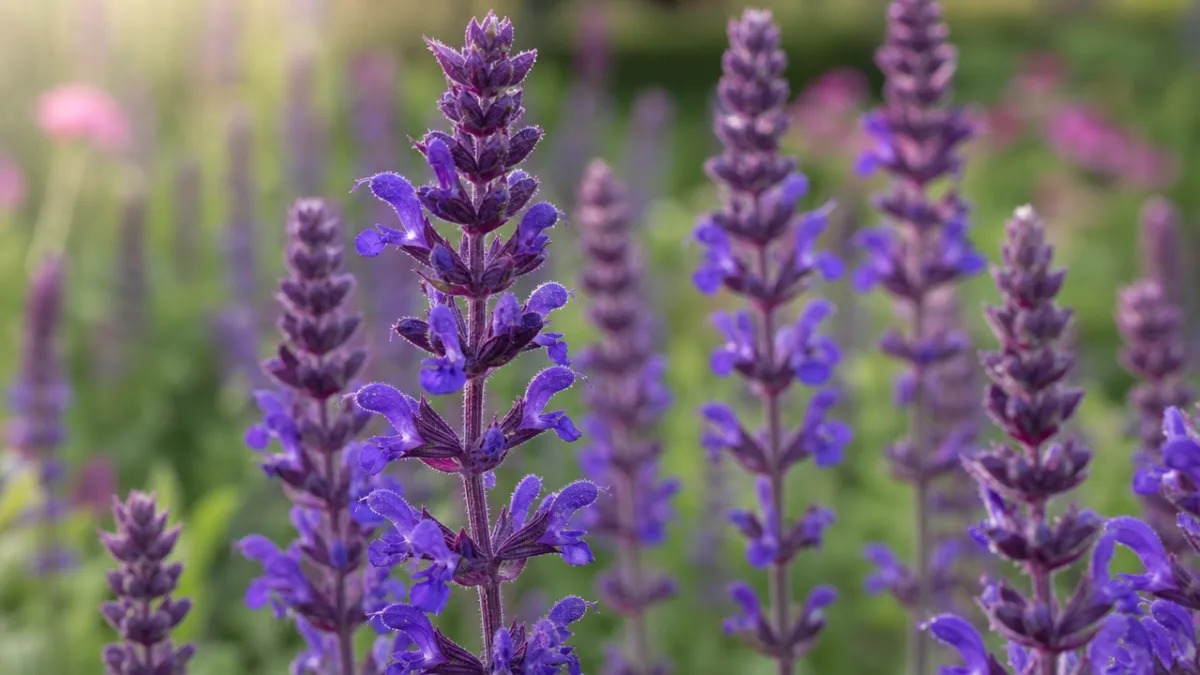
The flower spikes of ‘Amethyst’ are composed of whorls of small, two-lipped blooms clasped by persistent, coloured bracts that remain attractive even after the individual flowers have faded. This characteristic means the plant maintains its ornamental appeal for a longer period than many perennials, effectively extending the season of interest well beyond the primary flowering window. The bracts often take on a deeper, more saturated tone than the flowers themselves, adding visual depth to each spike.
In terms of growth rate, ‘Amethyst’ is a moderate performer that establishes steadily in its first season before putting on a more impressive display from its second year onward. The plant develops a woody base over time, and mature specimens can be divided every three to four years to maintain vigour and propagate new plants. Unlike some perennials that become congested and decline quickly, well-managed ‘Amethyst’ plants can persist and perform for many years in suitable conditions, making them a sound long-term investment for the garden.
Ideal Growing Conditions
Salvia nemorosa ‘Amethyst’ thrives in conditions that mirror its natural habitat: open, sunny positions with good air circulation and free-draining soil. Full sun is the ideal exposure, meaning at least six hours of direct sunlight daily. In shadier conditions, the plant will still grow but flowering will be noticeably reduced, and the stems may become lax and drawn as the plant stretches toward available light. For maximum performance, choose the sunniest available spot in your garden and ensure neighbouring plants do not cast shade over the salvia as they develop through the season.
Soil drainage is perhaps the single most critical factor in growing ‘Amethyst’ successfully. Like most Mediterranean and central European perennials, this salvia is highly sensitive to waterlogged conditions, particularly during winter. Heavy clay soils should be amended with grit, sharp sand, or coarse organic matter to improve drainage before planting. Raised beds and slopes offer natural advantages in this regard. Conversely, ‘Amethyst’ tolerates quite poor, dry soils remarkably well once established, and overly rich conditions can actually encourage excessive leafy growth at the expense of flowers.
The pH preferences of Salvia nemorosa ‘Amethyst’ are broadly neutral to slightly alkaline, broadly in the range of 6.5 to 7.5. Most garden soils fall within this range naturally, meaning pH adjustment is rarely necessary. However, if your garden has notably acidic soil, adding garden lime prior to planting can help optimise growing conditions. Temperature-wise, ‘Amethyst’ is reliably hardy in USDA zones 4 through 8, tolerating winter temperatures well below freezing provided the roots are not sitting in wet soil. In colder regions, a light mulch applied in late autumn offers useful additional protection.
Planting, Feeding, and Aftercare
Planting Salvia nemorosa ‘Amethyst’ is a straightforward process, but a little preparation goes a long way in setting the plant up for long-term success. Spring planting, once the risk of frost has passed, allows the plant to establish during the growing season. Autumn planting is also possible in milder climates, giving roots time to anchor themselves before winter. When planting from nursery containers, ensure the root ball is well hydrated before introduction to the planting hole, and avoid disturbing the roots unnecessarily. Plant at the same depth as the container level, firm gently, and water in thoroughly.
Feeding requirements for ‘Amethyst’ are modest, reflecting its preference for lean growing conditions. An application of a balanced granular fertiliser in early spring as new growth emerges provides adequate nutrition for most growing seasons. Avoid high-nitrogen feeds, which promote leafy growth and soft tissue susceptible to pest and disease problems. If your soil is particularly poor or sandy, a second light feed after deadheading in midsummer can support the second flush of flowers. Container-grown specimens will benefit from more regular liquid feeding throughout the growing season, as nutrients in compost deplete more rapidly.
Deadheading is one of the most rewarding tasks associated with growing ‘Amethyst’, as it directly leads to a renewed flush of flowering that can extend the season into late summer or even early autumn. Once the first flush of flowers begins to fade and set seed, cut the spikes back by around two-thirds using clean, sharp secateurs. New side shoots and basal growth will emerge relatively quickly in warm conditions, producing a second wave of bloom that, while sometimes not quite as vigorous as the first, is nonetheless genuinely impressive and extends garden interest considerably.
- Plant in full sun with at least six hours of direct light daily for best flowering performance.
- Ensure excellent soil drainage, amending heavy clay soils with grit or coarse sand before planting.
- Apply a balanced granular fertiliser in early spring; avoid high-nitrogen formulas.
- Deadhead spent flower spikes by cutting back two-thirds to encourage a second flush of blooms.
- Divide established clumps every three to four years in spring to maintain vigour.
- Cut back to basal growth in late winter or early spring, removing old woody stems.
Companion Planting and Garden Design
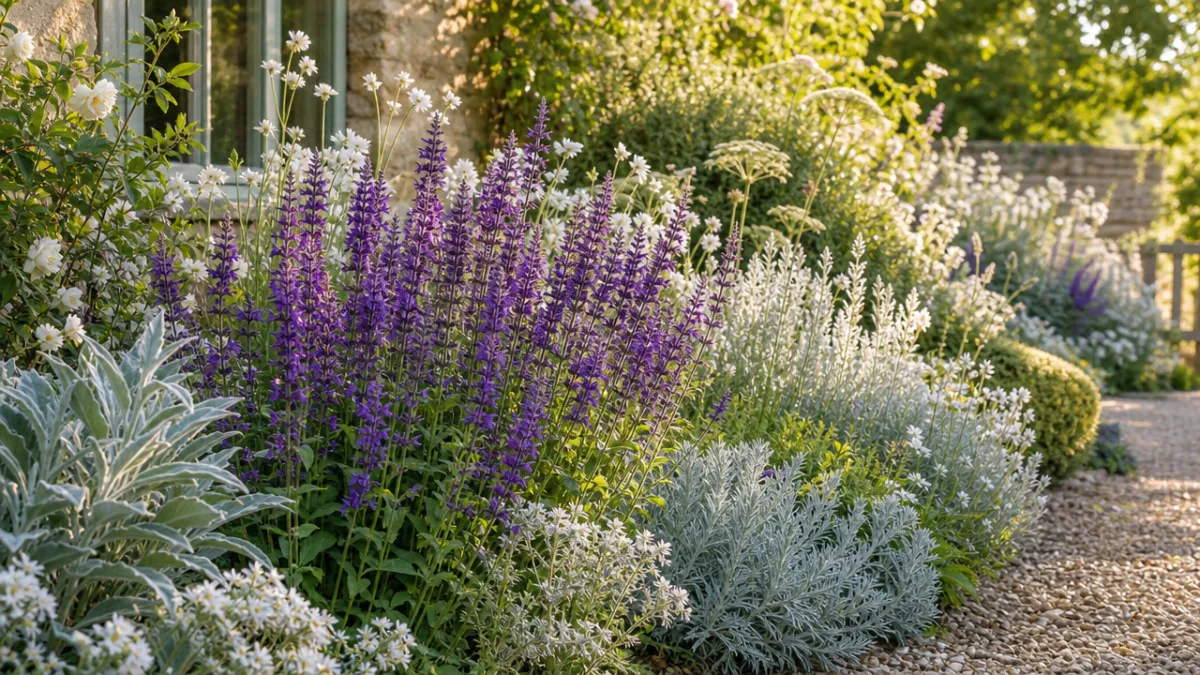
One of the greatest pleasures of growing Salvia nemorosa ‘Amethyst’ is the opportunity it presents for creative companion planting. Its warm pink-lavender tones sit comfortably alongside a surprisingly wide range of partners, from the steely blue of Eryngium to the rich gold of Achillea. In classic cottage garden style, pairing ‘Amethyst’ with Rosa ‘Felicia’, white Phlox paniculata, and the airy wands of Verbena bonariensis creates a romantic, layered border that blooms from early summer well into autumn. The varying heights and textures of these companions prevent the planting from feeling flat or monotonous.
For a more contemporary, prairie-inspired approach, ‘Amethyst’ works exceptionally well alongside ornamental grasses such as Stipa tenuissima or Pennisetum orientale. The fine, feathery texture of the grasses provides a striking contrast to the upright, structured flower spikes of the salvia, while both plants share a preference for sunny, well-drained conditions that makes their cultural requirements highly compatible. Adding Echinacea purpurea or Agastache for additional vertical interest and pollinator appeal rounds out a planting that looks effortlessly naturalistic while remaining genuinely manageable.
Silver and grey foliage plants are among the most flattering companions for ‘Amethyst’, amplifying the luminosity of its blooms and creating a sophisticated, harmonious palette. Stachys byzantina, Artemisia ‘Powis Castle’, and Perovskia atriplicifolia all serve this role beautifully, while contributing their own textural interest and drought tolerance that aligns neatly with the salvia’s cultural needs. In formal garden settings, repeating ‘Amethyst’ at regular intervals along a border, separated by blocks of clipped box or lavender, creates a structured rhythm that satisfies the eye and brings coherence to complex planting schemes.
Wildlife Value and Ecological Benefits
Salvia nemorosa ‘Amethyst’ is far more than a pretty face in the garden. It is a genuinely valuable plant for wildlife, providing nectar and pollen resources across an extended flowering season that coincides with peak insect activity. Bumblebees, honeybees, and a variety of solitary bee species are frequent visitors to the tubular flowers, which are ideally shaped to accommodate long-tongued pollinators. Gardens that incorporate ‘Amethyst’ in quantity can noticeably increase local pollinator activity, contributing to the broader ecological health of the surrounding area.
Butterflies and hoverflies are also regular visitors to the flowers, adding the additional pleasure of butterfly watching to the garden experience. The plant’s relatively long flowering season, especially when deadheading is practised to encourage repeat blooming, means that these ecological benefits are delivered over many weeks rather than concentrated in a brief window. As global concern for pollinator populations continues to grow, choosing garden plants with genuine wildlife value becomes increasingly important, and ‘Amethyst’ consistently delivers on this front without any compromise on ornamental quality.
Beyond its value during the growing season, Salvia nemorosa ‘Amethyst’ can also contribute to wildlife support through winter if the seed heads are left in place rather than being cut back immediately after flowering. Small birds such as goldfinches and sparrows will harvest seeds from the dried spikes, particularly during lean winter months when other food sources are scarce. The dried stems also provide shelter and overwintering sites for various invertebrates, including beneficial insects that prey on common garden pests. Delaying the winter cut-back until late February or early March therefore serves both the plant and local wildlife effectively.
- Provides nectar and pollen for bumblebees, honeybees, and solitary bee species throughout summer.
- Attracts butterflies and hoverflies, increasing overall garden biodiversity.
- Seed heads left over winter supply food for small garden birds such as goldfinches.
- Dried stems offer overwintering habitat for beneficial invertebrates and insects.
- Deer and rabbit resistance makes it a practical choice for rural and semi-rural gardens.
Pests, Diseases, and Common Problems
One of the most appealing aspects of Salvia nemorosa ‘Amethyst’ from a practical gardening standpoint is its remarkable resistance to the pests and diseases that trouble many ornamental perennials. The aromatic foliage is naturally unappealing to slugs and snails, which can devastate hostas and delphiniums planted nearby. Aphids occasionally colonise young growth in spring, particularly during warm, humid periods, but natural predator populations — ladybirds, lacewings, and parasitic wasps — typically bring infestations under control without the need for chemical intervention in established, wildlife-friendly gardens.
Powdery mildew is the disease most likely to affect ‘Amethyst’, particularly during dry summers when plants are under water stress and air circulation is poor. The characteristic white powdery coating appears on leaf surfaces and, in severe cases, can cause premature leaf drop. Prevention is the most effective strategy: ensure adequate spacing between plants, avoid overhead watering in the evening, and choose a planting location with good airflow. If mildew does establish, removing affected foliage promptly and cutting the plant back hard will usually resolve the problem and stimulate clean new growth.
Root rot caused by persistently wet conditions remains the most serious threat to ‘Amethyst’ and is essentially the only problem that is likely to kill an otherwise healthy plant. Waterlogging during winter is the most dangerous period, as the plant is dormant and unable to draw moisture from saturated soil. If plants show signs of deterioration — soft, rotting crowns, failure to emerge in spring, or wilting despite adequate moisture — improving drainage immediately is essential. In very problematic sites, growing ‘Amethyst’ in raised beds or large containers with excellent drainage compost is a reliable way to sidestep this issue entirely while still enjoying the plant’s ornamental and ecological benefits.
Propagation Methods
Propagating Salvia nemorosa ‘Amethyst’ is a satisfying and economical way to expand your plantings or share plants with fellow gardeners. Division is the simplest and most reliable propagation method, best carried out in early spring as new basal growth emerges. Lift established clumps using a garden fork, shake away excess soil, and separate the clump into healthy sections, each with several growth shoots and a reasonable root system. Replant divisions promptly at the original planting depth, water well, and they will typically establish quickly and flower in their first season.
Basal cuttings taken in spring offer another propagation route that allows more plants to be produced from a single parent without disturbing the whole clump. Select firm, young shoots emerging from the base of the plant when they reach approximately 7 to 10 centimetres in length. Remove with a clean, sharp knife, taking a small heel of older tissue if possible, and insert into a free-draining cuttings compost. Place in a bright but sheltered position out of direct sun, and rooting typically occurs within three to five weeks. Once rooted, pot on into individual containers before hardening off and planting out.
Seed propagation is possible but less commonly practised for named cultivars such as ‘Amethyst’, as seedlings may not reliably reproduce the exact characteristics of the parent plant. However, for gardeners interested in growing a range of Salvia nemorosa types or in generating larger quantities of plants for naturalised or meadow plantings, seed sowing in late winter under glass offers a viable approach. Sow thinly on the surface of seed compost, cover lightly, and germinate at around 18 to 20 degrees Celsius. Prick out seedlings once they are large enough to handle and grow on before planting out after the last frost date.








What do you think?
It is nice to know your opinion. Leave a comment.