










Red Ludwigia Pond Plant: Complete Care & Growing Guide
Introduction to Red Ludwigia
Red Ludwigia — scientifically known as Ludwigia repens, though you’ll also encounter related species like Ludwigia palustris and Ludwigia glandulosa — is honestly one of the most eye-catching aquatic plants you can add to a pond or aquarium. Native to North and Central America, it brings deep reds, rich burgundies, and warm coppery tones that immediately draw the eye. Whether you’re just starting out with water gardening or you’ve been doing it for years, this is the kind of plant that earns its spot.
What really makes Red Ludwigia stand out is how adaptable it is. It’ll grow fully submerged, hang out at the water’s edge as a marginal plant, or even settle into consistently moist bog soil. That flexibility means gardeners across a wide range of climates and setups can actually grow it successfully — formal water gardens, naturalistic wildlife ponds, indoor aquariums, you name it. There’s a good chance it fits whatever you have going on.
The plant belongs to the Onagraceae family, which is better known for evening primroses — and like its relatives, Red Ludwigia produces small, pretty yellow flowers when it grows above the waterline. Those little blooms are a nice bonus during warmer months, pulling in bees and other pollinators to your pond’s edge. Getting familiar with where this plant comes from and how it naturally grows will go a long way toward helping you keep it thriving in your own space.
Ideal Growing Conditions and Environment
Red Ludwigia loves warmth and bright light, and getting those two things right is really the key to achieving that deep, saturated red color everyone’s after. Water temperature-wise, it’s happiest somewhere between 65°F and 82°F (18°C to 28°C). Drop below that range and growth slows down noticeably — and the color tends to fade back toward green. If you’re growing it in an outdoor pond in a colder climate, plan to either treat it as an annual or bring it inside before the frost hits.
Light is probably the single biggest factor when it comes to that spectacular coloration. You’re looking at six to eight hours of high-intensity light per day at a minimum. In a pond, that means a spot with full sun for most of the day. In an aquarium, full-spectrum LED or fluorescent grow lights in the 6,500K to 10,000K range tend to give the best results. If you’re not getting enough light, the plant won’t turn red — it’ll grow pale and stretched out instead, a process called etiolation. It’s one of the most common mistakes people make with this plant.
Water chemistry matters too, though it’s a little more forgiving than light. Red Ludwigia prefers slightly acidic to neutral water, ideally a pH somewhere between 6.0 and 7.5, and it does best in soft to moderately hard water. Good circulation and oxygenation help as well, especially in pond settings where stagnant water can throw off your nutrient balance and lead to sluggish growth. Regular water testing and gradual adjustments will keep things stable and give your Red Ludwigia the environment it needs to really shine.

Planting and Propagation Techniques
Getting Red Ludwigia in the ground — or rather, in the water — is pretty painless, even if you’re new to aquatic gardening. In a pond, you can plant stems directly into an aquatic basket filled with substrate, or tuck them into the muddy margins along the edge. Use aquatic soil or a sand-and-fine-gravel mix, and steer clear of regular garden compost, which leaches nutrients into the water and tends to fuel algae blooms. Push the stems about two to three inches into the substrate so the lower nodes are anchored, with the growing tips reaching up toward the light.
Propagation is where Red Ludwigia really wins people over, because it could not be easier. The plant spreads through simple stem cuttings — just trim a healthy section with at least four to six nodes using clean, sharp scissors, strip the leaves from the bottom two or three nodes, and plant or float the cutting in water. Roots typically show up within a week or two under warm, bright conditions. It’s a satisfying way to build up your planting without spending much at all.
When you’re putting in multiple cuttings, give them a little room to breathe. Stems crammed too close together compete for light and nutrients, which leads to weak, washed-out growth. Space them at least two to three inches apart in an aquarium or planted basket. In a larger pond or bog, you can group them in clusters for a bolder look, just make sure water and nutrients can still reach the bases. Pruning mature growth regularly keeps things compact and bushy, and it gives you a steady supply of cuttings to work with.
Fertilization and Nutrient Requirements
Red Ludwigia needs a solid supply of both macro and micronutrients to stay healthy and keep that color vivid. If you’ve got fish in your pond, you’re already partway there — fish waste breaks down into nitrates and phosphates that plants happily absorb. But in a lightly stocked or fish-free pond, you’ll likely need to supplement, especially during the active growing season from late spring through early fall when the plant is really pushing hard.
Iron deserves special attention here, because it’s directly tied to how red your plant actually gets. When iron is lacking, new leaves tend to yellow — a condition called chlorosis — and that signature red starts to fade. Chelated iron is the way to go, since it stays available to the plant across a wider pH range than non-chelated forms. You can dose liquid fertilizer directly into the water column, or use root tabs in the substrate for a slower-release option that feeds the root system over several months.
In aquarium setups, CO2 supplementation is worth considering too. Red Ludwigia doesn’t need it to survive, but a pressurized CO2 system will noticeably speed up growth and deepen leaf color. Outdoor ponds generally get enough CO2 through natural gas exchange and biological activity. One thing to watch out for on the other end: don’t overdo nitrogen or phosphorus. Excess nutrients that the plant can’t absorb will feed algae instead, and algae shading out your Red Ludwigia is the last thing you want after putting in all that work.
- Nitrogen (N): Essential for leaf development; supplied naturally in fish ponds through waste breakdown.
- Phosphorus (P): Supports root growth and overall plant vigor; moderate levels are preferred.
- Potassium (K): Improves stress resistance and promotes healthy cell function throughout the plant.
- Iron (Fe): Directly responsible for vibrant red pigmentation; use chelated forms for best availability.
- Magnesium (Mg): A key component of chlorophyll; deficiency causes pale or yellowing foliage.
- CO2: Accelerates photosynthesis and growth; particularly beneficial in enclosed aquarium environments.
Common Problems, Pests, and Diseases
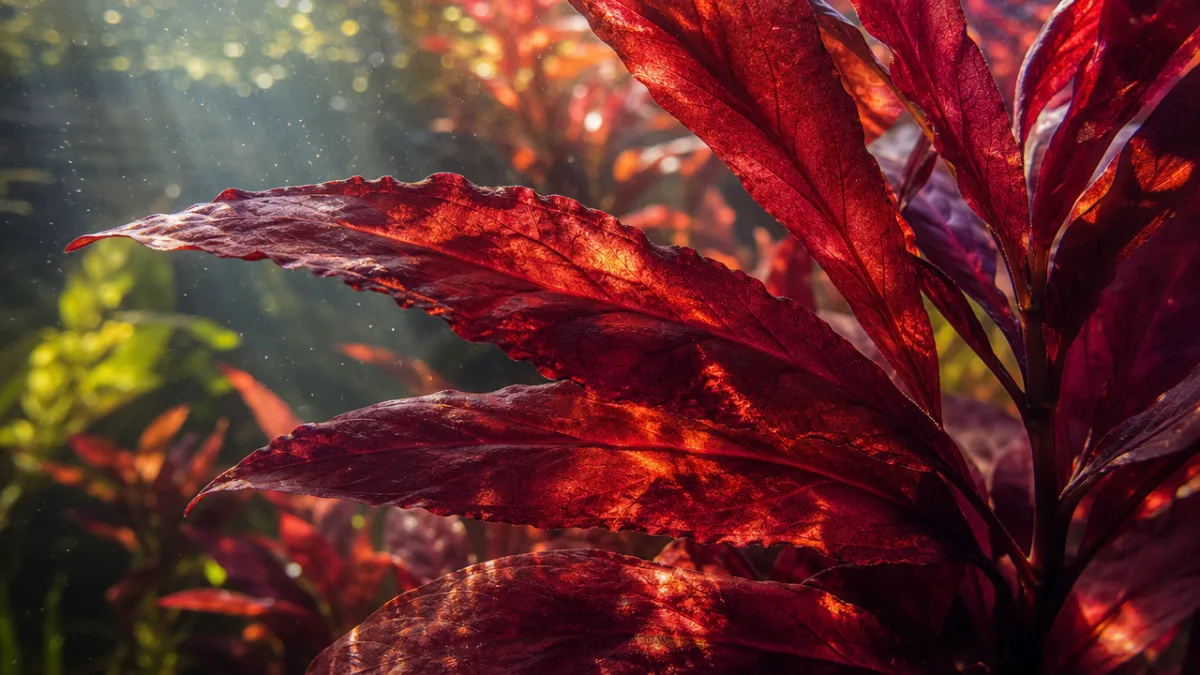
Red Ludwigia is fairly tough, but it does have its weak spots, and a few problems come up again and again. The most common complaint is color loss — leaves going green or yellowish instead of staying that deep, rich red. In the vast majority of cases, this comes down to not enough light or a lack of iron. Before you start worrying about disease or pests, check those two things first. Bumping up light exposure and switching to a fertilizer with chelated iron will fix the problem more often than not.
Algae is the other headache that pond keepers run into regularly. Filamentous algae, blanket weed, hair algae — any of these can wrap around Red Ludwigia stems, blocking light and stealing nutrients. Tackling algae really requires hitting it from multiple angles: keep your nutrient levels balanced, maintain good water circulation, bring in algae-eating snails, shrimp, or fish, and pull out what you can by hand during regular maintenance. Dialing back your lighting duration slightly can also help curb aggressive algae growth, and it usually won’t hurt your plant’s color as much as you’d expect.
Outdoors, aphids and other soft-bodied insects sometimes go after the stems and leaves that grow above the waterline. A strong spray of water is usually enough to knock them off, and whatever falls into the pond becomes a snack for your fish — a pretty tidy solution. Whatever you do, keep chemical pesticides well away from the pond; even tiny amounts can be lethal to fish, frogs, invertebrates, and basically everything else living in the water. Root rot is possible too, usually in poorly oxygenated or compacted substrate. Better water circulation and loosening up the growing medium tends to sort it out before it does any serious damage.
Seasonal Care and Overwintering
If you’re in a temperate climate, keeping Red Ludwigia happy through the seasons takes a bit of planning, but it’s nothing too complicated. Spring and summer are when the plant really takes off — growth can be fast enough that you’ll want to prune weekly just to keep things from getting unruly and shading out your other pond plants. This is also the best window for propagation, since warm temperatures and long days mean cuttings root quickly and easily. Trimming regularly during this period doesn’t just manage size; it actually encourages the plant to push out new growth that’s often the most vividly colored of all.
Once autumn rolls around and temperatures start dropping, you’ll notice growth slowing and the plant looking a little less vibrant. In areas where winter temperatures regularly dip below about 50°F (10°C), Red Ludwigia won’t survive outdoors — you’ll need to either replace it each spring or bring it inside before frost. The easiest approach is to take healthy stem cuttings in late summer and root them in a heated aquarium or a container of water near a bright window or under grow lights. Keep them there through winter, and when pond water climbs back above 60°F in spring, they’re ready to go back outside.
In warmer regions — USDA zones 9 through 11 — Red Ludwigia can actually behave as a true perennial and make it through mild winters without much fuss. That said, even in warm climates, a surprise frost can damage exposed growth, so it’s worth keeping an eye on the forecast and having some floating row cover handy, or moving container-grown plants somewhere sheltered when a cold snap is coming. The roots tend to be more resilient than the above-water foliage, and the plant can bounce back from surface damage if the root system stays protected. Stay consistent with seasonal care and you’ll get years of that stunning display to look forward to.
- Spring: Reintroduce overwintered cuttings to the pond once water temperatures exceed 60°F and begin regular fertilization.
- Early Summer: Peak growth phase; provide maximum light, increase fertilization frequency, and begin propagating cuttings.
- Midsummer: Prune regularly to manage density, monitor for pests, and maintain water chemistry parameters.
- Autumn: Reduce fertilization as growth slows, take final cuttings for overwintering, and prepare for seasonal transition.
- Winter (cold climates): Maintain overwintered cuttings indoors under artificial light in a heated water container.
- Winter (warm climates): Monitor for frost damage, protect roots, and resume light fertilization during mild spells.
Compatibility with Fish, Wildlife, and Other Plants
One of the things that makes Red Ludwigia such a great pond plant is how well it gets along with everything else living in and around the water. The dense stem structure makes fantastic shelter for small fish fry, giving them somewhere to hide from predators while they grow. Goldfish, koi, and most native pond fish coexist with it just fine — the one caveat being that larger koi sometimes decide to uproot or munch on it, especially when they’re hungry. Mesh guards around newly planted stems or a raised planting container can head that problem off pretty effectively.
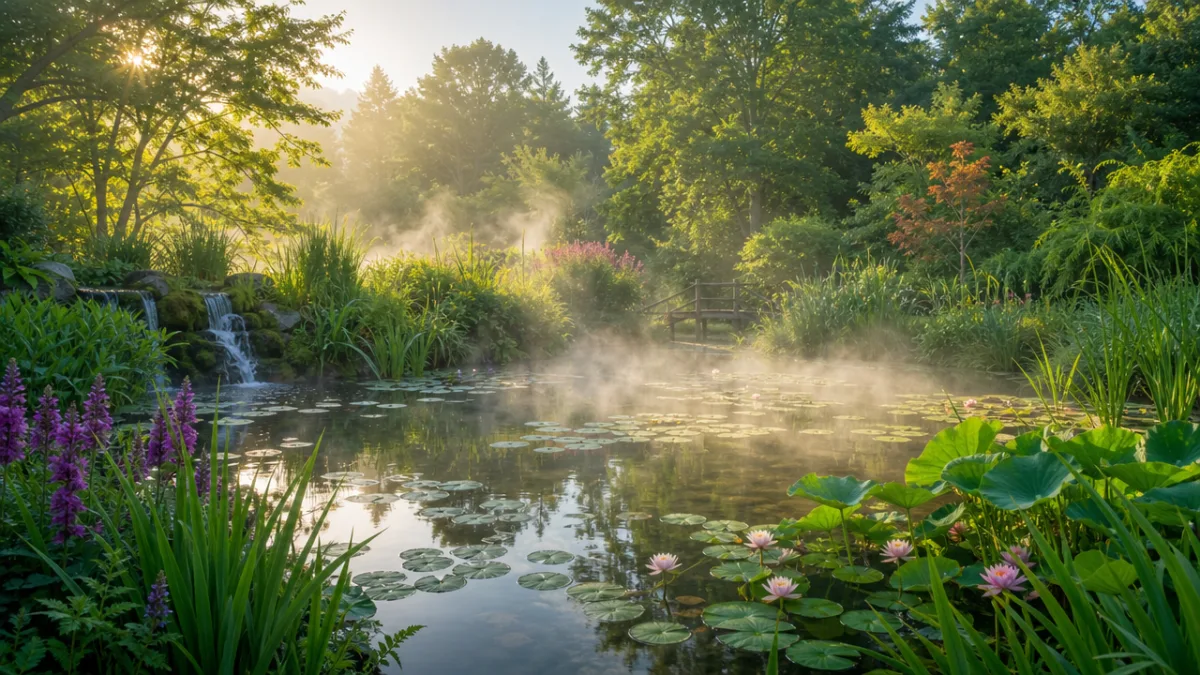
The benefits extend well beyond the fish, too. Frogs and newts love the dense stems for cover and breeding, and aquatic insects use them as anchor points for eggs and larvae. Above the water, those small yellow flowers bring in bees and other pollinators through the summer, so you’re adding real ecological value to your garden. Pair Red Ludwigia with other marginals like water iris, pickerelweed, or cattail, and you end up with a layered habitat that supports a surprisingly rich web of wildlife all year long.
When it comes to choosing companions in a designed planting scheme, think about plants that share similar growing needs while adding some visual contrast. Water hyacinth and water lettuce offer floating rosettes that break things up nicely and compete with algae for nutrients. Hornwort and anacharis work well as submerged oxygenators in similar water temperatures. For a real showstopper, try pairing Red Ludwigia with the bright lime green of Bacopa or the feathery texture of Myriophyllum — the contrast is striking. Thoughtful companion planting doesn’t just look great; it actively improves water quality and creates a healthier, more balanced pond for everything living in it.








What do you think?
It is nice to know your opinion. Leave a comment.