










Flowering Maple (Abutilon ‘Halo’): A Complete Growing Guide
Introduction to Abutilon ‘Halo’
The Flowering Maple, known botanically as Abutilon ‘Halo’, is one of the most visually striking ornamental plants available to gardeners today. Despite its common name, it bears no relation to true maple trees and instead belongs to the Malvaceae family, making it a closer relative of hibiscus and hollyhock. The ‘Halo’ cultivar is particularly celebrated for its stunning bell-shaped flowers and its ability to bloom prolifically across a wide range of growing conditions, making it a favorite among both novice and experienced gardeners alike.
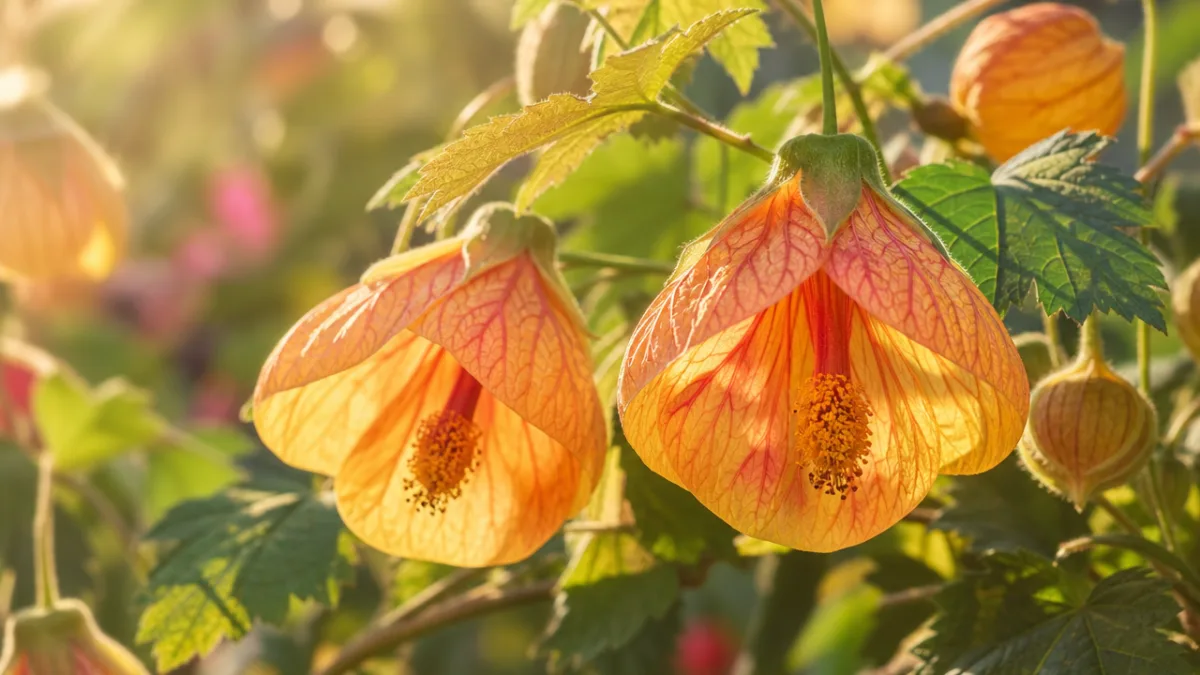
What sets Abutilon ‘Halo’ apart from other flowering shrubs is the remarkable combination of its ornate, pendulous blooms and its lush, maple-leaf-shaped foliage. The flowers typically display soft, warm hues — often peachy-apricot or salmon tones with delicate veining — that seem almost translucent when backlit by sunlight. This luminous quality has earned it the name ‘Halo’, perfectly describing the ethereal glow that radiates from each flower when the plant is positioned in bright light. Few plants in the ornamental garden can match this visual drama.
Originally native to tropical and subtropical regions of South America, Abutilon ‘Halo’ has been cultivated and hybridized over centuries to produce the refined garden varieties we enjoy today. It thrives in USDA hardiness zones 9 through 11 as a perennial shrub but is widely grown as an annual or container plant in cooler climates. Its adaptability, extended blooming season, and relatively low maintenance needs have cemented its place as a go-to plant for gardeners seeking year-round color and texture in their outdoor or indoor spaces.
Plant Structure and Physical Characteristics
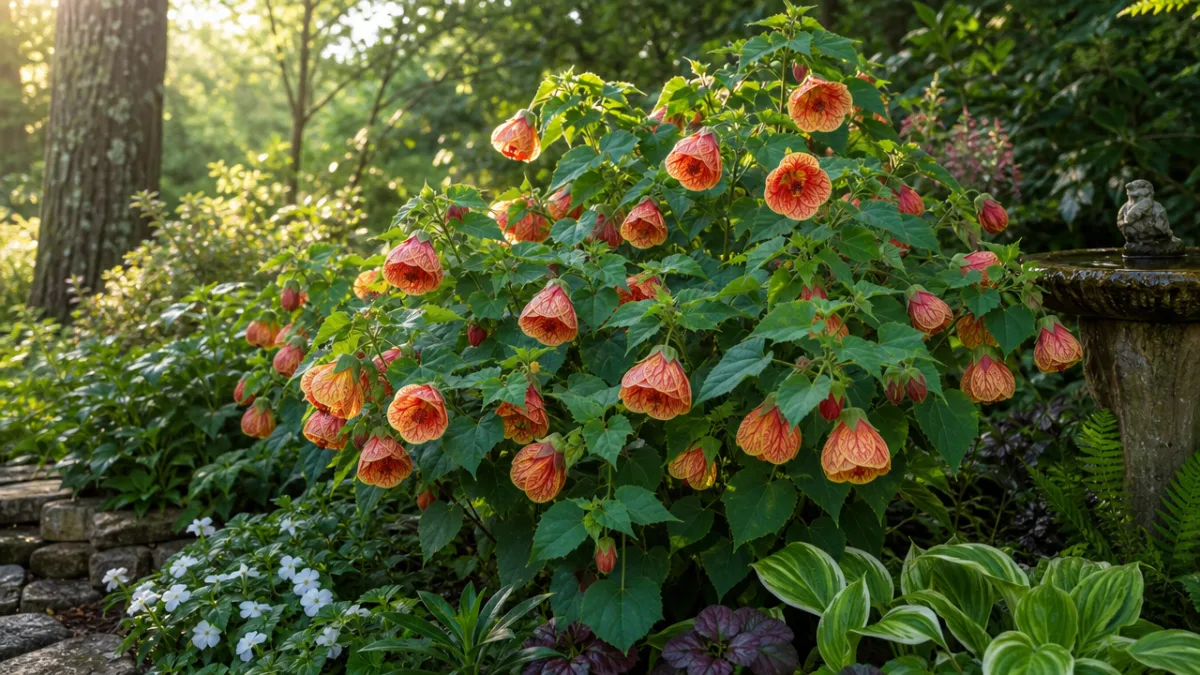
Understanding the full structure of Abutilon ‘Halo’ helps gardeners appreciate why this plant performs so well across different garden settings. At maturity, the plant typically reaches between three and six feet in height, though container-grown specimens often remain more compact. The overall growth habit is upright and bushy, with softly arching branches that drape gracefully under the weight of their abundant blooms. When the entire plant is viewed as a whole, it presents a lush, rounded silhouette that makes it an excellent focal point in mixed borders, patio containers, or as a standalone specimen.
The foliage of Abutilon ‘Halo’ is one of its most distinctive features. The leaves are broad, palmate, and deeply lobed, closely resembling those of a maple tree — hence the common name. Each leaf can span four to six inches across and is typically a rich, mid-green color with a slightly velvety texture. The leaf surface is covered with fine hairs that give it a soft, matte appearance and help the plant retain moisture in warmer conditions. This textural quality adds visual interest even when the plant is not in flower, ensuring it earns its place in the garden throughout the growing season.
The flowers themselves are the undeniable highlight of the entire plant. Each bloom is pendulous and lantern-like, constructed of five overlapping petals that form a rounded bell shape. The petals of the ‘Halo’ cultivar are particularly notable for their warm, apricot or salmon coloration, often accented by deeper veining that creates a subtle, stained-glass effect. The prominent staminal column — characteristic of the Malvaceae family — protrudes from the center of the flower in a decorative cluster, adding further visual complexity. These flowers appear in clusters at the ends of branches and in the leaf axils, meaning a healthy plant can carry dozens of blooms simultaneously.
Ideal Growing Conditions and Climate Requirements
To get the best performance from Abutilon ‘Halo’, it is essential to understand and replicate its preferred growing conditions as closely as possible. This plant thrives in bright, indirect light or filtered sunlight — too much harsh, direct afternoon sun can scorch the delicate petals and cause premature flower drop, while too little light will result in sparse, leggy growth and reduced flowering. A location that receives morning sun and afternoon shade is often considered ideal, particularly in warmer climates where summer temperatures can be intense. In cooler regions, a full-sun position may be entirely appropriate and even necessary to sustain vigorous growth.
Temperature plays a critical role in the health and flowering of Abutilon ‘Halo’. The plant prefers consistently warm conditions, with daytime temperatures between 65°F and 85°F (18°C to 29°C) proving optimal. It is frost-sensitive and will suffer leaf damage at temperatures below 32°F (0°C), with sustained freezing conditions likely to kill the plant entirely. In frost-prone areas, gardeners commonly treat it as a tender perennial, overwintering it indoors in a bright, heated space and moving it back outdoors once all risk of frost has passed in spring. This approach allows the plant to be enjoyed year after year even in temperate climates.
Humidity is another factor worth considering when growing Abutilon ‘Halo’. Being of tropical origin, the plant appreciates moderate to high humidity levels. In very dry climates or heated indoor environments during winter, humidity can drop to levels that stress the plant, leading to leaf curl, bud drop, and increased susceptibility to spider mites. Grouping plants together, placing containers on humidity trays filled with pebbles and water, or running a nearby humidifier can all help maintain an appropriate microclimate. Conversely, good air circulation is equally important to prevent fungal diseases, particularly in warm, humid weather.
Soil, Watering, and Fertilization
Abutilon ‘Halo’ performs best in a well-draining, fertile growing medium that retains adequate moisture without becoming waterlogged. In garden beds, incorporating generous amounts of organic matter such as well-rotted compost or aged bark will significantly improve both drainage and nutrient availability. A slightly acidic to neutral soil pH, ranging from 6.0 to 7.0, is ideal. Heavy clay soils should be amended extensively before planting, as poor drainage leads to root rot — one of the most common causes of failure with this plant. Raised beds or mounded planting areas can be particularly useful in areas where native soil drainage is problematic.
Consistent watering is key to maintaining a healthy, free-flowering specimen. Abutilon ‘Halo’ prefers to be kept evenly moist during the active growing season, which typically spans spring through early autumn. Allow the top inch of soil to dry slightly between waterings to avoid oversaturation, but do not allow the plant to dry out completely, as severe water stress will cause flower and bud drop almost immediately. During winter, especially for plants kept indoors, watering should be reduced significantly — the plant’s growth slows and its water requirements decrease accordingly. Always water at the base of the plant to keep foliage dry and minimize fungal risk.
Feeding Abutilon ‘Halo’ with a balanced, high-quality fertilizer is essential for supporting its notably vigorous growth and generous flowering habit. During the growing season, a liquid fertilizer with a balanced NPK ratio, or one slightly higher in phosphorus to promote flower development, should be applied every two to three weeks. Slow-release granular fertilizers can also be incorporated into the soil at the beginning of the growing season to provide a steady background level of nutrients. As the plant enters its winter rest period, fertilization should be stopped entirely or reduced to monthly applications at half strength, allowing the plant to slow its metabolism naturally before the following spring.
Pruning, Propagation, and Maintenance
Regular pruning is one of the most important maintenance tasks for keeping Abutilon ‘Halo’ looking its best and flowering abundantly season after season. Left unpruned, the plant can become quite woody and open in the center, reducing airflow and diminishing the overall display of flowers. Light pruning throughout the growing season — deadheading spent blooms and pinching back the tips of new growth — encourages the plant to branch more densely and produce a greater number of flowering shoots. More significant structural pruning should be carried out in late winter or early spring, just before new growth begins, when old, woody stems can be cut back by up to one-third.
Propagating Abutilon ‘Halo’ is a straightforward process that most gardeners find highly rewarding. Stem cuttings taken in spring or early summer root readily when treated with a rooting hormone and placed in a moist, well-draining propagation medium. The cuttings should be approximately four to six inches long, taken just below a leaf node, with the lower leaves removed to prevent rotting. Placing them in a warm, bright location with moderate humidity and consistent moisture will typically result in visible root development within three to four weeks. Once rooted, the young plants can be potted on into individual containers and grown on as normal.
Several routine maintenance tasks help ensure that Abutilon ‘Halo’ remains vigorous and pest-free throughout the growing season. Monitoring for common pests — including whiteflies, aphids, and spider mites — is important, as these insects are particularly attracted to the plant’s soft, lush growth. Regular inspection of the undersides of leaves and prompt treatment with insecticidal soap or neem oil at the first sign of infestation will prevent populations from becoming established. The following routine maintenance checklist summarizes the key tasks for year-round care:
- Inspect leaves weekly for signs of pest activity or disease, particularly during warm months when populations can build rapidly.
- Deadhead spent flowers regularly to encourage the production of new blooms and maintain a tidy appearance throughout the season.
- Repot container-grown specimens every one to two years in fresh potting mix, moving up only one pot size at a time to avoid overpotting.
- Check soil moisture before every watering rather than following a fixed schedule, as conditions can vary considerably with weather and season.
- Wipe down leaves with a damp cloth periodically to remove dust accumulation, which can impede photosynthesis and harbor spider mites.

Landscape Uses and Design Applications
Abutilon ‘Halo’ offers extraordinary versatility as a landscape plant, fitting comfortably into a wide range of garden styles and design contexts. In tropical or subtropical gardens, it serves beautifully as a mid-border plant, providing height, texture, and color that bridges the gap between low-growing ground covers and taller backdrop shrubs. Its warm flower tones complement bold, tropical foliage plants such as cannas, elephant ears, and gingers, creating richly layered planting combinations that feel exotic and lush. In more temperate cottage gardens, the soft apricot and salmon flowers harmonize beautifully with roses, salvias, and ornamental grasses.
Container gardening is perhaps one of the most popular and practical ways to grow Abutilon ‘Halo’, particularly in climates where frost prevents it from overwintering outdoors. A large, well-draining pot — at least twelve to fourteen inches in diameter — filled with a high-quality potting mix will support a generous, freely flowering specimen throughout the warmer months. Containers allow the gardener to position the plant precisely where its beauty can be most appreciated, whether framing an entrance, anchoring a patio seating area, or punctuating a balcony garden. The ability to move it indoors during cold weather also extends the plant’s useful life indefinitely.
Beyond its obvious ornamental value, Abutilon ‘Halo’ also plays an important ecological role in the garden by attracting and supporting pollinators. The pendulous, tubular flowers are particularly appealing to hummingbirds, which are drawn to the warm flower colors and the generous supply of nectar. Bumblebees and various butterfly species are also regular visitors, making this plant a valuable addition to any wildlife-friendly garden scheme. For gardeners interested in creating pollinator corridors or wildlife habitats, combining Abutilon ‘Halo’ with other nectar-rich plants ensures a continuous food source from spring through autumn, supporting healthy pollinator populations throughout the season.
Common Problems and Troubleshooting
Even with attentive care, Abutilon ‘Halo’ can occasionally encounter health problems that require prompt diagnosis and intervention. One of the most frequently reported issues is sudden flower and bud drop, which is typically a stress response triggered by dramatic changes in temperature, light, or watering patterns. When a plant is moved from one environment to another — such as when bringing it indoors for winter — it may shed its buds as it acclimatizes to new conditions. Minimizing sudden environmental changes and ensuring consistent care routines will usually resolve this problem over time, with new buds forming once the plant has settled.
Yellowing leaves are another common concern for Abutilon growers and can have several underlying causes that must be distinguished from one another for effective treatment. Overwatering leading to root rot is frequently the culprit, particularly in container-grown plants where drainage may be inadequate. However, yellowing can also result from nutrient deficiencies — especially iron or magnesium deficiency in alkaline soils — or from natural lower-leaf senescence as the plant matures. A careful examination of the entire plant, combined with a review of recent care practices and, if possible, a soil pH test, will usually provide enough information to identify the cause and select the appropriate remedy.
Leggy, weak growth with long internodes and few flowers is a reliable indicator that the plant is not receiving adequate light. This is a particularly common problem for plants grown indoors or in shaded garden positions, where light levels may appear sufficient to the human eye but are actually too low for robust photosynthesis and flower production. Moving the plant to a brighter position — or supplementing natural light with a quality grow lamp for indoor specimens during winter — will typically result in noticeable improvement within a few weeks. It is also worth noting that excessive nitrogen fertilization can promote lush, green vegetative growth at the expense of flowering, so ensuring a balanced fertilizer program is also important for maintaining a good ratio of foliage to blooms.








What do you think?
It is nice to know your opinion. Leave a comment.