










Orostachys iwarenge: The Complete Guide to Chinese Dunce Cap Succulent
Introduction to Orostachys iwarenge
Orostachys iwarenge, commonly known as the Chinese Dunce Cap or Chinese Stonecrop, is one of the most visually captivating succulents available to plant enthusiasts today. Native to the rocky mountainous regions of China, Japan, Korea, and parts of Siberia, this remarkable plant has earned a devoted following among collectors and casual gardeners alike. Its symmetrical rosette form and silvery-blue coloration make it an instant focal point in any succulent arrangement or rock garden display, and its hardy nature allows it to thrive in conditions that would challenge many other ornamental plants.
The genus name Orostachys comes from Greek roots, with “oros” meaning mountain and “stachys” meaning spike — a fitting description for a plant that naturally colonizes rocky outcrops and alpine terrain and eventually sends up a dramatic central flower spike. The species epithet “iwarenge” derives from Japanese, roughly translating to “lotus on a rock,” which beautifully captures the plant’s lotus-like rosette shape and its preference for rocky, well-drained growing conditions. Understanding this etymology gives gardeners immediate insight into what the plant needs to thrive and why it behaves the way it does through its lifecycle.
What truly sets Orostachys iwarenge apart from the crowded world of succulents is its unusual monocarpic nature combined with an exceptional ability to produce offsets prolifically before the mother plant flowers and dies. This lifecycle strategy ensures the colony’s survival and gives the gardener a continuous supply of new rosettes to propagate and share. Whether you are a seasoned succulent collector or just beginning to explore the world of drought-tolerant plants, this guide will walk you through everything you need to know about cultivating and appreciating this extraordinary species.
Distinctive Appearance and Growth Characteristics
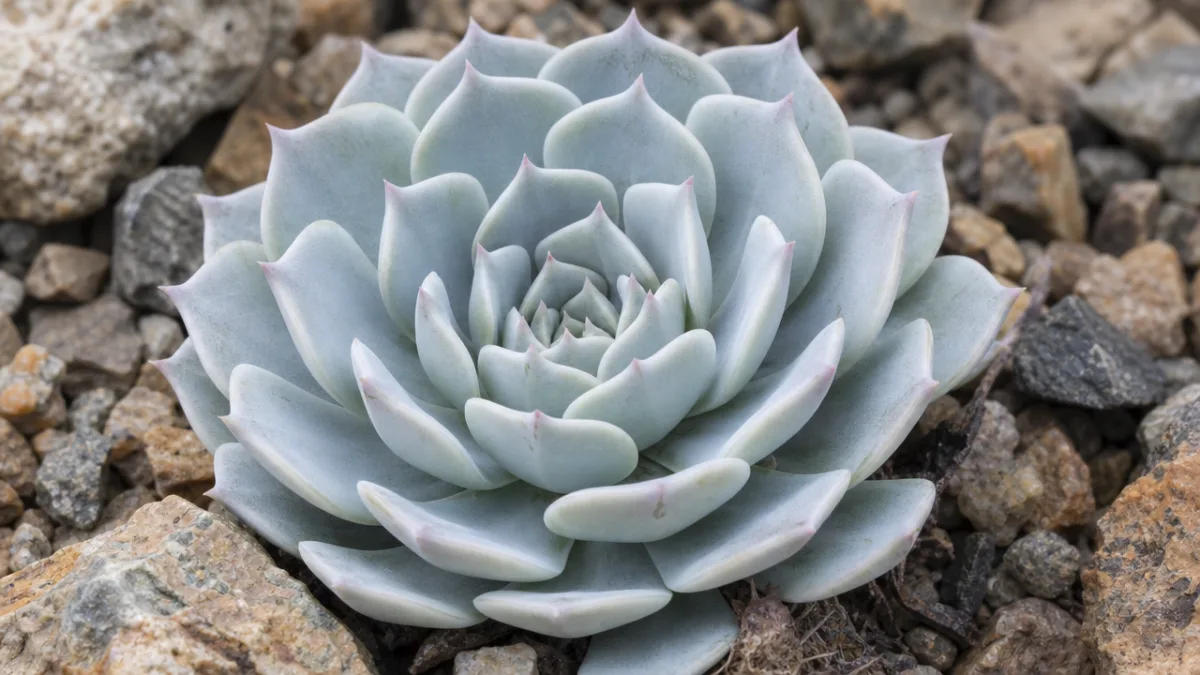
The visual appeal of Orostachys iwarenge centers on its tightly packed, symmetrical rosette of fleshy leaves that form a shape remarkably similar to a pointed hat — hence the common name “Dunce Cap.” The leaves themselves are soft to the touch, powdery in texture due to a protective epicuticular wax coating called farina, and display a stunning range of colors from pale silvery-green to dusty blue-gray, often flushed with hints of purple or pink at the tips, especially when the plant is stressed by cold or drought. Each rosette typically measures between five and fifteen centimeters in diameter, depending on age, growing conditions, and the specific cultivar.
One of the most distinctive structural features of this plant is the characteristic pointed tip that protrudes from the center of the rosette like a tiny spire. This central papilla, formed by the tightly spiraling innermost leaves, gives the plant its conical silhouette and sets it apart immediately from other rosette-forming succulents like Echeveria or Sempervivum. As the plant matures, these inner leaves slowly unfurl outward while new growth continues to form the central point, creating an almost hypnotic, geometric progression that photographers and plant lovers find endlessly fascinating. The overall effect is architectural and otherworldly, lending any planting a sculptural quality.
Orostachys iwarenge is a relatively compact plant, rarely exceeding about fifteen centimeters in height outside of its flowering stage. It grows slowly throughout spring and summer, enters a period of semi-dormancy in winter, and can flatten dramatically against the ground when temperatures drop significantly, an adaptation that helps it survive freezing conditions in its native habitat. The plant produces numerous stolons, or runners, from the base of the mother rosette, each tipped with a tiny new plantlet ready to root wherever it makes contact with soil. This spreading habit, combined with the plant’s low stature, makes it an excellent ground cover choice for rock gardens and alpine-style plantings.
Ideal Growing Conditions and Soil Requirements
Like most succulents hailing from rocky mountain environments, Orostachys iwarenge demands excellent drainage above almost all other considerations. In its natural habitat, this plant grows in thin, gravelly soils on cliff faces and rocky slopes where water drains away almost immediately after rainfall, and the roots are never allowed to sit in moisture for extended periods. Replicating this condition in cultivation is essential to the plant’s health and longevity. A well-draining succulent or cactus mix amended with additional perlite, coarse grit, or crushed pumice works exceptionally well, with many growers targeting a ratio of roughly fifty percent inorganic material to fifty percent organic matter.
Regarding light requirements, Orostachys iwarenge thrives in full sun to partial shade, though the quality and intensity of available light will significantly influence the plant’s coloration and compactness. Plants grown in bright, direct sunlight tend to produce the most vivid silvery and purple-tinted foliage and maintain the tightest, most symmetrical rosette form. Those grown in lower light conditions often become etiolated — stretching toward the light source — and may display a greener, less dramatic coloration. In hotter climates with intense afternoon sun, some protection during the harshest midday hours can prevent leaf scorch, but this plant is notably more sun-tolerant than many other finely-leaved succulents.
Temperature hardiness is one of Orostachys iwarenge’s most celebrated traits among gardeners in cooler climates. This species is genuinely cold-hardy, tolerating temperatures well below freezing and rated as suitable for USDA hardiness zones four through nine, meaning it can survive outdoor winters across much of North America, Europe, and similar temperate regions without any protection whatsoever. In fact, exposure to cold temperatures triggers some of the plant’s most beautiful color responses, with the tips and edges of the leaves deepening to purple and wine-red shades that contrast spectacularly with the silvery center. This combination of cold hardiness and visual beauty makes it a rare and valuable addition to year-round garden planting schemes.
Watering, Feeding, and Seasonal Care
The watering needs of Orostachys iwarenge follow the classic succulent approach of thorough, infrequent irrigation combined with a strict emphasis on allowing the growing medium to dry out completely between waterings. During the active growing season in spring and summer, the plant appreciates a good soaking once every one to two weeks, depending on temperature, pot size, and humidity levels in your environment. The key is to avoid any prolonged dampness around the roots, as rot is the primary cause of failure with this species in cultivation. Always water at the soil level rather than from above to keep the powdery farina on the leaves intact and to avoid fungal issues that can arise from wet foliage.
As autumn approaches and temperatures begin to drop, it is important to gradually reduce the frequency of watering to help prepare the plant for its winter semi-dormancy period. During winter, Orostachys iwarenge requires very minimal moisture — often none at all if grown outdoors in a rainy climate, as the plant can subsist entirely on natural precipitation and whatever moisture it stores in its leaves. For container-grown specimens kept indoors or in a cold greenhouse, a light watering once per month or even less is generally sufficient. Overwatering in winter is far more dangerous than underwatering for this species, and many losses can be attributed directly to excessive moisture during cold, low-light conditions.
Feeding requirements for Orostachys iwarenge are modest, as this plant has evolved in nutrient-poor rocky soils and is perfectly adapted to low-fertility conditions. A diluted balanced liquid fertilizer applied two or three times during the growing season is generally more than adequate to support healthy growth. Some growers prefer to use a fertilizer with a lower nitrogen content, such as a tomato or bloom fertilizer, to encourage compact growth and more vivid coloration rather than lush, soft foliage that can be more susceptible to pest damage and rot. Avoid feeding during autumn and winter entirely, as the plant’s slowed metabolism cannot efficiently use additional nutrients during its rest period, and excess salts in the soil can cause root stress.
Here are key seasonal care tasks for Orostachys iwarenge throughout the year:
- Spring: Resume regular watering as temperatures rise; begin fertilizing; check for and remove any winter-damaged leaves; repot if necessary before vigorous growth begins.
- Summer: Maintain regular watering schedule; monitor for pests; protect from extreme midday heat in very hot climates; enjoy the proliferation of offsets forming around the mother rosette.
- Autumn: Gradually reduce watering frequency; stop fertilizing; prepare outdoor plants by ensuring soil drainage is excellent ahead of autumn rains; collect offset plantlets for propagation.
- Winter: Reduce or eliminate watering entirely; protect pot-grown specimens from prolonged freezing of the root zone if in containers; enjoy the cold-stressed coloration of outdoor plants.
Propagation Methods and Techniques
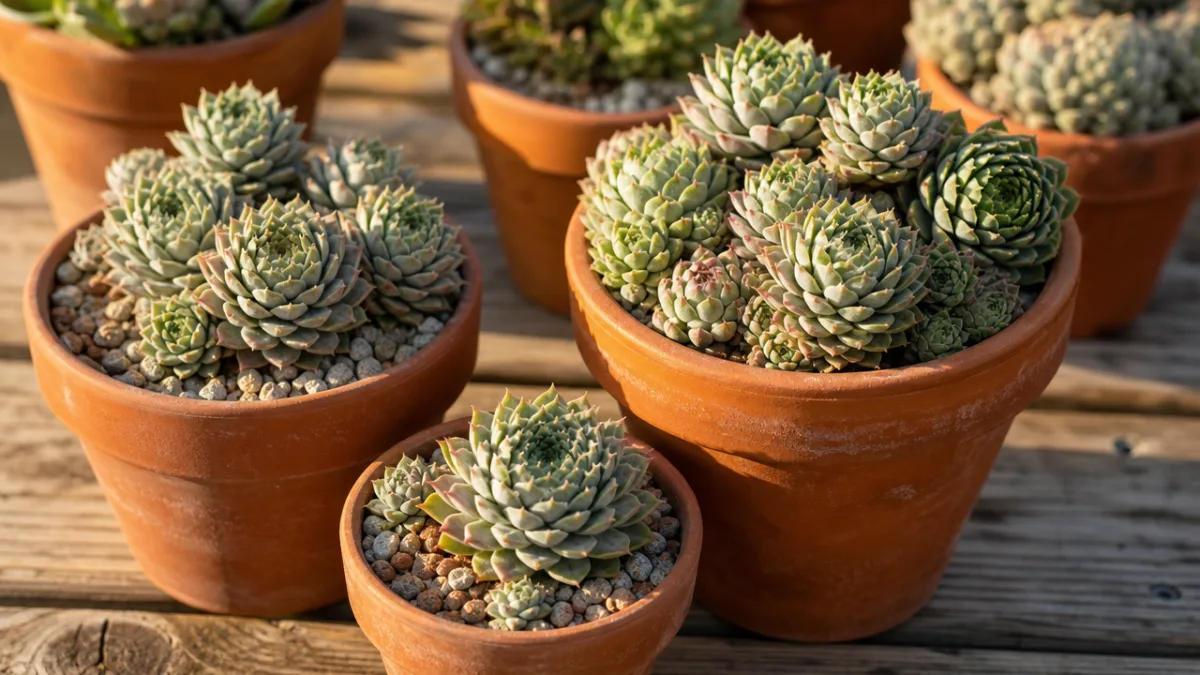
One of the greatest pleasures of growing Orostachys iwarenge is how freely and enthusiastically the plant propagates itself, providing the gardener with an endless supply of new plants to expand a collection, create mass plantings, or share with friends. The most reliable and effortless method of propagation is simply allowing the stolons — the thin, thread-like runners the plant produces in abundance — to spread until their terminal plantlets make contact with soil and begin to root on their own. This mirrors exactly what the plant does in nature and requires virtually no intervention from the grower beyond ensuring suitable growing medium is within reach of the spreading runners.
For a more controlled approach to propagation, individual offset plantlets can be carefully detached from the stolons once they have developed a small but visible root system of their own. Using clean, sharp scissors or fingertips, gently separate the offset at the point where the stolon connects, taking care to preserve as many roots as possible. Allow the detached offset to rest in a warm, dry location for a day or two to let any small wounds callous over, which reduces the risk of rot when the cutting is potted. Then place the offset in a small container filled with pre-moistened, well-draining succulent mix and position it in bright indirect light for the first week or two to encourage root establishment before moving it to full sun conditions.
Orostachys iwarenge can also be grown from seed, though this method is considerably more time-consuming and less commonly practiced than offset division. Seeds are tiny and require careful handling, a well-prepared seed-starting mix that is kept consistently but lightly moist, and warm temperatures of around twenty to twenty-five degrees Celsius for successful germination. Seedlings grow slowly in their first season and require patient, attentive care to avoid damping-off fungal issues. However, growing from seed does offer the possibility of observing natural genetic variation in the population and occasionally discovering seedlings with particularly attractive coloration or form that might be selected and named as new cultivars.
The Spectacular Blooming Cycle and Monocarpic Nature
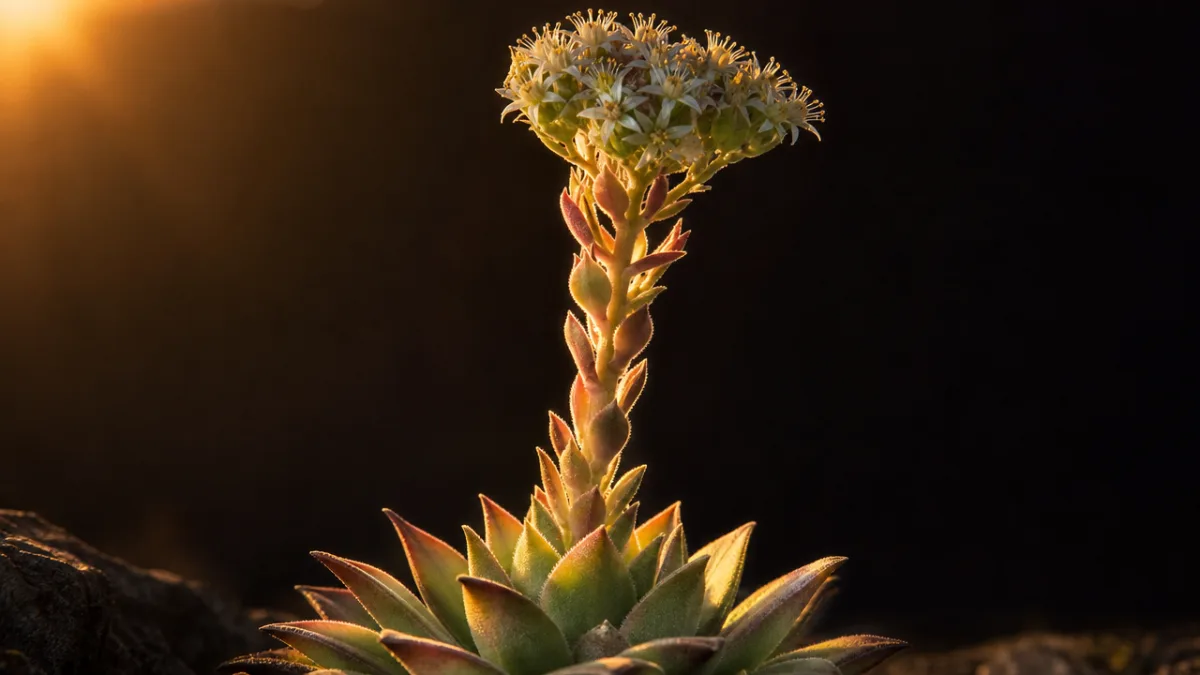
Perhaps the most dramatic event in the life of Orostachys iwarenge is its eventual flowering, a spectacular and bittersweet spectacle that marks both the plant’s greatest achievement and the end of its individual life. As a monocarpic species, each rosette flowers only once, then dies — but not before producing numerous offsets that carry on the genetic legacy of the mother plant. The decision to flower is triggered by a combination of factors including the plant’s age, day length, and temperature signals, typically occurring in the plant’s second or third year of life during late summer or early autumn, with the entire flowering process unfolding over several weeks.
The transformation that begins with flowering is visually extraordinary. From the tight center of the rosette emerges a rapidly elongating central spike that can ultimately reach heights of fifteen to thirty centimeters, densely packed along its length with small, star-shaped flowers in shades of creamy white or pale pink. This spike makes the plant look completely different from its usual compact, ground-hugging form, and the flower spike itself attracts pollinators including bees and butterflies in good numbers during its bloom period. The flowers are individually small but collectively create an impressive display, and if allowed to set seed, the spike will become laden with tiny seed capsules that can be harvested for future propagation efforts.
After flowering is complete and the seeds have ripened, the mother rosette begins to wither and die — a process that can be emotionally difficult for attached plant owners to witness but is entirely natural and should not be interfered with. The dying rosette should be left in place until it has completely dried out, as it continues to send nutrients and energy to the developing offset plants surrounding it during this final phase. Once fully desiccated, it can be removed cleanly. The surrounding offsets, which have been growing vigorously throughout this period, will fill the space left by the mother plant within a single growing season, and the cycle begins anew, ensuring the colony’s continuity.
Pests, Diseases, and Common Problems
Orostachys iwarenge is a remarkably resilient plant that suffers from relatively few pest and disease problems when grown under appropriate conditions, but like all succulents it is not entirely immune to the challenges of garden and indoor cultivation. The most commonly encountered pests are mealybugs, which favor the tight crevices between the leaves where the farina provides shelter, and vine weevil grubs, which can devastate the root system of container-grown specimens. Regular inspection of the plant, particularly in the heart of the rosette and around the soil level, is the best preventive measure, and early intervention with appropriate treatments — isopropyl alcohol for mealybugs, neem soil drench for vine weevil — prevents minor infestations from becoming major problems.
Root rot caused by Fusarium or Phytophthora fungi remains the single most common cause of plant death in cultivated Orostachys iwarenge, and it is almost always preventable through disciplined watering practices and excellent soil drainage. Plants that show signs of rot — soft, mushy stems at the base, wilting despite moist soil, or a foul odor from the growing medium — should be removed from their containers immediately and inspected. If rot has not yet reached the crown of the rosette, it may be possible to save the plant by removing all affected tissue with a clean sharp knife, dusting the wound with sulfur powder or a commercial fungicide, and allowing the plant to dry for several days before repotting in fresh, dry mix.
Environmental stress problems are also worth addressing for new growers. Etiolation caused by insufficient light is easily identified by stretched, widely spaced leaves and a generally unhealthy-looking form, and the remedy is simply to move the plant to a brighter location. Sunburn from sudden exposure to intense direct sunlight after a period of low-light growing appears as pale, papery patches on the leaf surfaces and is prevented by gradually acclimatizing the plant to higher light levels over several weeks. Leaf drop in winter is normal and should not cause alarm, as the plant may shed its outermost leaves as a natural response to dormancy conditions, revealing a tighter, smaller winter rosette that will expand again come spring.
Landscape Uses and Companion Planting
Orostachys iwarenge’s cold hardiness, compact size, and striking appearance make it exceptionally versatile in the landscape, finding roles in a wider range of garden styles and climates than many of its succulent relatives. In rock gardens and alpine plantings, it excels as a ground cover and gap-filler, spreading gently between stones and over gravel mulches to create naturalistic colonies that require almost no maintenance once established. Its low profile means it never overshadows neighboring plants, and its spreading habit by stolons allows it to colonize empty spaces gradually without becoming invasive or aggressive. These qualities make it a thoughtful and easy-to-manage addition to any low-maintenance landscape design.
Container gardening is another arena where Orostachys iwarenge truly shines. Its compact size makes it perfect for shallow troughs, hypertufa containers, and wide, low bowls that show off the rosette’s symmetrical geometry to full advantage. Mixed succulent arrangements benefit enormously from its silvery-blue coloration and distinct textural contrast compared to more common succulent companions like Sedum, Sempervivum, and Echeveria. When selecting companions for mixed plantings, choose plants with similar watering and light requirements and complementary colors — deep burgundy Sempervivum varieties, golden Sedum species, or rosette Echeverias in soft pink tones all pair beautifully with the cool silver tones of Orostachys iwarenge.
From a design perspective, Orostachys iwarenge is particularly effective when planted in numbers rather than as solitary specimens. A drift of fifteen or twenty rosettes in various stages of development, ranging from tiny newly-rooted offsets to mature flowering-stage plants, creates a living tapestry of texture, color, and form that changes subtly with the seasons and dramatically when any individual plant chooses to send up its flower spike. This kind of planting approach mirrors the plant’s natural colony-forming behavior and results in a display that looks both naturalistic and intentionally designed — a balance that is genuinely difficult to achieve in garden design but which Orostachys iwarenge seems to accomplish almost effortlessly by simply being allowed to do what it does best.








What do you think?
It is nice to know your opinion. Leave a comment.