










Luculia intermedia: A Complete Guide to the Himalayan Honeysuckle Shrub
Introduction to Luculia intermedia
Luculia intermedia is a stunning flowering shrub that belongs to the Rubiaceae family, the same botanical family that includes coffee, gardenias, and bedstraws. Native to the Himalayan foothills and subtropical regions of southern Asia, this remarkable plant has captured the hearts of gardeners and horticulturalists around the world. With its graceful arching branches, large oval leaves, and spectacular clusters of fragrant pink flowers, Luculia intermedia occupies a well-deserved place among the most beautiful ornamental shrubs available to gardeners in temperate and subtropical climates.
The genus Luculia comprises only a small handful of species, making each one something of a botanical treasure. Luculia intermedia is often regarded as one of the most accessible members of the genus for cultivation in gardens outside its native range, as it demonstrates somewhat greater adaptability than its close relatives. Gardeners in the warmer parts of Europe, Australia, New Zealand, and the southern United States have discovered that with the right conditions, this shrub can thrive and reward careful cultivation with breathtaking seasonal displays that are both visually dramatic and richly scented.
Despite its undeniable beauty, Luculia intermedia remains relatively obscure outside specialist horticultural circles, which means that many gardeners have yet to discover what this plant can offer. Its flowers, which bloom primarily in autumn and winter depending on the climate, can fill an entire garden with a sweet, penetrating fragrance that is difficult to describe but utterly unforgettable. This article aims to provide a thorough and practical guide to understanding, growing, and enjoying Luculia intermedia, covering everything from its botanical characteristics to its care requirements, propagation techniques, and landscape uses.
Botanical Characteristics and Natural Habitat
In its natural habitat across the Himalayan foothills, Bhutan, northeastern India, and parts of Myanmar and southwestern China, Luculia intermedia grows as a semi-evergreen to deciduous shrub, typically reaching heights of between two and four meters under ideal conditions. The plant produces long, gracefully arching stems that give it a somewhat informal, flowing silhouette in the landscape. The leaves are large, broadly oval, and deep green with a slightly glossy upper surface and a paler underside, making them an attractive feature even when the plant is not in flower.
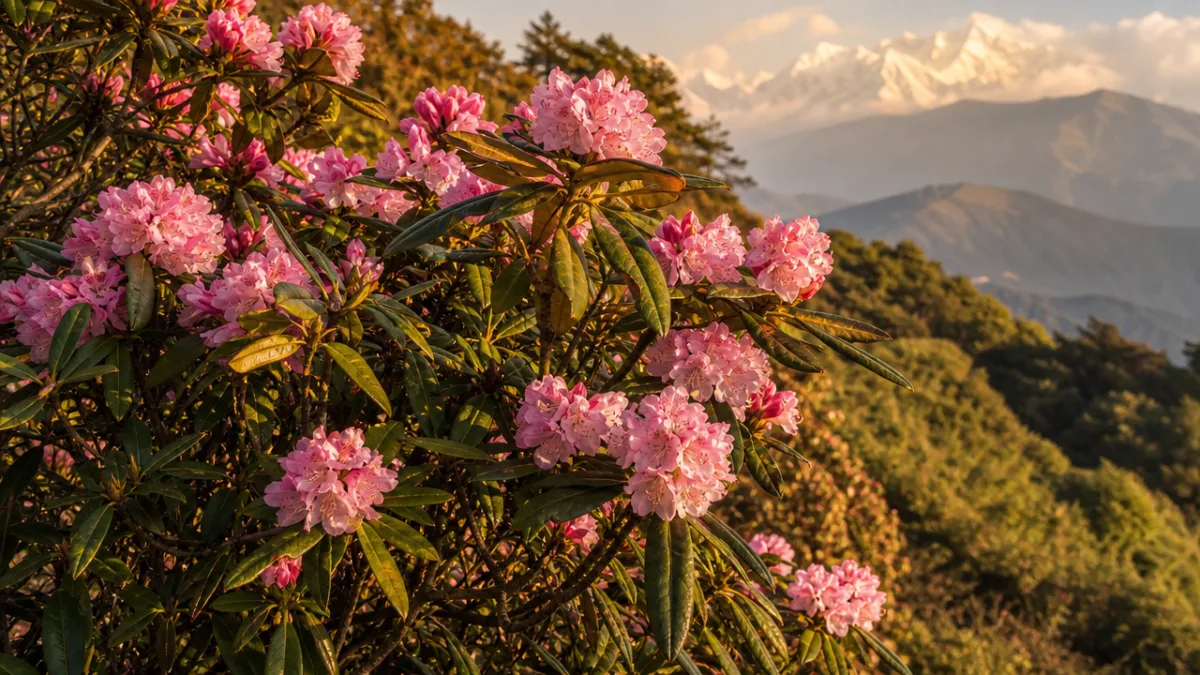
The flowers of Luculia intermedia are its most celebrated feature. They are borne in large, terminal and axillary corymbs — that is, flat-topped or gently domed clusters — and each individual flower is a slender tube that opens into five spreading petals at its mouth. The color is typically a soft to medium pink, sometimes with a slightly deeper flush toward the center, and the overall effect of a fully flowering shrub is one of extraordinary delicacy and abundance simultaneously. The flowers are intensely fragrant, producing a scent that has been variously described as sweet, slightly spicy, and reminiscent of hyacinths or tuberoses, though it is truly its own unique perfume.
In its native Himalayan range, Luculia intermedia is found growing at elevations typically between 1,500 and 2,800 meters, where it favors well-drained but moisture-retentive soils along forest margins, stream banks, and in secondary vegetation. The climate at these altitudes is characterized by warm, moist summers with significant monsoon rainfall and mild, relatively dry winters. Understanding this natural habitat provides the key to successfully cultivating Luculia intermedia in gardens, as it reveals the plant’s fundamental requirements: good drainage, consistent moisture during the growing season, protection from frost, and a position that offers some shelter from drying winds.
Growing Conditions and Soil Requirements
Successfully cultivating Luculia intermedia begins with selecting the right growing conditions, and chief among these is soil quality. This plant demands a well-draining, humus-rich, acidic to neutral soil with a pH ideally between 5.5 and 6.5. Heavy clay soils that become waterlogged will quickly cause root rot and the rapid decline of the plant, while thin, sandy soils that dry out too rapidly will cause stress during the growing season. The ideal soil is loose, friable, and rich in organic matter, much like the leaf-litter-enriched soils found naturally in its mountain forest habitat.
In terms of climate, Luculia intermedia is best suited to regions with mild winters and warm, humid summers. It is generally rated as hardy to around -3 to -5 degrees Celsius, meaning that hard frosts will damage or kill the plant unless it is given significant protection. In borderline climates, planting against a warm, sheltered wall — particularly one with a southerly or westerly aspect in the Northern Hemisphere — can provide enough additional warmth and wind protection to tip the balance in the plant’s favor. In cooler regions, growing Luculia intermedia in a large container that can be moved into a frost-free greenhouse or conservatory over winter is a highly practical alternative.
Sunlight requirements are another important consideration. Luculia intermedia performs best in a position that receives full sun to partial shade. In hotter, drier climates, some afternoon shade is beneficial in preventing leaf scorch and reducing moisture stress. In cooler, cloudier climates, a position in full sun will help the plant receive the warmth it needs to grow strongly and flower reliably. Adequate air circulation around the plant is also valuable, as it reduces the risk of fungal diseases, which can be a problem in humid conditions — though it should be balanced against the need for shelter from cold or drying winds.
When preparing a planting site for Luculia intermedia, incorporating generous amounts of well-rotted compost or leaf mold into the existing soil will significantly improve its suitability. Adding a layer of organic mulch around the base of the plant, kept clear of the main stem, helps retain soil moisture, regulate root temperature, and suppress competing weeds. Key soil preparation steps include:
- Testing soil pH and adjusting if necessary with sulfur to acidify or lime to raise pH toward the neutral range
- Digging in two to three buckets of well-rotted compost or leaf mold per square meter of planting area
- Ensuring drainage is adequate by raising the planting site slightly on heavy soils or incorporating coarse grit
- Applying a 5–8 centimeter layer of bark chip or leaf mold mulch after planting
- Watering thoroughly at planting and establishing a regular irrigation routine for the first two growing seasons
Watering, Feeding, and Seasonal Care
Luculia intermedia has a distinct seasonal rhythm that should guide the gardener’s approach to watering and fertilizing throughout the year. During the active growing season in spring and summer, the plant benefits from regular, consistent watering that keeps the soil evenly moist without allowing it to become saturated. In regions with naturally dry summers, supplemental irrigation will almost certainly be necessary. Drip irrigation or soaker hoses are ideal for delivering water efficiently directly to the root zone while keeping foliage dry, which helps prevent fungal problems.
Feeding Luculia intermedia should begin in early spring as new growth emerges and continue through the summer months. A balanced, slow-release fertilizer formulated for acid-loving plants — such as those designed for camellias, rhododendrons, and azaleas — is an excellent choice. Alternatively, liquid feeds of a balanced fertilizer with micronutrients can be applied monthly from spring through to late summer. Feeding should be stopped in late summer to allow the plant to harden its new growth before the cooler months arrive, as soft, sappy growth produced late in the season is much more vulnerable to frost damage.
In autumn, as temperatures begin to drop and the plant enters its flowering period, care requirements shift. Watering can be gradually reduced as natural rainfall tends to increase in many regions during this season, and the plant’s growth rate slows. The spectacular flower clusters typically appear from late autumn through winter in mild climates, transforming the shrub into a breathtaking focal point during a season when many other garden plants are dormant or bare. Throughout winter, in borderline hardy situations, fleece wrapping the stems or placing a cloche over smaller plants during cold snaps can make the difference between plant survival and loss.
Pruning is an important aspect of seasonal care for Luculia intermedia. The plant flowers on growth produced in the current season, which means that pruning, when carried out immediately after flowering has finished, will encourage the production of vigorous new shoots that will carry the following season’s flowers. Pruning too late risks removing the developing flower buds. General pruning guidelines include:
- Prune immediately after the last flowers have faded, typically in late winter or very early spring
- Remove spent flower clusters and cut back flowered stems by approximately one-third to one-half their length
- Cut out any dead, damaged, or crossing branches to maintain an open, well-ventilated structure
- Shape the overall plant lightly to maintain an attractive silhouette without sacrificing too many potential flowering stems
- Apply a top dressing of fresh compost or balanced fertilizer after pruning to support the vigorous new growth that follows

Propagation Methods and Techniques
Propagating Luculia intermedia is a rewarding undertaking that allows gardeners to multiply their plants, share them with friends, or create replacement specimens as insurance against losses. The most reliable method of propagation for home gardeners is semi-hardwood cuttings taken in mid to late summer. At this time of year, the current season’s growth has begun to firm up at its base while remaining somewhat flexible at the tip, and this intermediate state — hence the technique’s name — provides the best balance between the cutting’s ability to form roots and its resilience against wilting.
To take semi-hardwood cuttings of Luculia intermedia, select healthy, disease-free shoots of the current season’s growth approximately 10 to 15 centimeters long. Using clean, sharp secateurs or a knife, cut just below a leaf node and remove the lower leaves, leaving only two or three pairs at the tip of the cutting. Dipping the cut end in a rooting hormone powder or gel formulated for semi-hardwood cuttings significantly improves the strike rate. Insert the prepared cuttings into a mix of equal parts perlite and peat-free compost in a small pot or tray, then cover with a clear plastic bag or place in a heated propagator to maintain high humidity around the cuttings while they root.
Rooting typically takes between six and twelve weeks under warm, humid conditions with a bottom heat of around 20 to 22 degrees Celsius. Once the cuttings have rooted and are producing visible new growth, they can be gradually acclimatized to less humid conditions before being potted on individually into 9–10 centimeter pots filled with an acidic, free-draining compost mix. Young plants should be grown on in a frost-free environment through their first winter and planted out or moved to their permanent containers the following spring after the risk of frost has passed. Patience and attention during these early stages will result in vigorous young plants ready to reward the gardener with their first flowers within two to three years.
Landscape Uses and Companion Planting
Luculia intermedia’s combination of elegant form, attractive foliage, spectacular flowers, and exceptional fragrance makes it an extraordinarily versatile plant in the garden landscape. Perhaps its most powerful role is as a specimen or focal point plant, positioned where its beauty and scent can be fully appreciated. Planting it near a pathway, garden gate, seating area, or window that is frequently opened in the flowering season allows the fragrance to be enjoyed to the fullest. A specimen plant growing against a warm sheltered wall, where it can develop its natural arching form, is a breathtaking sight when in full flower during the autumn and winter months.
In larger gardens, Luculia intermedia works beautifully within mixed shrub borders alongside other acid-loving plants that share similar growing requirements. Companion plants that complement it well include camellias, whose bold, formal flowers provide an interesting contrast to Luculia’s delicate clusters; rhododendrons and azaleas, which offer spectacular spring color as a prelude to Luculia’s autumn display; and Michelia species, which similarly combine beautiful flowers with exceptional fragrance. Ferns, hostas, and hellebores can fill the under-planting layer with texture and interest during the seasons when Luculia is not at its peak.
Container cultivation opens up Luculia intermedia to a much wider range of gardeners, particularly those in cooler climates where outdoor cultivation is not possible year-round. A large container — at least 40 to 50 centimeters in diameter — filled with a free-draining, acidic potting mix provides an excellent home for the plant. Container-grown specimens can be displayed on a sunny terrace or patio during the warmer months, then moved into a cool conservatory, greenhouse, or frost-free porch to overwinter safely. The portability of container plants also means that the plant can be brought to the most prominent position in the garden when it is at its spectacular flowering peak.
For those interested in creating a fragrant garden experience, Luculia intermedia pairs particularly well with other winter- and autumn-flowering fragrant plants to create a sequence of scent throughout the cooler months. Excellent fragrant companions for different seasons include:
- Autumn: Sweet osmanthus (Osmanthus fragrans), Cestrum nocturnum, and fragrant cyclamen varieties
- Winter: Winter-flowering viburnums such as Viburnum farreri, Chimonanthus praecox (wintersweet), and Daphne bholua
- Early Spring: Daphne odora, Sarcococca confusa, and witch hazels (Hamamelis species)
- Year-round containers: Gardenias and scented-leaved pelargoniums for additional fragrant interest in patio settings

Pests, Diseases, and Common Problems
Like all garden plants, Luculia intermedia can be affected by a range of pests and diseases, though a plant grown in appropriate conditions with good cultural care is significantly more resistant to problems than one under stress. Aphids are among the most common pests, often clustering on soft new growth tips in spring and early summer. They can be controlled by encouraging natural predators such as ladybirds and lacewings, or by treating with a targeted insecticidal soap or neem oil spray. Mealybugs can occasionally be problematic, particularly on container-grown plants, and should be treated promptly with systemic insecticide or removed manually with a cotton swab dipped in rubbing alcohol.
Fungal diseases, particularly powdery mildew and botrytis (grey mold), can affect Luculia intermedia in conditions of poor air circulation, high humidity, or if the foliage is frequently wetted. Ensuring the plant is positioned with adequate space around it, avoiding overhead watering, and removing any affected plant material promptly will help prevent these diseases from taking hold. In cases where fungal disease becomes established, a fungicide appropriate for ornamental shrubs can be applied according to the manufacturer’s instructions, with repeat applications as needed until the problem is resolved.
Several cultural problems are also commonly encountered with Luculia intermedia. Yellowing leaves can indicate either iron deficiency due to overly alkaline soil — addressed by soil acidification and application of chelated iron — or overwatering and root damage. Failure to flower is often the result of insufficient sun, over-feeding with nitrogen-rich fertilizer (which promotes leafy growth at the expense of flowers), or pruning at the wrong time of year and removing flower buds. Frost damage, manifesting as blackened, wilted stems and foliage, is the most serious problem in borderline climates and emphasizes the critical importance of providing appropriate protection during cold weather. With attentive observation and prompt response to problems, Luculia intermedia can be kept healthy and beautiful for many years.








What do you think?
It is nice to know your opinion. Leave a comment.