










Impatiens walleriana: The Complete Guide to Growing and Caring for Busy Lizzies
Introduction to Impatiens walleriana
Impatiens walleriana, commonly known as Busy Lizzie, Patient Lucy, or simply garden impatiens, is one of the most beloved flowering plants in the world of horticulture. Native to eastern Africa, from Kenya and Tanzania through to Mozambique, this remarkably versatile annual has captured the hearts of gardeners across every continent. Its ability to thrive in shaded conditions where few other flowering plants dare to grow makes it an irreplaceable component of garden design, container planting, and indoor decoration alike.
The plant was named in honor of Sir Clement Robert Markham’s companion Horace Waller, a missionary and abolitionist who accompanied the famous explorer on his African expeditions. The genus name Impatiens, meaning “impatient” in Latin, refers to the explosive way the seed pods burst open when touched, scattering seeds with remarkable force across the surrounding area. This fascinating botanical mechanism is one of many reasons this plant has intrigued scientists and gardeners for well over a century since its introduction to European horticulture.
Today, Impatiens walleriana is cultivated in an astonishing range of cultivars, offering flowers in colors spanning from pure white to deep burgundy, coral, salmon, vivid orange, magenta, and every soft pastel imaginable. Many modern varieties also feature double blooms that closely resemble miniature roses, adding an unexpected elegance to what is often considered a humble bedding plant. Whether used as a seasonal annual in temperate climates or grown as a perennial in frost-free tropical gardens, Busy Lizzies have earned their place as one of horticulture’s most enduring favorites.
Botanical Characteristics and Plant Structure
Understanding the physical structure of Impatiens walleriana helps gardeners make better decisions about its care, placement, and use in the landscape. The plant typically grows between 15 and 60 centimeters tall, forming a dense, bushy mound of soft, succulent stems. These stems are semi-transparent, fleshy, and brittle, containing a high water content that contributes to the plant’s need for consistent moisture. The branching habit is naturally prolific, which means plants tend to fill out attractively without requiring much pinching or pruning from the gardener.
The leaves of Impatiens walleriana are ovate to elliptical in shape, with finely serrated or crenate margins that give them a slightly wavy, textured appearance. They are typically bright to medium green, though some cultivars produce foliage in bronze or darker green tones that provide a beautiful contrast to the vivid flowers above. Leaves are arranged alternately along the stems and possess a soft, almost waxy texture that, combined with their succulent nature, makes the entire plant somewhat delicate when handled roughly or exposed to extremes of temperature.
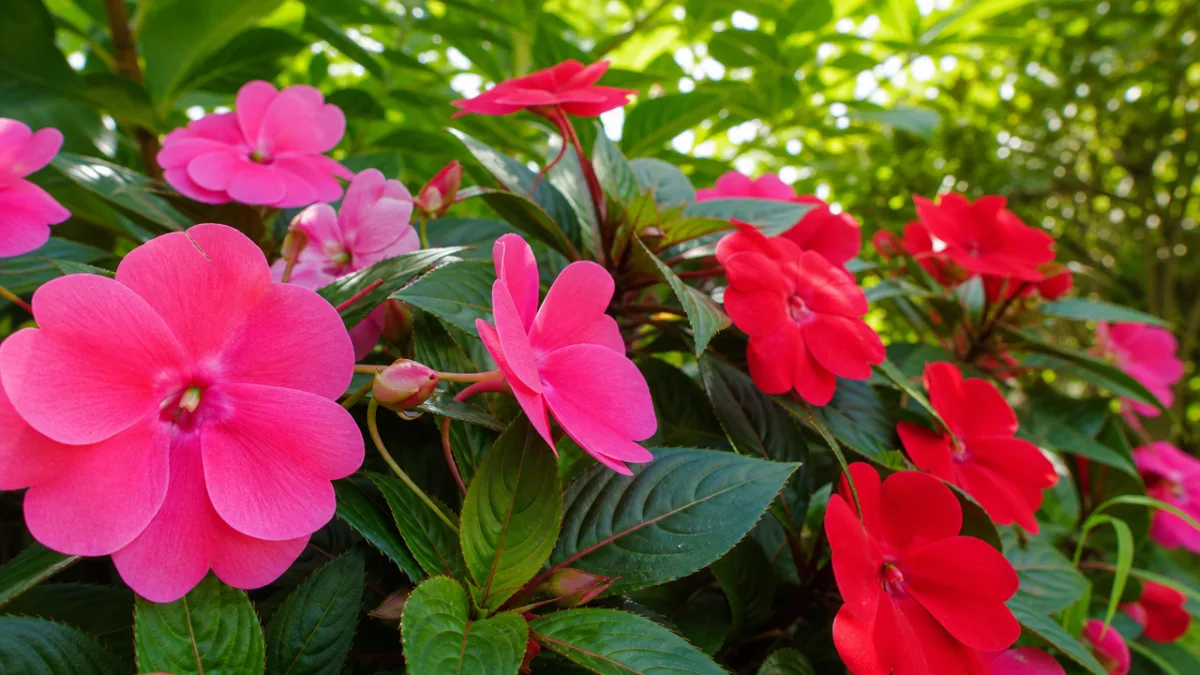
The flowers themselves are perhaps the plant’s most notable feature. Each bloom is composed of five petals, though double-flowered cultivars may have many more, arranged around a small nectar spur that projects backward from the base of the flower. This spur is an important adaptation for attracting specific pollinators, particularly certain species of bee and butterfly with sufficiently long tongues or proboscises to access the nectar within. The flowers are produced continuously from late spring until the first frosts of autumn in temperate climates, making Busy Lizzies one of the longest-blooming plants available to home gardeners.
Ideal Growing Conditions and Climate Requirements
Impatiens walleriana thrives best in conditions that mimic its native woodland and forest-edge habitat in eastern Africa. This means the plant is uniquely suited to partial shade or dappled light, conditions that most flowering annuals find inhospitable. In very warm climates or during intense summer heat, Busy Lizzies actually perform better with afternoon shade or filtered light rather than direct full sun, which can scorch the delicate foliage and cause the plant to wilt persistently even when adequately watered. This shade tolerance is the primary reason they are so frequently used beneath trees, along north-facing walls, and in other spots where sunlight is limited.
Temperature plays a critical role in the health and performance of Impatiens walleriana. The plant is frost-tender and will be killed by even a light freeze, making it a true annual in most temperate climates where winters dip below freezing. It grows most vigorously in temperatures between 18 and 29 degrees Celsius (65 to 85 degrees Fahrenheit). Temperatures consistently above 32 degrees Celsius (90 degrees Fahrenheit) can stress the plant, causing it to drop flowers and slow its growth, while cool nights in early autumn signal the plant to begin redirecting energy toward seed production rather than continued flowering.
Humidity is another environmental factor that strongly influences Impatiens walleriana’s wellbeing. The plant generally prefers moderate to high humidity levels, which aligns with its tropical origins. In very dry climates, it may struggle unless provided with additional moisture through regular misting or the use of moisture-retaining mulch around its base. Conversely, in regions with extremely high humidity and poor air circulation, the plant can become susceptible to fungal diseases, particularly the devastating downy mildew pathogen Plasmopara obducens, which has caused significant problems for impatiens growers in recent decades. Selecting resistant varieties and ensuring adequate airflow around plantings are the best preventive measures available.
Soil, Watering, and Fertilization
The ideal growing medium for Impatiens walleriana is a rich, well-draining soil that retains sufficient moisture without becoming waterlogged. In garden beds, incorporating generous amounts of organic matter such as well-rotted compost, leaf mold, or aged manure before planting significantly improves both the structure and fertility of the soil. A slightly acidic to neutral pH range of 6.0 to 7.0 is optimal for nutrient availability and root health. Heavy clay soils should be amended to improve drainage, as waterlogged roots are highly susceptible to rot, which can devastate an entire planting within days under warm, humid conditions.
Watering is perhaps the single most important aspect of Impatiens walleriana care, as the plant’s succulent stems and high transpiration rate mean it requires consistently moist soil. During hot weather or when grown in containers, watering may be needed daily or even twice daily to prevent wilting. A reliable indicator of water stress in Busy Lizzies is the dramatic drooping of the entire plant, which can appear alarming but is usually reversible with prompt watering. The plant typically recovers within an hour of receiving adequate moisture, though repeated severe wilting can cause lasting damage to flowers and impair overall performance throughout the season.
Fertilization supports the continuous, prolific blooming that makes Impatiens walleriana so valuable in the garden. A balanced, slow-release granular fertilizer incorporated into the planting medium at the time of installation provides a sustained nutrient supply throughout the growing season. Supplementing with liquid fertilizer every two to three weeks during the peak growing season further encourages vigorous growth and flower production. Fertilizers with a slightly higher phosphorus content support flowering particularly well. It is important to avoid over-fertilization with nitrogen-heavy products, as this can stimulate excessive leafy growth at the expense of flower production, resulting in lush but sparsely blooming plants.
Container-grown Impatiens walleriana have somewhat different nutritional needs compared to those grown in open garden beds, as frequent watering leaches nutrients from potting mix more rapidly. A high-quality, peat-based or coco coir potting medium combined with controlled-release fertilizer pellets and supplemental liquid feeding every one to two weeks represents the gold standard for container culture. Self-watering planters are an excellent option for Busy Lizzies, as they provide the consistent moisture levels these plants crave while reducing the risk of both under-watering and overwatering that can challenge even experienced gardeners during busy or unpredictable schedules.
Propagation Methods and Growing from Seed
Impatiens walleriana can be propagated through two primary methods: growing from seed and taking stem cuttings. Each approach has its advantages and is suited to different circumstances and gardening goals. Growing from seed is the more economical choice when large numbers of plants are needed, and it opens access to the widest possible range of named cultivars and series available in the horticultural trade. However, impatiens seed is notably slow and somewhat temperamental to germinate, requiring specific conditions to achieve reliable results, and the time from sowing to first bloom can span ten to fourteen weeks under ideal conditions.
To germinate impatiens seeds successfully, gardeners should follow a careful protocol that addresses the plant’s particular requirements. Key steps in the seed-starting process include the following considerations:
- Sow seeds on the surface of a fine, sterile seed-starting mix without covering them, as light is required for germination.
- Maintain a consistent soil temperature of 21 to 24 degrees Celsius (70 to 75 degrees Fahrenheit) using a propagation heat mat.
- Cover the seed tray loosely with clear plastic or a humidity dome to retain moisture and warmth without excluding light.
- Expect germination within 14 to 21 days under optimal conditions, though some seeds may take longer.
- Once seedlings emerge, gradually reduce humidity and provide bright, indirect light to encourage sturdy growth.
- Transplant seedlings to individual cells or small pots once they develop their first set of true leaves.
Stem cuttings offer a faster and more reliable alternative to seed propagation, particularly for home gardeners wishing to overwinter favorite plants or multiply specific cultivars that do not come true from seed. Cuttings should be taken from healthy, non-flowering stems approximately 8 to 10 centimeters long. The lower leaves are removed, and the cut end is either dipped in rooting hormone powder or placed directly into a moist propagating medium such as perlite or a mix of perlite and peat. Under warm, humid conditions with indirect light, cuttings typically root within two to three weeks, after which they can be potted up and grown on as normal. This method is especially valuable for preserving double-flowered varieties that are particularly cherished.
Common Pests, Diseases, and Troubleshooting
Like all garden plants, Impatiens walleriana is susceptible to a range of pests and diseases that can diminish its performance and appearance if not managed promptly. The most serious disease threat in recent years has been impatiens downy mildew, caused by the water mold pathogen Plasmopara obducens. This devastating disease causes yellowing and downward curling of leaves, followed by rapid defoliation and eventual plant death. Infected plants should be removed and disposed of in the trash rather than composted to prevent the spread of resting spores, which can persist in the soil for many years and reinfect future plantings.
In terms of insect pests, several species pose significant risks to Busy Lizzies, and early identification is key to successful management. The most frequently encountered pest problems include:
- Spider mites: Tiny sap-sucking arachnids that thrive in hot, dry conditions, causing stippled, bronzed foliage and fine webbing on undersides of leaves.
- Aphids: Soft-bodied insects that cluster on new growth and flower buds, secreting sticky honeydew that promotes sooty mold fungal growth.
- Thrips: Slender insects that rasp the surface of petals and leaves, causing silvery streaking and distorted growth.
- Whiteflies: Small, moth-like insects that congregate on leaf undersides and weaken plants through repeated sap removal.
- Vine weevils: Particularly problematic in container-grown plants, where larvae feed on roots causing sudden wilting and plant collapse.
Preventing pest and disease problems is always more effective than treating established infestations. Best practices include selecting disease-resistant cultivars such as those in the Beacon or Imara series developed specifically for downy mildew resistance, maintaining appropriate spacing between plants to promote airflow, avoiding overhead watering that keeps foliage wet for extended periods, and inspecting new plants carefully before introducing them to the garden. When chemical controls become necessary, insecticidal soap, neem oil, and horticultural oils represent lower-toxicity options that are effective against most soft-bodied insect pests while minimizing harm to beneficial insects and pollinators visiting the flowers.
Landscape Uses and Design Applications
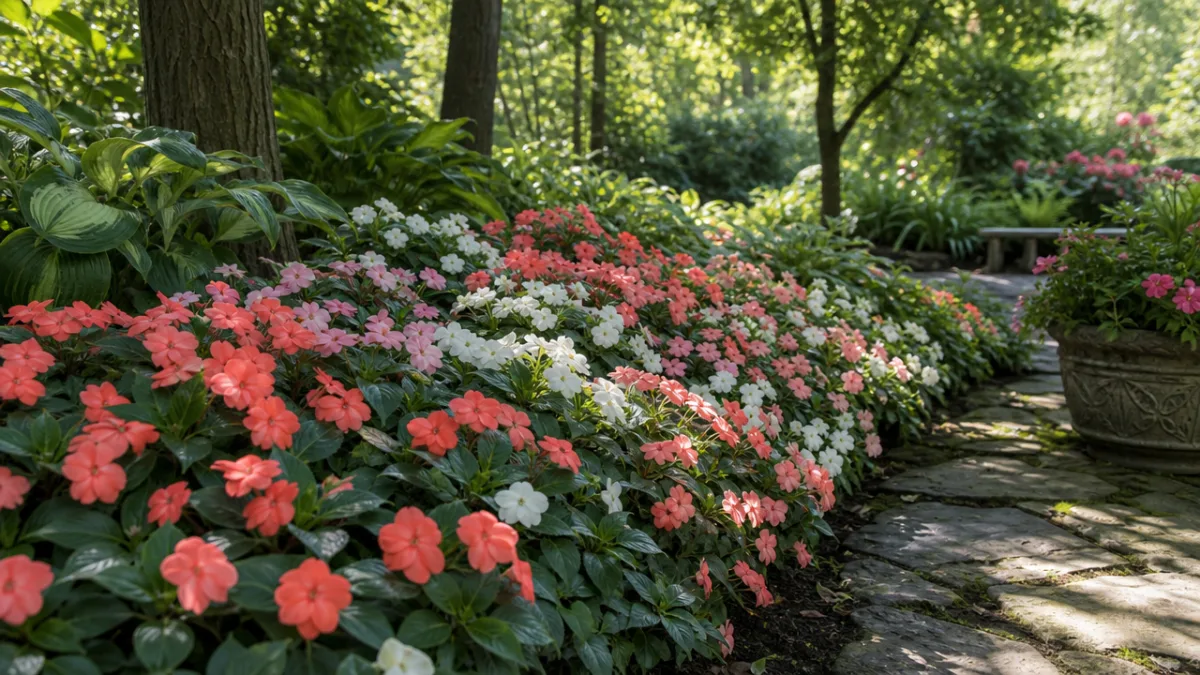
Few plants offer the versatility in landscape design that Impatiens walleriana provides. Their compact, mounding habit and prolific flowering make them ideal for a wide range of applications, from traditional bedding plant schemes to sophisticated container compositions and hanging basket arrangements. In formal garden settings, a mass planting of a single cultivar in a bold, uniform color can create a striking, carpet-like effect that remains consistently attractive from late spring through the first autumn frosts. In more naturalistic or cottage garden designs, mixed color plantings beneath deciduous trees evoke the appearance of woodland wildflowers.
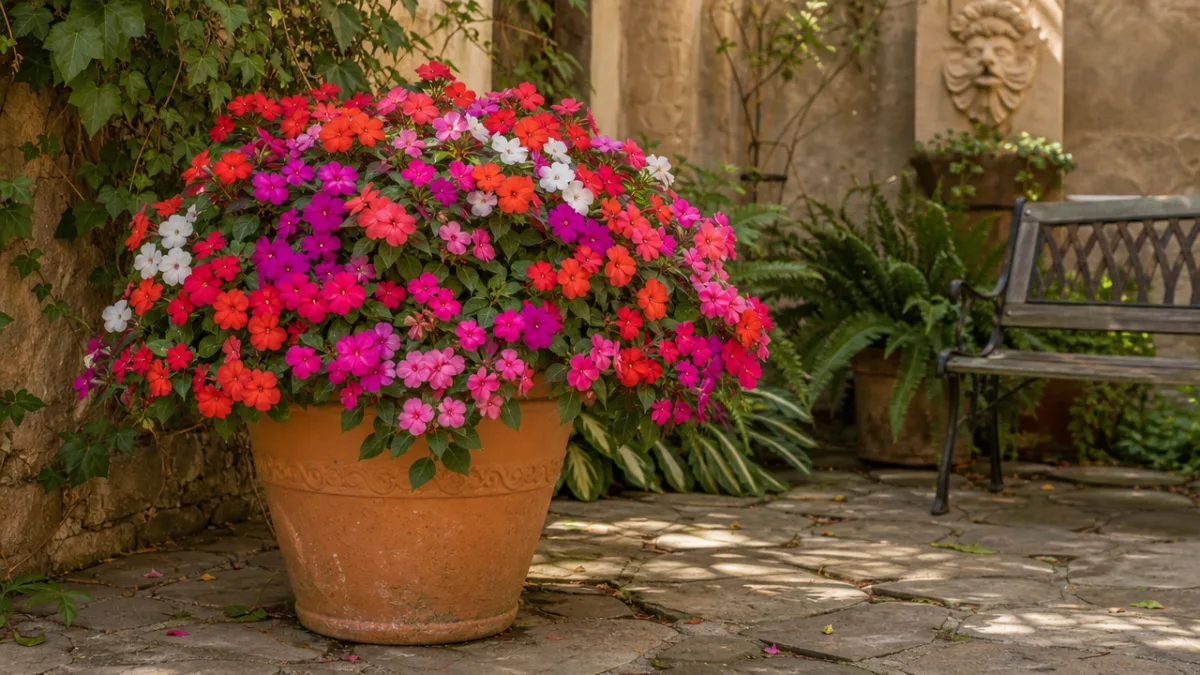
Container gardening with Impatiens walleriana offers enormous creative potential, as the plant’s compact size and continuous blooming make it ideal for window boxes, patio pots, hanging baskets, and even wall-mounted planters. When designing container combinations, Busy Lizzies pair beautifully with shade-tolerant foliage plants such as caladiums, coleus, sweet potato vine, and Persian shield, which provide textural and color contrast without competing for the same growing conditions. Trailing plants such as creeping Jenny or bacopa work well cascading over the edges of containers while impatiens provide the central floral display, creating professional-quality compositions accessible to gardeners of all experience levels.
The indoor use of Impatiens walleriana deserves special mention, as the plant can be successfully grown as a houseplant in bright, indirect light, bringing continuous color to interior spaces throughout the year. When grown indoors, the plant benefits from placement near east or west-facing windows where it receives several hours of gentle light daily without exposure to harsh, direct midday sun that can scorch leaves through glass. Indoor plants benefit particularly from occasional misting to raise humidity around the foliage, and should be inspected regularly for spider mites, which proliferate rapidly in the warm, dry conditions typical of centrally heated homes. With proper care, indoor Impatiens walleriana can flower almost continuously, providing year-round color that few other houseplants can match.
Cultivar Selection and Modern Breeding Advances
The modern impatiens market offers an extraordinary wealth of cultivated varieties developed through decades of intensive plant breeding aimed at improving flower size, color range, weather tolerance, disease resistance, and overall garden performance. Understanding the major series and their characteristics helps gardeners make informed purchasing decisions suited to their specific climate, growing conditions, and aesthetic preferences. The following overview highlights some of the most significant developments in contemporary Impatiens walleriana breeding.
Among the most important series currently available to gardeners are several that have achieved widespread recognition for specific strengths. The Beacon series, developed in response to the downy mildew crisis that devastated impatiens plantings across North America and Europe, represents a major breakthrough in disease-resistant breeding. These plants retain the classic impatiens appearance and performance characteristics while offering significantly improved resistance to the pathogen responsible for downy mildew. The Imara XDR series, another disease-resistant development, provides a broader color palette alongside reliable resistance, making it a preferred choice for gardeners in regions where downy mildew pressure is high.
Double-flowered impatiens varieties, sold under series names such as Fiesta, Rockapulco, and Musica, have carved out a devoted following among gardeners seeking a more opulent, rose-like effect in shaded areas where traditional roses cannot grow. These varieties produce densely petaled blooms that bear a striking resemblance to miniature camellias or ranunculus flowers, adding an unexpected air of luxury to container arrangements and garden borders. While double-flowered forms are generally propagated vegetatively from cuttings rather than from seed, tissue-culture propagation by specialist nurseries has made these plants increasingly affordable and widely available through mainstream garden centers, bringing their distinctive beauty within reach of everyday gardeners.








What do you think?
It is nice to know your opinion. Leave a comment.