










How to Grow Famous Japanese Miyazaki Mangoes: A Complete Guide
Introduction to the World’s Most Expensive Mango
The Miyazaki mango, known in Japan as “Taiyo no Tamago” or “Egg of the Sun,” is widely regarded as one of the most luxurious and sought-after fruits on the planet. Grown primarily in the Miyazaki Prefecture of Kyushu, Japan’s southernmost main island, these extraordinary mangoes command prices that can reach hundreds or even thousands of dollars per fruit. Their deep ruby-red skin, intensely sweet flavor, and near-perfect shape have made them a symbol of premium Japanese agricultural craftsmanship and an aspirational gift for special occasions.
What sets Miyazaki mangoes apart is not merely their taste, but the extraordinary level of care, precision, and patience that goes into cultivating each single fruit. Japanese farmers dedicate years to perfecting their growing techniques, carefully controlling temperature, humidity, sunlight exposure, and even the angle at which each mango hangs on the tree. The result is a fruit that is not just food but a piece of edible art, celebrated in gift shops, high-end department stores, and auction houses across Japan and beyond.
Despite their mystique, it is entirely possible for dedicated home growers and enthusiastic gardeners to cultivate Miyazaki-style mangoes outside of Japan, provided they understand and replicate the specific growing conditions these fruits require. This guide will walk you through every essential step, from selecting the right variety and preparing your growing environment to harvesting and caring for your prized fruit. With the right knowledge, patience, and commitment, you too can grow mangoes that rival the legendary Taiyo no Tamago.
Understanding the Miyazaki Mango Variety and Its Unique Characteristics
The Miyazaki mango is a specific cultivar of Mangifera indica, most commonly identified as the “Irwin” variety, which was originally developed in the United States but found its highest expression in Japan’s carefully controlled greenhouse environments. The Irwin mango is distinguished by its vibrant red skin, which develops fully when the fruit receives the right combination of intense sunlight and warm temperatures. In Miyazaki Prefecture, growers have refined the cultivation process so thoroughly that the resulting fruit far surpasses the standard Irwin mango in flavor, color, and size.
One of the most defining characteristics of the Miyazaki mango is its sugar content, which must reach at least 15 degrees Brix to qualify for the official “Taiyo no Tamago” classification. Most premium specimens measure between 15 and 20 degrees Brix, delivering a honey-like sweetness with virtually no fibrous texture. The flesh is a deep golden-orange, almost glowing in its intensity, and the aroma is floral and intoxicating. Each certified mango must also weigh a minimum of 350 grams and exhibit a rich, uniform red covering at least half the fruit’s surface area.
Understanding these standards is crucial for anyone attempting to grow Miyazaki-quality mangoes, because the goal is not simply to produce a mango but to produce a fruit that meets a very precise set of quality benchmarks. This means selecting the correct variety, sourcing healthy grafted saplings from reputable nurseries, and committing to a growing process that prioritizes quality over quantity. Most commercial Miyazaki growers harvest only a handful of certified fruits per tree per season, channeling all of the plant’s energy into developing a small number of perfect specimens rather than a large yield of average ones.
Choosing the Right Climate and Growing Environment
Mangoes are tropical plants that thrive in warm, humid environments, and the Miyazaki variety is no exception. In Japan, these fruits are grown almost exclusively in greenhouses, which allow farmers to precisely control temperature, humidity, and sunlight throughout the growing season. If you live in a tropical or subtropical region — such as southern Florida, Hawaii, parts of Australia, Southeast Asia, or the Caribbean — you may be able to grow mangoes outdoors, but achieving true Miyazaki quality will still likely require some form of controlled growing environment.
The ideal temperature range for Miyazaki mango cultivation is between 25°C and 35°C (77°F to 95°F) during the growing season. Temperatures below 10°C (50°F) can damage or kill the tree, especially during flowering, while extreme heat above 40°C (104°F) can cause fruit drop and sunburn. Humidity should be kept relatively high during vegetative growth but reduced somewhat during flowering to encourage proper pollination. Japanese greenhouse growers are meticulous about managing these variables, using automated systems to adjust conditions in real time based on the season and the tree’s growth stage.
For home growers in temperate climates, a heated greenhouse or a large polytunnel is essentially non-negotiable if you want to produce high-quality Miyazaki-style mangoes. The structure should be oriented to maximize sunlight exposure, ideally facing south in the northern hemisphere, and equipped with supplemental lighting for periods of low natural light. Ventilation is equally important, as stagnant air promotes fungal diseases that can devastate a mango crop. Investing in a quality growing structure is one of the most important decisions you will make in this entire process, and cutting corners here will compromise your results significantly.
Soil Preparation, Planting, and Early Care
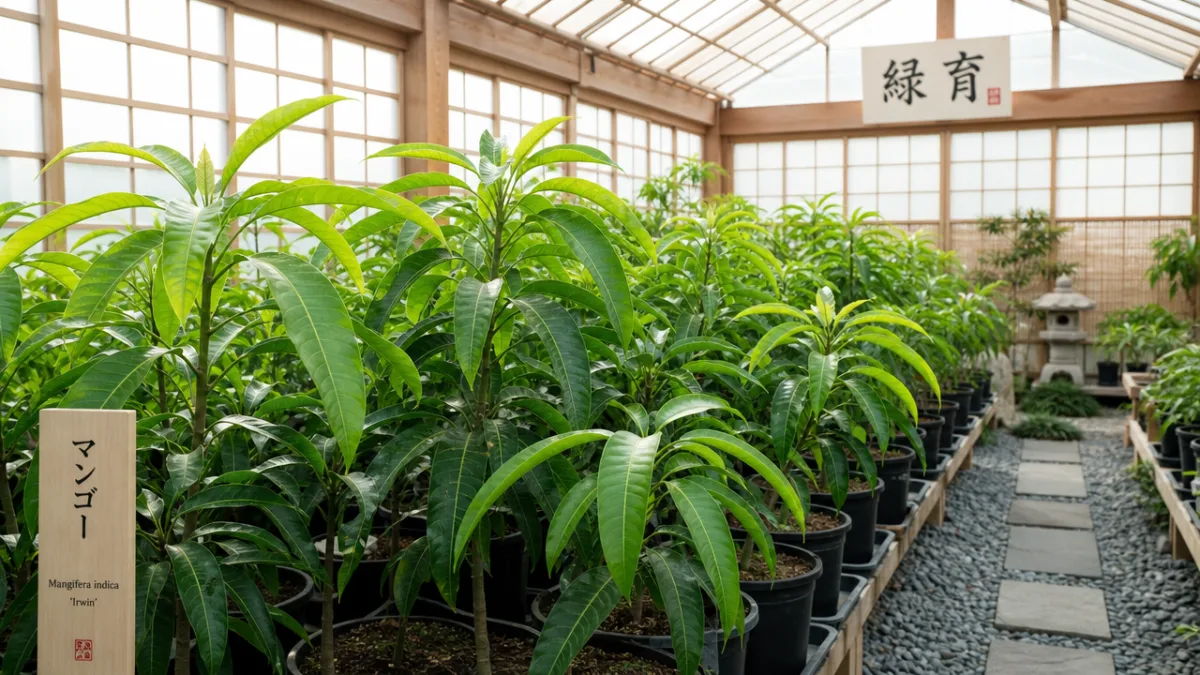
Miyazaki mangoes require well-draining, slightly acidic to neutral soil with a pH between 5.5 and 7.5. They are sensitive to waterlogged conditions, which can lead to root rot and other serious problems, so ensuring excellent drainage is a top priority. In Japan, greenhouse growers often use raised beds or custom soil mixes that incorporate perlite, coarse sand, and organic matter to create a loose, airy growing medium that holds moisture without becoming saturated. If you are growing in containers, choose large pots of at least 100 liters and use a high-quality tropical fruit tree mix.
When planting your mango sapling, dig a hole that is at least twice the width of the root ball and slightly shallower than its depth, so the graft union sits well above the soil line. Backfill with your prepared soil mix, firm it gently around the roots, and water thoroughly to settle the soil. Apply a thick layer of organic mulch around the base of the tree, keeping it a few centimeters away from the trunk to prevent rot. Stake young trees if necessary to protect them from wind damage during the establishment phase, which typically lasts six to twelve months.
Early care focuses on encouraging a strong, well-structured canopy through careful pruning. In the first year, allow the tree to grow freely to build a robust root system, but remove any crossing, weak, or diseased branches. From the second year onward, begin shaping the tree into an open vase or modified central leader form, which maximizes light penetration and air circulation throughout the canopy. This structural pruning is fundamental to the Miyazaki growing method, as a well-shaped tree will produce more reliably and deliver better-quality fruit once it reaches bearing age, typically three to five years after grafting.
- Use grafted saplings from the Irwin cultivar for the most authentic Miyazaki results
- Ensure soil pH is tested and adjusted before planting
- Maintain a minimum pot or bed depth of 60 cm for healthy root development
- Water young trees regularly but allow the top layer of soil to dry slightly between waterings
- Avoid nitrogen-heavy fertilizers in the first year, which can encourage excessive vegetative growth at the expense of root establishment
Fertilization, Watering, and Pollination Techniques
Feeding your Miyazaki mango tree correctly is one of the most nuanced aspects of the entire growing process. During the vegetative growth phase in spring and summer, trees benefit from a balanced fertilizer with a roughly equal ratio of nitrogen, phosphorus, and potassium, applied every four to six weeks. As the tree transitions toward flowering in late summer and autumn, switch to a lower-nitrogen formula that is higher in potassium and phosphorus, which encourages flower bud initiation and development. Japanese growers often use specialized slow-release granular fertilizers combined with targeted foliar sprays of micronutrients such as zinc, manganese, and boron.
Watering discipline is absolutely critical, particularly during the pre-flowering and flowering periods. Miyazaki growers deliberately stress their trees mildly by reducing irrigation in late summer to trigger the hormonal shift toward flower production. Once flower panicles emerge, watering is resumed carefully and consistently, ensuring the soil is moist but never saturated. During fruit development, consistent moisture is essential to prevent premature fruit drop and to support the development of the high sugar levels that define a premium Miyazaki mango. Drip irrigation systems are ideal, as they deliver water precisely to the root zone without wetting the foliage, reducing disease risk.
Because Miyazaki mangoes are grown almost exclusively in enclosed greenhouse environments in Japan, natural pollination by insects is limited, and growers rely heavily on hand pollination to ensure fruit set. When the panicles are in full bloom, use a small, soft paintbrush to transfer pollen from flower to flower each morning, when the blooms are freshest and most receptive. This process requires patience and attention to detail but dramatically improves fruit set rates. In addition to pollination, most Miyazaki growers practice aggressive fruit thinning, retaining only one or two of the best-positioned, most well-formed fruits per panicle to concentrate the tree’s energy into developing superior specimens.
- Begin reducing water in mid to late summer to stress the tree into flowering mode
- Apply a potassium-rich fertilizer as flower buds begin to form
- Hand pollinate flowers each morning using a fine, clean brush
- Thin fruits to one or two per cluster once they reach marble size
- Resume consistent, moderate watering once fruits are firmly set
- Apply calcium foliar sprays during fruit development to improve skin quality and reduce splitting
The Net Hammock Technique and Fruit Ripening
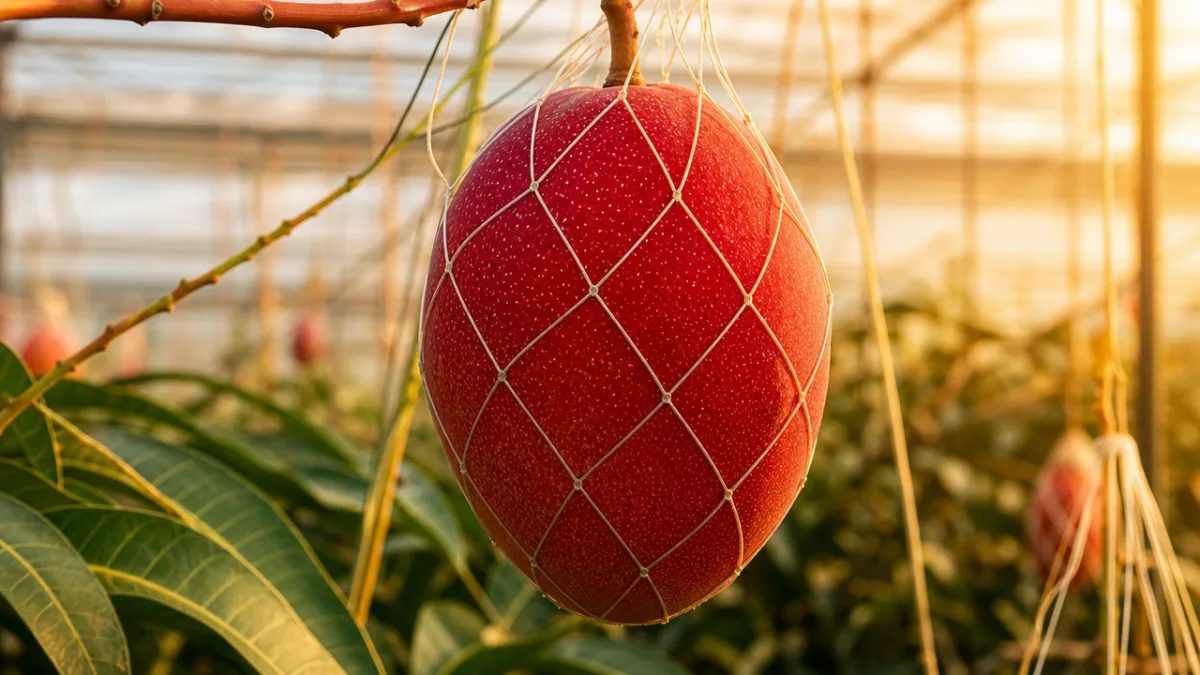
One of the most iconic and visually distinctive practices in Miyazaki mango cultivation is the use of individual net hammocks or cradles to support each growing fruit as it develops on the tree. These small mesh bags, often red or pink in color, are attached to the branch above each fruit and gently cradle it from below, preventing it from falling if the stem weakens before harvest and protecting it from bruising caused by contact with branches or other fruits. The hammocks also make it easier for growers to monitor each fruit individually and to control its exposure to light, ensuring even coloration across the entire surface.
Beyond their practical function, the net hammocks have become a symbol of the extraordinary attention to detail that defines the Miyazaki growing philosophy. Each mango is treated as an individual work of art deserving of personal care and attention. Some growers also use reflective sheets or mirrors placed beneath the hanging fruits to redirect light onto the underside of the mango, promoting more uniform red pigmentation. The combination of high sugar content, generous sunlight exposure, and warm temperatures triggers the production of anthocyanins, the pigments responsible for the fruit’s signature deep-red color, which develops most intensely in the final weeks before harvest.
Knowing when to harvest is perhaps the most critical skill in the entire Miyazaki growing process. The fruit should not be picked when it turns red, as color is not a reliable indicator of ripeness on its own. Instead, experienced growers look for a combination of signals: the fruit emits a strong, sweet fragrance, the skin takes on a slight waxy sheen, the flesh yields very gently under light pressure, and the fruit may begin to detach naturally from the vine net if it is fully ripe. A refractometer can be used to test a small sample of juice for Brix levels, confirming whether the sugar content has reached the minimum threshold for a premium designation.

Common Challenges and How to Overcome Them
Growing Miyazaki-quality mangoes outside of Japan presents a number of significant challenges that require proactive management and consistent vigilance. One of the most common problems is anthracnose, a fungal disease caused by Colletotrichum gloeosporioides that affects flowers, leaves, and developing fruit, causing dark lesions and premature fruit drop. Anthracnose thrives in warm, humid conditions, making greenhouse environments particularly vulnerable if ventilation is inadequate. Preventive copper-based fungicide sprays applied during flowering and fruit development, combined with good air circulation practices, are the most effective defenses against this disease.
Pest management is another ongoing concern for mango growers. Common pests include mango hoppers, scale insects, mealybugs, and mango fruit flies, all of which can cause significant damage to flowers and developing fruit. In a greenhouse setting, introducing beneficial insects such as parasitic wasps and ladybirds can provide natural biological control, reducing the need for chemical interventions. For fruit flies in particular, exclusion netting and protein bait traps placed around the growing area are highly effective. Regular inspection of the tree and its fruits, ideally on a weekly basis, allows growers to catch infestations early before they escalate.
Perhaps the greatest challenge for growers in temperate climates is achieving the combination of intense sunlight and sustained warmth that gives Miyazaki mangoes their extraordinary color and sweetness. If natural light is insufficient, high-intensity grow lights positioned strategically around the tree canopy can supplement solar radiation during critical periods. Heating the greenhouse through the cooler months is essential and can be achieved using gas, electric, or biomass heating systems. While these investments are substantial, they are necessary if you are serious about producing truly premium fruit. Many growers find that the experience of nurturing these remarkable trees and harvesting even a handful of perfect mangoes is more than worth the effort and expense involved.
Harvesting, Storage, and Enjoying Your Miyazaki Mangoes
When your Miyazaki mangoes are finally ready for harvest, handle them with the utmost care to protect their perfect skin and preserve their quality. Use clean, sharp scissors or pruning shears to cut the stem approximately five centimeters above the fruit, leaving a short stub attached. Hold the fruit from below with a gloved hand rather than gripping it around the equator to avoid bruising the flesh. Place each harvested mango stem-down in a clean container lined with soft tissue paper, allowing the natural sap that seeps from the cut stem to drip away without running down the fruit’s skin, which can cause skin staining.
Freshly harvested Miyazaki mangoes should be kept at room temperature, between 18°C and 22°C, until fully ripe, which may take an additional two to five days after harvest depending on the maturity at picking. Refrigeration of unripe mangoes is strongly discouraged, as cold temperatures interrupt the ripening process and can cause chilling injury, resulting in an uneven texture and muted flavor. Once fully ripe, the mangoes can be refrigerated for up to three days to extend their shelf life slightly, but they are best enjoyed at room temperature, which allows the full complexity of their flavor and aroma to express itself most vividly.
Savoring a homegrown Miyazaki mango is a genuinely extraordinary experience that rewards all of the patience, investment, and careful attention you have devoted to the growing process. The traditional Japanese way to serve them is simply halved or cubed, presented elegantly on a clean white plate to showcase their vibrant golden flesh and allow their natural aroma to perfume the air. For gifting, the Japanese tradition of wrapping each mango individually in soft foam netting and presenting them in a lacquered box is a beautiful way to honor the effort that has gone into producing them. Whether you grow one tree or a dozen, the journey of cultivating Miyazaki mangoes is as rewarding as the remarkable fruit it produces.








What do you think?
It is nice to know your opinion. Leave a comment.