










How to Choose, Raise, and Maintain Beautiful Climbing Roses
Understanding Climbing Roses: What Makes Them Special
Climbing roses are among the most dramatic and rewarding plants you can introduce to a garden. Unlike true vines, they do not actually climb on their own through the use of tendrils or adhesive roots. Instead, they produce long, arching canes that must be trained and tied to a supporting structure. This distinction is important for any gardener to understand before planting, because it shapes every decision you will make about placement, support, and ongoing care. Once properly established, a climbing rose can transform an ordinary fence, trellis, or pergola into something that looks like it belongs in the pages of a storybook garden magazine.
What sets climbing roses apart from their bush-type counterparts is their extraordinary vigor and the sheer volume of blooms they can produce. Many varieties will reach heights of ten to twenty feet under ideal conditions, and when they are in full bloom, the visual impact is genuinely breathtaking. The canes grow much longer and more flexible than those of shrub roses, and this flexibility is precisely what allows gardeners to bend and weave them into gorgeous living architectural features. Some varieties bloom only once in early summer but produce an absolutely spectacular flush of flowers that makes the wait entirely worthwhile.
There is also a meaningful difference between climbing roses and rambling roses, two categories that are often confused by beginners. Ramblers tend to be more vigorous, with thinner, more flexible canes and smaller flowers produced in large clusters. True climbers typically have thicker canes, larger individual flowers, and many modern varieties are repeat-blooming, meaning they will continue producing flowers from late spring well into autumn. Understanding which category your chosen plant falls into will help you plan its support structure and set realistic expectations for its performance throughout the growing season.
Choosing the Right Climbing Rose for Your Garden
Selecting the right climbing rose is one of the most important decisions you will make, and it deserves considerably more thought than simply picking the prettiest picture on a nursery label. The first factor to consider is your climate zone, since roses vary significantly in their cold hardiness. Some of the most beloved old climbing varieties, such as the legendary ‘Climbing Cecile Brunner’ or the deeply fragrant ‘Zephirine Drouhin,’ are less tolerant of harsh winters than modern varieties bred specifically for cold resilience. Always check the hardiness zone rating before purchasing, and when in doubt, choose a variety rated one zone colder than your own to build in a margin of safety.
The mature size of the plant should match the scale of your intended support structure. A small garden trellis beside a cottage door calls for a compact climber like ‘Dublin Bay’ or ‘Fourth of July,’ which top out at around ten feet and can be managed with regular pruning. A sprawling pergola or a large stone wall, on the other hand, is the perfect canvas for a powerhouse grower like ‘New Dawn’ or ‘Albertine,’ which can easily cover thirty feet of horizontal space given time and encouragement. Planting a massive grower in a confined space sets you up for years of frustration, while planting a compact variety on a grand structure will leave you with something that always looks a little underwhelming and sparse.
Fragrance and bloom color are deeply personal choices, but there are practical considerations worth layering in as well. If you are planting near a seating area or a window that you often open, fragrance becomes a significant feature rather than a bonus, and varieties like ‘Constance Spry,’ ‘Climbing Ena Harkness,’ or ‘Generous Gardener’ offer scent that can perfume an entire garden corner. Color choice should take into account the colors of your house, fencing, and surrounding plants. Soft pinks and creams tend to harmonize with almost everything, while bold reds and oranges make strong statements that require more careful coordination with their surroundings to avoid clashing.
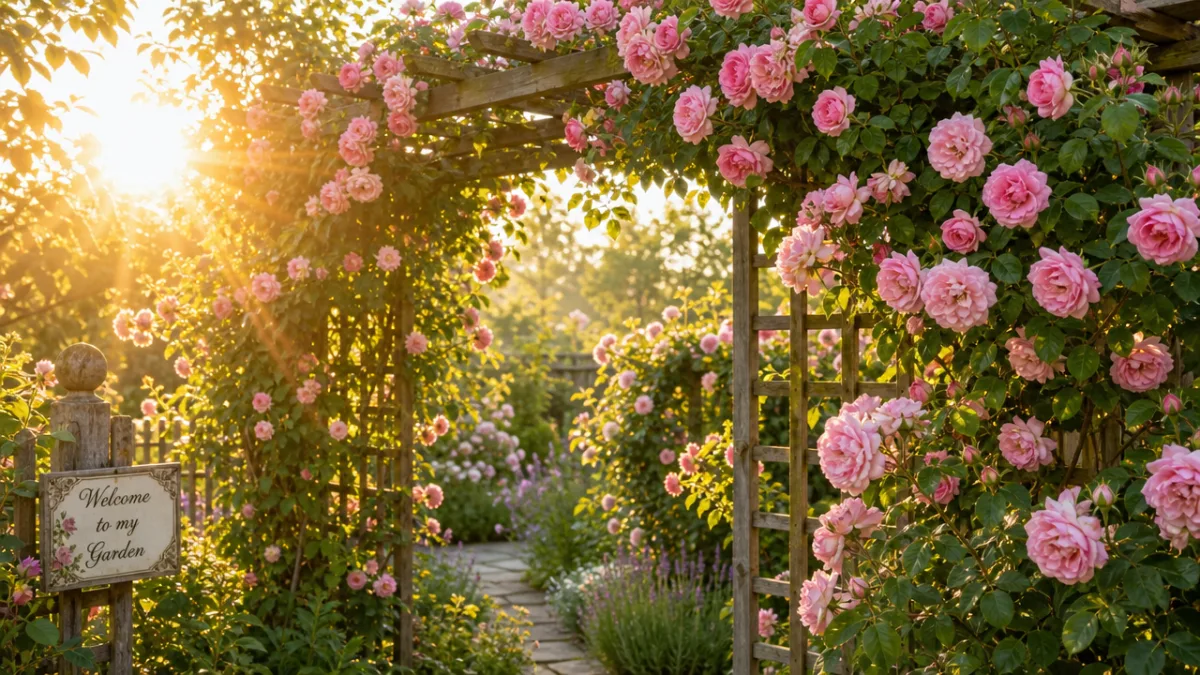
Planting Climbing Roses: Getting the Foundation Right
The long-term health and performance of a climbing rose depends enormously on the quality of its initial planting. The single most common mistake gardeners make is choosing a location that looks beautiful on paper but fails to meet the plant’s basic requirements. Climbing roses need a minimum of six hours of direct sunlight per day, and eight hours is even better for the most vigorous flowering. Planting in a shadier spot will result in fewer blooms, weaker growth, and a significantly higher susceptibility to fungal diseases like black spot and powdery mildew, which thrive in the humid, still-air conditions that shade tends to create.
Soil preparation is not a step to rush or skip. Roses are hungry, deep-rooted plants that reward generous soil improvement with years of outstanding performance. Before planting, dig a hole at least twice as wide and as deep as the root ball, and work in generous quantities of well-rotted compost or aged manure. If your soil is heavy clay, adding horticultural grit will improve drainage significantly, since roses hate to sit in waterlogged conditions. If your soil is very sandy and free-draining, extra organic matter will help retain the moisture and nutrients the plant needs. Aim for a slightly acidic pH of around 6.0 to 6.5 for optimal nutrient availability.
When it comes to the actual planting process, there are a few key points that will make a meaningful difference to how quickly the rose establishes and begins to thrive. For bare-root roses, soak the roots in a bucket of water for several hours before planting to rehydrate them after their dormant storage period. Plant the bud union — the swollen knobby area where the cultivar has been grafted onto the rootstock — just below the soil surface in cold climates, or at soil level in warmer regions. After planting, water thoroughly and apply a generous layer of mulch around the base, keeping it a few inches away from the canes themselves to prevent rot and discourage pests from sheltering there.
Training and Supporting Your Climbing Rose
Training is the art at the heart of growing climbing roses well, and it is what separates a spectacular garden feature from a tangled, underperforming mess of thorny canes. The fundamental principle behind training a climbing rose is that horizontal canes produce far more flowering side shoots than vertical ones. When a cane is bent to grow more horizontally, it triggers a hormonal response in the plant that encourages the growth of upward-reaching laterals along its entire length, each of which will produce blooms. This is why the most spectacular rose-covered pergolas and arches always have canes trained in sweeping fans or gentle spirals rather than simply tied straight upward.
The choice of support structure matters both aesthetically and practically, and it pays to over-engineer rather than under-engineer. A heavy, mature climbing rose in full growth and covered in wet foliage can exert enormous weight and wind resistance on its support, and structures that seemed sturdy when first installed sometimes prove inadequate after five or ten years of plant growth. For walls, fix horizontal wires at twelve-inch intervals using vine eyes anchored firmly into the masonry, keeping the wires a few inches away from the wall surface to allow air circulation. For freestanding structures like pergolas and arches, ensure that posts are set deeply in concrete and that crossbeams are constructed from timber substantial enough to bear years of accumulated plant weight.
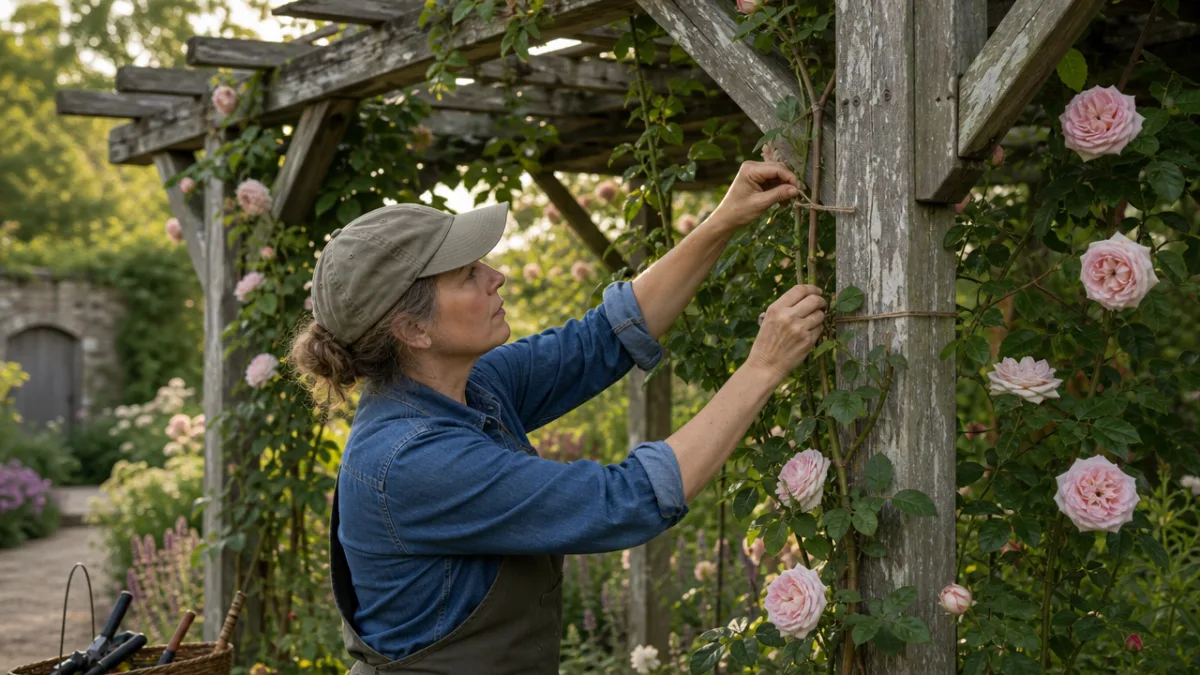
Tying in new canes should be done regularly throughout the growing season rather than left as a once-a-year task, because young growth is pliable and can be directed much more easily than older, woodier canes. Use soft garden twine or specialist rose ties that will stretch slightly as the canes expand in girth, and always tie in a figure-eight pattern that cushions the cane against the wire or support rather than pressing it directly against a hard surface. Check ties annually and replace any that have become tight or have rotted through. When training a rose around an arch or pillar, wind the canes in a gentle spiral to maximize the flowering surface area and create an evenly covered structure rather than a one-sided display.
Feeding and Watering for Peak Performance
Climbing roses are vigorous plants with substantial nutritional needs, and a consistent feeding program is one of the most reliable ways to maximize both the quantity and quality of their flowers. Begin feeding in early spring as the first leaves start to unfurl, using a balanced granular rose fertilizer that contains the key nutrients of nitrogen for leafy growth, phosphorus for strong roots, and potassium for flower production and disease resistance. Follow the manufacturer’s instructions carefully, as over-feeding with nitrogen in particular can push excessive soft, lush growth that is highly attractive to aphids and more susceptible to fungal disease.
As the season progresses into early summer, switch the emphasis of your feeding toward a formula higher in potassium to encourage robust flowering rather than continued vegetative growth. Many dedicated rose fertilizers are formulated with this seasonal shift in mind, and liquid feeds have the advantage of being rapidly absorbed and particularly useful for giving plants a quick boost at key moments in the growing year. After the first flush of blooms on repeat-flowering varieties, a dose of liquid tomato food — which is high in potassium — is an excellent way to encourage a strong second flush. Stop feeding entirely by late summer to allow the new growth to harden off before winter, since soft new growth promoted by late feeding is vulnerable to frost damage.
Watering deeply and infrequently is far better for climbing roses than light, frequent irrigation that encourages shallow root systems. During dry periods, water at the base of the plant rather than overhead to keep foliage dry, since wet leaves are an open invitation to the fungal diseases that roses are famously prone to. A well-established rose with a deep root system is surprisingly drought-tolerant, but young plants in their first two or three seasons need consistent moisture to develop properly. A thick layer of mulch around the base of the plant — ideally four to six inches of composted bark, wood chip, or well-rotted manure — is one of the most effective things you can do to retain soil moisture, suppress weeds, and gradually improve soil structure as it breaks down.
Pruning Climbing Roses: Timing, Technique, and Tools
Pruning is the aspect of rose care that causes the most anxiety among gardeners, but approached with a few clear principles in mind, it is really not as complicated as it can seem. The timing of your pruning depends entirely on whether your rose blooms once a year or repeatedly. Once-blooming climbers — including many of the old garden roses and ramblers — produce their flowers on wood that grew the previous year, so they should be pruned immediately after flowering in summer. Pruning them in late winter or spring would remove the wood that carries this year’s buds and cost you the entire season’s display, which is a frustrating and entirely avoidable mistake.
Repeat-blooming modern climbers are pruned in late winter or early spring, just as the buds begin to swell and growth is clearly resuming. At this point, remove any dead, diseased, or damaged wood entirely, cutting back to healthy growth. Reduce the side shoots — the laterals that carry the flowers — by approximately two-thirds of their length, cutting to a healthy outward-facing bud. Every few years, cut out one or two of the oldest main canes entirely at the base to make way for vigorous new growth, since younger canes tend to be more productive than very old ones. The goal is to maintain a framework of healthy, well-spaced main canes with regularly renewed lateral growth.
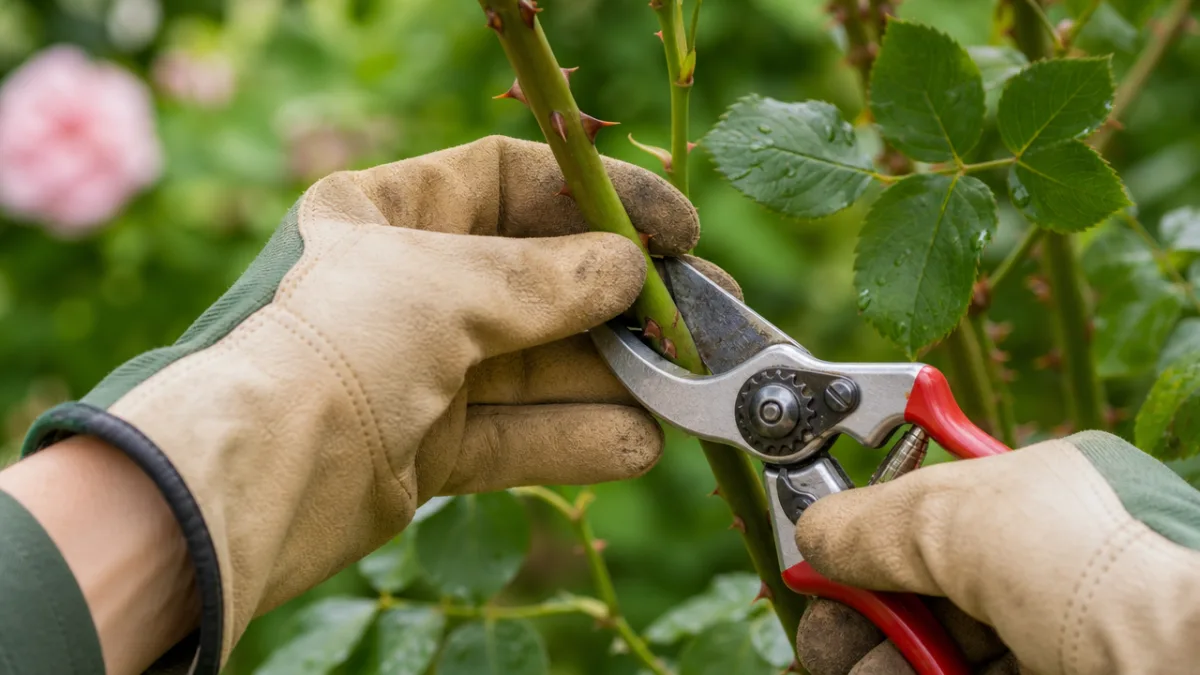
Having the right tools and keeping them in good condition makes pruning far less arduous and produces cleaner cuts that heal more quickly and resist disease. A good pair of bypass secateurs is essential for most pruning cuts, and long-handled loppers are useful for thicker canes. A narrow-bladed pruning saw handles the oldest, woodiest growth that is too thick for loppers. Always clean and sharpen your tools before pruning season begins, and wipe blades with disinfectant if you are cutting out diseased wood to avoid spreading problems from plant to plant. Wear thick, puncture-resistant gloves without exception — climbing roses can be very thorny, and a deep rose-thorn puncture wound has a deserved reputation for causing persistent, troublesome infections.
Dealing with Pests and Diseases Organically
Every rose grower will eventually encounter the three most common enemies of the genus: aphids, black spot, and powdery mildew. Aphids — those soft, sap-sucking insects that cluster on new growth and flower buds — are best dealt with early, before populations explode into a serious infestation. A strong jet of water from a hose will dislodge many of them, and encouraging natural predators like ladybirds, lacewings, and birds into the garden provides ongoing biological control. If a chemical intervention is truly necessary, insecticidal soap or neem oil are both effective and far less damaging to beneficial insects than systemic pesticides, which can persist in plant tissues and harm the pollinators that visit the flowers.
Black spot is a fungal disease that produces characteristic circular black spots on leaves, often surrounded by a yellow halo, and eventually causes significant defoliation if unchecked. It spreads through water splash and thrives in humid conditions, which is why overhead watering and planting in poorly ventilated spots dramatically increases the problem. Remove and dispose of affected leaves promptly — never compost them, as this can spread the spores. Choosing disease-resistant varieties in the first place is the single most effective preventive measure, and modern breeders have made enormous strides in producing climbers that are genuinely resistant to the diseases that plagued earlier generations of roses.
Powdery mildew, which presents as a white, dusty coating on young leaves, shoots, and buds, is particularly common in hot, dry conditions when the roots are stressed for moisture, combined with warm humid air around the foliage — conditions that sometimes seem contradictory but occur frequently at the end of a dry summer. Consistent watering and mulching to prevent root stress goes a long way toward preventing it. Good air circulation around the plant is equally important, so avoid training canes too tightly against a wall with no gap for airflow. A general approach of selecting naturally resistant varieties, maintaining plant vigor through good feeding and watering, and dealing promptly with any problems you observe will keep the vast majority of rose pests and diseases well within manageable limits.








What do you think?
It is nice to know your opinion. Leave a comment.