










Hidcote Manor Garden: A Masterpiece of English Garden Design
The Origins and History of Hidcote Manor Garden
Nestled in the North Cotswolds near Chipping Campden in Gloucestershire, Hidcote Manor Garden stands as one of the most influential and celebrated gardens in the entire history of British horticulture. Created in the early twentieth century by American-born Lawrence Johnston, this remarkable garden transformed a relatively unremarkable piece of agricultural land into a horticultural masterpiece that continues to inspire gardeners, designers, and plant enthusiasts from around the world more than a century after its creation.
Lawrence Johnston first acquired the Hidcote estate in 1907 when his mother, Gertrude Winthrop, purchased the property. At that time, the land consisted of little more than a few trees, a cedar of Lebanon, and open fields swept by the cold winds rolling off the Cotswold Hills. Johnston, who had no formal training in garden design, threw himself into the project with extraordinary passion and dedication, spending the next several decades crafting what would become his life’s defining achievement and a transformative force in twentieth-century garden design.
Johnston’s background was eclectic and cosmopolitan. Born in Paris in 1871 to American parents, educated at Cambridge, and later a naturalized British subject who served in the Boer War and the First World War, he brought a uniquely international perspective to his gardening endeavors. He traveled extensively throughout Europe, South Africa, and East Asia, collecting rare and unusual plants that he would eventually incorporate into Hidcote’s carefully curated planting schemes. His travels gave the garden an extraordinary botanical richness that continues to distinguish it from many of its contemporaries.
In 1948, Johnston donated Hidcote to the National Trust, making it the first garden acquired by the organization primarily on the merits of its horticultural significance rather than its association with a historic house. This landmark moment cemented Hidcote’s place in the broader history of British cultural heritage and ensured that future generations would have access to this extraordinary place. Today, the National Trust manages the garden with meticulous care, balancing conservation with accessibility for the hundreds of thousands of visitors who come each year.
The Genius of the Room Garden Concept
Perhaps the most enduring and widely imitated aspect of Hidcote Manor Garden is its revolutionary use of outdoor “rooms,” a design concept that Lawrence Johnston pioneered and that has since become one of the most beloved and widely adopted approaches in garden design worldwide. The garden is divided into a series of distinct, enclosed spaces, each with its own character, color palette, planting scheme, and atmosphere, connected by pathways and openings that create a sense of discovery and surprise as visitors move from one area to the next.
The garden rooms at Hidcote are created using a variety of structural elements, most notably the extraordinary hedges that define its spaces. Johnston planted hedges of yew, box, hornbeam, holly, and beech, some of which now reach impressive heights, creating green walls that shelter plants from wind, frame views, and establish a powerful sense of enclosure. These hedges are not always of a single species; some incorporate multiple varieties, creating what Johnston called “tapestry hedges” that display subtle variations in color and texture through the changing seasons, adding an additional layer of visual interest to the garden’s architecture.
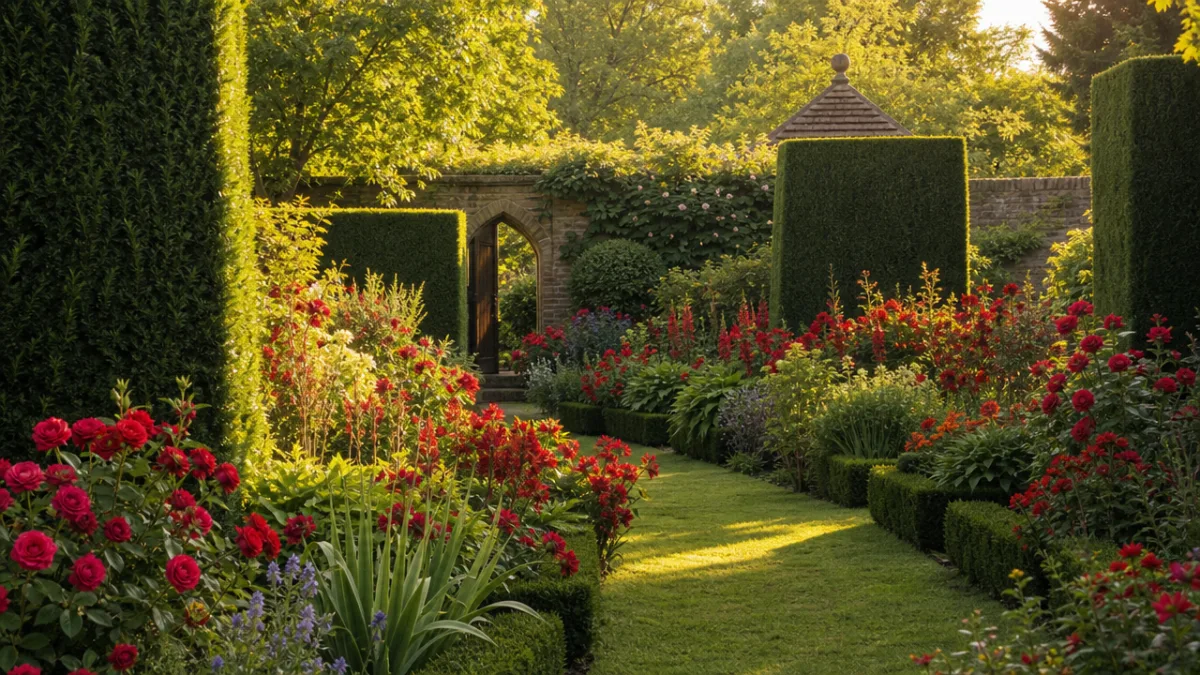
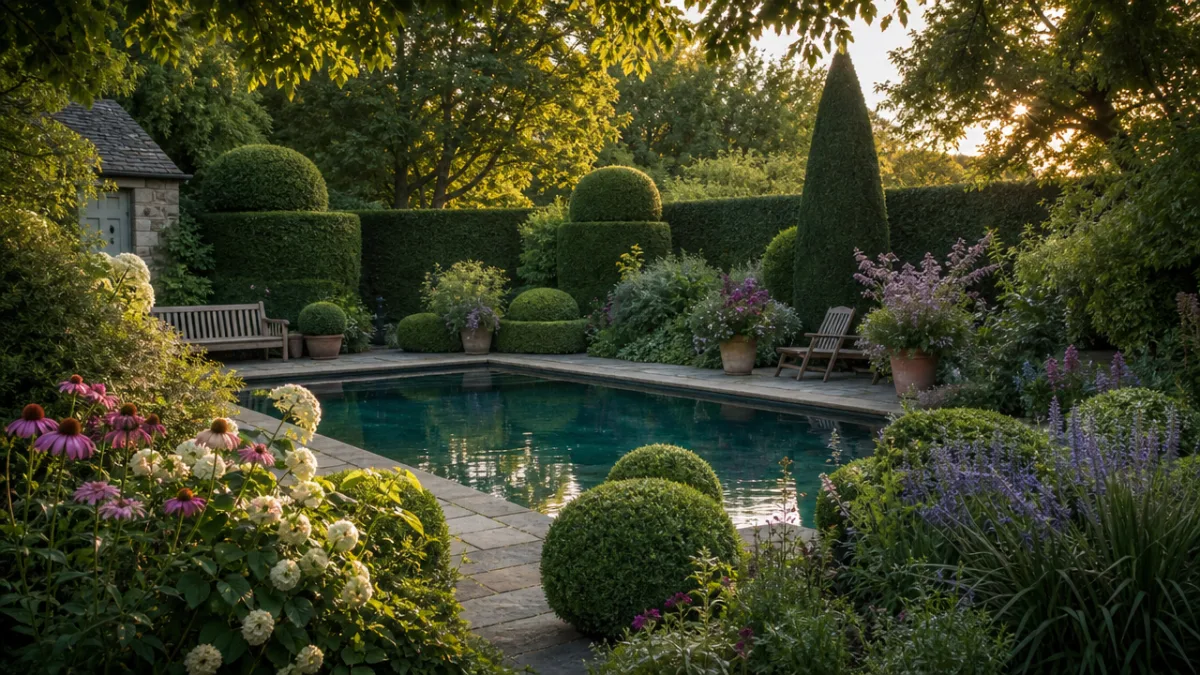
Each room within the garden offers a distinct emotional and aesthetic experience. The Red Borders blaze with rich scarlet, crimson, and burgundy planting that creates a dramatic and theatrical atmosphere. The White Garden, by contrast, offers cool serenity with its palette of ivory, cream, and silver-green foliage. The Bathing Pool Garden, centered on a circular pool, evokes Italian Renaissance formality, while the wilder areas of the garden transition gently toward the surrounding Cotswold landscape. This carefully orchestrated variety ensures that a walk through Hidcote is never monotonous, each new room revealing a fresh surprise.
The influence of this room-based design approach can scarcely be overestimated. Vita Sackville-West and Harold Nicolson, who visited Hidcote and admired it greatly, acknowledged it as a direct inspiration for their own iconic garden at Sissinghurst Castle in Kent. From there, the idea of the garden room spread throughout the English-speaking world and beyond, shaping domestic gardens large and small across generations. Hidcote’s contribution to the language of garden design is therefore not merely a matter of its own beauty but of the vast creative legacy it has seeded across the horticultural world.
The Plant Collection and Horticultural Significance
Beyond its design innovations, Hidcote Manor Garden holds an extraordinary place in the history of plant cultivation and introduction. Lawrence Johnston was a passionate and highly skilled plantsman who undertook several significant plant-hunting expeditions during his lifetime. In 1927, he participated in a major expedition to East Africa and the Rift Valley, and in 1930 he traveled to the Yunnan province of China, returning with specimens of rare and previously uncollected plants that he introduced into cultivation and trialed at Hidcote before distributing them more widely through the horticultural community.
A number of plants bear Johnston’s name or are directly associated with Hidcote, testifying to his lasting contribution to horticulture. Among the most famous is Hypericum ‘Hidcote’, the St. John’s Wort cultivar that has become one of the most widely planted shrubs in British gardens, beloved for its large, brilliant yellow flowers and extended flowering season. Lavandula angustifolia ‘Hidcote’ is another enormously popular cultivar originating from the garden, a compact lavender with intensely deep purple-blue flower spikes that has become a staple of cottage garden planting throughout the temperate world.
The diversity of the plant collection at Hidcote reflects Johnston’s broad horticultural curiosity and his willingness to experiment. He grew tender plants that required the protection of the garden’s sheltered rooms, rare species from far-flung habitats, and traditional cottage garden flowers alongside more unusual specimens. This eclecticism was not merely a collector’s impulse but was integrated thoughtfully into the garden’s design, with each plant chosen not only for its intrinsic interest but for the contribution it made to the overall composition of its garden room, in terms of color, form, texture, and seasonal interest.
Today, the National Trust works closely with specialist nurseries and botanical institutions to maintain and where possible restore the authenticity of Hidcote’s plant collection. The trust maintains detailed records of the plants grown during Johnston’s tenure and undertakes ongoing research to identify and source historic varieties that may have disappeared from common cultivation. This commitment to horticultural conservation ensures that Hidcote remains not only a beautiful garden but a living document of early twentieth-century plant taste and a valuable repository of horticultural heritage for future generations of botanists and garden historians.
The Architecture of Landscape: Axes, Views, and Structure
While Hidcote is celebrated for its intimacy and the enclosed character of its garden rooms, it also demonstrates a sophisticated understanding of landscape architecture on a grander scale. Johnston laid out the garden on two principal axes that intersect near the old cedar of Lebanon, one of the few existing features of the property when he arrived. These axes provide the structural backbone of the design, organizing the various garden rooms in relation to one another and creating a coherent sense of spatial order beneath the apparently spontaneous richness of the planting.
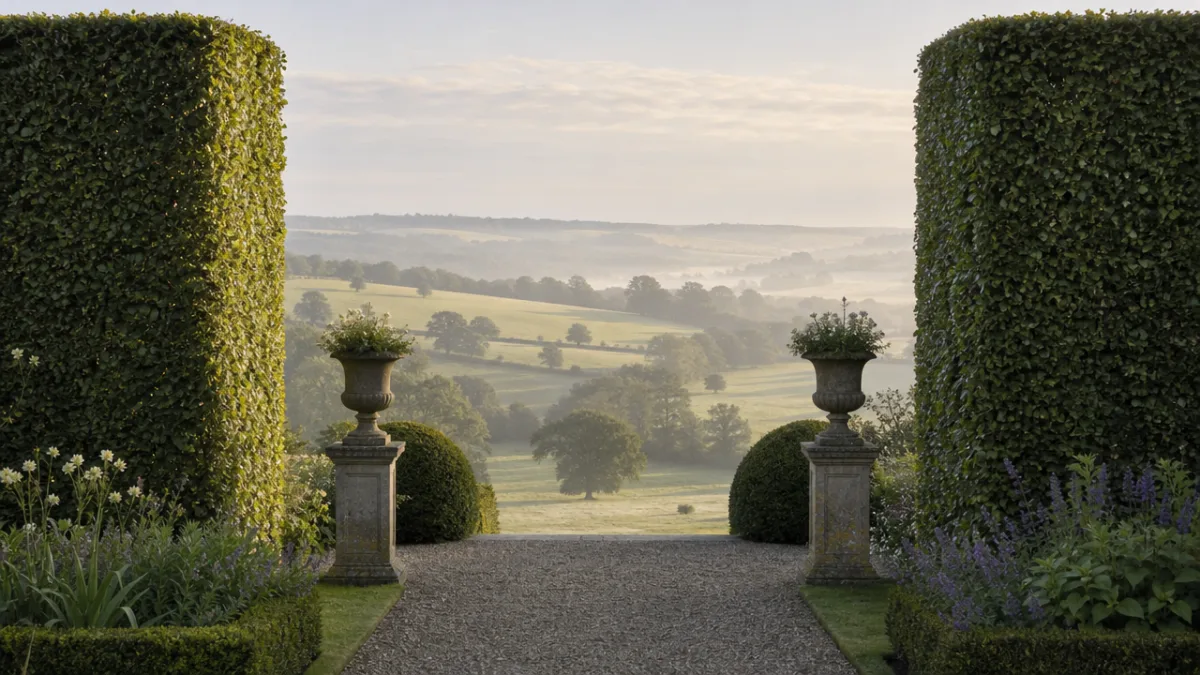
The Long Walk is one of the most memorable features of this axial structure. A wide grass path flanked by hornbeam hedges of almost architectural precision, it draws the eye and the feet forward toward a pair of wrought iron gates that open onto a breathtaking view of the Cotswold countryside beyond. This sudden expansion of the view after the enclosed intimacy of the garden rooms is a masterstroke of spatial choreography, reminding visitors that the garden exists within a broader landscape and providing a moment of exhilarating visual release. The transition from enclosure to openness is managed with consummate skill.
The use of topiary throughout the garden adds another layer of architectural interest and provides year-round structure that supports the planting through all seasons. Clipped columns, globes, and abstract forms punctuate the garden rooms, acting as exclamation marks within the composition and providing vertical interest that balances the horizontal spread of border planting. In winter, when the herbaceous plants have died back, this topiary structure becomes the dominant visual element, revealing the garden’s underlying bones with particular clarity and demonstrating that Hidcote’s beauty is not dependent on flowers alone.
Water features contribute another dimension to the garden’s spatial vocabulary. The Bathing Pool, the stream garden, and various smaller water elements introduce sound, reflection, and movement into the experience of the garden, counterpointing the stillness of the enclosed rooms with a dynamic quality that enlivens the senses. Johnston understood that a great garden must engage all the senses, not just sight, and his thoughtful deployment of water throughout Hidcote demonstrates this holistic approach to the creation of outdoor spaces that are genuinely immersive environments rather than simply collections of attractive plants.
Seasonal Rhythms and the Garden Through the Year
One of the hallmarks of a truly great garden is its ability to offer reward and interest throughout the changing seasons, and Hidcote Manor Garden fulfills this aspiration with particular distinction. Johnston designed the garden with careful attention to seasonal succession, ensuring that as one area or plant group reaches its peak and begins to fade, another is rising to take its place. This orchestration of seasonal interest gives the garden a living, dynamic quality that rewards repeated visits throughout the year, revealing new aspects of its character with each return.
Spring at Hidcote is heralded by bulbs, blossoms, and fresh green growth that emerges with particular vividness after the monochrome restraint of winter. Magnolias open their extravagant flowers against clear skies, tulips in a range of carefully selected colors animate the borders, and the fresh lime-green of new hornbeam and beech leaves on the hedges creates a softness and luminosity that will harden as the season progresses. The orchard area, with its flowering trees and meadow plantings of naturalized bulbs, is especially lovely in spring, offering an impression of unselfconscious abundance that contrasts pleasingly with the more formal areas of the garden.
Summer brings Hidcote to its fullest and most theatrical expression. The famous Red Borders reach their peak in July and August, when the combination of dahlias, cannas, lobelia, and other red and orange-toned plants creates an almost overwhelming intensity of color. Elsewhere, roses, geraniums, and a vast range of herbaceous perennials sustain the display through the long summer months, and the sheltered garden rooms accumulate warmth that allows tender plants to thrive in a climate that might otherwise be too cool for them. Summer evenings at Hidcote, when the low sun catches the flower colors and the air is laden with fragrance, are among the most magical experiences the English garden has to offer.
Autumn transforms the garden with a different but equally compelling beauty. The great hedges take on warmer tones as beech and hornbeam leaves turn to amber and bronze, and the borders shift from the brightness of summer to deeper, richer colors in tawny orange, russet, and burgundy. Seed heads and the structural forms of grasses come into their own, and the quality of autumn light in the Cotswolds, low, golden, and raking, illuminates the garden’s forms with a clarity and warmth that is entirely its own. Even in the depths of winter, the topiary and the architecture of the hedges ensure that Hidcote retains its dignity and a quiet, contemplative beauty.
Hidcote’s Legacy and Influence on Modern Garden Design
The legacy of Hidcote Manor Garden extends far beyond the boundaries of its Cotswold estate. Lawrence Johnston’s innovations in garden design, from the room-based structure to the integration of plantsmanship with architectural rigor, fundamentally changed the way English gardens were conceived and created in the twentieth century. His influence can be traced through a succession of important gardens created in the decades following his work at Hidcote, including Sissinghurst, Great Dixter, and Rodmarton Manor, each of which adopted and developed aspects of his approach in distinctive ways.
The garden room concept in particular has proven to be extraordinarily fertile and adaptable. From the grandest country house gardens to modest suburban plots, the idea of dividing a garden into smaller, distinct spaces with their own character and purpose has become one of the most widely understood principles of garden design in the English tradition. Garden designers, writers, and educators throughout the twentieth and twenty-first centuries have cited Hidcote as a foundational reference point, and the garden continues to be studied by students of landscape architecture and horticulture as a primary example of inspired design thinking translated into living reality.
Hidcote’s influence has also been felt in the world of plant cultivation and distribution. The cultivars that originated at or are associated with the garden, most notably Hypericum ‘Hidcote’ and Lavandula ‘Hidcote’, are now among the most widely grown garden plants in the temperate world, found in gardens, parks, and public plantings across Europe, North America, Australia, and beyond. In this way, Johnston’s horticultural vision has been distributed across the globe in literal botanical form, each plant a living ambassador for the values of thoughtfulness, beauty, and care that define the garden itself.
The conservation work undertaken by the National Trust at Hidcote has itself become a model for the preservation of significant designed landscapes. The organization has developed and refined methodologies for researching and documenting the historic character of garden spaces, identifying and sourcing historic plant varieties, and managing the inevitable tension between conservation and the dynamic, living nature of a garden that must grow and change to remain healthy and beautiful. The experience gained at Hidcote has informed the Trust’s stewardship of many other important gardens and has contributed to the development of best practice in designed landscape conservation more broadly.
Visiting Hidcote today, one is struck by the paradox at the heart of its appeal. A garden that was the personal creation of a single, somewhat private individual has become one of the most public and celebrated green spaces in Britain, welcoming visitors from across the world who come to be inspired, educated, and moved by what Johnston created. Yet despite this fame and the many thousands of visitors it receives each year, Hidcote retains an intimacy and a sense of personal vision that speaks directly to each visitor. It remains, at its core, a deeply human garden, a place created out of love for plants, beauty, and the art of making a place that nourishes the spirit as much as it delights the eye.
Planning Your Visit to Hidcote Manor Garden
Hidcote Manor Garden is managed by the National Trust and is open to the public for much of the year, with seasonal variations in opening times that reflect the garden’s changing character and the requirements of its ongoing maintenance and conservation program. The garden is located near the village of Chipping Campden in the North Cotswolds, an area of outstanding natural beauty that offers a wealth of additional attractions for visitors wishing to combine a trip to Hidcote with wider exploration of one of England’s most beloved landscapes.
Visitors to Hidcote should be prepared for a garden that rewards careful and unhurried exploration. Unlike a park or pleasure ground designed for casual strolling, Hidcote’s garden rooms reveal their full complexity and beauty to those who take the time to pause, observe, and engage with the detail of the planting and design. It is worth visiting with a good garden guide or using the interpretive materials provided by the National Trust, which offer context about the history of specific areas and the significance of particular plants or design features that might otherwise be missed by those unfamiliar with the garden’s story.
The following practical considerations are worth bearing in mind when planning a visit to Hidcote Manor Garden:
- The garden is most spectacular during peak flowering season from late spring through summer, but autumn visits offer their own rewards including the golden tones of the tapestry hedges and the warm quality of Cotswold light in September and October.
- National Trust members receive free entry to the garden; non-members pay an admission charge that varies by season and visitor category.
- The garden’s paths include some uneven surfaces and gentle gradients; it is largely accessible but visitors with significant mobility challenges are advised to check current accessibility information with the Trust before visiting.
- A plant sales area on site offers visitors the opportunity to purchase plants propagated from the Hidcote collection, allowing them to take a living piece of the garden’s heritage home with them.
- The surrounding Cotswolds countryside offers excellent opportunities for walking, and the nearby village of Chipping Campden, with its famous high street of honey-colored stone buildings, is well worth exploring as part of a visit to the area.
Whether you come as an experienced gardener seeking inspiration from one of the twentieth century’s greatest horticultural achievements, a lover of beautiful landscapes wishing to experience a place of exceptional charm and character, or simply a curious visitor drawn by the garden’s reputation, Hidcote Manor Garden is virtually certain to exceed your expectations. It is a place that has moved and inspired visitors for over a century, and that retains, in every season and in every corner, the ability to surprise, delight, and renew the sense of wonder that a truly great garden invariably awakens in those fortunate enough to experience it.








What do you think?
It is nice to know your opinion. Leave a comment.